


 Top Rated Course

We may not have the course you’re looking for. If you enquire or give us a call on +40 316317743 and speak to our training experts, we may still be able to help with your training requirements.
Agile Culture: Principles, Benefits and Practices
David Evans 09 May 2026Agile Culture is a work environment that prioritises speed and collaboration, enabling organisations to adapt quickly to change and deliver value effectively. With transparency, trust, and customer focus at its core, it helps to foster innovation across teams and empowers teams to make decisions together and deliver value faster.

Training Outcomes Within Your Budget!
We ensure quality, budget-alignment, and timely delivery by our expert instructors.
Table of Contents

Finding it hard to keep your team focused and energised amid constant change? You’re not alone. As businesses face shifting priorities, evolving customer needs, and new technologies, teams often lose direction and motivation. Traditional methods just don’t cut it anymore. That’s where Agile Culture comes in.
With the right mindset and transparency, Agile can transform your team into a responsive, engaged, and high-performing unit. In this blog, we’ll dive into what Agile Culture really means, why it matters, and how you can build a collaborative team environment that thrives even in uncertain times. Read ahead!
Table of Contents
1) What is Agile Culture?
2) 4 Ways to Develop Collaborative Agile Culture
3) Doing vs Being: Practical Lessons on Building an Agile Culture
4) What is the Agile Culture Matrix?
5) What is an Agile Working Style?
6) Conclusion
What is Agile Culture?
Agile Culture is a mindset and way of working that values adaptability, customer focus, and continuous improvement. It is built on the Agile principles of transparency, collaboration, and responsiveness, encouraging teams to deliver value in small, frequent increments rather than through lengthy plans.
This culture promotes trust, empowerment, and accountability, allowing teams to make decisions and adjust quickly to change. By fostering innovation, open communication, and shared ownership, Agile Culture creates an environment where organisations can stay flexible and deliver meaningful results.
4 Ways to Develop Collaborative Agile Culture
Currently, we all know that the software industry is marching towards agility and collaboration. So, let’s know how exactly we can work to develop a collaborative Agile Culture. Here are four ways.
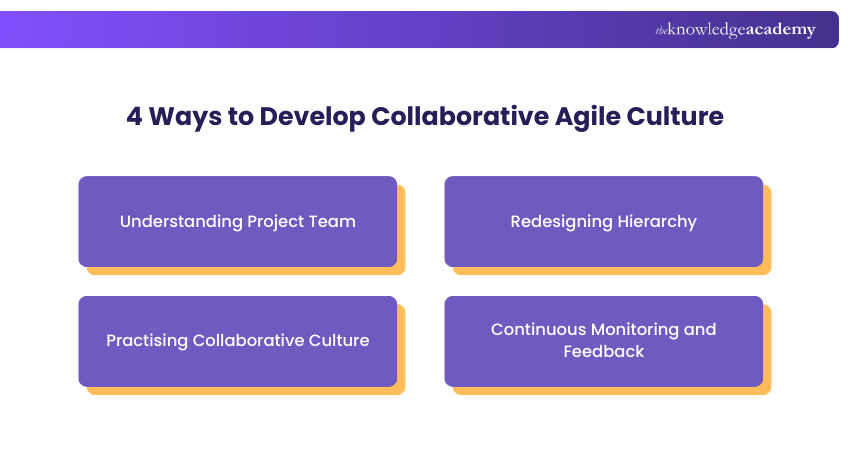
Understanding Project Team
The essential factor in Agile teamwork is recognising that every team member brings unique skills, backgrounds, and experiences. As a manager, understanding individual strengths and weaknesses helps assign tasks effectively and build confidence. Instead of focusing on the challenges of Agile, emphasise collaboration, trust, and open discussions to solve problems collectively.
This approach builds rapport, creates a safe environment, and enhances productivity. People remain the core of Agile Culture, and valuing their contributions ensures stronger teamwork and better project outcomes.
Redesigning Hierarchy
In traditional organisations, hierarchy often limits creativity and agility. Agile encourages lean leadership and shared responsibility, where leaders guide rather than control. Instead of micromanagement, managers act as facilitators who empower teams to self-organise and make decisions.
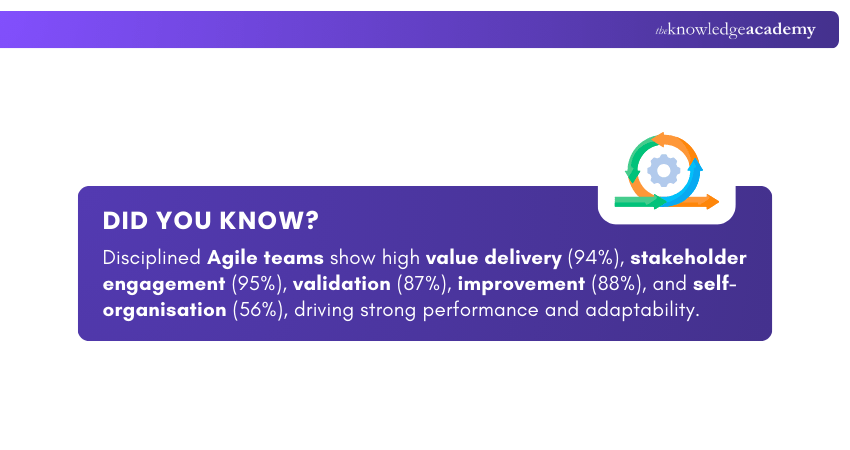
The drawbacks of rigid hierarchy include power-driven decisions, lack of openness, and reduced innovation. Agile promotes a flat structure with collaboration, openness, distributed decision-making, and continuous learning, making the work environment more adaptive and people-centred.
Motivate your team to work faster, smarter, and with greater clarity with our Agile for Teams Course – Register today!
Practising Collaborative Culture
Agile thrives on both teamwork and collaboration. Collaboration means problem-solving together, while teamwork means fulfilling roles to achieve shared goals. To foster this, organisations must adapt workplace practices and communication methods.
Examples include dedicated collaboration spaces, direct customer-team interactions, pair programming, knowledge sharing, flexible team structures, and ongoing workshops. Encouraging continuous progress, clarifying expectations, and promoting Agile behaviours build a culture where innovation and adaptability flourish.
Continuous Monitoring and Feedback
Continuous monitoring and feedback ensure projects remain aligned with goals and customer needs. Regular reviews, retrospectives, and demonstrations help teams track progress, identify improvements, and adapt strategies.
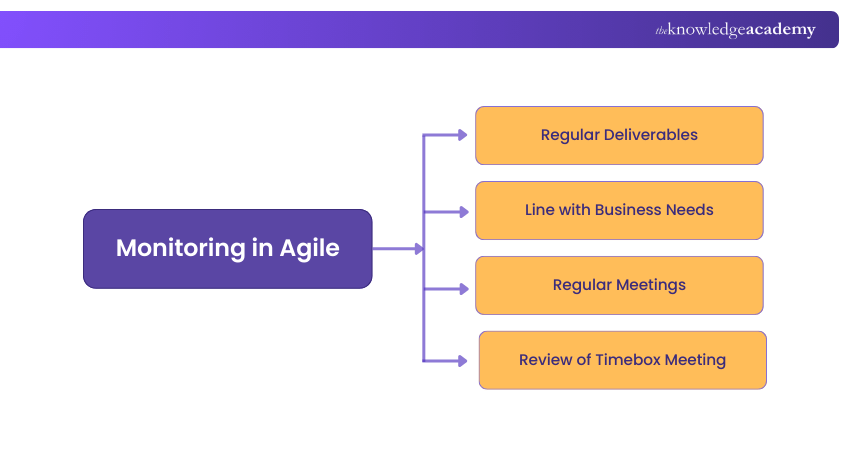
Agile Culture values feedback not as a one-time event but as an ongoing cycle. By integrating feedback into every iteration, teams improve performance, strengthen communication, and remain engaged with both the product and each other.
Manage time, cost, and risk effectively in Agile projects with our Agile Project Management Foundation (AgilePM® V3) Course – Join soon!
Doing vs Being: Practical Lessons on Building an Agile Culture
An Agile Culture isn’t just about adopting frameworks and tools. It is more about fundamentally shifting how people think, behave, and interact. Often, cultural change is the hardest part of an Agile transformation, surpassing technical challenges like restructuring or tooling.
Here are the practical lessons to build an Agile Culture for your business:
1) Understand the Difference Between Doing and Being Agile:
Doing Agile means using tools like sprints or Kanban. Being Agile is about adopting a mindset of adaptability, collaboration, and learning. The shift requires more than processes. It needs a cultural transformation.
2) Define Clear Behavioural Shifts:
Identify specific changes in behaviour that reflect Agile values. For example, move from top-down control to team empowerment, or from rigid long-term plans to adaptive, short-term cycles.
3) Make Agile Personal and Purpose-driven:
Encourage individuals to internalise Agile values such as autonomy, mastery, and purpose. Agile Cultures grow stronger when people feel ownership, motivation, and psychological safety to innovate.
4) Align Structures and Systems with Agile Values
Support Agile behaviours by adjusting organisational structures. Create open communication, reduce bureaucracy, and provide flexible environments that enable fast learning and collaboration.
5) Measure, Reflect, and Improve Continuously
Use retrospectives, feedback tools, and cultural check-ins to track progress. Agile is not a one-time change but a continuous journey that evolves with your team and goals.
Acquire the Leadership skills to thrive in complex business environments with our Agile Programme Management (AgilePgM®) Training – Sign up soon!
What is the Agile Culture Matrix?
The Agile Culture Matrix is a structured framework developed by the Agile Business Consortium to help organisations assess and evolve their Agile Culture. It’s part of their Business Agility Toolkit and is designed to guide teams through cultural transformation by identifying key elements and measuring progress.
The matrix is built around seven core elements of Agile Culture DNA:
1) Customer
2) Ecosystem
3) People
4) Culture
5) Leadership
6) Governance
7) Strategy
Each element is assessed across five levels of agility, ranging from traditional practices to fully agile behaviours. This helps organisations:
1) Understand their current cultural maturity
2) Set benchmarks for growth
3) Identify areas needing improvement
What is an Agile Working Style?
An Agile working style refers to a flexible, collaborative, and adaptive way of working that prioritises customer value, continuous improvement, and team empowerment. Agile working promotes cross-functional collaboration, iterative progress, and fast feedback. It leverages technology for its open communication and collaboration among the teams.
Key traits of an Agile working style include:
1) Self-organising teams with shared accountability
2) Transparency in goals and progress
3) Frequent communication and collaboration
4) Rapid experimentation and learning from failure
5) Customer-centricity in every action
Conclusion
Creating an Agile Culture isn’t just about adopting new tools or methods. It is more about transforming how people think, collaborate, and respond to change. With tools, you can assess where your team stands and plan to grow. When teams move beyond doing Agile to being Agile, you can unlock real innovation, deeper engagement, and lasting success.
Discover the Agile planning, control, and delivery techniques with our AgilePM® Foundation & Practitioner (AgilePM® V3) Training – Begin immediately!
Frequently Asked Questions
What is an Agile Mindset?

An Agile mindset values flexibility, collaboration, and continuous improvement. It encourages learning from feedback, adapting to change, and focusing on delivering customer value. People with an Agile mindset embrace teamwork, ownership, and experimentation to solve problems and improve outcomes.
What is Agile vs Waterfall?
Agile is an iterative approach that delivers work in small, flexible increments with regular feedback. Waterfall is a linear, step-by-step method where each phase must finish before the next begins. Agile allows for changes during the project, while Waterfall follows a fixed plan.
What are the Other Resources and Offers Provided by The Knowledge Academy?
The Knowledge Academy takes global learning to new heights, offering over 3,000+ online courses across 490+ locations in 190+ countries. This expansive reach ensures accessibility and convenience for learners worldwide.
Alongside our diverse Online Course Catalogue, encompassing 19 major categories, we go the extra mile by providing a plethora of free educational Online Resources like Blogs, eBooks, Interview Questions and Videos. Tailoring learning experiences further, professionals can unlock greater value through a wide range of special discounts, seasonal deals, and Exclusive Offers.
What is The Knowledge Pass, and How Does it Work?
The Knowledge Academy’s Knowledge Pass, a prepaid voucher, adds another layer of flexibility, allowing course bookings over a 12-month period. Join us on a journey where education knows no bounds.
What are the Related Courses and Blogs Provided by The Knowledge Academy?
The Knowledge Academy offers various Agile Training, including AgilePM® Foundation & Practitioner (AgilePM® V3) Course, Agile Project Management Foundation (AgilePM® V3) Course and Agile for Teams Training. These courses cater to different skill levels, providing comprehensive insights into workflow Management.
Our Project Management Blogs cover a range of topics related to Agile Culture, offering valuable resources, best practices, and industry insights. Whether you are a beginner or looking to advance your Project Management skills, The Knowledge Academy's diverse courses and informative blogs have got you covered.

David Evans


Certified Project Trainer and Agile Delivery Expert
David Evans brings over a decade of hands-on experience in project delivery, Agile transformation, and team leadership. With a background in technology and business consulting, David has led cross-functional teams through Agile and Waterfall projects in both public and private sectors. He combines technical knowledge with practical insights to help readers navigate the challenges of modern project environments.

Upcoming Project Management Resources Batches & Dates
Date
 AgilePM® Foundation & Practitioner (AgilePM® v2)

 If you wish to make any changes to your course, please


