


 Top Rated Course

We may not have the course you’re looking for. If you enquire or give us a call on + 1-866 272 8822 and speak to our training experts, we may still be able to help with your training requirements.
How to Become a Mortgage Loan Officer: A Complete Overview
The Knowledge Academy 27 December 2025A Mortgage Loan Officer assists clients in securing home loans by evaluating financial profiles and explaining mortgage options. They ensure compliance with lending regulations. To become a Mortgage Loan Officer, you need to complete pre-licensing education like CeMAP Qualification, pass required exams and meet regulatory requirements.

Training Outcomes Within Your Budget!
We ensure quality, budget-alignment, and timely delivery by our expert instructors.
Table of Contents
Related Courses
Do you have a dream to help people unlock the door to their new home? A career as a Mortgage Loan Officer (MLO) could be your perfect fit. With the housing market always on the move, skilled professionals who can instruct clients through complex mortgage options are in high demand.
From first-time buyers to seasoned property investors, people rely on expert advice to make life-changing financial decisions. This blog will take you through How to Become a Mortgage Loan Officer, from education and licensing requirements to essential skills, career outlook, and practical tips. Ready to shape futures, one home at a time? Let’s dive in!
Table of Contents
1) Who is a Mortgage Loan Officer?
2) What are the Steps to Become a Mortgage Loan Officer?
3) Skills Required to Become a Mortgage Loan Officer
4) Average Salary of a Mortgage Loan Officer
5) What is the Work Environment of a Loan Officer?
6) How Fast Can You Become a Mortgage Loan Officer?
7) Conclusion
Who is a Mortgage Loan Officer?
A Mortgage Loan Officer (MLO) is a specialist dedicated to assisting individuals in securing their ideal home. They guide prospective homeowners through the process of determining whether they qualify for a mortgage loan. Primarily employed by banks and Mortgage lending institutions, MLOs provide a range of financial services. Additionally, they furnish clients with details on interest rates and the assortment of available loan options.
A successful Mortgage Loan Officer not only evaluates a borrower’s financial health but also acts as a trusted advisor throughout the lending journey. They analyse credit reports, income, and debt-to-income ratios to match clients with the most suitable loan products.

What are the Steps to Become a Mortgage Loan Officer?
Becoming a Mortgage Loan Officer takes a lot of work because of many requirements. Registering with the National Mortgage Registry and completing the necessary training are essential. These requirements can be broken down into several steps. Let's look at How to Become a Mortgage Loan Officer:
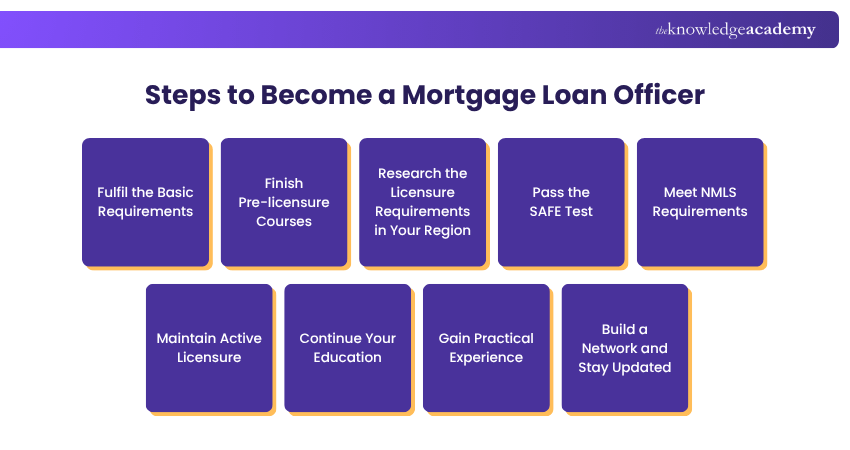
1) Fulfil the Basic Requirements
One of the basic steps to becoming a Mortgage Loan Officer is to complete your schooling and some foundational courses. Knowledge in Finance and Mathematics can greatly improve the skills needed for this role. Additionally, you must be at least 18 years old.
2) Finish Pre-licensure Courses
Completing pre-licensure courses is a crucial step in becoming an MLO. These courses, which usually take about 20 hours, cover laws, regulations, fair lending, consumer protection, and ethics. They provide clarity and insight into the MLO’s job.
3) Research the Licensure Requirements in Your Region
Licensure requirements for Mortgage Loan Officers vary by location. For example, in Scotland, MLOs must register with the Scottish Financial Services Authority (SFSA). In the UK, the licensure requirements for Mortgage Loan Officers are specific to the region and the type of advice provided. For instance, MLOs advising on properties in Scotland must be registered with the Scottish Financial Services Authority (SFSA).
Across the UK, those wishing to engage in mortgage brokering activities need to be authorised by the Financial Conduct Authority (FCA). The authorisation process involves demonstrating the ability to deliver positive outcomes for consumers and includes steps such as submitting a detailed business plan and undergoing a thorough application review.
4) Pass the SAFE Test
To become a Mortgage Loan Officer, you must clear the Secure and Fair Enforcement (SAFE) test with at least a 75% score. This test evaluates your knowledge of state and federal lending laws. If you don’t pass on the first try, you can retake it after 30 days. After three attempts, you must wait 180 days to retake it.
5) Meet NMLS Requirements
The next step is to meet the Nationwide Multistate Licensing System (NMLS) requirements. This ensures that your employer can easily sponsor and supervise your duties as a Mortgage Loan Officer. Your sponsorship must also be approved by your state's regulatory body. Obtaining an NMLS Unique Identifier, a permanent number for officers and Real Estate organisations will help track your licenses and make sponsorship and supervision easier.
6) Maintain Active Licensure
Many people assume that everything is done after getting their license, but it’s far from done, as you should make sure that you fulfil the latest requirements. Moreover, you should ensure that you keep your information updated with the NMLS.
Learn about budgeting, saving, investing, and managing money with our Personal Finance Course – Register today!
7) Continue Your Education
Despite obtaining a license, learning must be an everyday focus, as continuous learning is the key factor behind success in the long term. You can also use it to renew your license. Additionally, you have to have at least eight hours of coursework each year in order to be considered eligible to renew your license. Emphasise the understanding of laws, regulations, ethics, lending policies, and mortgage origination services.
8) Gain Practical Experience
After completing your education and obtaining your license, gaining practical experience is crucial. You can start in an entry-level role or through internships. Working in an established institution can provide valuable industry insights. Whether you're exploring traditional financing options or specialised ones like a Reverse Mortgage, hands-on experience will help you navigate various financial solutions. Here are some steps to gain practical experience:
1) Seek Entry-level Positions: Start with entry-level roles such as Loan Processor, Loan Officer Assistant, or Mortgage Underwriter in banks, credit unions, or mortgage lending companies. These positions help you learn from seasoned professionals and understand the mortgage industry.
2) Shadow Experienced Loan Officers: Once in an entry-level position, seek opportunities to shadow experienced Loan Officers. Observing their daily activities and learning from their expertise provides practical knowledge and real-world experience.
9) Build a Network and Stay Updated
Creating a professional network and staying informed about industry trends is crucial for success as a Mortgage Loan Officer. Here are some key steps to help you connect with others and stay informed:
1) Attend Industry Events: Participate in conferences, seminars, and networking events to connect with other professionals, lenders, and Real Estate Agents. Interacts and follows up with contacts to build relationships.
2) Join Professional Associations: Become a member of mortgage and finance-related associations and organisations. These groups provide networking opportunities, industry resources, and educational events, allowing you to stay updated and gain valuable insights.
3) Collaborate With Real Estate Professionals: Build relationships with Real Estate Agents, Mortgage Brokers, and industry professionals. Partnering with them can lead to referrals and a larger client base. Attend real estate events, offer educational seminars, and engage in cooperative marketing efforts.
4) Utilise Online Platforms: Connect with industry professionals using social media, professional networks, and online forums. Participate in discussions, share insights, and showcase your expertise to reach an audience and build connections beyond your local area.
5) Stay Updated With Industry News: Keep up with industry news, market trends, and regulatory changes. Subscribe to industry publications, follow reputable financial news sources, and join online communities. Attend webinars and workshops to stay informed about mortgage guidelines, loan options, and best practices.
Gain expert knowledge in financial planning with our Certified Wealth Management Course – Join now!
Skills Required to Become a Mortgage Loan Officer
To become a successful Mortgage Loan Officer, having the right education is essential, but developing specific skills is equally important. Here are the key skills to focus on for How to Become a Mortgage Loan Officer:
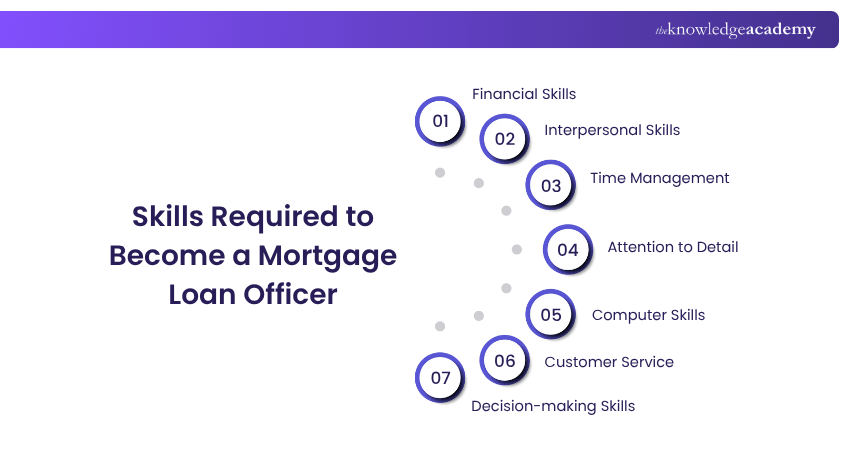
1) Financial Skills
A Mortgage Loan Officer needs to have strong financial skills to evaluate borrowers’ eligibility and lead them through complex mortgage options. This includes reviewing income, assets, credit reports, and debt-to-income ratios to recommend suitable loans. Earning a finance-related degree or certification can help strengthen these skills and boost credibility in the lending industry.
Practical Applications of Financial Skills:
1) Analyse clients’ financial documents, including income and credit history
2) Assess loan eligibility and recommend the best options
3) Explain loan structures, interest rates, and repayment terms clearly
2) Interpersonal Skills
Mortgage Loan Officers work closely with clients, often those unfamiliar with lending terms or financial jargon. Excellent interpersonal skills help them communicate clearly, build trust, and maintain a positive client experience. They need to listen carefully to understand clients’ needs, answer questions patiently, and simplify the loan process.
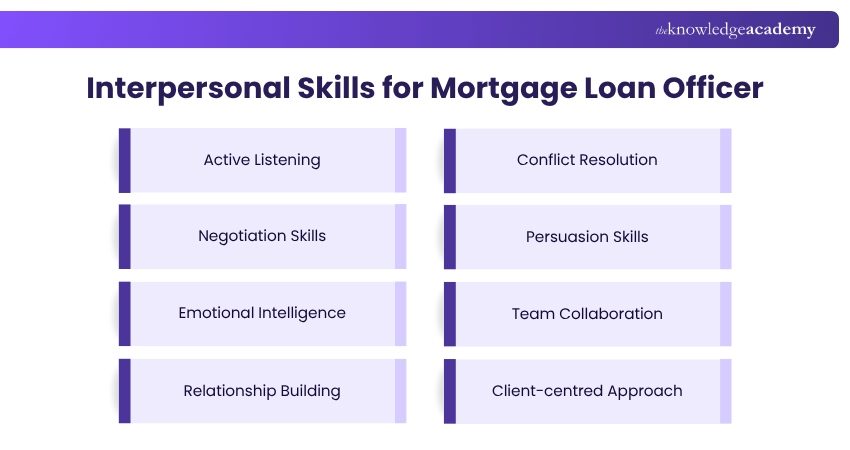
Examples of Interpersonal Effectiveness:
1) Build rapport with clients through empathy and active listening
2) Simplify complex mortgage information for better understanding
3) Develop long-term relationships through clear and honest communication
3) Time Management
Handling multiple applications, client meetings, and documentation requires efficient Time Management skills. MLOs must organise their schedules, prioritise tasks, and ensure loan processing deadlines are met. Strong time management also supports consistent follow-ups and timely communication with clients and lenders.
Ways to Apply Time Management:
1) Prioritise loan applications and manage multiple clients efficiently
2) Create daily or weekly task schedules to stay organised
3) Track deadlines to ensure timely loan processing
4) Attention to Detail
Accuracy is critical in mortgage lending, as even minor errors in loan applications or documentation can cause delays or issues. Mortgage Loan Officers need to review every form, calculation, and contract carefully to ensure all data is correct. Attention to detail helps prevent mistakes, ensures regulatory compliance, and strengthens others’ trust in you.
Examples of Attention to Detail in Action:
1) Double-check loan applications and documentation for accuracy
2) Verify borrower details and supporting documents carefully
3) Ensure compliance with financial and legal standards
5) Computer Skills
In today’s digital-driven mortgage industry, MLOs have to be comfortable using technology. They rely on various software platforms for credit assessments, loan origination, and Client Management. Proficiency in computer systems, spreadsheets, and CRM tools improves efficiency, accuracy, and productivity.
Technology in Mortgage Operations:
1) Use Loan Origination Software (LOS) effectively
2) Manage digital records and financial databases securely
3) Use spreadsheets to track financial data and client information
6) Customer Service
Customer service is an important skill for a Mortgage Loan Officer’s role. They serve as the main point of contact for clients, addressing questions, explaining terms, and guiding them through complex financial steps. A professional, yet friendly approach helps clients feel supported and informed throughout the process.
Customer Service Best Practices:
1) Respond promptly and professionally to client queries
2) Provide clear explanations to build client confidence
3) Handle concerns or complaints with patience and empathy
7) Decision-making Skills
Mortgage Loan Officers are responsible for assessing financial information and determining whether clients qualify for specific loans. This requires strong analytical judgment and the ability to make confident, well-informed decisions. A good MLO balances data-driven analysis with ethical responsibility, ensuring fair lending practices.
Tips for Sound Decision-making:
1) Evaluate financial data to make informed approval decisions
2) Balance analytical insights with sound professional judgment
3) Ensure decisions comply with lending laws and ethical standards
Enhance your financial decision-making skills with our Financial Management Course – Sign up soon!
Average Salary of a Mortgage Loan Officer
Below is a table showing the average salaries of Mortgage Loan Officers in the specified countries:
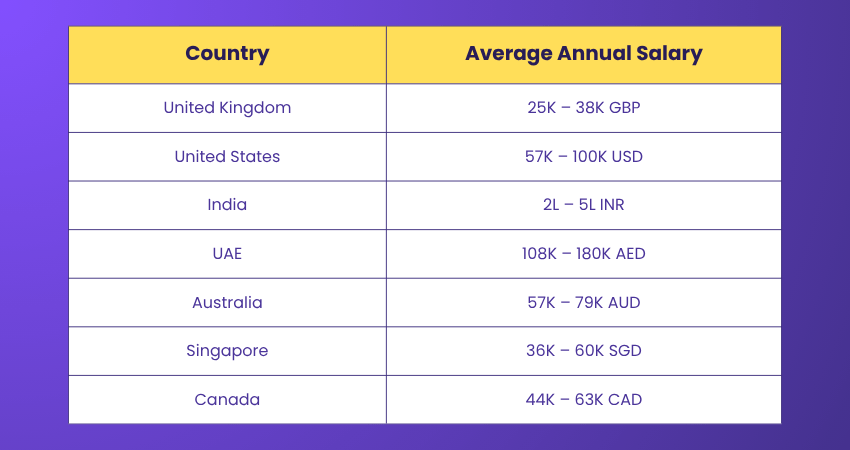
Please note that these data can vary based on factors, such as experience, location, and company.
What is the Work Environment of a Loan Officer?
Loan Officers typically work in banks, credit unions, mortgage companies, or financial institutions, operating in both office settings and remote environments. Their day-to-day involves meeting clients, evaluating financial documents, explaining loan options, and working closely with underwriters and real estate professionals.
How Fast Can You Become a Mortgage Loan Officer?
Becoming a Mortgage Loan Officer typically takes about 45 days to six months, depending on your background and state requirements. The process includes completing 20 hours of pre-licensing education, passing the NMLS exam, and undergoing background and credit checks.
Some candidates can start working within one to two months, while others may take longer if additional training is required. With consistent effort and preparation, many people can start their career as a licensed Mortgage Loan Officer in as little as three to six months.
Conclusion
Embarking on the journey of How to Become a Mortgage Loan Officer is like stepping into a role that genuinely impacts people’s lives. As an MLO, you become the bridge between dreams and reality, helping individuals and families secure the keys to their future homes. If you’re driven by the idea of helping others while achieving professional growth, becoming a Mortgage Loan Officer could be the perfect direction for your career journey.
Become a qualified Mortgage Advisor or Loan Officer with our CeMAP Course (Level 1,2 and 3) - Take your first step!
Frequently Asked Questions
What is the Difference Between a Loan Officer and a Mortgage Broker?

A Loan Officer works for a bank or lending institution and offers loan products from their employer, while a Mortgage Broker acts as an intermediary who shops around for the best loan products from different lenders on behalf of the borrower.
Can You Make a Lot of Money as a Loan Officer?
Yes, Mortgage Loan Officers can earn a high income with their expertise. The earnings often increase with experience, performance, and the volume of loans that have been successfully closed.
What are the Other Resources and Offers Provided by The Knowledge Academy?
The Knowledge Academy takes global learning to new heights, offering over 3,000 online courses across 490+ locations in 190+ countries. This expansive reach ensures accessibility and convenience for learners worldwide.
Alongside our diverse Online Course Catalogue, encompassing 19 major categories, we go the extra mile by providing a plethora of free educational Online Resources like Blogs, eBooks, Interview Questions and Videos. Tailoring learning experiences further, professionals can unlock greater value through a wide range of special discounts, seasonal deals, and Exclusive Offers.
What is the Knowledge Pass, and how does it work?
The Knowledge Academy’s Knowledge Pass, a prepaid voucher, adds another layer of flexibility, allowing course bookings over a 12-month period. Join us on a journey where education knows no bounds.
What are related courses and blogs provided by The Knowledge Academy?
The Knowledge Academy offers various CeMAP Courses, including the CeMAP Course (Level 1,2 and 3). These courses cater to different skill levels, providing comprehensive insights into Mortgage.
Our Business Skills Blogs cover a range of topics related to Mortgage, offering valuable resources, best practices, and industry insights. Whether you are a beginner or looking to advance your Mortgage skills, The Knowledge Academy's diverse courses and informative blogs have got you covered.

The Knowledge Academy


Global Training Provider
The Knowledge Academy is a world-leading provider of professional training courses, offering globally recognised qualifications across a wide range of subjects. With expert trainers, up-to-date course material, and flexible learning options, we aim to empower professionals and organisations to achieve their goals through continuous learning.

Upcoming Business Skills Resources Batches & Dates
Date
 CeMAP Course (Level 1,2 and 3)
CeMAP Course (Level 1,2 and 3)
Mon 8th Jun 2026
CeMAP Course (Level 1,2 and 3)
Mon 21st Sep 2026
CeMAP Course (Level 1,2 and 3)
Mon 16th Nov 2026

 If you wish to make any changes to your course, please


