


 Top Rated Course

We may not have the course you’re looking for. If you enquire or give us a call on + 1-866 272 8822 and speak to our training experts, we may still be able to help with your training requirements.
What Is Age Discrimination? Meaning, Types, and Impact
The Knowledge Academy 10 February 2026Age discrimination, or ageism, is unfair treatment based on age, affecting younger and older people in hiring, promotion, workplace culture, and legal rights. It can limit career progression, reduce morale, and expose organisations to legal risk, making awareness and prevention essential for fair, inclusive workplaces.

Training Outcomes Within Your Budget!
We ensure quality, budget-alignment, and timely delivery by our expert instructors.
Table of Contents

Age discrimination affects people at different stages of their working lives, often influencing how they are recruited, treated, and supported in the workplace. It can occur subtly or openly and may impact both younger and older employees.
In this blog we will explore What is Age Discrimination, the forms it takes, and its consequences to understand how to create a fair and inclusive workplaces, ensuring compliance with equality and employment laws.
Table of Contents
1) What is Age Discrimination?
2) Types of Age Discrimination
3) Age Discrimination Laws and Regulations
4) Identify Age Discrimination
5) Impact of Age Discrimination
6) How to Prevent Age Discrimination
7) Conclusion
What is Age Discrimination?
The concept of What is Age Discrimination begins with recognising that it occurs when an individual is treated unfairly because of their age in situations covered by the Equality Act. This discrimination can be a result of just one act or even the policies and procedures of the workplace that discriminate against some age groups. There are legal exceptions to the case, including age-based treatment in schools. Importantly, age discrimination can be unlawful even when it is unintentional.
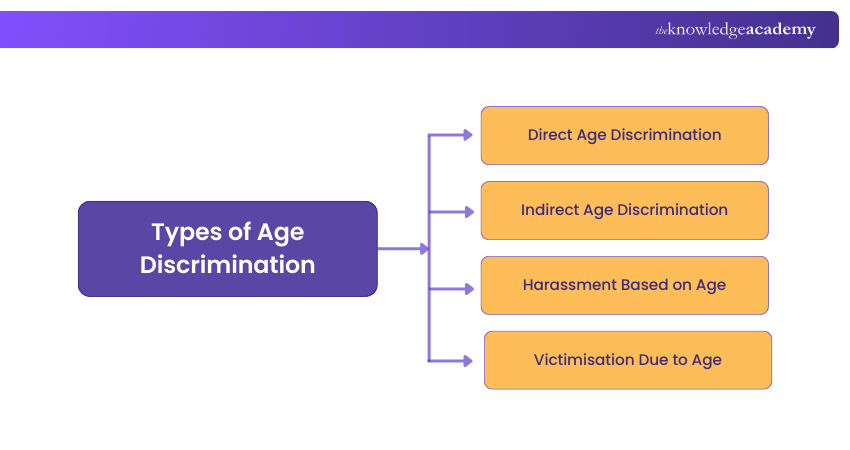
Types of Age Discrimination
Understanding What is Age Discrimination, gives you a head start on knowing when it's happening. Here, four major categories of Age Discrimination at work are discussed:
1) Direct Age Discrimination
Direct discrimination happens when a person is treated less favourably because of their age.
Examples Include:
a) Rejecting a candidate solely because they are considered “too old” for the role.
b) Promoting a younger employee over an older one despite equal or stronger. performance
c) Excluding an older worker from training because it’s assumed they won’t adapt to new skills.
2) Indirect Age Discrimination
Indirect discrimination occurs when a policy or practice that applies to everyone disproportionately affects a particular age group.
Examples Include:
a) Setting a requirement to complete physically demanding tasks unnecessarily disadvantages older workers.
b) Offering training only through online platforms that assume a high digital proficiency, younger staff are more likely to have.
c) Creating promotion criteria that favour specific recent qualifications typically held by younger employees.
3) Harassment Based on Age
Harassment involves any unwelcome behaviour related to age that creates a hostile, intimidating, or offensive environment.
Examples Include:
a) Making insulting or mocking comments about an employee’s age or perceived abilities.
b) Repeatedly joking that an older colleague is “slow,” “outdated,” or “ready to retire.”
c) Excluding someone from workplace activities while implying they are “too old to fit in.”
4) Victimisation Due to Age
Victimisation occurs when someone is treated less favourably because they have reported Age Discrimination or assisted someone else in reporting it.
Examples Include:
a) Punishing an employee for reporting age discrimination to HR or management.
b) Ignoring or sidelining a worker after they support a colleague’s age-related complaint.
c) Denying opportunities or benefits because someone participated in an age discrimination investigation.
Advance your workplace expertise with our Employment Law Training- Sign up now!
Age Discrimination Regulations
One of the nine safeguarded attributes that is included in the Equality Act 2010, which grants legal safeguarding against unfair treatment in the workplace, is that of age. The law defines age discrimination as follows:
1) Age discrimination is often referred to as ageism, which consists of direct and indirect discrimination, harassment, and victimisation
2) Discrimination may occur as a result of decision-making at work, in the organisation, or due to language and behaviour related to age
3) It can be a single event or a recurring process, at workplace events or remote working
4) There are cases where the treatment of an individual due to age can be considered legal
5) In the Equality Act, age is defined to be a certain age or an age group, which may be broad, such as under 20s or over 50s
6) Age groups can also be depicted through such generational names as Gen Z or millennials
7) The people who are protected by law include persons of all ages, employees, job applicants, contractors, self-employed workers, and former employees
Identify Age Discrimination
Age Discrimination in the workplace comes with devastating consequences. The initial step in dealing with unfair treatment is the ability to recognise the warning signs. Here are some of the Age Discrimination signs you need to look for:
1) Getting transferred to minimum duties without any reasonable explanation
2) Getting negative, dismissive, or inappropriate or age-related jokes and remarks by your colleagues or managers
3) Getting poor performance reviews where you can not clearly see it in your actual work output
4) It is frustrating to find seniors who are being sidelined as younger and more affordable employees are employed to fill the vacancies that their seniors leave
5) Failure to get remuneration when there is high performance, and age seems to be a factor
Impact of Age Discrimination
Age discrimination has far-reaching consequences for both employees and organisations, shaping workplace culture, morale, and long-term performance. Some of the common impacts are:
1) Cultivates a hostile and isolating work atmosphere where people feel discriminated or neglected due to the age factor
2) Lowers the job satisfaction, confidence, and wellbeing, which results in high levels of stress and disengagement by the employees impacted
3) Restricts career growth and upward mobility, thereby making them feel undervalued or marginalised
4) Changes negative stereotypes, like assumptions about adaptive ability, technological ability, or receptiveness to change
5) Dilutes interregional collaboration and trust among the various age groups, including in the area of teamwork and knowledge sharing
6) Keeps organisations deprived of the ultimate advantages of a multigenerational workforce with their respective experience, skills, and perspectives
7) Heightens the chances of reputational risk, lawsuits, and problems with attracting and keeping talent
8) Negatively affects organisational development and innovation as it decreases diversity of thought and inclusive decision-making
How to Prevent Age Discrimination
To prevent discriminations like Age Discrimination, a proactive approach is needed. The protection provided by law is minimal compared to the necessity of enlightened and active participation in the workplace for the creation of a fair and inclusive environment. Some of the prevention methods are:
a) Know and support the policies of the organisation that tackle Age Discrimination.
b) Whenever you notice any treatment that is unfair based on age, let it be known.
c) Conducting awareness on discrimination based on age is against the law and is not tolerated.
d) Assert that the leaders and managers should exemplify the strong, anti-discriminatory practices.
Advance your legal expertise and manage disputes with our Commercial Law Training - Join today!
Conclusion
Age Discrimination still continues to be a problem, but the first step to dealing with it is understanding what it is and how it appears in daily life. By identifying injustice treatment and being aware of one's rights under the Equality Act 2010, both individuals and organisations can push for a society that is fairer and more inclusive, irrespective of age. Let us all see that ability rather than age governs opportunity in the environments we create.
Become an expert on employment law and safeguard yourself and workplace with our Employment Law Courses - Join today!
Frequently Asked Questions
How to Identify Age Discrimination?

Age Discrimination can be spotted when someone is treated unfairly due to their age, such as being denied training, passed over for promotions, or receiving age-based remarks. Watch for unequal treatment in hiring, pay, or workplace opportunities.
What Causes Age Discrimination?
Age Discrimination is often caused by stereotypes and assumptions about what people of certain ages can or cannot do. It also arises from workplace biases, cultural attitudes, and policies that favour specific age groups over others.
What are the Other Resources and Offers Provided by The Knowledge Academy?
The Knowledge Academy takes global learning to new heights, offering over 3,000+ online courses across 490+ locations in 190+ countries. This expansive reach ensures accessibility and convenience for learners worldwide.
Alongside our diverse Online Course Catalogue, encompassing 19 major categories, we go the extra mile by providing a plethora of free educational Online Resources like Blogs, eBooks, Interview Questions and Videos. Tailoring learning experiences further, professionals can unlock greater value through a wide range of special discounts, seasonal deals, and Exclusive Offers.
What is The Knowledge Pass, and How Does it Work?
The Knowledge Academy’s Knowledge Pass, a prepaid voucher, adds another layer of flexibility, allowing course bookings over a 12-month period. Join us on a journey where education knows no bounds.
What are the Related Courses and Blogs Provided by The Knowledge Academy?
The Knowledge Academy offers various Employment Law Courses, including the Employment Law Training and Practitioner Course, Anti-Bribery and Corruption Training, and Commercial Law Training. These courses cater to different skill levels, providing comprehensive insights into Employee Rights and Responsibilities.
Our Human Resources Blogs cover a range of topics related to Age Discrimination, offering valuable resources, best practices, and industry insights. Whether you are a beginner or looking to advance your legal expertise in workplace, The Knowledge Academy's diverse courses and informative blogs have got you covered.

The Knowledge Academy


Global Training Provider
The Knowledge Academy is a world-leading provider of professional training courses, offering globally recognised qualifications across a wide range of subjects. With expert trainers, up-to-date course material, and flexible learning options, we aim to empower professionals and organisations to achieve their goals through continuous learning.

Upcoming HR Resources – Learn about Human Resources Batches & Dates
Date
 Direct and Indirect Discrimination Training
Direct and Indirect Discrimination Training
Fri 24th Apr 2026
Direct and Indirect Discrimination Training
Fri 26th Jun 2026
Direct and Indirect Discrimination Training
Fri 11th Sep 2026
Direct and Indirect Discrimination Training
Fri 30th Oct 2026

 If you wish to make any changes to your course, please


