


 Top Rated Course

We may not have the course you’re looking for. If you enquire or give us a call on +44 1344 203 999 and speak to our training experts, we may still be able to help with your training requirements.
Why is Communication Important: Tips to Improve it Today
Charlotte Wilson 15 July 2026Communication is Important for building trust, strong relationships, collaboration, resolving conflicts, and achieving personal and professional success. It also helps in expressing ideas clearly, reducing misunderstandings, and encouraging teamwork. Good Communication improves morale and makes every goal easier to achieve.

Training Outcomes Within Your Budget!
We ensure quality, budget-alignment, and timely delivery by our expert instructors.
Table of Contents
Have you ever sent a text that was meant to be funny but ended up sounding rude? Or written an email that seemed fine until you reread it later and thought, “That came across a bit cold”? We’ve all been there. Communication isn’t just about talking or typing words; it’s the bridge that connects hearts, minds, and ideas. It helps us build trust, share meaning, and turn misunderstandings into understanding.
In this blog, we’ll explore Why is Communication Important, share share practical tips to improve it and uncover the different types of Communication that help us express, listen, and grow together. Let’s dive in and learn how to communicate with clarity and confidence.
Table of Contents
1) Why is Communication Important?
2) Tips for Improving Communication
3) What are the Different Types of Communication?
4) What are the Five Purposes of Communication?
5) Conclusion
Why is Communication Important?
Communication is important because it strengthens every relationship by building clarity, connection, and collaboration. It helps people understand each other, reduces confusion, and builds trust. Strong Communication enhances teamwork and ensures ideas flow smoothly. Below are key points showing Why is Communication Important for personal and professional success:
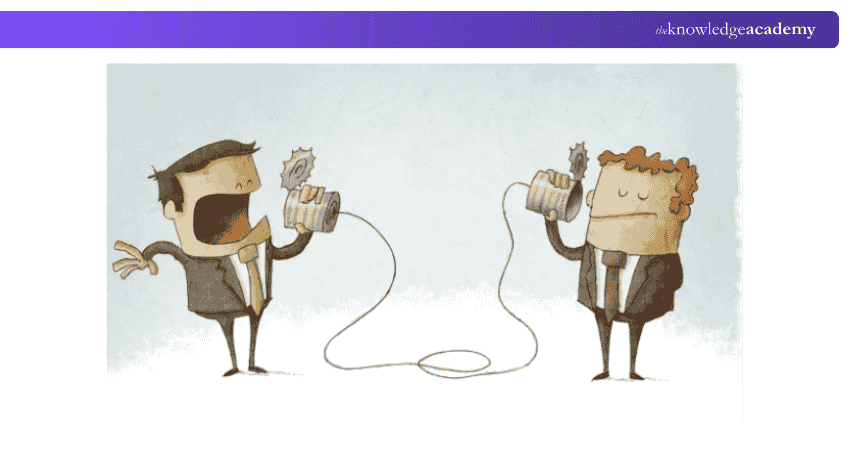
Clear Expression
Saying what you mean helps others understand. It avoids confusion and keeps things smooth. Clear language shows purpose and confidence. These build trust in daily conversations. Even short messages can have a big impact.
Active Listening
Active Listening shows care and attention. It means giving focus without distractions. Eye contact and small gestures help. People feel respected when they are heard. This builds strong and meaningful connections.
Relationship Building
Good relationships grow through simple talk. Sharing thoughts creates comfort and ease. Words build trust over time. Friendly chats turn into strong bonds. Every conversation brings people closer.
Conflict Resolution
Disagreements are part of life. Calm Communication helps solve them fast. Listening to both sides is important. Respectful words ease tension naturally. Solutions come when people feel understood.
Positive Work Environment
Open talk lifts the mood at work. People feel valued and supported. Tasks become easier with good teamwork. Kind feedback helps everyone grow. A healthy space starts with clear Communication.
Career Advancement
Strong speakers often move ahead faster. They express ideas with clarity and ease. Good Communication shows Leadership Skills. It helps in meetings and interviews. Words can open new career paths.
Diversity and Inclusivity
Communication brings people together. It helps every voice feel welcome. Different views add depth and value. Respectful talk creates unity. Everyone deserves space to be heard.
Personal Growth
Talking things through builds self-awareness. Sharing ideas helps you reflect. Feedback guides your development. Every chat brings new insight. Growth begins with honest expression.
Overcoming Barriers
Barriers often start with confusion. Clear words remove doubt and fear. Open minds lead to progress. Patience helps bridge every gap. Communication connects where silence divides.
Gain confidence in presenting ideas clearly and persuasively. Join our Public Speaking Course now!
Tips for Improving Communication
Good Communication isn’t just about speaking; it’s about creating a real connection where others can easily understand your message and feel engaged in the conversation. Small changes in how you talk and listen can make a big difference. Here are a few simple tips for Effective Communication:
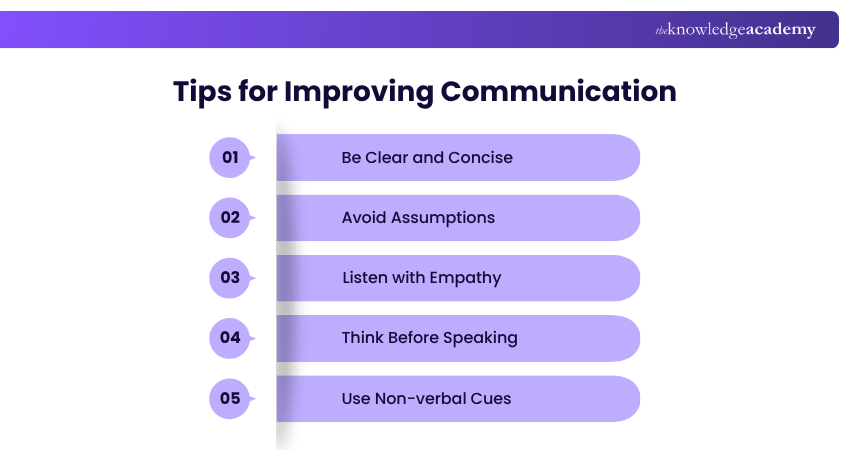
1) Be Clear and Concise While Communicating: Say what you mean in simple words. Keep your message short and easy to understand. Avoid long sentences or difficult terms so the other person can get your point quickly.
2) Don’t Make any Assumptions: Don’t guess what others mean. If you’re unsure, ask questions to make sure you understand correctly. Clear questions help avoid confusion and mistakes.
3) Listen with Empathy: Give your full attention when someone speaks. Try to understand their emotions and points of view. Listening with care helps people feel respected and understood.
4) Think Before you Speak: Pause for a moment before talking. Choose your words carefully so they are kind and helpful. Speaking thoughtfully avoids hurting others and keeps the conversation positive.
5) Learn the Basics of Non-verbal Communication: Your body language, facial expressions, and tone matter as much as your words. Smile, keep eye contact, and use a calm tone. These small actions make your message stronger and friendlier.
What are the Different Types of Communication?
Communication comes in four main types. These include verbal (spoken words), non-verbal (body language and gestures), written (texts, emails, documents), and visual (charts, images, symbols). Each plays a unique role in how we share ideas, express emotions, and connect with others effectively.
What are the Five Purposes of Communication?
Communication serves many purposes in our daily lives. It helps us share ideas, express emotions, and connect with others in meaningful ways. Here are the five main purposes of Communication:
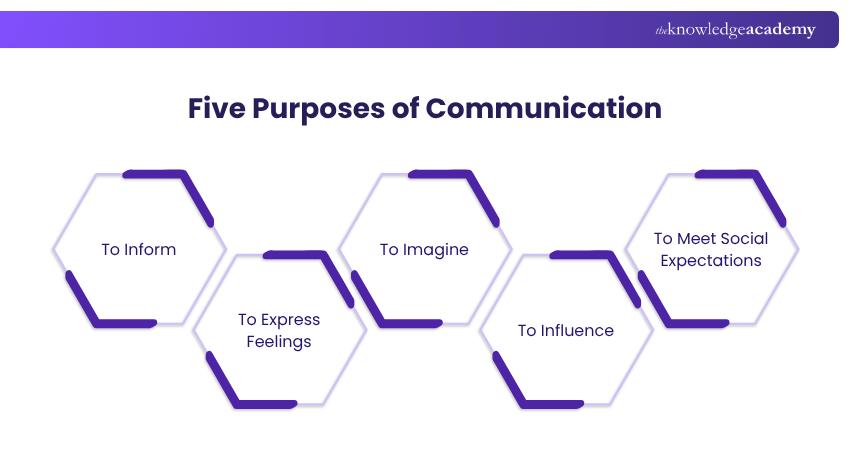
1) To Inform: We share facts or knowledge so others can understand something clearly. For example, a teacher explains a topic. Clear and accurate information helps people make better decisions and stay informed.
2) To Express Feelings: We share our emotions, like happiness or sadness, to connect with others. Expressing how we feel strengthens relationships and helps others understand our emotional state.
3) To Imagine: We use words to create stories, jokes, or ideas for better communication. It helps us be creative. Imagination allows us to explore new possibilities and express unique perspectives.
4) To Influence: We try to change someone’s opinion or encourage action. For example, an ad asks people to buy something. Persuasive communication inspires others to think differently or take meaningful steps.
5) To Meet Social Expectations: We communicate to be polite and friendly, like saying “hello,” “thank you,” or making small talk. These interactions build respect, comfort, and harmony in everyday relationships.
Conclusion
We hope this blog helped you understand Why is Communication Important in building strong connections and achieving success. Communication is the foundation of trust, teamwork, and personal growth. Improving your Communication Skills, you can express ideas clearly and strengthen relationships. Also, open doors to new opportunities in both personal and professional life.
Gain the confidence to present ideas persuasively in any workplace scenario. Join our Communication Skills Course now!
Frequently Asked Questions
What is the Role of Communication in our Lives?

Communication helps us connect, express feelings, and share ideas. It builds trust, clears confusion, and strengthens bonds. We use it to solve problems, make choices, and navigate daily life. From casual chats to serious talks, it shapes how we live, work, and grow together.
What are the Benefits of Communication?
Good Communication brings people closer. It helps build trust, avoid confusion, and solve problems quickly. It improves teamwork, boosts confidence, and encourages better decisions. Whether at home or work, strong Communication makes everything run smoother.

Charlotte Wilson


Soft Skills and Business Training Manager
Charlotte Wilson is an expert in soft skills development, with over 14 years of experience helping individuals and teams improve communication, productivity and emotional intelligence in the workplace. Her training content is focused on enhancing interpersonal effectiveness and fostering positive, collaborative environments across all levels of an organisation.
View Detail

 If you wish to make any changes to your course, please


