


 Top Rated Course

We may not have the course you’re looking for. If you enquire or give us a call on +48 221041849 and speak to our training experts, we may still be able to help with your training requirements.
What is Digital Forensics? Importance, Process and Techniques
The Knowledge Academy 30 December 2025Digital Forensics involves identifying, preserving, and analysing digital evidence to support investigations, ensure integrity, and strengthen legal outcomes. It also helps uncover cyber incidents, trace unauthorised activities, recover deleted data, and present reliable findings that support compliance, security, and judicial processes.
Home
 Resources
IT Security & Data Protection
What is Digital Forensics? Importance, Process and Techniques
Resources
IT Security & Data Protection
What is Digital Forensics? Importance, Process and Techniques
Resources
IT Security & Data Protection
What is Digital Forensics? Importance, Process and Techniques

Training Outcomes Within Your Budget!
We ensure quality, budget-alignment, and timely delivery by our expert instructors.
Table of Contents
If you are intrigued by Sherlock Holmes, you’ll likely find Digital Forensics fascinating. Think of it as the modern, digital version of classic detective work. Digital Forensics gained prominence in the 1980s, a time when computers were still a mystery to many.
In this blog, you will learn about What is Digital Forensics, its importance, applications, techniques, and more. So, wasting no time, let's begin our mysterious and career-empowering journey!
Table of Contents
1) What is Digital Forensics?
2) Why Digital Forensics is Important?
3) Applications of Digital Forensics
4) Key Branches of Digital Forensics
5) Steps in the Digital Forensics Process
6) Common Digital Forensics Techniques
7) What Tools Do Digital Forensic Examiners Use?
8) Conclusion
What is Digital Forensics?
Digital Forensics involves identifying, collecting, and examining electronic evidence from digital devices. It plays a vital role in modern investigations, as most criminal activities leave digital traces. Findings from Digital Forensics are widely used to support legal cases and court proceedings.
Digital Forensics is also essential in investigating cyberattacks and security incidents. It helps organisations detect threats, limit damage, and remove malicious activity. After an incident, digital evidence supports audits, legal reviews, and law enforcement investigations.

Why Digital Forensics is Important?
Digital Forensics extends far beyond computers, impacting society at large. With connected devices generating massive data, digital evidence is crucial in solving crimes and legal issues in both digital and physical environments. Organisations rely on it to investigate cybersecurity and physical security incidents efficiently.
Key uses of Digital Forensics include:
a) Data theft and network breaches: Understanding how breaches occurred and identifying attackers.
b) Online fraud and identity theft: Assessing impact on organisations and their customers.
c) Violent crimes: Capturing digital evidence from phones, vehicles, or nearby devices.
d) White-collar crimes: Collecting evidence for corporate fraud, embezzlement, and extortion investigations.
e) Incident response: Detecting breaches, identifying root causes, eradicating threats, and supporting legal proceedings.
f) Evidence management: Centralising logs, retaining them securely, and preventing tampering or accidental loss.
Applications of Digital Forensics
Digital Forensics plays a vital role in both criminal and private investigations. In criminal cases, it helps collect evidence to support or refute claims, assist intelligence gathering, or identify and prevent further crimes. The standards for handling digital evidence may differ from traditional forensics due to its unique nature.
In civil matters, Digital Forensics often supports electronic discovery (eDiscovery), such as investigating unauthorised network intrusions. Examiners work to determine the scope of the attack and identify perpetrators. However, widespread encryption can make investigations more challenging, as laws compelling disclosure of encryption keys are limited.
Key Branches of Digital Forensics
Given the vast applications of Digital Forensics, the field is divided into five key branches. Although there are six, the sixth one — computer forensics has already been explained in the preceding sections. The other branches are described in detail below:
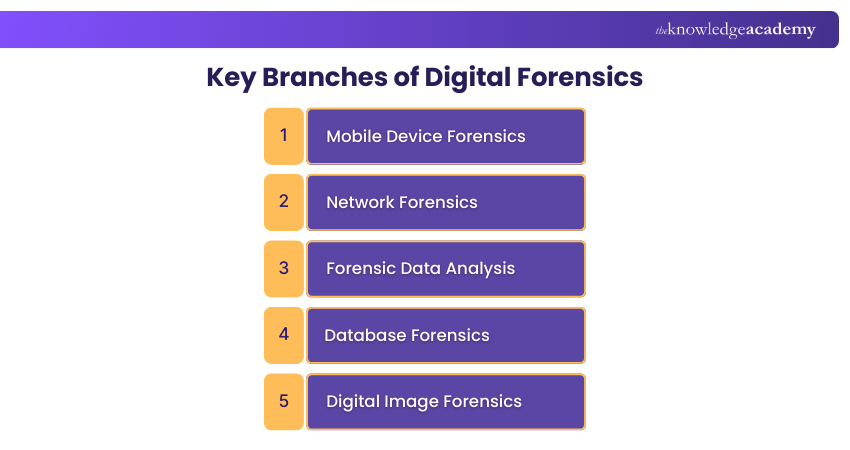
1) Mobile Device Forensics
Unlike computer forensics, mobile device forensics deals with recovering and analysing data along with the evidence from smartphones. This includes deleted messages, call logs, photos, and other relevant information to solve cases.
2) Network Forensics
Network forensics deals with the analysis of clues, data, and evidence from computer networks. It helps to track down cyber-attacks easily by looking at the network traffic and logs.
3) Forensic Data Analysis
Forensic Data Analysis is a broader term that includes studying data evidence from diverse digital sources, such as File Systems, Logs, Cloud Storage, etc.
4) Database Forensics
Data Forensics deals with analysing data and evidence from vast online records and Database Management Systems (DMS). It includes deleting records, understanding data changes, why they have been made, and whether there is any tempering with the primary database.
5) Digital Image Forensics
Digital Image Forensics is examining digital images on platforms like social media to prevent alternations and detect fraudulent images. It can be useful in cases involving fake or misleading visuals.
Kickstart your professional Cyber Security journey with Certified Cyber Security Professional Training – join now!
Steps in the Digital Forensics Process
There are four steps in the Digital Forensics process. These steps are described as follows:
1) Data Collection
This is the first step of Digital Forensics, where the expert investigators gather all the valuable digital evidence. This includes data from computers, phones, servers, or other digital devices. The main goal of this step is to ensure that all relevant data is preserved without alteration.
2) Examination
In this step, the collected data is intricately analysed to understand its contents. Investigators examine the files, identify the hidden or deleted information, and then utilise specialised tools to come to conclusion. The main aim of this step is to find evidence relevant to the case.
3) Analysis
After that, the examined data is analysed deeply through pattern identifications and various specialised techniques. The Digital Forensics expert tries to understand the correlation between evidence and the incident.
4) Reporting
This is the final step, in which these experts prepare reports to show their findings to stakeholders and lawmakers. These visuals examine everything related to their work in the case, like how they analysed the data and what conclusions were drawn.
Stay ahead of cyber threats- sign up for our Cyber Security Awareness Course!
Common Digital Forensics Techniques
There are various techniques in Digital Forensics that are widely used in modern applications. These techniques are described below:
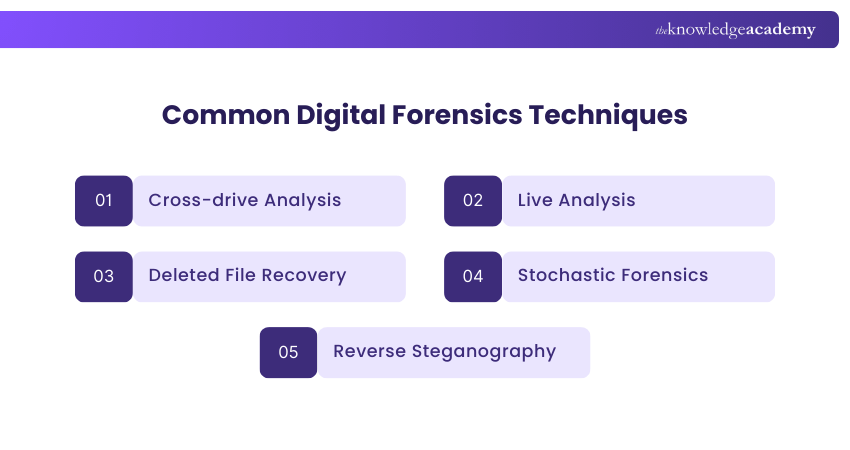
1) Cross-Drive Analysis
Cross-drive analysis involves comparing data from multiple storage devices to find connections or patterns. For example, if investigators have several hard drives from different computers, they look for similar files, metadata, or traces across these drives. This helps understand whether the same user or malicious activity exists on different devices.
2) Live Analysis
Live analysis means examining a computer or device while it is still running. Instead of waiting for the device to be shut down or rebooted, forensic experts analyse it in real-time to capture the current activities, such as open files, running processes, and network connections. This method helps understand what is currently happening on the device.
3) Deleted File Recovery
Deleted file recovery specialises in retrieving previously deleted files but not overwritten ones. When files are deleted, they often remain on the storage device until new data replaces them. Forensic tools can scan the device to recover these deleted files, which might contain valuable evidence.
4) Stochastic Forensics
Stochastic forensics uses statistical methods to analyse and understand digital evidence. Instead of looking at specific data points, this technique uses probabilities and patterns to uncover hidden information or detect anomalies. Understanding large data volumes and identifying key patterns are essential skills for a Forensics Computer Analyst, enabling effective security investigations.
5) Reverse Steganography
Reverse steganography involves uncovering hidden information that has been embedded within other files, like images or audio. For example, someone might hide a secret message inside a picture. Forensic experts use techniques to detect and extract this hidden information, revealing what was concealed.
What Tools Do Digital Forensic Examiners Use?
Digital forensic examiners use a variety of tools to capture, analyse, and preserve digital evidence without altering the original data. Over time, tools have evolved from basic disk copying software to advanced platforms for memory, mobile, and network forensics.
Key tools used in Digital Forensics include:
a) Disk and data capture tools (e.g., IMDUMP, SafeBack)
b) File analysis and viewers (e.g., EnCase, FTK)
c) Registry and internet analysis tools
d) Email and mobile device analysis tools
e) Network forensics tools (e.g., Wireshark)
f) Database forensics tools
g) Live memory forensics tools (e.g., WindowsSCOPE)
h) Specialised OS platforms (e.g., CAINE Linux distribution)
Conclusion
Digital Forensics is an important field that leverages the combination of technology and investigative skills to discover valuable digital evidence. Despite its key benefits, Digital Forensics is prone to numerous challenges, such as evolving technology, elevated costs, concerns about privacy, and data recovery limitations. Understanding its critical processes, applications, and drawbacks will help you better understand What is Digital Forensics and how it contributes to modern investigations and security.
Strengthen security strategies- join today for our Cyber Security Risk Management Training!
Frequently Asked Questions
What are the Legal Considerations of Digital Forensics?

Digital Forensics must comply with legal standards to ensure evidence is admissible in court. This includes proper collection, preservation, and handling of data, respecting privacy laws, obtaining necessary warrants, and preventing evidence tampering or unauthorised access.
What Degrees and Certifications Are Useful for Digital Forensics?
The degrees and certifications required in Digital Forensics are Degrees in Computer Science or Cyber Security and Certified Computer Forensics Examiner (CCFE) and Certified Information Systems Security Professional (CISSP).
What are the Other Resources and Offers Provided by The Knowledge Academy?
The Knowledge Academy takes global learning to new heights, offering over 3,000 online courses across 490+ locations in 190+ countries. This expansive reach ensures accessibility and convenience for learners worldwide.
Alongside our diverse Online Course Catalogue, encompassing 19 major categories, we go the extra mile by providing a plethora of free educational Online Resources like Blogs, eBooks, Interview Questions and Videos. Tailoring learning experiences further, professionals can unlock greater value through a wide range of special discounts, seasonal deals, and Exclusive Offers.
What is The Knowledge Pass, and How Does it Work?
The Knowledge Academy’s Knowledge Pass, a prepaid voucher, adds another layer of flexibility, allowing course bookings over a 12-month period. Join us on a journey where education knows no bounds.
What are the Related Courses and Blogs Provided by The Knowledge Academy?
The Knowledge Academy offers various Cyber Security Training, including the Digital Forensics Training, Certified Cyber Security Professional Training, and Computer Forensics Foundation Training. These courses cater to different skill levels, providing comprehensive insights into Whaling Attacks.
Our IT Security & Data Protection Blogs cover a range of topics related to Cyber Security and data privacy, offering valuable resources, best practices, and industry insights. Whether you are a beginner or looking to advance your Cyber Security skills, The Knowledge Academy's diverse courses and informative blogs have got you covered.

The Knowledge Academy


Global Training Provider
The Knowledge Academy is a world-leading provider of professional training courses, offering globally recognised qualifications across a wide range of subjects. With expert trainers, up-to-date course material, and flexible learning options, we aim to empower professionals and organisations to achieve their goals through continuous learning.

Upcoming IT Security & Data Protection Resources Batches & Dates
Date
 Digital Forensics Training
Digital Forensics Training
Fri 17th Jul 2026
Digital Forensics Training
Fri 23rd Oct 2026

 If you wish to make any changes to your course, please


