


 Top Rated Course

We may not have the course you’re looking for. If you enquire or give us a call on +48 221041849 and speak to our training experts, we may still be able to help with your training requirements.
Employee Value Proposition for Attracting and Retaining Talent
Amelia Williams 17 April 2026A strong Employee Value Proposition helps businesses attract and keep employees by offering pay, benefits, and career growth. It also improves job satisfaction, builds a positive workplace, and strengthens a company’s reputation. A strong EVP boosts engagement, increasing productivity and ensuring long-term success.

Training Outcomes Within Your Budget!
We ensure quality, budget-alignment, and timely delivery by our expert instructors.
Table of Contents

Imagine working at a company where employees feel valued and excited to be part of the team. They stay longer, do their best work, and speak positively about the company. What makes this possible? It’s not just good leadership or high salaries—it’s a strong Employee Value Proposition (EVP).
An EVP is what a company offers employees for their skills. A well-crafted EVP attracts top talent and helps businesses grow. In this blog, we will discuss what an Employee Value Proposition is, why it matters, and how companies can build one to create a great workplace and stay ahead in the job market.
Table of Contents
1) What is an Employee Value Proposition (EVP)?
2) Importance of Employee Value Proposition (EVP)
3) Essential Components of an Employee Value Proposition
4) How to Create an Employee Value Proposition?
5) Why a Strong EVP is Crucial for Business Success?
6) How to Enhance Your Employee Value Proposition?
7) EVP vs Employer Brand: Key Differences Explained
8) Conclusion
What is an Employee Value Proposition (EVP)?
An Employee Value Proposition (EVP) is what a company offers its employees in return for their skills, work, and commitment. It includes salary, benefits, career growth, work environment, and company culture. A strong EVP helps businesses attract and keep good employees by showing why working there is a great choice.
A good EVP gives employees more than just a paycheck. It includes things like flexible working hours, learning opportunities, and a positive work atmosphere. For example, a tech company might offer remote work, free training, and a friendly team culture. When employees feel valued, they are happier and more loyal to the company.

Importance of Employee Value Proposition (EVP)
Here are the benefits of it:

a) A good EVP makes job seekers choose your company over others
b) Employees stay longer when they feel valued
c) A positive work environment leads to happier employees
d) Motivated employees work harder and deliver better results
e) A great EVP enhances your company’s reputation as a great place to work
f) Fewer employees leave, so companies spend less on hiring and training
g) Happy and engaged employees help businesses succeed
Essential Components of an Employee Value Proposition
A strong EVP includes key elements that make employees feel valued. Here are some important components:
Stability
a) Job security gives employees confidence in their future
b) A stable company helps employees plan long-term careers
c) Reliable income and benefits reduce stress and uncertainty
d) Employees feel safe knowing their jobs are not at risk
Location
a) A good workplace location makes commuting easier
b) Remote or hybrid options give employees more flexibility
c) A safe and accessible office improves work experience
d) Proximity to essential services improves employee convenience
Work-life Balance
a) Flexible work hours help employees manage personal time
b) Remote work options reduce travel stress
c) Encouraging breaks and vacations prevents burnout
d) A healthy balance makes employees more productive
Compensation
a) Fair salaries ensure employees feel valued for their work
b) Bonuses and incentives reward extra effort
c) Health and retirement benefits provide financial security
d) Transparent pay policies build employee trust
Respect
a) Employees feel valued when their ideas are heard
b) A respectful workplace promotes teamwork and trust
c) Fair treatment ensures everyone is given equal opportunities
d) Supportive leadership encourages personal and career growth
Learn about workforce planning with our Workforce Resource Planning Training – Join today!
How to Create an Employee Value Proposition?
Here are the ways to develop an EVP:
1) Evaluate Your Current Offerings
Before creating an Employee Value Proposition, check what you already provide to employees. Look at salary, benefits, work environment, and career growth opportunities. Compare your offerings with competitors to see if you are providing enough value. Identify areas where improvements can be made to attract and keep employees.
a) Review salaries and perks you offer
b) Compare with what other companies provide
c) Find gaps where employees may want more support
2) Gather Employee Insights
Ask employees what they value most about working at your company. Use surveys, meetings, or one-on-one talks to understand their needs and expectations. Knowing what makes employees happy helps shape a better EVP. Listening to them also builds trust and Employee Engagement.
a) Conduct surveys to understand employee needs
b) Hold feedback sessions to hear their thoughts
c) Encourage open discussions about workplace improvements
3) Analyse Feedback From Employees
After gathering insights, look for common themes in employee responses. Identify what they like and what needs improvement. Use this information to shape a value proposition that matches their needs. This ensures your EVP is based on real employee experiences, not just assumptions.
a) Identify key concerns or suggestions from employees
b) Find patterns in feedback to prioritise improvements
c) Use feedback to make meaningful changes
4) Formulate Your Employee Value Proposition
Create a clear message that explains why employees should work for your company. Highlight benefits like career growth, work-life balance, and a positive work environment. Make sure your EVP is easy to understand and reflects the company’s culture. It should show what makes your company different from others.
a) Define key benefits that employees receive
b) Keep the message simple and direct
c) Make sure it aligns with company values
5) Secure Internal Support
Get leadership and HR teams to support the EVP. Managers and executives must believe in and promote it. When leadership supports EVP, employees are more likely to trust and engage with it. Strong internal support helps ensure EVP is part of the company culture.
a) Discuss the EVP with senior management
b) Train managers to communicate with the EVP effectively
c) Ensure HR teams include EVP in hiring and onboarding
6) Promote Your EVP
Share your EVP with employees and potential job seekers. Use company websites, social media, and job postings to highlight what you offer. Make sure employees understand and experience the EVP daily. The better you promote it, the more effective it becomes.
a) Display EVP on career pages and job postings
b) Use social media to showcase company culture
c) Communicate EVP in interviews and onboarding
7) Manage, Monitor and Review Your Employee Value Proposition
An EVP should evolve as employee needs and company goals change. Regularly review feedback to see if adjustments are needed. Keeping your EVP updated ensures employees stay engaged and feel valued. A strong EVP improves employee satisfaction and company success.
a) Collect feedback on EVP effectiveness
b) Update benefits and policies as needed
c) Keep EVP relevant to changing employee expectations
Learn to improve organisational performance with our Talent Management Training – Join today!
Why a Strong EVP is Crucial for Business Success?
EVP helps businesses attract and motivate employees. Here’s why it matters:

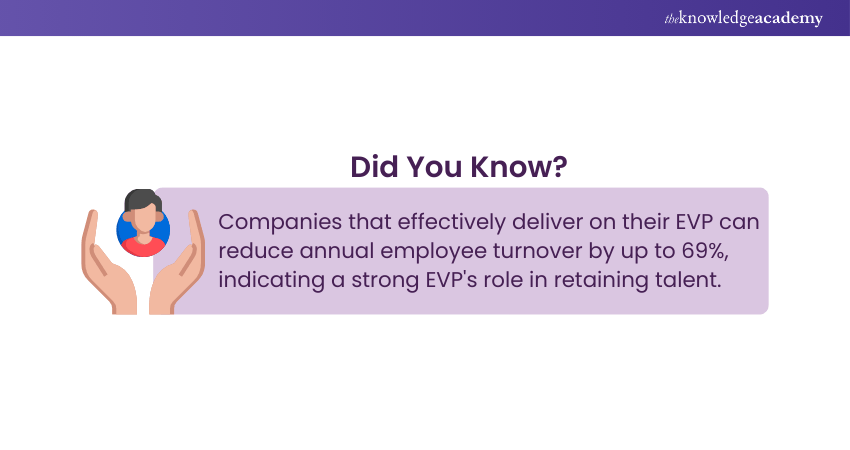
1) Reduced Employee Turnover
a) Employees stay longer when they feel supported
b) A good work environment reduces stress and job dissatisfaction
c) Lower turnover means less time and money spent on hiring new staff
2) Enhanced Employee Engagement
a) Happy employees are more motivated and productive
b) They feel connected to the company’s goals and values
c) Engaged employees bring new ideas and work with passion
3) Increased Performance and Profitability
a) Employees work better when they feel valued and supported
b) Better teamwork leads to higher company success
c) A strong EVP helps businesses grow and stay competitive
4) Improved Cost Savings
a) Hiring and training new employees costs money
b) A strong EVP reduces the need for constant hiring
c) Keeping employees happy saves businesses time and resources
5) Greater Transparency
a) A clear EVP shows employees what they can expect from the company
b) It builds trust between employees and management
c) Open communication makes the workplace better for everyone
How to Enhance Your Employee Value Proposition?
Some of the ways to improve your EVP include:
1) Identify Your Company’s Unique Qualities
Every company has something special that makes it a great place to work. Find out what sets your company apart, like growth opportunities, company culture, or unique benefits. Highlight these qualities to attract and keep the best employees.
a) Look at what makes your company different from others
b) Ask employees what they like most about working there
c) Focus on strengths like career growth and benefits
2) Understand Employee Needs
To create a strong Employee Value Proposition, you must know what employees want. Gather feedback through surveys, meetings, or informal chats. Understanding their needs helps you offer better benefits and a better work environment.
a) Conduct surveys to learn what employees value most
b) Listen to employee issues and find ways to improve
c) Offer benefits that match their expectations and needs
3) Make Your EVP Tangible and Inclusive
A good EVP should offer real benefits, not just promises. Make sure all employees, no matter their role, experience the benefits of your EVP. It should cover different needs like salary, work-life balance, and career development.
a) Provide clear and visible perks like flexible hours or learning programmes
b) Ensure all employees, not just a few, benefit from EVP
c) Offer choices so employees can pick benefits that suit them
4) Communicate Your EVP Effectively
An EVP is only useful if employees know about it. Share it through job postings, company meetings, and internal newsletters. Make sure new employees learn about it during onboarding.
a) Use websites, social media, and emails to promote EVP
b) Train managers to explain EVP to their teams
c) Highlight EVP during hiring to attract top talent
5) Be Authentic
Your EVP should reflect what your company truly offers. Do not make false promises—employees will notice if the reality is different. A real and honest EVP builds trust and keeps employees happy.
a) Only include benefits that employees actually receive
b) Stay true to your company’s culture and values
c) Make sure leaders and managers follow what EVP promises
6) Measure the Success of Your EVP
A strong EVP should have a positive impact on employees and the company. Regularly check if it is working by looking at employee feedback and retention rates. If something isn’t working, make changes to improve it.
a) Use surveys to track employee satisfaction and engagement
b) Check how many employees stay long-term
c) Adjust EVP based on what employees say and need
Learn to design employee training with our Employee Training and Development Course – Register today!
EVP vs Employer Brand: Key Differences Explained
Here are the key differences:

Definition and Purpose
An Employee Value Proposition is what a company offers employees, including salary, benefits, career growth, and work environment. On the other hand, an Employer Brand is how the company is seen by employees and job seekers, shaping its reputation as a workplace.
Focus and Impact
EVP focuses on keeping employees happy and engaged by offering real benefits. In contrast, Employer Branding focuses on attracting new talent by promoting the company’s positive image to the public.
Internal vs External Approach
EVP is an internal strategy that improves employee satisfaction and retention. On the other hand, Employer Branding is an external strategy that markets the company as a great place to work.
Long-term Influence
A strong EVP helps employees stay longer and feel valued, improving company culture. In contrast, a strong Employer Brand helps attract new employees.
Conclusion
We hope this blog helped you understand the Employee Value Proposition and why it matters. A strong EVP makes employees feel valued, improves job satisfaction, and helps businesses grow. It attracts the right people and reduces turnover. Companies that focus on EVP create a better workplace and stay competitive. Keep improving your EVP to support your employees and business success.
Learn to enhance employee relationships with our Employee Relations Training– Join today!
Frequently Asked Questions
What is Nike's Employee Value Proposition?

Nike's Employee Value Proposition focuses on innovation, teamwork, and personal growth. It offers employees a creative work environment and benefits that support a healthy work-life balance.
What is the KPI for EVP?
A Key Performance Indicator (KPI) for EVP measures how well a company’s Employee Value Proposition works. Common KPIs include employee satisfaction, retention rates, and the number of job applicants attracted to the company.
What are the Other Resources and Offers Provided by The Knowledge Academy?
The Knowledge Academy takes global learning to new heights, offering over 3,000+ online courses across 490+ locations in 190+ countries. This expansive reach ensures accessibility and convenience for learners worldwide.
Alongside our diverse Online Course Catalogue, encompassing 19 major categories, we go the extra mile by providing a plethora of free educational Online Resources like Blogs, eBooks, Interview Questions and Videos. Tailoring learning experiences further, professionals can unlock greater value through a wide range of special discounts, seasonal deals, and Exclusive Offers.
What is The Knowledge Pass, and How Does it Work?
The Knowledge Academy’s Knowledge Pass, a prepaid voucher, adds another layer of flexibility, allowing course bookings over a 12-month period. Join us on a journey where education knows no bounds.
What are Related Courses and Blogs Provided by The Knowledge Academy?
The Knowledge Academy offers various People Management Courses, including the Workforce Resource Planning Training, Talent Management Training and Talent Acquisition Training. These courses cater to different skill levels, providing comprehensive insights into Talent Acquisition Strategy.
Our HR Resources Blogs cover a range of topics related to Employee Value Proposition, offering valuable resources, best practices, and industry insights. Whether you are a beginner or looking to advance your Employee Value Proposition knowledge, The Knowledge Academy's diverse courses and informative blogs have got you covered.

Amelia Williams


Senior Human Resources Consultant and Learning Specialist
Amelia Williams is a highly respected HR professional with over 12 years of experience in human capital management, talent development and workplace policy. She has worked across sectors including education, healthcare and corporate services, focusing on aligning people strategies with organisational goals. Amelia’s writing blends current HR trends with practical solutions for modern workplace challenges.

Upcoming HR Resources – Learn about Human Resources Batches & Dates
Date
 Talent Acquisition Training
Talent Acquisition Training
Fri 28th Aug 2026
Talent Acquisition Training
Fri 27th Nov 2026

 If you wish to make any changes to your course, please


