


 Top Rated Course

We may not have the course you’re looking for. If you enquire or give us a call on +48 221041849 and speak to our training experts, we may still be able to help with your training requirements.
What is Customer Experience Automation? All You Need to Know
The Knowledge Academy 07 April 2026Customer experience automation uses AI and workflows to streamline interactions, cut manual tasks, reduce costs, and improve CSAT with faster support. It enables personalised communication across channels to improve engagement. It also uses real-time data to deliver consistent experiences throughout the customer journey.

Training Outcomes Within Your Budget!
We ensure quality, budget-alignment, and timely delivery by our expert instructors.
Table of Contents
Businesses today are evolving fast, and providing exceptional customer experiences has become more vital than ever. The growing demand for efficiency and personalisation in consumer interactions has led to the rise of Customer Experience Automation.
This transformative technology allows companies to simplify operations, deliver seamless assistance, and stay ahead of their competitors. In this blog, we’ll explore how CX Automation reshapes companies' operations, fetching advantages like increased efficiency, improved customer engagement, and growth.
Table of Contents
1) What is Customer Experience Automation?
2) Why Do We Need CX Automation?
3) How Does Customer Experience Automation Work?
4) Ways to Use CX Automation
5) Example of Customer Experience Automation
6) Benefits of Customer Experience Automation
7) CX Automation vs Marketing Automation
8) Challenges of Customer Experience Automation
9) Conclusion
What is Customer Experience Automation?
Customer Experience Automation (CX Automation) uses technologies such as Artificial Intelligence and Machine Learning to improve and simplify interactions between businesses and customers. It helps organisations deliver faster, more personalised, and consistent experiences across different touchpoints.
This approach includes activities such as personalised email campaigns, automated appointment scheduling and reminders, easy-to-use feedback surveys, and quick responses to customer queries through intelligent systems. These processes reduce manual effort while improving customer satisfaction.
Common tools used in CX Automation include AI-powered chatbots for instant support, automated email platforms for timely communication, and self-service portals that allow customers to find solutions on their own.

Why Do We Need CX Automation?
Businesses today must embrace Customer Experience Automation to meet the increasing demand for fast, personalised, and seamless interactions. Here’s why:
a) Efficiency and Accuracy: Automation handles repetitive tasks swiftly and accurately, minimising human error and reducing operational costs.
b) 24/7 Availability: With automation, companies can provide instant responses around the clock, enhancing customer satisfaction and loyalty.
c) Scalability: Automation allows businesses to effortlessly manage a growing number of customer interactions without compromising on quality.
How Does Customer Experience Automation Work?
Customer Experience Automation works through a series of connected steps that use data, AI, and automation to improve customer interactions.
1) Data Collection: Gathers customer data from emails, chats, websites, and other touchpoints to create a complete customer profile.
2) Data Analysis: Uses AI to understand customer behaviour, preferences, and intent based on collected data.
3) Automated Responses: Handles common queries through chatbots, automated emails, or messaging systems for quick support.
4) Smart Routing: Directs complex issues to the right team or agent, ensuring faster and accurate resolution.
5) Workflow Automation: Automates repetitive tasks such as follow-ups, ticket updates, and notifications.
6) Personalisation: Delivers tailored experiences based on customer history and behaviour.
7) Continuous Improvement: Tracks performance, gathers feedback, and refines processes to enhance customer experience over time.
Ways to Use CX Automation
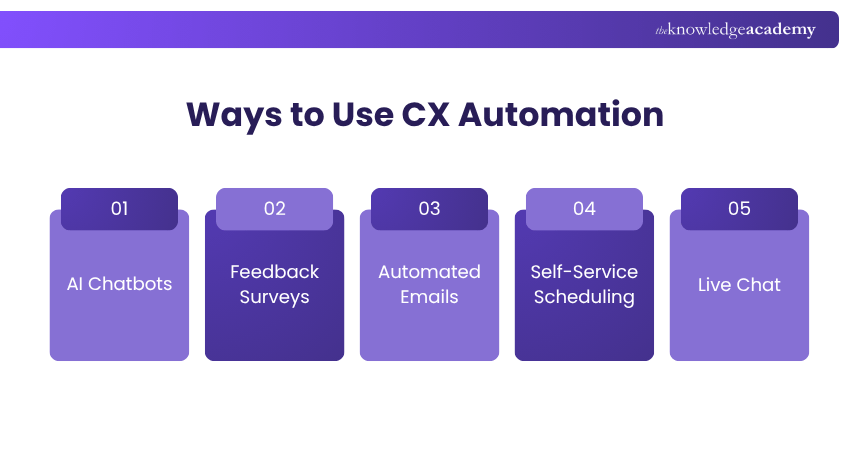
Implementing Customer Experience Automation can revolutionise how businesses interact with customers, offering faster and more personalized services. Here are some of the ways companies can use CX Automation to enhance customer satisfaction and streamline operations:
1) AI Chatbots
AI chatbots are automated tools that use Artificial Intelligence to handle customer queries instantly. They can answer common questions, provide support 24/7, and deliver personalised responses, helping businesses improve efficiency and customer satisfaction.
2) Feedback Surveys
Feedback surveys are used to collect customer opinions and insights in a structured way. Automated surveys make it easy to gather responses after interactions, helping businesses understand customer needs and improve their services continuously.
3) Automated Emails
Automated emails allow businesses to send timely and relevant messages based on customer actions. These include welcome emails, reminders, and follow-ups, ensuring consistent communication without manual effort.
4) Self-Service Scheduling
Self-service scheduling enables customers to book appointments or services on their own without needing direct assistance. This automation reduces waiting time and improves convenience while freeing up staff resources.
5) Live Chat
Live chat allows real-time communication between customers and support teams through websites or apps. It provides quick assistance, improves engagement, and helps resolve issues faster, enhancing the overall customer experience.
Master the art of handling tough situations—join our Dealing with Difficult People course today!
Example of Customer Experience Automation
Netflix's recommendation engine serves as an exemplary model of Customer Experience Automation. Through an in-depth analysis of user choices, viewing habits, and interactions, Netflix uses cutting-edge technology to automatically generate personalised content recommendations for each user.
This refined and highly efficient technique allows Netflix to provide everyone with a custom viewing experience. It does so by seamlessly delivering personalised content, catering to each user's unique preferences and enhancing their satisfaction, fostering high engagement and customer retention.
Benefits of Customer Experience Automation
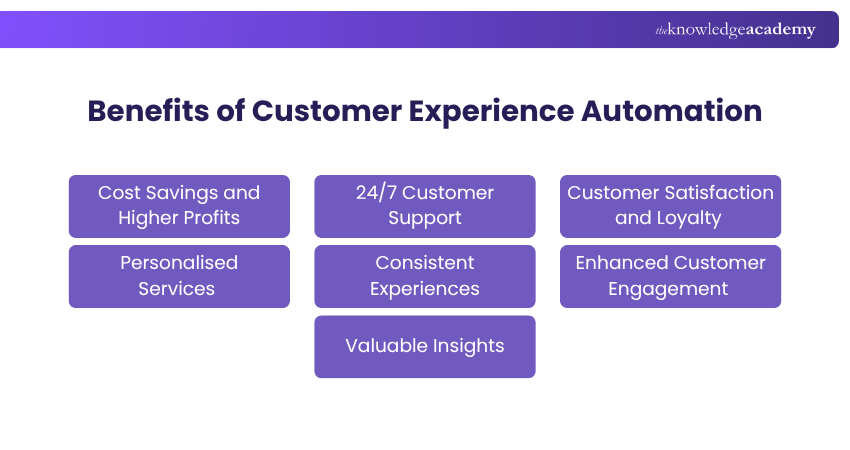
Customer Experience Automation offers numerous advantages, from improving operational efficiency to delivering personalised customer interactions. Let’s explore the key benefits that automation can bring to both businesses and their customers.
1) Cost Savings and Higher Profits
Automating repetitious chores reduces the need for additional staff, leading to significant cost savings. These savings, along with enhanced efficiency and improved customer satisfaction, contribute to higher profits. Additionally, businesses can scale their operations more effectively, managing customer interactions without escalating expenses, which can positively impact the Salary of a Customer Experience Manager as companies recognize the value of their expertise.
2) 24/7 Customer Support
Customer Experience Automation enables businesses to provide support at any time through chatbots and automated systems. These tools handle common queries instantly, reducing wait times and ensuring customers receive quick and consistent assistance.
3) Customer Satisfaction and Loyalty
Automation improves the overall customer journey by delivering timely and seamless interactions. When customers receive quick responses and personalised experiences, they are more likely to stay satisfied and build long-term loyalty with the brand.
4) Personalised Services
CX Automation uses customer data and insights to deliver tailored experiences based on individual preferences. This level of personalisation helps businesses meet customer expectations more effectively and enhances engagement across all touchpoints.
5) Consistent Experiences
Automation ensures consistency across all customer touchpoints. Whether through automated emails, chatbots, or surveys, businesses can deliver the same high-quality experience to every customer, reducing variability and maintaining brand standards.
6) Enhanced Customer Engagement
Automated tools such as email marketing and AI chatbots ensure customers are always engaged. Automation keeps customers interested and connected with the brand by providing timely responses and personalised communication, leading to higher retention rates.
7) Valuable Insights
Automated feedback tools and analytics provide businesses with valuable insights into customer behaviour and preferences. These insights help companies refine their strategies, tailor offerings, and make data-driven decisions that improve customer experience.
Boost your focus and productivity—join our Attention Management Training today!
CX Automation vs Marketing Automation
Customer Experience (CX) Automation and Marketing Automation are often used together, but they serve different purposes. Marketing Automation focuses mainly on promoting products, sending campaigns, and moving customers through the sales funnel using emails, ads, and targeted messaging.
In contrast, CX Automation looks at the entire customer journey, including support, service, and post-purchase interactions. Its goal is to create a smooth, consistent, and personalised experience at every stage of the relationship.
Another key difference is in outcomes. Marketing Automation is measured by engagement metrics such as clicks, leads, and conversions, while CX Automation focuses on customer satisfaction, issue resolution, and overall experience quality.
In simple terms, Marketing Automation helps attract and convert customers, whereas CX Automation ensures they stay satisfied and build long-term relationships with the brand.
Challenges of Customer Experience Automation
Customer Experience Automation offers many benefits, but organisations also face several challenges when implementing it effectively:
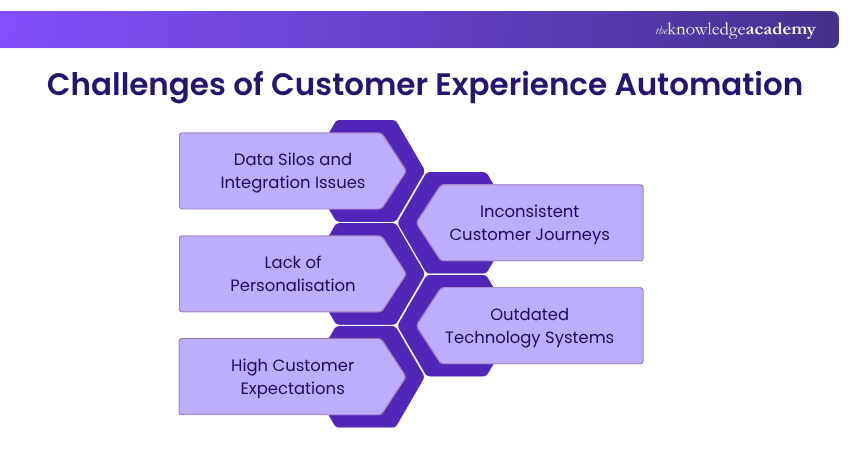
1) Data Silos and Integration Issues: Customer data is often spread across different systems, making it difficult to create a unified view of the customer.
2) Inconsistent Customer Journeys: Different departments managing separate touchpoints can lead to disconnected and uneven customer experiences.
3) Lack of Personalisation: Without accurate data and proper AI training, automated interactions can feel generic and fail to meet customer expectations.
4) Outdated Technology Systems: Older systems may not support automation or real-time responses, slowing down service delivery and reducing efficiency.
5) High Customer Expectations: Customers expect fast, seamless, and personalised experiences, which can be challenging to consistently deliver across all channels.
These challenges highlight the importance of strong data management, modern technology, and a customer-focused strategy when implementing CX Automation.
Conclusion
In a fast-paced, digital-first world, Customer Experience Automation is no longer a luxury; it’s a necessity. Companies can facilitate operations, reduce costs, and create impressive, consistent customer experiences by leveraging automation means like AI chatbots, self-service options, and personalised emails. The future of consumer service lies in automation, and firms that adopt it will undoubtedly prosper, offering outstanding services that fulfil the evolving demands of today's consumers. This also speaks to the growing Difference between CX and UX, as automation can help improve both customer experiences and user interactions through personalized and efficient tools.
Build skills for independent career success with Personal Development Courses now!
Frequently Asked Questions
What tools are commonly used for Customer Experience Automation?

Common tools used for Customer Experience Automation include AI-powered chatbots for instant support, automated email platforms for personalised communication, and CRM systems to manage customer data. Businesses also use self-service portals, live chat tools, and analytics platforms to track interactions and improve overall customer experience.
How to build a CX culture?
To build a strong CX culture, prioritise customer-centric values throughout the organisation by training employees, fostering open communication, and integrating customer feedback into decision-making. Empower teams to focus on delivering consistent, personalised experiences and align goals to enhance customer satisfaction and loyalty.
What are the Other Resources and Offers Provided by The Knowledge Academy?
The Knowledge Academy takes global learning to new heights, offering over 3,000+ online courses across 490+ locations in 190+ countries. This expansive reach ensures accessibility and convenience for learners worldwide.
Alongside our diverse Online Course Catalogue, encompassing 17 major categories, we go the extra mile by providing a plethora of free educational Online Resources like Blogs, eBooks, Interview Questions and Videos. Tailoring learning experiences further, professionals can unlock greater value through a wide range of special discounts, seasonal deals, and Exclusive Offers.
What is The Knowledge Pass, and How Does it Work?
The Knowledge Academy’s Knowledge Pass, a prepaid voucher, adds another layer of flexibility, allowing course bookings over a 12-month period. Join us on a journey where education knows no bounds.
What are the Related Courses and Blogs Provided by The Knowledge Academy?
The Knowledge Academy offers various Personal Development Courses, including the Customer Experience Training, Time Management Training, and Dealing with Difficult People Course. These courses cater to different skill levels, providing comprehensive insights into How to Become Self-Employed.
Our Business Skills Blogs cover a range of topics related to Personal Development, offering valuable resources, best practices, and industry insights. Whether you are a beginner or looking to advance your Business skills, The Knowledge Academy's diverse courses and informative blogs have got you covered.

The Knowledge Academy


Global Training Provider
The Knowledge Academy is a world-leading provider of professional training courses, offering globally recognised qualifications across a wide range of subjects. With expert trainers, up-to-date course material, and flexible learning options, we aim to empower professionals and organisations to achieve their goals through continuous learning.

Upcoming Business Skills Resources Batches & Dates
Date
 Customer Experience Training
Customer Experience Training
Fri 24th Jul 2026
Customer Experience Training
Fri 16th Oct 2026

 If you wish to make any changes to your course, please


