


 Top Rated Course

We may not have the course you’re looking for. If you enquire or give us a call on +47 80010068 and speak to our training experts, we may still be able to help with your training requirements.
Zero-based Budgeting: How it Works and Why it Matters Today
The Knowledge Academy 13 February 2026Zero-based Budgeting allocates every dollar to a clear purpose, planning expenses and savings so income minus spending balances to zero. It promotes mindful spending and financial control over money for individuals and organisations alike. Budgets are reviewed and adjusted regularly for accuracy, changing goals, and financial priorities.

Training Outcomes Within Your Budget!
We ensure quality, budget-alignment, and timely delivery by our expert instructors.
Table of Contents
Zero-based Budgeting establishes an intentional method for conducting financial planning activities. The system promotes spending that is connected to specific objectives instead of making standard purchases.
The Zero-based Budgeting system requires all decisions to begin with a complete understanding of their objectives. As you read on, you’ll discover how this method works and why it has gained attention for improving financial discipline.
Table of Contents
1) What is Zero-based Budgeting?
2) Steps to Create a Zero-based Budget
3) Key Principles of Zero-based Budgeting
4) Zero-based Budgeting vs Other Budgeting Methods
5) Advantages and Disadvantages of Zero-based Budgeting
6) Best Tools for Zero-based Budgeting
7) What are Sinking Funds in Zero-based Budgeting?
8) Conclusion
What is Zero-based Budgeting?
Zero-based Budgeting (ZBB) refers to the financial planning method where each new budget period starts from a "zero base." This means every expense must be justified and approved rather than simply adjusting previous budgets. All expenditures are analysed, and only those necessary for the company's operations and goals are approved. This approach ensures resources are allocated efficiently, promoting cost-effective decision-making and eliminating unnecessary expenses.

Steps to Create a Zero-based Budget
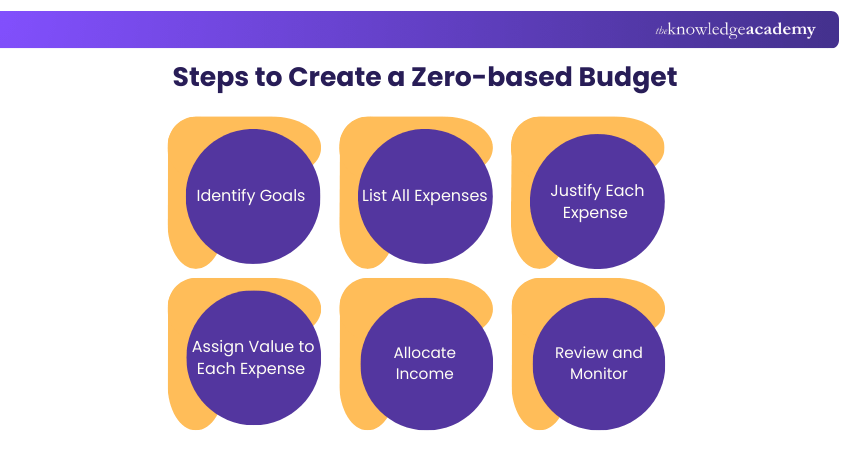
Creating a Zero-based Budget helps you manage your money better by making sure every expense is needed. Follow these steps to make a budget that matches your financial goals and controls your spending.
1) Identify Goals
Establish specific financial objectives of the budget period. This aids in realising what you aim at accomplishing and in making your budgeting choices. Goals ensure that you are focused and motivated.
2) List All Expenses
Make a list of the spending you can write down all the anticipated monthly costs, including necessities and nonnecessities. This is a move that provides a proper understanding of your finances, and this forms the foundation of developing an accurate and realistic budget.
3) Justify Each Expense
Consider the cost of every expense to make sure that it is justifiable and corresponds with your financial objectives. This is useful in eliminating any redundant expenses and justification of costs, which keeps your budget lean.
4) Assign Value to Each Expense
Assign every justifiable cost a particular cost corresponding to the amount you are intending to spend. This is to make sure that your budget is accurate and to avoid overspending.
5) Allocate Income
Use your overall income to pay these bills. Ensure that your money is not wasted. It assists you in spending your money in a better way and guarantees financial stability.
6) Review and Monitor
Review your budget and expenditure. Make sure that they are aligned with your plan and make amendments where necessary to be on track. The constant observation allows adjusting to the changes.
Key Principles of Zero-based Budgeting
To lay out what Zero-based Budgeting means, let us break down the core fundamentals of the approach.
a) Starting From Zero: Every budget cycle begins from a clean slate, with no automatic carryover of past expenses. Each cost requires a new evaluation process, which determines its ongoing necessity and relevance to current operations.
b) Justifying Every Expense: All expenses require complete documentation, which needs to receive official approval before funds can be distributed.
c) Aligning Budget With Goals: Budgets directly support existing organisational objectives and current priorities of the organisation. The system guarantees that essential resources support vital tasks while preventing their use for obsolete goals.
Learn how to adapt to changes in working routine or environment with our Stress Management Course!
Zero-based Budgeting vs Other Budgeting Methods
Let's see below how Zero-based Budgeting compares with other common budgeting approaches and provides distinctions.
Zero-based Budgeting vs Traditional Budgeting
Zero-based Budgeting requires organisations to develop complete expense plans from the beginning of each budget period. Traditional budgeting builds on previous budgets, making incremental adjustments that may carry forward outdated or unnecessary expenses.
Zero-based Budgeting vs Incremental Budgeting
Zero-based Budgeting begins with a fresh start for each budgeting period because all budget expenses need verification before they can be added to the budget. Incremental budgeting uses last period’s budget as the base and adjusts it up or down, which can perpetuate inefficiencies and carry forward outdated costs.
Advantages and Disadvantages of Zero-based Budgeting
Understanding both the benefits and limitations of Zero-based Budgeting helps you decide whether this approach is the right fit for your financial or organisational needs.
Advantages of Zero-based Budgeting
Zero-based Budgeting offers several key advantages for organisations:
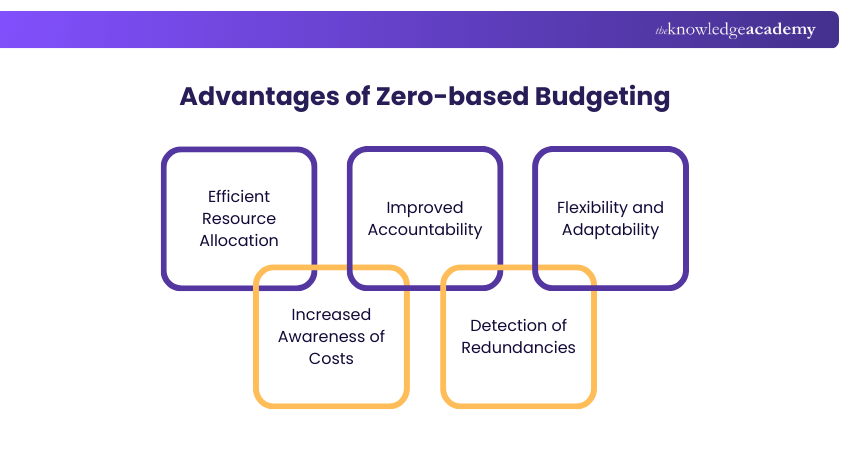
a) Efficient Resource Allocation: Zero-based Budgeting ensures that all spending is necessary by starting from zero and justifying every expense. This helps avoid unnecessary spending. It also makes sure that resources are directed to the areas that need them most, matching current goals.
b) Improved Accountability: Managers must justify all budget requests under Zero-based Budgeting, which increases accountability. This transparency helps ensure that all spending is necessary and justified. It also encourages responsible financial management.
c) Flexibility and Adaptability: It allows organisations to adapt to changes. By reallocating resources to the most critical areas, companies can respond more effectively to new opportunities or challenges. This flexibility supports better decision-making.
d) Increased Awareness of Costs: Regularly reviewing and justifying all expenses heightens cost awareness across the organisation. This awareness encourages everyone to make more prudent financial decisions. It fosters a culture of cost-consciousness.
e) Detection of Redundancies: Zero-based Budgeting helps identify and eliminate redundant or non-value-adding activities. By scrutinising every expense, organisations can streamline operations and improve efficiency. This leads to more effective use of resources.
Refine your planning abilities with our Strategic Thinking and Planning Course – Join today!
Disadvantages of Zero-based Budgeting
While Zero-based Budgeting offers many benefits, it also comes with several significant drawbacks. Let's find out:
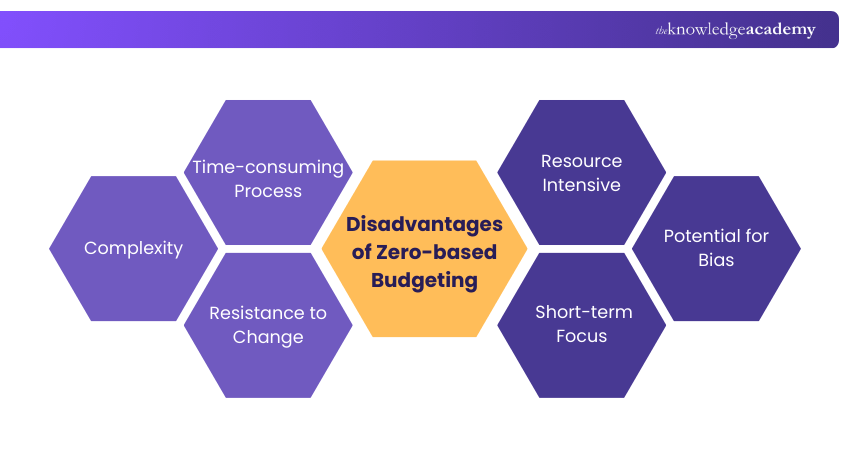
a) Time-consuming Process: Zero-based Budgeting requires a detailed review of all expenses from scratch. This can be very time-consuming, as every cost needs thorough justification. It requires significant time and effort from managers and employees.
b) Complexity: The process can be complex, involving a lot of data collection and analysis. It requires a deep understanding of all business activities. This complexity can be overwhelming for organisations, especially those with limited resources.
c) Resistance to Change: Employees and managers may resist the Zero-based Budgeting process due to its demanding nature. A shift in mindset from traditional budgeting methods is needed. This resistance can hinder successful implementation and create friction within the organisation.
d) Resource Intensive: Implementing Zero-based Budgeting can require additional resources, such as training for staff and investment in budgeting tools. This can be a burden, particularly for small organisations. The increased resource demands might outweigh the benefits for some companies.
e) Short-term Focus: It may lead to a focus on short-term gains rather than long-term goals. Managers might prioritise immediate cost savings over investments that provide long-term value. This short-term focus can impact future growth and development.
f) Potential for Bias: The process relies heavily on the judgment of managers who prepare the budget proposals. This can introduce bias, as managers might favour their departments or projects. It can lead to imbalanced resource allocation if not managed carefully.
Best Tools for Zero-based Budgeting
The following tools help Zero-based Budgeting processes because they provide better visibility and control and accurate results throughout the planning and expense management process.
a) Anaplan: A powerful planning and performance platform that supports complex budgeting and scenario modelling across large organisations.
b) Prophix: Best for integrated financial reporting Offers automated reporting and helps finance teams unify budgets with financial performance data.
c) Drivetrain: Provides predictive insights and assists in smarter budget planning using AI features.
d) Planful: Supports ongoing budgeting and forecasting with collaborative planning tools.
e) Cube: Bridges spreadsheet workflows with budgeting software to streamline data entry and reporting.
f) Farseer: Helps teams build and compare financial scenarios for more strategic budgeting decisions.
g) Mosaic: Offers flexible planning tools tailored for smaller or growing businesses with clear dashboards.
h) Pigment: Provides real-time planning, collaboration, and easy-to-use visual budgeting features.
i) MoneyPatrol: A budgeting and tracking app that supports Zero-based Budgeting for individual financial goals.
j) Teamwork: Useful for teams managing budgets around projects, costs, and allocations.Develop the ability to prioritise tasks and manage time with our Motivation and Goal Setting Training – Join today!
What are Sinking Funds in Zero-based Budgeting?
Sinking funds are dedicated savings set aside regularly for planned, non-monthly expenses such as annual bills, repairs, or holidays. The system enables you to distribute expenses throughout different periods while maintaining your zero-based budget without needing to use debt.
Conclusion
Zero-based Budgeting is more than just a financial technique; it is a strategic approach that encourages organisations to justify every expense from scratch. By focusing on necessity rather than past spending patterns, businesses can reduce waste, improve efficiency, and allocate resources more effectively. In today’s fast-changing economic environment, this helps organisations stay agile, accountable, and financially disciplined.
Transform potential with Personal Development Courses and gain skills to grow in life and work.
Frequently Asked Questions
Is Zero-based Budgeting Better Than the 50/30/20 Rule?

Zero-based Budgeting assigns specific functions to each euro, which enables complete financial management. The 50/30/20 rule divides income into three major categories, which helps users understand their budgeting better, but it introduces less precise results.
For Which Costs Can Zero-based Budgeting Be Implemented?
Zero-based Budgeting can be implemented for all types of costs, including operational expenses, capital expenditures, and departmental budgets.
What are the Other Resources and Offers Provided by The Knowledge Academy?
The Knowledge Academy takes global learning to new heights, offering over 3,000+ online courses across 490+ locations in 190+ countries. This expansive reach ensures accessibility and convenience for learners worldwide.
Alongside our diverse Online Course Catalogue, encompassing 19 major categories, we go the extra mile by providing a plethora of free educational Online Resources like Blogs, eBooks, Interview Questions and Videos. Tailoring learning experiences further, professionals can unlock greater value through a wide range of special discounts, seasonal deals, and Exclusive Offers.
What is the Knowledge Pass, and how does it work?
The Knowledge Academy’s Knowledge Pass, a prepaid voucher, adds another layer of flexibility, allowing course bookings over a 12-month period. Join us on a journey where education knows no bounds.
What are related courses and blogs provided by The Knowledge Academy?
The Knowledge Academy offers various Personal Development Courses, including the Time Management Training, Attention Management Training, and Supervisor Training. These courses cater to different skill levels, providing comprehensive insights into Effective Communication Strategies.
Our Business Skills Blogs cover a range of topics related to Zero-based Budgeting, offering valuable resources, best practices, and industry insights. Whether you are a beginner or looking to advance your Finance and Budgeting skills, The Knowledge Academy's diverse courses and informative blogs have got you covered.

The Knowledge Academy


Global Training Provider
The Knowledge Academy is a world-leading provider of professional training courses, offering globally recognised qualifications across a wide range of subjects. With expert trainers, up-to-date course material, and flexible learning options, we aim to empower professionals and organisations to achieve their goals through continuous learning.

Upcoming Business Skills Resources Batches & Dates
Date
 Introduction to Managing Budgets
Introduction to Managing Budgets
Fri 7th Aug 2026
Introduction to Managing Budgets
Fri 30th Oct 2026

 If you wish to make any changes to your course, please


