


 Top Rated Course

We may not have the course you’re looking for. If you enquire or give us a call on +47 80010068 and speak to our training experts, we may still be able to help with your training requirements.
What is Supplier Relationship Management: A Complete Guide
James Smith 17 February 2026Supplier Relationship Management helps businesses build strong, long-term supplier partnerships to improve value, reduce risks and strengthen the supply chain. It involves systematic evaluation to optimise supplier contribution which ensures they align with the buyer's objectives for innovation, cost-effectiveness, and reliable supply.

Training Outcomes Within Your Budget!
We ensure quality, budget-alignment, and timely delivery by our expert instructors.
Table of Contents
Struggling with late deliveries, poor-quality supplies, or rising costs? These issues often stem from weak supplier relationships, and they can hold your entire business back. Imagine having reliable, trusted suppliers who not only deliver on time but also help you innovate and grow. That’s exactly what effective Supplier Relationship Management offers.
It is a strategic way to build strong, long-term partnerships with your suppliers, so that every supplier feels like a trusted partner, not just a name on an invoice. In this blog, we’ll explore the secrets of effective Supplier Relationship Management, why it matters, and how it can transform your supply chain into a powerhouse of collaboration and success. So read on!
Table of Contents
1) What is Supplier Relationship Management (SRM)?
2) The CIPS Relationship Spectrum
3) How Supplier Relationship Management Works?
4) Goals and Benefits of Supplier Relationship Management
5) Challenges in Supplier Relationship Management
6) Supplier Relationship Management Examples
7) What are the Five Types of Supplier Relationships?
8) What are the Three Basic Components of Supplier Relationship Management?
9) Conclusion
What is Supplier Relationship Management (SRM)?
Supplier Relationship Management (SRM) is the process of managing and maintaining the relationship between a buyer (your organisation) and its suppliers. It focuses on building a strong, long-term working relationship that benefits both sides.
Instead of just buying things and moving on, SRM focuses on working together, solving problems, improving performance, and growing the business together. When managing a supplier, effective SRM involves:
1) Assessing their capability to meet your business and contract needs
2) Measuring their performance regularly during the contract period
3) Working together to solve problems, challenges, and continuously improve
4) Maintaining clear and consistent communication to ensure you stay aligned
The CIPS Relationship Spectrum
This spectrum illustrates how much commitment both the buyer and supplier bring to a relationship. It looks at factors like trust, openness, information sharing, and risk management. As these elements grow stronger between the parties, the relationship naturally becomes more collaborative and resilient.
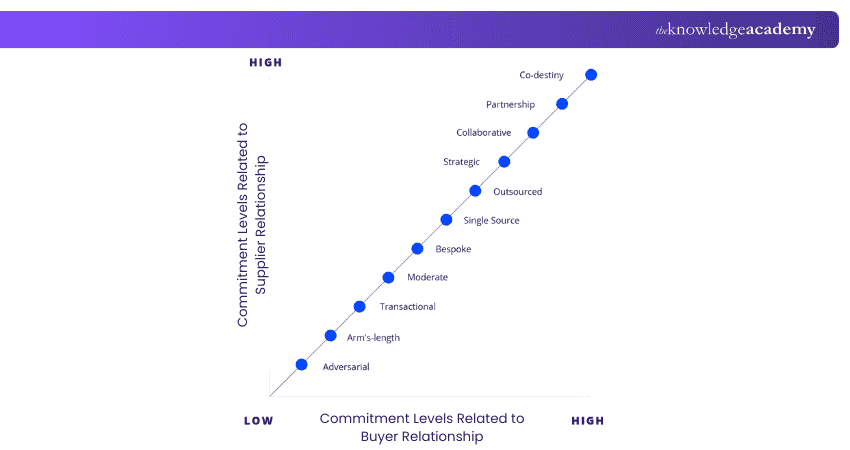
1) Low-commitment Relationships: This is the left side of the spectrum. It's about transactional, price-driven interactions where short-term deals matter more than long-term collaboration, sometimes creating adversarial dynamics.
2) Mid-level Relationships: This is the centre of the spectrum. it involves more frequent engagement with moderate dependency, often including higher-value or riskier goods and services that require closer cooperation.
3) Strategic Partnerships: This is the right-hand side of the spectrum. It deals with high-commitment, collaborative relationships with key suppliers providing critical or high-risk solutions, demanding significant time, trust, and resource investment.
How Supplier Relationship Management Works?
Every organisation has unique approaches. However, given below are a few common steps involved in the SRM process:
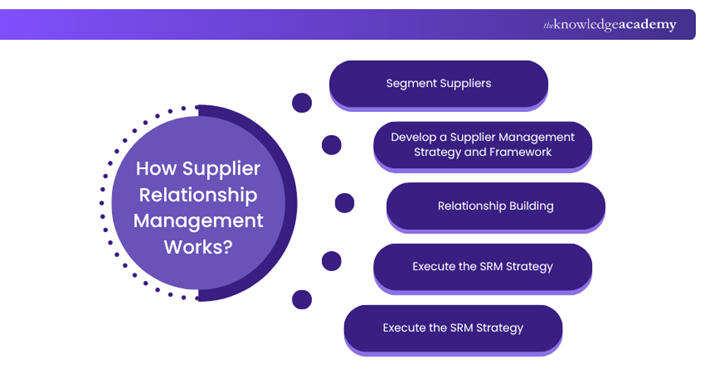
1) Segment Suppliers
This is the first and fundamental step in the SRM process. In this step, business firms identify all its suppliers and categorises them by their significance to the business. This ensures the suppliers key to the success of a business get proper attention. This helps to identify potential risks, cost-saving opportunities, and steps to manage each supplier.
2) Develop a Supplier Management Strategy and Framework
Once suppliers are segmented, the next step is to create a tailored strategy for each group. This involves designing a strategic plan for how Supplier Relationship Management will work with each Supplier or category of suppliers. It includes setting clear goals for each supplier category, negotiating contracts and pricing, and reducing risk by diversifying suppliers.
3) Relationship Building
This step involves communicating Supplier Relationship Management plans, strategies and initiatives with key suppliers. It can help advance relationships and provide valuable insights into what will ensure mutual success. This stage focuses on trust and communication through two-way communication and a sense of partnership.
4) Execute the SRM Strategy
Now it is time for you to put your strategy into action. This includes Supplier Performance Management, ensuring timely deliveries with high quality and collaborating to improve services or overcome challenges. This step turns your plans into real actions that bring results for both your organisation and your suppliers.
5) Monitoring and Continuous Improvement
Performance tracking and monitoring is essential in SRM. You should regularly measure your delivery accuracy, speed, responsive time for an issue, and product or service quality. This data helps you improve relationships and make smarter decisions. It also helps you update strategies as needs or performance change, creating a continuous improvement cycle.
Align individual and team goals with organisational objectives by registering for our Performance Management Training now!
Goals and Benefits of Supplier Relationship Management
A well-implemented SRM strategy provides numerous benefits for both buyers and suppliers. So, let’s check what are the goals of effective Supplier Relationship Management:
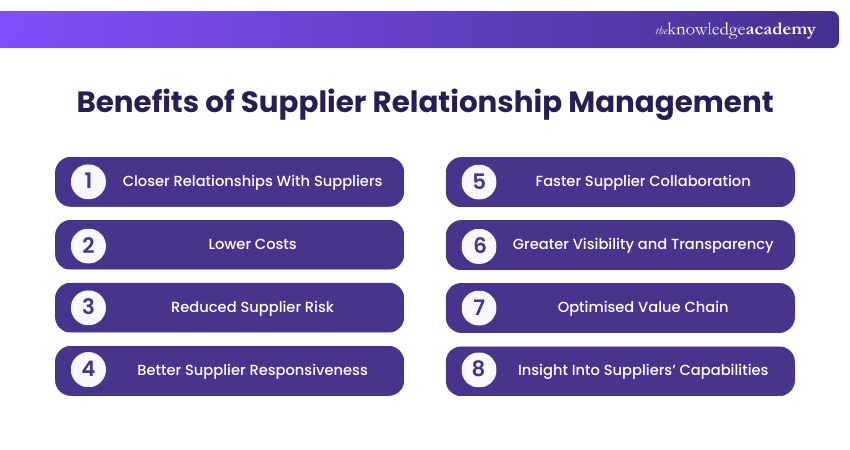
1) Enhancing Supplier Collaboration: To foster open communication, trust, and teamwork with suppliers for better coordination and joint problem-solving.
2) Improving Supplier Performance: To ensure suppliers consistently meet expectations in quality, cost, delivery, and service.
3) Reducing Risks: To identify, monitor, and minimise supply chain risks such as delays, shortages, or compliance issues.
4) Driving Innovation: To collaborate with suppliers on new ideas, products, or improvements that benefit both parties.
5) Increasing Value: To get the best return from supplier relationships; not just in cost savings, but also in quality, speed, and flexibility.
6) Ensuring Long-term Supply Stability: To secure reliable, sustainable, and ethical sources for essential goods or services.
Now, here are some of its benefits:
1) Closer Relationships With Suppliers
Deepening relationships beyond basic transactions is essential. It builds better trust, shared goals, and a better understanding of each other’s risks and opportunities, creating more resilient partnerships.
2) Lower Costs
By understanding how suppliers operate, organisations can identify cost-saving opportunities, negotiate better pricing, benefit from bulk buying and reduce total cost of ownership without affecting quality.
3) Reduced Supplier Risk
Effective SRM provides real-time visibility, allowing risks to be identified and addressed quickly. With better data and smarter procurement tools, organisations remain informed, prepared and confident in their decision-making.
4) Better Supplier Responsiveness
When suppliers feel valued and connected to your success, they respond faster during urgent or unexpected situations. Strong relationships naturally lead to more prompt support and problem resolution.
5) Faster Supplier Collaboration
Using digital, real-time collaboration tools speeds up communication and improves agility. Multi-enterprise supply chain platforms allow buyers and suppliers to connect, transact and share information seamlessly.
6) Greater Visibility and Transparency
Good SRM promotes open performance metrics and honest communication. This promotes accountability and encourages suppliers to maintain high standards as part of a trusted partnership, not just compliance.
7) Optimised Value Chain
Aligning supplier activities with business goals strengthens the entire value chain. This improved efficiency, visibility and overall operational effectiveness from end to end.
8) Insight Into Suppliers’ Capabilities
Access to reliable data helps organisations understand supplier strengths, capacities and limitations. This supports better planning and gives teams the confidence to adapt when new products or business models emerge.
Learn the strategies to evaluate, manage, and improve supplier quality with our Supplier Quality Management Training – Join now!
Challenges in Supplier Relationship Management
Apart from the inevitable benefits, SRM has its own challenges too. These require ongoing focus on both data and relationship quality while avoiding common mistakes. The key challenges fall into four main categories:
1) Differences in Business Culture
Global sourcing often means working with suppliers from different cultural backgrounds. Understanding their norms, communication styles and business practices can be difficult without prior experience. This makes research and cultural awareness essential.
2) Corporate Social Responsibility (CSR)
As supply chains grow more complex, making sure that the suppliers meet ethical, social and environmental standards becomes a major responsibility. SRM teams must closely monitor compliance to uphold corporate values.
3) Regulatory Compliance
Managing multiple suppliers across various regions can make it challenging to ensure consistent adherence to legal, environmental and manufacturing standards. Each location may have unique regulations that require thorough oversight.
4) Supplier Training
Suppliers may underperform if they don’t fully understand your organisation’s goals or processes. While training helps align expectations and improve performance, it can be time-consuming, especially when working with diverse or international suppliers.
Maintain cost efficiency with our Costing and Pricing Training - Register now!
Supplier Relationship Management Examples
Supplier relationship management (SRM) plays a vital role across multiple industries, helping organisations address their specific challenges and needs:
1) Healthcare
In healthcare, product quality is critical. SRM helps hospitals conduct strict supplier vetting, frequent quality audits and compliance checks. For example, real-time alerts about product recalls allow hospitals to act quickly, switch suppliers promptly and avoid risks to patient safety.
2) Retail
Fast-changing trends make timing everything. Retailers use SRM to collaborate with suppliers on forecasting and inventory planning so popular products are available at the right moment. A retailer selling limited-edition items, for instance, can work with suppliers to customise stock levels by region and avoid excess inventory.
3) Energy
Utility companies often rely on old infrastructure requiring rare parts, while also transitioning toward cleaner technologies. SRM helps them manage both traditional parts suppliers and modern tech vendors through a unified system. This ensures equipment reliability, regulatory compliance and progress toward sustainability goals.
4) Transportation
Transport and logistics companies depend heavily on reliable parts and timely supplies. SRM enables them to monitor supplier performance, maintain essential equipment without excess stock, and assess the reliability of multiple vendors. This helps them scale operations with confidence.
5) Construction
Construction firms face tight deadlines and must coordinate with many material suppliers. Using SRM tools, they can track supplier performance across projects, identify consistently reliable vendors and ensure materials meet quality and timing requirements. This keeps projects on budget and on schedule.
Enhance Quality Management skills with our Certified Manager of Quality Training – Join now to excel in your career!
What are the Five Types of Supplier Relationships?
The five types of Supplier Relationships are:
1) Short-term Relationships: These are primarily price-focused, transactional interactions with low commitment.
2) Tactical Relationships: These are routine, operational engagements focused on efficiency and day-to-day needs.
3) Collaborative Relationships: These are long-term partnerships built on shared goals, trust and cooperation.
4) Strategic Relationships: These involve high-value, high-risk suppliers offering significant mutual benefits and deep involvement.
5) Alliances: These are fully integrated relationships aimed at innovation, joint development and long-term value creation.
Embrace the art of management and shape tomorrow’s leaders with our Management Courses - Sign up now!
What are the Three Basic Components of Supplier Relationship Management?
The three basic components are as follows:
1) Supplier Segmentation: This involves categorising suppliers based on their importance, risk level and impact on the organisation.
2) Performance Management: This involves evaluating and monitoring supplier performance to ensure quality, reliability and compliance.
3) Relationship Development: This involves building and maintaining strong, collaborative partnerships that support long-term value.
Conclusion
Supplier Relationship Management is more than just negotiating contracts. It's about trust, collaboration, commitment, transparent communication, and compliance with the SRM process. Investing in CRM technologies like Customer Relationship Managers is crucial for a strategic SRM strategy. These elements help build strong relationships between buyers and sellers, driving mutual success.
Learn how to deliver services on time with our Productivity and Time Management Training - Sign up today!
Frequently Asked Questions
What is a Supplier Relationship Management Framework?

A Supplier Relationship Management framework is a well-structured approach to manage interactions with suppliers, focus on segmentation, performance management, and relationship development to ensure mutual benefits and efficiency.
How do you Manage Supplier Relationships Effectively?
Managing supplier relationships involves first setting clear expectations, maintaining open communication, regularly evaluating performance and building trust to ensure mutual benefits and long-term success.
What are the Other Resources and Offers Provided by The Knowledge Academy?
The Knowledge Academy takes global learning to new heights, offering over 3,000+ online courses across 490+ locations in 190+ countries. This expansive reach ensures accessibility and convenience for learners worldwide.
Alongside our diverse Online Course Catalogue, encompassing 17 major categories, we go the extra mile by providing a plethora of free educational Online Resources like Blogs, eBooks, Interview Questions and Videos. Tailoring learning experiences further, professionals can unlock greater value through a wide range of special discounts, seasonal deals, and Exclusive Offers.
What is the Knowledge Pass, and How Does It Work?
The Knowledge Academy’s Knowledge Pass, a prepaid voucher, adds another layer of flexibility, allowing course bookings over a 12-month period. Join us on a journey where education knows no bounds.
What are Related Business Skills Courses and Blogs Provided by The Knowledge Academy?
The Knowledge Academy offers various Management Courses, including the Introduction to Supplier Management Course, 8D Problem-Solving Training, Financial Management and Behaviour Management Training. These courses cater to different skill levels, providing comprehensive insights into Characteristics of an Effective Team.
Our Business Skills Blogs cover a range of topics related to Supplier Relationship Management, offering valuable resources, best practices, and industry insights. Whether you are a beginner or looking to advance your skills in managing supplier relationships, The Knowledge Academy's diverse courses and informative blogs have you covered.

James Smith


Digital Marketing Manager and Trainer
James Smith is a digital marketing professional with over a decade of experience in SEO, content strategy, paid media and analytics. He has supported both SMEs and global brands in transforming their digital presence. James’s writing and training are rooted in results-driven tactics and the latest marketing trends.
View Detail
Upcoming Business Skills Resources Batches & Dates
Date
 Business Sustainability Course
Business Sustainability Course
Fri 20th Mar 2026
Business Sustainability Course
Fri 1st May 2026
Business Sustainability Course
Fri 24th Jul 2026
Business Sustainability Course
Fri 16th Oct 2026

 If you wish to make any changes to your course, please


