


 Top Rated Course

We may not have the course you’re looking for. If you enquire or give us a call on +47 80010068 and speak to our training experts, we may still be able to help with your training requirements.
Difference Between Sales and Marketing: Key Insights
Charlotte Wilson 14 July 2026The Difference Between Sales and Marketing lies in their roles; Sales converts leads into customers, while Marketing builds interest and nurtures demand. Knowing how they work separately yet synergistically is key to driving growth, improving strategy, and enhancing customer engagement. Read ahead to know more!Title: Understanding How Sales and Marketing Differ

Training Outcomes Within Your Budget!
We ensure quality, budget-alignment, and timely delivery by our expert instructors.
Table of Contents

Let’s say that you have built the perfect product: a smart water bottle that tracks hydration and glows when it’s time to drink. The buzz? That’s Marketing in action. The purchase? That’s Sales doing its job. But here’s the surprising part: many teams blur the line between the two. The Difference Between Sales and Marketing isn’t just technical detail; it’s the backbone of a successful business strategy. One crafts the story and attracts the crowd; the other turns curiosity into commitment.
In this blog, we’ll explore their unique roles, clear up common confusion, and show you how these two engines work best when running in sync. If you're ready to connect the dots and unlock real growth, keep reading.
Table of Contents
1) What is Sales?
2) What is Marketing?
3) Difference Between Sales and Marketing
4) Core Elements of Sales and Marketing
5) Sales and Marketing Alignment for Lead Generation
6) Skills for Salespeople
7) Skills for Marketers
8) Conclusion
What is Sales?
Sales refers to the direct process of persuading potential customers to purchase a product or service. It’s the final step in converting interest into revenue, focused on building one-on-one relationships and meeting specific customer needs. Sales efforts are typically short-term, aiming to close deals, meet immediate targets, and generate revenue for the business.
Role of a Sales Team
A Sales team is responsible for turning leads into actual customers. They handle client inquiries, conduct meetings or demonstrations, negotiate terms, and finalise transactions. Their primary goal is to drive revenue by closing deals, upselling where possible, and maintaining strong client relationships for repeat business.

What is Marketing?
Marketing is a broader, long-term strategy focused on generating interest in a brand, product, or service. It involves understanding the market, identifying customer needs, and promoting offerings through various channels. Marketing builds awareness and trust, paving the way for future Sales.
Role of a Marketing Team
The Marketing team works to attract and engage potential customers through campaigns, content, social media, Search Engine Optimisation (SEO), and more. They conduct market research, define target audiences, and craft messages that align with customer expectations. Their aim is to create demand and generate qualified leads for the Sales team to pursue.
Boost client trust with our Relationship Sales Training. Register today!
Difference Between Sales and Marketing
Understanding the distinctions between Sales and Marketing is crucial for aligning business strategies and achieving organisational goals. While both functions aim to generate revenue, they differ in approach, focus, and execution.
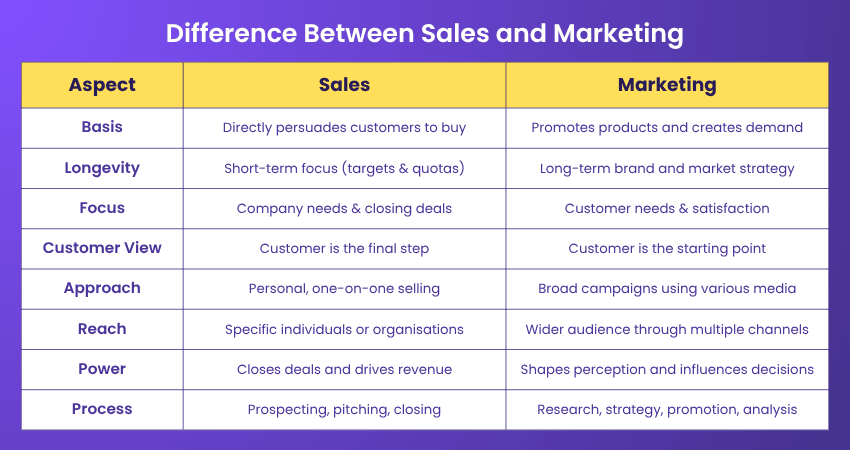
1) Basis
a) Sales: Involves the direct process of persuading potential customers to purchase a product or service. It focuses on converting prospects into buyers through personal interactions.
b) Marketing: Encompasses the activities that promote and position products or services in the market. It aims to identify customer needs and create demand through various channels.
2) Longevity
a) Sales: Typically concentrate on short-term objectives, such as meeting monthly or quarterly Sales targets.
b) Marketing: Focuses on long-term strategies to build brand awareness, customer loyalty, and market share over time.
3) Focus
a) Sales: Centres on the company's immediate needs, aiming to close deals and drive revenue.
b) Marketing: Prioritises understanding and satisfying customer needs, tailoring offerings to market demands.
4) View on Customers
a) Sales: Often views customers as the final step in the business process, focusing on closing the sale.
b) Marketing: Sees customers as the starting point, using their preferences and behaviours to shape products and campaigns.
5) Approach
a) Sales: Employs a direct, often individualised approach to persuade customers to make a purchase.
b) Marketing: Utilises a broader, more integrated approach, including market research, advertising, and public relations to attract potential customers.
6) Reach
a) Sales: Targets specific individuals or organisations, engaging them directly to secure Sales.
b) Marketing: Aims to reach a wider audience through various channels, creating interest and generating leads.
7) Power
a) Sales: Holds the power to finalise transactions and directly influence revenue.
b) Marketing: Influences purchasing decisions by shaping perceptions and creating demand.
8) Process
a) Sales: Involves steps like prospecting, presenting, handling objections, and closing deals.
b) Marketing: Includes market research, strategy development, campaign execution, and performance analysis.
Turn targets into triumphs with our Sales Management Course – join us today!
Core Elements of Sales and Marketing
Sales and Marketing work together to drive business success, but each has distinct components that define how they operate and contribute to the customer's journey.
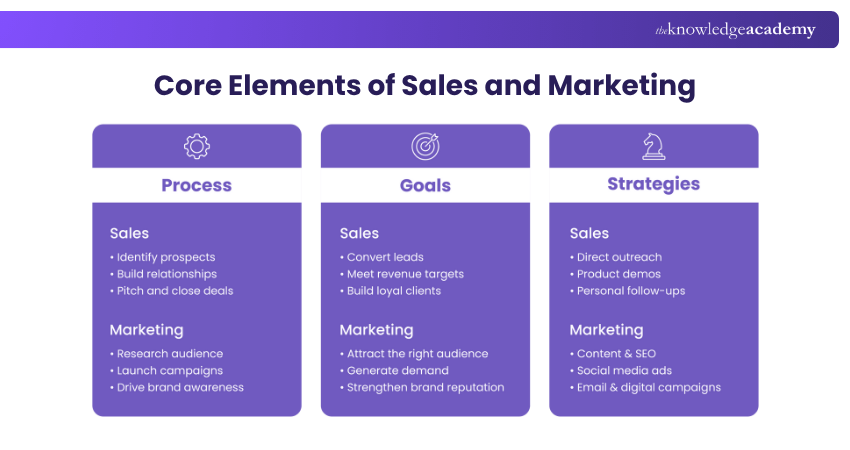
1) Process
The Sales process is action-oriented and involves directly engaging with potential customers. It includes identifying prospects, nurturing leads, handling objections, and closing deals. Marketing, on the other hand, follows a broader process that includes researching market needs, crafting targeted campaigns, and building brand visibility across multiple platforms.
2) Goals
The primary goal of Sales is to convert leads into paying customers and generate immediate revenue. Marketing has more long-term goals, aiming to raise brand awareness, attract the right audience, and create interest in products or services that eventually feed into the Sales pipeline.
3) Strategies
Sales strategies focus on direct interactions like personal outreach, product demos, and relationship building to secure a commitment. Marketing strategies involve using tools such as content creation, social media, SEO, and advertising to attract and inform potential buyers before any Sales conversation begins.
Unlock your Marketing potential with our Marketing Courses. Join now!
Sales and Marketing Alignment for Lead Generation
Aligning Sales and Marketing teams is essential for effective lead generation. When these departments collaborate seamlessly, businesses can attract, nurture, and convert leads more efficiently.
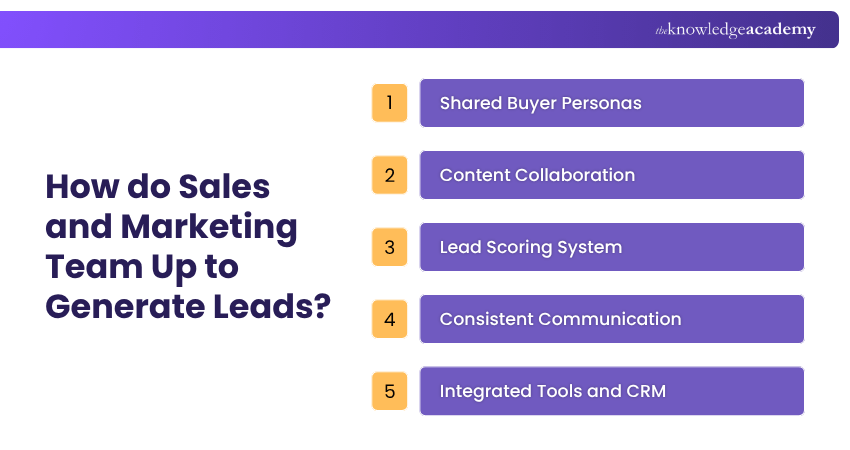
1) Unified Customer Understanding: Both teams should collaborate to develop detailed customer personas, ensuring that Marketing campaigns and Sales strategies target the same audience segments.
2) Shared Goals and Metrics: Establishing common objectives, such as lead conversion rates and revenue targets, fosters accountability and ensures both teams work towards the same outcomes.
3) Integrated Processes: Implementing shared tools and platforms allows for real-time data sharing, enabling sales to provide feedback on lead quality and Marketing to adjust strategies accordingly.
4) Consistent Communication: Regular meetings and open channels of communication help in addressing challenges promptly and refining joint strategies for lead generation.
Skills for Salespeople
Sales are well-suited to individuals with specific personality traits and a particular skill set. Key skills required include:
a) Confidence: Successful salespeople are typically confident in what they’re selling, comfortable interacting with others, and assertive when necessary.
b) Resilience: Given that salespeople often face rejections, objections, and other challenges in their pursuit of a sale, resilience is a crucial personality trait.
c) Communication Skills: Effective Communication, especially strong listening skills, is vital. This allows salespeople to persuasively address potential customers’ needs based on the information shared during conversations.
d) Rapport Building: Salespeople must appear trustworthy and professional. By effectively building rapport, they can increase the likelihood of closing more Sales.
e) Sociability: Being naturally social makes a salesperson more approachable. Developing this skill can also be beneficial in other roles you may pursue in the future.
Unlock your Sales potential with our Corporate Selling Training. Join now!
Skills for Marketers
Marketing is a profession that suits individuals with particular skills and interests, including:
a) Creativity: Essential for marketers, as the strategies used to engage potential customers are continually evolving.
b) Interpersonal Skills: Marketers interact with a diverse range of people, from internal stakeholders to the public, making strong interpersonal skills crucial for building effective working relationships.
c) Adaptability: Given that Marketing is a fast-paced and ever-changing field, the ability to adapt quickly to new circumstances is vital.
d) Data Interpretation: Effective Marketing strategies are driven by high-quality data, so strong data analysis skills are essential for success.
e) Research: Marketers conduct extensive research on audiences and topics when building campaigns, designing strategies, or creating content, making strong research skills a key requirement for the role.
Conclusion
To conclude, the Difference Between Sales and Marketing isn’t a battle; rather, it’s a balance. When both teams understand their roles and work together, the results speak for themselves. It’s where strategy meets action, and curiosity turns into change. Want to turn interest into impact? Start by getting both sides on the same page.
Elevate your Sales prowess with our comprehensive Online Sales Training - unlock your potential today!
Frequently Asked Questions
Should I go Into Sales or Marketing?

Choose Sales if you enjoy direct interaction and closing deals. Opt for Marketing if you prefer strategy, creativity, and long-term brand development. Both offer rewarding career paths depending on your strengths and interests.
Is Sales and Marketing Difficult?
Sales and Marketing can be challenging but rewarding. Both require strong communication, adaptability, and problem-solving skills. Success comes with understanding your audience, staying consistent, and continuously learning from results and feedback.

Charlotte Wilson


Soft Skills and Business Training Manager
Charlotte Wilson is an expert in soft skills development, with over 14 years of experience helping individuals and teams improve communication, productivity and emotional intelligence in the workplace. Her training content is focused on enhancing interpersonal effectiveness and fostering positive, collaborative environments across all levels of an organisation.
View Detail

 If you wish to make any changes to your course, please


