


 Top Rated Course

We may not have the course you’re looking for. If you enquire or give us a call on +31 208081674 and speak to our training experts, we may still be able to help with your training requirements.
What is Vendor Management: A Complete Guide
The Knowledge Academy 09 March 2026Vendor Management is the process of managing supplier relationships to ensure quality service, control costs, reduce risk, and meet business needs. It includes selecting vendors, negotiating contracts, and monitoring performance against agreed standards. Strong oversight improves efficiency and supports long-term business growth.

Training Outcomes Within Your Budget!
We ensure quality, budget-alignment, and timely delivery by our expert instructors.
Table of Contents
In the lightning-paced business landscape, vendors are more than just suppliers; they are the lifeline of efficiency and innovation. Consequently, effective Vendor Management is the fuel that drives successful partnerships and ensures long-term business success. From selecting the perfect partners to cultivating lasting relationships, the Vendor Management process is the expressway to improved business outcomes and assured competitive advantage.
This comprehensive blog will help you gain proper insight into What is Vendor Management is by highlighting its benefits, essential steps, key features, challenges, and more. Read on and elevate your vendor collaborations to new heights!
Table of Contents
1) What is Vendor Management?
2) Why is Vendor Management Important?
3) Vendor Management Process
4) Types of Vendor Relationships
5) Benefits of Using a Vendor Management Platform
6) Common Challenges in Traditional Vendor Management
7) Vendor Management Examples
8) What are the Four Stages of Vendor Management?
9) How Does a Vendor Management System Work?
10) Conclusion
What is Vendor Management?
Vendor Management is the strategic process organisations use to source, select, onboard, and manage third-party suppliers that provide goods or services. It ensures business needs are met while controlling costs, reducing risks, and maintaining service quality. This includes vendor evaluation, contract negotiation, defining SLAs, performance monitoring, payment management, and regulatory compliance.
Vendors vary by industry and may include raw material suppliers, IT providers, consultants, or logistics partners, ranging from small firms to large enterprises. Effective Vendor Management builds strong relationships, improves transparency, and supports operational efficiency and sustainable growth.

Why is Vendor Management Important?
Vendor Management is important because it helps organisations choose suppliers that best match their needs. It also supports business goals by controlling costs and making the onboarding process quicker and more efficient.
Properly managing vendors reduces the risk of delays or supply issues and ensures products and services are delivered on time and of the right quality. It also helps build positive supplier relationships, which can lead to better pricing and long-term value.
Vendor Management Process
The Vendor Management process includes numerous activities, including vendor selection, vendor onboarding, Contract Negotiation, risk monitoring, and more. These activities are explored in detail below:

1) Vendor Selection
The vendor selection process includes:
a) Seeking quotes via Requests For Quotation (RFQs)
b) Seeking quotes via requests for quotation (RFQs)
c) Requests for Proposals (RFPs)
d) Shortlisting vendors
While price will be an inevitable consideration during this process, companies must also evaluate other factors. These include a vendor’s reputation, track record, and communication ability, when deciding which vendors to appoint for a contract.
2) Contract Negotiation and Vendor Onboarding
Before working with a vendor, finalising a contract that clearly outlines the terms and benefits for both sides is important. This includes:
a) Defining the goods or services
b) Setting start and end dates
c) Covering confidentiality and non-compete clauses
Once terms are agreed, the vendor onboarding process begins. This step gathers all necessary documentation to approve the vendor and enable payments, including:
a) Contact and payment details
b) Tax forms
c) Insurance documents
d) required licenses
3) Monitoring Vendor Performance
As part of the Vendor Management process, organisations monitor and evaluate their vendors' performance. This can include evaluating their performance against key performance indicators (KPIs) like delivery dates and quality and volume of goods. The common KPIs are:
a) Supplier lead time
b) Compliance rate
c) Return on Investment (ROI)
d) Vendor Availability
e) Service quality
4) Risk Monitoring and Management
Vendors must be monitored for risks that could impact the company, such as:
a) Compliance breaches
b) Lawsuits
c) Data security issues
d) Loss of intellectual property
Additionally, companies will need to monitor the risk that a vendor’s failure to provide goods and services may pose to company operations.
5) Payment Processing
This is the process of paying vendors for goods or services delivered to a business. The payment process ensures that vendors are paid accurately and in a timely manner. This process involves several steps, including:
a) Purchase order issuance
b) Invoice receipt and verification
c) Payment approval
d) Payment remittance
Learn finance, marketing, HR and Project Management with our Business Management Training – Join now!
Types of Vendor Relationships
Organisations usually decide the type of vendor relationship they want based on their business goals and product needs. Different relationships suit different levels of involvement, risk, and long-term planning. Some of the common types are explained below.
1) Ongoing Relationship:
An ongoing relationship develops when a buyer and vendor work together consistently over time. Clear pricing, delivery terms, and regular checks help avoid issues and keep the partnership stable.
2) Partnership:
A partnership is a deeper, long-term relationship built on trust and consistent performance. It often involves renewed or extended contracts. These relationships develop when vendors reliably deliver quality products on time and meet legal and ethical standards.
3) Backward Integration:
Backward integration happens when a company takes ownership of or merges with a supplier. This gives the buyer more control over the supply process, improves transparency, and reduces dependency and risk linked to external vendors.
4) Strategic Alliances:
Strategic alliances involve close collaboration between businesses to share resources and decisions. Shared goals, regular communication, and clear measures help improve efficiency and competitiveness.
5) Buy the Market:
This is the most informal type of vendor relationship. Buyers purchase goods as needed, with little ongoing commitment or information sharing. Contracts may be minimal or absent, making risk management important due to the limited level of control and predictability.
Benefits of Using a Vendor Management Platform
The following are the benefits of using a Vendor Management Platform:
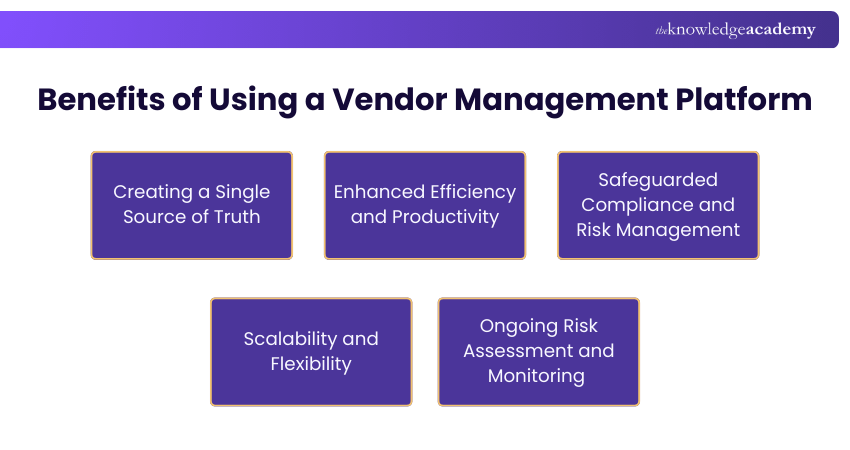
1) Creating a Single Source of Truth
a) A Vendor Management platform stores all vendor data, contracts, and compliance documents in one place.
b) It gives procurement teams quick and easy access to important information.
c) It removes the need for multiple systems and manual document handling.
d) It helps reduce errors, version control problems, and audit risks.
2) Enhanced Efficiency and Productivity
a) A Vendor Management platform automates tasks like contract creation, vendor onboarding and approval routing.
b) It tracks compliance automatically, reducing the need for manual checks.
c) It simplifies processes and cuts down on time-consuming admin work.
d) It boosts productivity by freeing up time for strategic tasks.
e) Procurement teams can put their focus on high-value activities rather than routine operations.
3) Safeguarded Compliance and Risk Management
a) A Vendor Management platform provides due diligence forms, custom fields and configurable workflows for compliance.
b) It makes sure that vendors meet regulatory requirements, industry standards, and internal policies.
c) Automated compliance checks help monitor vendor finance and cyber health.
d) It reduces the chances of regulatory breaches, fines or legal issues.
4) Scalability and Flexibility
a) A Vendor Management platform supports the specific needs of regulated businesses.
b) Configurable workflows help adapt to changing processes and compliance demands.
c) Its user permissions ensure secure and controlled access to sensitive information.
d) The various reporting tools provide accurate data for audits and compliance reviews.
e) The platform helps organisations stay flexible in evolving regulatory environments.
f) It enables easy delivery of required evidence to internal and external Auditors.
5) Ongoing Risk Assessment and Monitoring
a) A Vendor Management platform offers suppliers real-time risk monitoring.
b) There are even customisable risk scoring features that help identify and assess potential vendor risks.
c) Automated alerts keep teams informed of risk changes as they happen.
d) Risk dashboards provide clear, actionable insights on vendor performance and compliance.
e) Thanks to these platforms, procurement professionals can quickly respond to issues and reduce risk exposure.
Great products start with great partners! Learn how to bring the best out of your supplier in our Supplier Quality Management Training - Sign up now!
Common Challenges in Traditional Vendor Management
Organisations often face obstacles when implementing effective Vendor Management practices, impacting compliance, efficiency, and long-term growth. Key challenges include the following:
1) Poor Contract Management:
Ineffective contract tracking and unclear terms may lead to disputes, missed renewal dates, and compliance gaps. Without structured contract oversight, organisations risk financial losses and legal complications.
2) Inconsistent Vendor Performance Monitoring:
Lack of defined performance metrics makes it difficult to evaluate supplier quality, delivery timelines, and service levels. This can result in recurring performance issues and reduced operational efficiency.
3) Weak Risk Assessment Framework:
Without a structured vendor risk assessment process, organisations may fail to identify financial instability, cybersecurity threats, or regulatory risks associated with suppliers.
4) Communication Gaps:
Ineffective communication channels between buyers and vendors can cause misunderstandings, delays, and reduced collaboration, ultimately affecting service quality and delivery timelines.
5) Compliance and Regulatory Complexity:
Operating across multiple regions or industries increases compliance requirements. Managing different regulatory standards for vendors can be complex and time-consuming without a systematic approach.

Vendor Management Examples
Imagine a company launching a new line of electric bicycles. It sources motors, batteries, frames, and other components from different suppliers, assembles them in-house, and sells the final product under its brand.
Vendor Management in this case involves:
1) Requirement Planning: Finalising product models, estimating demand, and identifying required components.
2) Supplier Selection: Evaluating vendors based on price, quality, capacity, and compliance.
3) RFI/RFP Process: Requesting quotations and reviewing terms before selecting suitable suppliers.
4) Contract and PO Management: Signing agreements, issuing purchase orders, and defining delivery timelines.
5) Inspection and Payment: Checking quality upon delivery, accepting or rejecting supplies, and processing payments as per agreed terms.
6) Performance Monitoring: Continuously tracking vendor reliability, delivery performance, and defect rates.
This structured approach ensures quality control, cost efficiency, regulatory compliance, and smooth production operations.
Develop essential communication, negotiation, and conflict resolution skills with our Management Courses – Join now!
What are the Four Stages of Vendor Management?
The Vendor Management process includes these four stages that can help you cement a productive relationship with vendors:
1) Segmentation: This is the step where you group and choose vendors. You can organise them based on things like profit, risk, product quality, performance, and how often you work with them. This helps you decide what kind of relationship you want with each vendor.
2) Collaboration: Working closely with vendors is key. You can negotiate prices, reduce risks, and find new value-adding ways. The goal is to reach agreements that reap benefits for both sides and encourage innovation and long-term partnerships.
3) Implementation: This is when you implement your Vendor Management plan. Focus on the vendor's strengths and aim to reach your goals. A well-run plan can attract more vendors who want to work with you and build a positive reputation.
4) Evaluation: You review how well vendors perform at this stage. Check if they’re meeting your standards. If not, talk with them and create an improvement plan. To help with evaluation:
How Does a Vendor Management System Work?
A Vendor Management system (VMS) works as follows:
1) Vendor Onboarding: Vendors are registered into the system with their company details, certifications, compliance documents, and service offerings.
2) Vendor Selection & Sourcing: The system helps identify and evaluate vendors based on criteria like cost, quality, and past performance.
3) Contract Management: VMS stores and manages contracts, to make sure that terms, deadlines and compliance requirements are tracked and met.
4) Performance Monitoring: Vendors are evaluated using KPIs such as delivery time, service quality and issue resolution.
5) Invoice & Payment Processing: The system automates invoice approvals and integrates with the financial systems for timely payments.
6) Risk & Compliance Management: VMS flags every risk by making sure the vendors meet regulatory and internal compliance standards.
7) Reporting and Analytics: Dashboards and reports provide insights into vendor performance, spend analysis and optimisation opportunities.
Conclusion
Vendor relationships directly impact cost, quality, and risk. Understanding What is Vendor Management enables organisations to build structured, transparent, and performance-driven supplier partnerships. When managed effectively, Vendor Management improves compliance, boosts efficiency, and transforms suppliers into strategic partners supporting long-term business growth.
Learn the art of negotiating and managing supplier relationships in our Category Management Training - Sign up now!
Frequently Asked Questions
How Does Vendor Management Improve Supply Chain Efficiency?

Vendor Management improves supply chain efficiency by ensuring timely delivery, consistent quality, and fewer disruptions. Clear communication and regular reviews help reduce delays, control costs, and keep operations running smoothly.
What is a KPI in Vendor Management?
In Vendor Management, Key Performance Indicators (KPIs) refer to the measurable metrics used to assess the performance of service providers and product suppliers. Common KPIs are on-time delivery rates, cost savings achieved, Service Level Agreement (SLA) adherence, quality of goods or services, and vendor responsiveness.
What are the Other Resources and Offers Provided by The Knowledge Academy?
The Knowledge Academy takes global learning to new heights, offering over 3,000+ online courses across 490+ locations in 190+ countries. This expansive reach ensures accessibility and convenience for learners worldwide.
Alongside our diverse Online Course Catalogue, encompassing 17 major categories, we go the extra mile by providing a plethora of free educational Online Resources like Blogs, eBooks, Interview Questions and Videos. Tailoring learning experiences further, professionals can unlock greater value through a wide range of special discounts, seasonal deals, and Exclusive Offers.
What is The Knowledge Pass, and How Does it Work?
The Knowledge Academy’s Knowledge Pass, a prepaid voucher, adds another layer of flexibility, allowing course bookings over a 12-month period. Join us on a journey where education knows no bounds.
What are the Related Courses and Blogs Provided by The Knowledge Academy?
The Knowledge Academy offers various Management Courses, including Vendor Management Training, Senior Management Training, and Performance Management Training. These courses cater to different skill levels, providing comprehensive insights into Quality Assurance Plan.
Our Business Skills Blogs cover a range of topics related to Vendor Management, offering valuable resources, best practices, and industry insights. Whether you are a beginner or looking to advance your Management skills, The Knowledge Academy's diverse courses and informative blogs have got you covered.

The Knowledge Academy


Global Training Provider
The Knowledge Academy is a world-leading provider of professional training courses, offering globally recognised qualifications across a wide range of subjects. With expert trainers, up-to-date course material, and flexible learning options, we aim to empower professionals and organisations to achieve their goals through continuous learning.

Upcoming Business Skills Resources Batches & Dates
Date
 Vendor Management Training
Vendor Management Training
Fri 7th Aug 2026
Vendor Management Training
Fri 6th Nov 2026

 If you wish to make any changes to your course, please


