


 Top Rated Course

We may not have the course you’re looking for. If you enquire or give us a call on +31 208081674 and speak to our training experts, we may still be able to help with your training requirements.
What is Maximalist Interior Design: The Ultimate Style Guide
Richard Harris 02 March 2026Maximalist Interior Design embraces bold colours, mixed patterns, textures and personal collections to create vibrant, expressive spaces to reflect your style. Maximalism is the antithesis of minimalism, encouraging people to incorporate what they love into their homes. It allows for a personalised and visually rich environment.

Training Outcomes Within Your Budget!
We ensure quality, budget-alignment, and timely delivery by our expert instructors.
Table of Contents
Do you ever feel like your home should reflect you, your memories, your travels, your love for colour and comfort? That’s exactly what Maximalist Interior Design does. It’s bold, fun, and deeply personal. Picture patterned cushions on a velvet sofa, walls filled with art you adore, and treasures displayed proudly instead of hidden away. Maximalism is about joy in abundance, not clutter.
In this blog, we’ll explain What is Maximalist Interior Design, outline its key traits, and share simple ways to achieve the look. You’ll also find tips to master the style, see how it differs from eclectic design, and discover colour palettes that make it shine.
Table of Contents
1) What is Maximalist Interior Design?
2) A History of Maximalist Interior Design
3) Key Characteristics of Maximalist Interior Design
4) Rules of Maximalist Home Interior Design
5) Common Mistakes & How to Avoid Over-Clutter
6) What is the Difference Between Eclectic and Maximalist Interior Design?
7) What is the Colour Palette of Maximalist Interior Design?
8) Conclusion
What is Maximalist Interior Design?
Modern maximalism in Interior Design has evolved dramatically. Once associated with loud clutter and visual overload, it has now evolved into a more thoughtful approach. The idea of “more is more” still applies, but today it comes with intention. Often called “tidy maximalism,” this style celebrates bold colours and rich textures, where every piece has purpose and personality.
Instead of overwhelming the senses, contemporary maximalism welcomes them. It encourages creativity and self-expression while maintaining balance. Whether you’re building a striking gallery wall or pairing vintage treasures with modern artwork, the aim is to create a space that feels vibrant, expressive and lived-in, never messy or chaotic.

A History of Maximalist Interior Design
Maximalism in the UK may have evolved with culture and taste, but the love for bold, rich design endures from palaces to modern homes. Now, let’s explore how it changed through the centuries:
a) Early Days (16th–17th Century): Wealthy Europeans displayed their status through grand homes, art, ornate furniture and Baroque drama full of gold and detail.
b) Victorian Era (19th Century): Middle-class families went with heavy curtains, patterned wallpapers, plush furniture and layered décor to spotlight their prosperity.
c) 20th Century Changes: Art Nouveau brought flowing patterns, while the 1980s Memphis style introduced bold colours, playful shapes, and striking designs.
d) Today’s Maximalism: Trends like cottagecore, dopamine décor, dark academia, and grandmillennial embrace bold patterns, books, plants, and personal items, creating homes that feel cosy, expressive, and full of personality.
Turn your imagination tangible with our SketchUp Course. Sign up now and design your world in 3D!
Key Characteristics of Maximalist Interior Design
Maximalist Interior Design is not plain or simple. It loves rich detail and depth. As you explore its features, you will see it is much more than just adding more things. Here are its key characteristics:
1) Vibrant Colours
Maximalist interiors celebrate bold, lively colours that bring energy into a space. Jewel tones such as deep emerald, rich sapphire and warm ruby are favourites for their dramatic impact. Colourful walls, expressive furniture and patterned fabrics all work together to create a dynamic, eye-catching atmosphere.
2) Mixed Patterns
Pattern play is central to maximalism. Florals, geometrics, stripes and even animal prints can sit side by side in harmony. The trick lies in balancing scale and colour, so the patterns complement one another rather than compete for attention.
3) Luxurious Textures
Texture adds depth and richness to maximalist spaces. Fabrics like velvet, silk and brocade bring a sense of luxury to sofas, curtains and cushions. Layering textures creates comfort and visual interest. For example, pair a plush rug with polished flooring or drape a silky throw over a velvet chair.
4) Abundant Décor
Maximalism embraces an eclectic mix of decorative items. Art, sculptures, plants and curated collections fill the space with character. This abundance turns rooms into expressive displays of personal style and artistic flair.
5) Personal Touches
Individuality is a hallmark of maximalism. Instead of aiming for uniformity, this style showcases meaningful objects. Consider family heirlooms, travel mementos, treasured finds and unique collections that tell the story of the homeowner and make the space feel truly personal.
6) Sustainable Choices
Modern maximalism often supports sustainable living. By incorporating vintage pieces and repurposed décor, it encourages reuse and brings new life to old treasures. This approach also promotes mindful buying and favouring time-honoured craftsmanship over disposable trends. As a result, maximalist spaces feel both environmentally conscious and uniquely characterful.
Learn to use Revit for collecting and managing project data efficiently. Join our Revit Course today!
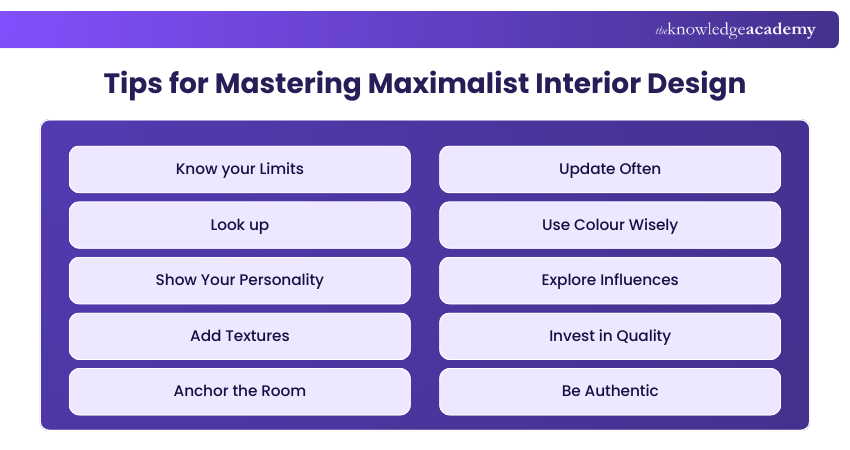
Tips for Mastering Maximalist Interior Design
Maximalist Interior Design is bold, vibrant, and personal. It celebrates abundance but also needs balance. These are the tips to create a cohesive and expressive space:
a) Feature Pieces: Pick one or two standout items to anchor the room.
b) Look up: Treat the ceiling as a fifth wall with paint, wallpaper, or pattern.
c) Layer With Care: Combine rugs, cushions, art, and accessories for depth and warmth.
d) Know Your Limits: Keep balance and avoid filling every corner.
e) Start Small: Try one room or corner first, then grow as you gain confidence.
f) Show Your Personality: Display collections, souvenirs, and your own artwork.
g) Mix, not Match: Blend patterns, textures, and colours instead of buying sets.
h) Play with Size: Pair large pieces with small accents for contrast and focus.
i) Add Textures: Use soft, rough, glossy, and matte finishes to enrich the space.
j) Anchor the Room: Choose a clear focal point like a sofa, bold wall, or artwork.
k) Leave Breathing Space: Empty areas help decorated parts stand out.
l) Update Often: Swap, rotate, and add new finds over time.
m) Use Colour Wisely: Follow simple colour rules so bold shades feel harmonious.
n) Love Imperfections: Keep worn or vintage pieces for charm and character.
o) Explore Influences: Borrow ideas from history and different cultures.
p) Trust Yourself: Your taste matters; if it feels right, use it.
q) Stay Organised: Use shelves, cabinets, and storage to keep things tidy.
r) Invest in Quality: A few well-made items lift the whole look.
s) Choose Multifunctional Items: Pick pieces that look good and do more than one job.
t) Be Authentic: Let your home show who you are and what you love.
Rules of Maximalist Home Interior Design
Here are the five proven rules of Maximalist Home Interior Design:
a) Pick Your Palette: Choose a set of core colours and use them consistently throughout your space. This helps balance bold hues and keeps rooms feeling cohesive, even with a lot going on.
b) Pattern Matters: Mix patterns boldly like florals, stripes, geometrics, animal prints or abstract motifs. But ensure they work together in scale and style so the room feels lively, not chaotic.
c) Talk Texture: Layer different textures like soft cushions, shaggy rugs, sleek ceramics, ribbed glass or glossy finishes. This will create depth and a sense of richness.
d) Curate a Statement cabinet: Decorate with statement items: art, oversized mirrors, vintage finds, plants or sculptural pieces. Choose pieces that reflect personality rather than just filling space.
e) Match Your Home’s Vibe and Use: Let your home’s function and personality guide your style choices. Mix antique or thrifted furniture with bold décor, use lighting creatively, but ensure the space remains livable and comfortable.
Common Mistakes & How to Avoid Over-clutter
A vibrant maximalist home thrives on personality, not chaos. Understanding where things go wrong can help you create an expressive space that still feels balanced and inviting.
1) When More Becomes Too Much
a) Maximalism isn’t about stacking objects endlessly.
b) When every wall, shelf and surface demands attention, the room can start to feel chaotic.
c) The goal isn’t adding more; it’s adding with intention.
d) Ask yourself whether each piece genuinely contributes to the room’s story; if not, replace it with something meaningful.
e) Another common mistake is forgetting the importance of negative space. Your eyes need places to rest.
f) A few empty areas can actually highlight your artwork, furniture and textures, creating balance instead of clutter.
2) The Role of Curation in Maximalism
a) Strong maximalism is always curated.
b) Even if the room looks playful and eclectic, there’s usually a unifying idea.
c) Try out a repeated colour, a botanical theme or matching frame styles. These subtle links keep the space cohesive.
d) Curation also means knowing when to edit.
e) Rotate artwork, swap pieces between rooms or refresh displays seasonally.
f) This keeps the space lively and expressive without becoming visually overwhelming.
Build skills in modelling, texturing, rigging, and rendering. Join our AutoDesk Maya Training today!
What is the Difference Between Eclectic and Maximalist Interior Design?
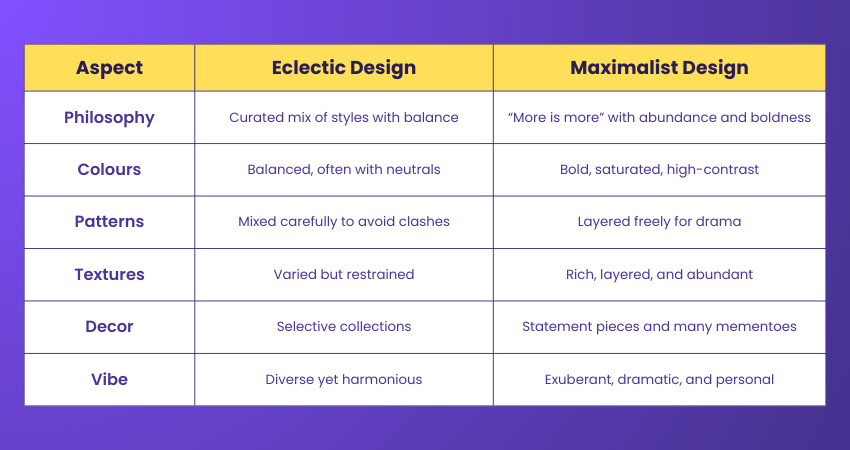
Eclectic Interior Design mixes styles, patterns, and textures from different eras to create a diverse yet balanced look, while Maximalist design follows a “more is more” philosophy, using bold colours, clashing patterns, layered textures, and abundant décor for a dramatic and personal statement.
What is the Colour Palette of Maximalist Interior Design?
The colour palette for Maximalist Interior Design is full of bold and vibrant shades. Rich hues like emerald, green, sapphire blue, ruby red, and mustard yellow bring energy and depth to a room, making it feel livelier and more expressive.
To keep the balance, softer shades like dusty rose, lavender or light blue can be added in bedrooms or calm areas. Neutral colours such as beige, off-white or warm grey are also used as a base so that the bold colours and patterns can stand out without looking too crowded.
Conclusion
Maximalism is more than just a trend; it is a way of expressing personality through colour, texture, and meaningful details. By understanding What is Maximalist Interior Design, you can see how it transforms ordinary rooms into vibrant, story-filled spaces. Embracing this style means celebrating abundance, creativity, and individuality, while designing a home that feels warm, inspiring, and uniquely yours.
Develop your creative problem-solving skills by tackling complex design challenges. Join our AutoCAD Courses now!
Frequently Asked Questions
What are the Benefits of Maximalism?

Maximalism's power lies in its numerous benefits, including:
a) It's got strong personal expression
b) It's rich, layered aesthetic
c) It's highly creative and playful
d) It offers more comfort and cosiness
e) It's great for storytelling
f) It supports sustainable living
g) It's flexible enough to evolve over time
Why is Maximalism Trending?
The ability to showcase one’s personality through art, brings people joy and helps convert houses into homes. Maximalist Interior Design creates the space for one to do so and share that joy with other people.
What are the Other Resources and Offers Provided by The Knowledge Academy?
The Knowledge Academy takes global learning to new heights, offering over 3,000 online courses across 490+ locations in 190+ countries. This expansive reach ensures accessibility and convenience for learners worldwide.
Alongside our diverse Online Course Catalogue, encompassing 17 major categories, we go the extra mile by providing a plethora of free educational Online Resources like Blogs, eBooks, Interview Questions and Videos. Tailoring learning experiences further, professionals can unlock greater value through a wide range of special discounts, seasonal deals, and Exclusive Offers.
What is The Knowledge Pass, and How Does it Work?
The Knowledge Academy’s Knowledge Pass, a prepaid voucher, adds another layer of flexibility, allowing course bookings over a 12-month period. Join us on a journey where education knows no bounds.
What are the Related Courses and Blogs Provided by The Knowledge Academy?
The Knowledge Academy offers various AutoCAD Courses, including the Interior Design Course, Revit Course, and the AutoDesk Maya Training. These courses cater to different skill levels, providing comprehensive insights into the Interior Designer Salary.
Our Office Applications Blogs cover a range of topics related to Maximalist Interior Design, offering valuable resources, best practices, and industry insights. Whether you are a beginner or looking to advance your Interior Design skills, The Knowledge Academy's diverse courses and informative blogs have got you covered.

Richard Harris


Senior Full Stack Developer and Technology Educator
Richard Harris is a highly experienced full-stack developer with deep expertise in both frontend and backend technologies. Over his 12-year career, he has built scalable web applications for startups, enterprises and government organisations. Richard’s writing combines technical depth with clear explanations, ideal for developers looking to grow in modern frameworks and tools.

Upcoming Business Skills Resources Batches & Dates
Date
 Interior Design Course
Interior Design Course
Fri 15th May 2026
Interior Design Course
Fri 3rd Jul 2026
Interior Design Course
Fri 2nd Oct 2026

 If you wish to make any changes to your course, please


