


 Top Rated Course

We may not have the course you’re looking for. If you enquire or give us a call on +31 208081674 and speak to our training experts, we may still be able to help with your training requirements.
Importance of Leadership for Organisational Success
Elizabeth Clark 09 March 2026Leadership drives organisational success by setting vision, inspiring teams, fostering collaboration, managing change, and boosting performance and growth. Strong leadership aligns strategy with execution, builds accountability, strengthens culture, and enables sustainable results in competitive business environments.

Training Outcomes Within Your Budget!
We ensure quality, budget-alignment, and timely delivery by our expert instructors.
Table of Contents

Organisations do not succeed by strategy alone, they succeed through direction, influence, and decisive action. The Importance of Leadership lies in its ability to shape vision, inspire teams, and translate business goals into measurable outcomes.
In this blog, we explore why leadership is critical for organisational success, how it drives performance and growth, and the role it plays in managing change, strengthening culture, and building sustainable competitive advantage.
Table of Contents
1) What is the Significance of Leadership?
2) Importance of Leadership
3) How is Good Leadership Defined?
4) How does Leadership Influence Company Culture?
5) What is the Role of Leadership in Decision Making?
6) Conclusion
What is the Significance of Leadership?
Effective management is crucial to many aspects of an organisation’s success, which is why businesses place significant value on leadership. One of the key roles of a leader is to provide a vision for the company. The leader articulates this vision and guides members of the organisation on how to achieve it.
While a business may have many individuals with diverse talents and capabilities, it is leadership that channels these efforts towards the realisation of a common goal. A good leader helps their organisation achieve excellence by motivating and encouraging teams, and by organising individual actions towards the progression of a shared objective. Compassionate Leadership plays a critical role in ensuring that individuals feel valued and supported in their roles, boosting morale and improving overall performance.

Importance of Leadership
Effective Leadership fosters collaboration, encourages accountability, and facilitates decision-making, improving performance and organisational success. Leadership is the cornerstone of building resilient, adaptive, and high-performing teams in today's dynamic business environment. Now, let’s discover the Importance of Leadership, so that it's easy for you to understand it when you go into a position of authority:
1) Vision
Effective Leadership can help the organisation and the employees understand the vision of the company. Determining a proper vision is extremely important as it allows the individuals in the organisation to work towards the common goal.
Effective leaders not only develop strategies, ideas, and methods to achieve goals before deadlines but also actively engage in the process. They stay informed about any errors or potential issues and are quick to recognize if changes are necessary along the way to reach the desired outcomes. For a deeper understanding of how different leadership theories inform these actions, check out the Leadership Theories PDF.
2) Communication
A leader can only help the organisation and the teams if they are good at communication. Without communication, it can be challenging for Leaders to communicate their ideas, participate in team activity, and, most importantly, direct the employees towards the set goals. Communication is important in Leadership, as the Leaders not only have to communicate with their teams but also need to communicate across departments in the organisation.
3) Decision-making
Importance of Leadership next comes for decision-making. It is because all the important decisions regarding projects and organisational goals are taken by the management, they should have an unwavering quality to take decisions quickly but correctly. Here's how decision-making skills can help leaders:
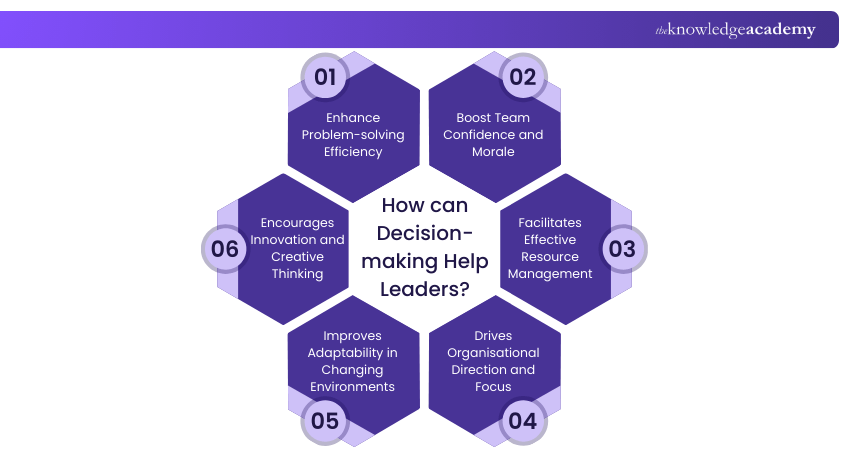
Individuals who possess this skill can be a good leader for the organisation. Leaders are faced with many situations where they need to think quickly and take the correct decision according to the situation. Individuals can hone this skill by weighing the organisation’s interests and profits without getting influenced by their own personal prejudices.
4) Passion
Leadership also involves showing passion towards work. Whether it be in a position of Leadership or as an employee. An effective leader can be identified with their strong passion towards their work and their organisation. Being passionate can help increase your emotional intelligence and be empathic towards your colleagues and team members. It is also an important skill to possess, as it can help you to invigorate the same passion and inspire your team to be dedicated towards their work.
Gain essential supervisory skills to manage teams effectively from day one with our Introduction to Supervising a Team Course- Join now!
5) Guidance
Importance of Leadership lies in guiding people/employees. The idea is to direct or guide individuals, teams and organisations towards the correct path. Clearly communicating with your team members and colleagues help them to understand their duties and responsibilities towards the organisational goals. Most importantly a good leader is also known for the impact they put on the employees’ personal life. It is also the responsibility of the Leader to correctly guide the employer in their personal life, thereby helping the employees have an all-round development.
6) Confidence
As the saying goes, “Confidence is key”. Whether you are a leader or an employee, you should have confidence in everything you do. Especially if you are in a position of authority, you have to be confident in your decisions and the way you conduct yourself.
Remember you are in a position where your team, colleagues, and junior employees seek inspiration from you. Showing them your ability to solve any situation calmly, make correct decisions without being partial, and, most importantly, provide positive feedback to them can help your team be more proactive in whatever work they do.
7) Commitment
Influential leaders are dedicated to the success of their organisation and its employees. They stay focused on their long-term objectives and do not let temporary setbacks diminish their resolve. When faced with challenges, effective leaders inspire their teams and help them look beyond the obstacles hindering their progress towards the common goal.
8) Morale
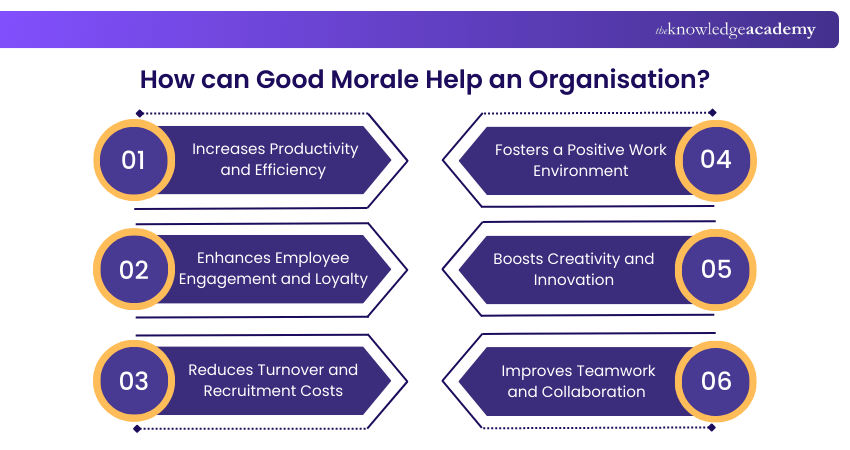
If your question is What Differentiates a Leader and a Boss, then you can easily understand the difference by observing how those individuals interact with their teams. A good leader always tries to maintain a high morale for the employees. Recognising the efforts of the employees and awarding them for their work inspires them and keeps them motivated.
This also fosters a positive work culture in the organisation. A high employee morale motivates them to achieve more for the organisation and improve their professional life. This is where you can see the Importance of Leadership truly unfolding as there is an increase in employee satisfaction and performance. Here's a detailed explanation:
9) Growth
The finest leaders cultivate an environment where individuals can thrive and are receptive to new ideas and methods for achieving results, while also being flexible enough to acknowledge their mistakes. Successful leaders encourage their subordinates to offer suggestions for improving work processes and reward excellence, thereby fostering creativity and loyalty.
Become the leader your organisation needs with our Leadership and Management Course– Join now!
How is Good Leadership Defined?
Leadership is not a title but something that is practised through consistent actions, and it shapes influence, empowers and directs others towards achieving a common goal. Strong leaders enhance the performance of the team by maximising on the strengths, communicating in an effective manner and by instilling trust. The following are some of the notable qualities of strong leadership:
!) Inspires and motivates others to achieve collective goals
2) Communicates with clarity, purpose, and transparency
3) Builds meaningful relationships rooted in trust and respect
4) Demonstrates accountability and leads by example
5) Leverages individual strengths to enhance team performance
6) Adapts to challenges while maintaining strategic focus
How does Leadership Influence Company Culture?
The Importance of Leadership goes beyond just motivating team members, leadership has a direct influence on the culture of an organisation because a leader determines the standards of behaviour, values and expectations of performance. Employee tone is driven by the leaders and, as such, affects communication, cooperation, and reaction to challenges.
When leaders lead by example based on integrity, accountability, and inclusivity, such behaviours tend to be instilled in the day-to-day functions. Trust, innovation, and high performance are a culture that is built through good leadership experience and conduct over a period of time, leading to successful performance at a long-term organisational level.
Learn proven techniques to energise teams and boost workplace productivity with our Staff Motivation Training- Join today!
What is The Role of Leadership in Decision Making?
Leadership importance in decision making ensures strategic, timely, and aligned growth with organisational priorities. Effective leaders bring structure, clarity, and accountability to complex business choices.
This is how leadership shapes decision making:
1) Guides structured and timely strategic decisions
2) Evaluates risks and analyses relevant data before action
3) Aligns decisions with organisational goals and stakeholder interests
4) Combines analytical judgement with experience and foresight
5) Reduces uncertainty while strengthening accountability
6) Supports sustainable growth and long-term competitive advantage
Conclusion
The importance of leadership lies in its ability to influence direction, culture, and performance across every level of an organisation. Strong leadership aligns vision with execution, ensuring decisions and strategies drive measurable results. It fosters accountability, resilience, and collaboration in changing environments. Ultimately, effective leadership is the foundation of sustained organisational success and growth.
Develop practical leadership capabilities that drive performance and influence with our Leadership Skills Training- Sign up now
Frequently Asked Questions
Are There Specific Industries or Sectors Where Effective Leadership Holds Exceptional Importance?

Effective Leadership holds exceptional importance in industries such as healthcare, technology, and finance, where complex operations and high-stakes decision-making are prevalent. Strong Leadership ensures efficient resource allocation and strategic direction, which is crucial for navigating dynamic challenges.
Where can Aspiring Leaders Access Resources or Training to Develop and Refine Their Leadership Capabilities?
Aspiring leaders can access resources through Leadership sessions, online courses, and mentorship. Platforms like LinkedIn Learning and professional workshops offer valuable insights, while mentorship provides real-world guidance for Leadership development.
What are the Other Resources and Offers Provided by The Knowledge Academy?
The Knowledge Academy takes global learning to new heights, offering over 3,000+ online courses across 490+ locations in 190+ countries. This expansive reach ensures accessibility and convenience for learners worldwide.
Alongside our diverse Online Course Catalogue, encompassing 17 major categories, we go the extra mile by providing a plethora of free educational Online Resources like Blogs, eBooks, Interview Questions and Videos. Tailoring learning experiences further, professionals can unlock greater value through a wide range of special discounts, seasonal deals, and Exclusive Offers.
What is Knowledge Pass, and How Does it Work?
The Knowledge Academy’s Knowledge Pass, a prepaid voucher, adds another layer of flexibility, allowing course bookings over a 12-month period. Join us on a journey where education knows no bounds.
What are Related Courses and Blogs Provided by The Knowledge Academy?
The Knowledge Academy, as a Trusted Training Provider offers various Leadership Courses, including the Leadership Skills Training, Staff Motivation Training, and Introduction to Supervising a Team. Our courses cater to different skill levels, providing comprehensive insights into Team Leader Qualities.
Our Business Skills Blogs cover a range of topics related to Importance of Leadership. Whether you are a beginner or looking to advance your Leadership skills, The Knowledge Academy's diverse courses and informative blogs have got you covered.

Elizabeth Clark


Senior Leadership Trainer and Business Strategist
Elizabeth Clark is a senior trainer and strategist with a strong background in leadership, business management, and operational improvement. With more than 15 years of experience, she has worked with leaders across industries to enhance their influence, communication, and strategic planning skills. Her writing is known for being insightful and focused on real-world leadership challenges.
View Detail
Upcoming Business Skills Resources Batches & Dates
Date
 Successful People Management and Team Leadership
Successful People Management and Team Leadership
Fri 15th May 2026
Successful People Management and Team Leadership
Fri 3rd Jul 2026
Successful People Management and Team Leadership
Fri 2nd Oct 2026

 If you wish to make any changes to your course, please


