


 Top Rated Course

We may not have the course you’re looking for. If you enquire or give us a call on +60 1800812339 and speak to our training experts, we may still be able to help with your training requirements.
What is Interior Design: A Complete Beginner’s Guide
Richard Harris 08 April 2026Interior Design is the art and science of creating functional, safe, and appealing spaces through planning, structure, and design to enhance quality of life. It blends creativity with technical skills to optimise space and lighting, ensuring efficiency. It also reflects personal style while ensuring comfort, usability, and sustainability.

Training Outcomes Within Your Budget!
We ensure quality, budget-alignment, and timely delivery by our expert instructors.
Table of Contents

Your surroundings are speaking to you. Are you listening to it? Every colour on the wall, every piece of furniture, and every bit of lighting in a room influences how you feel and function. That is the magic of Interior Design, shaping experiences that can calm, energise, or inspire people.
Think of the spaces you love most: a cosy living room, a modern office, or a stylish cafe. What makes them so inviting isn’t an accident; it is the thoughtful work of design principles at play. If you’re ready to learn more, this blog on What is Interior Design explores how it works, the key elements behind it, and where the industry is headed. Let’s dive in without any delay!
Table of Contents
1) What is Interior Design?
2) History and Evolution of Interior Designing
3) Core Elements of Interior Design
4) Modern Trends in Interior Design
5) Importance of Interior Design
6) The Future of Interior Design
7) Is Interior Designing Easy?
8) How Long Does it Take to Become an Interior Designer?
9) Conclusion
What is Interior Design?
Interior Design can be termed as transforming the interiors of spaces to make them visually appealing and functional. It is a combination of creativity and practicality to increase a room's aesthetics while assuring that it serves its intended purpose effectively.
It goes beyond simple decoration by incorporating spatial planning, colour theory, lighting, materials, and ergonomics to shape how a space feels and performs. The Interior Designers seek to maximise the use of space, considering factors like movement flow, functionality and comfort. They work closely with clients to understand their needs, preferences, and the intended purpose of a space.

History and Evolution of Interior Designing
Over time, Interior Design has developed through various historical periods, each introducing new styles, ideas, and influences. The following points highlight its key stages of evolution:
1) Ancient and Classical Beginnings (3000 BC – 5th Century AD):
Interior Design started as a way to reflect culture and status. Egyptians used rich materials and decoration, Greeks focused on symmetry and balance, and Romans introduced luxury through mosaics and grand layouts.
2) Evolution through the Ages (6th Century – 18th Century):
Interiors were functional in the medieval period but became more artistic during the Renaissance. The Baroque era added luxury and drama, while Neoclassicism later favoured simpler, refined designs.
3) Industrial Revolution (19th Century):
Mass production made furniture and decor widely accessible, allowing more people to design their homes. Victorian style became popular, known for rich fabrics and detailed interiors.
4) Modern Design Movements (20th Century):
Design shifted towards simplicity and functionality. Art Deco introduced bold patterns, while Mid-Century Modern focused on clean lines, practicality, and new materials.
5) Contemporary Interior Design (21st Century – Present):
Modern design combines aesthetics with technology and sustainability. Interiors now focus on comfort, flexibility, and personal expression using eco-friendly materials and smart solutions.
Core Elements of Interior Design
Now, let’s check the core elements that form the backbone of each and every Interior Design:

1) Space
a) Functionality: Every space should serve a defined purpose, whether for relaxation, work, or entertainment.
b) Flow: Efficient pathways and circulation are crucial to avoid obstructions and ensure ease of movement.
c) Proportions: A balanced space takes into consideration ceiling height, room size, and furnishings to avoid feelings of claustrophobia or emptiness.
2) Line
a) Coherence: Consistent use of lines, whether straight or curved, brings a sense of order to space.
b) Direction: Horizontal lines can expand space, vertical lines can give a sense of height, and dynamic lines add energy and movement.
c) Balance: A mix of different lines adds interest without overwhelming the eyes.
3) Form
a) Symmetry: Balanced forms create a sense of order and stability in a room.
b) Contrast: Mixing geometric and organic forms adds depth and intrigue.
c) Repetition: Using similar forms throughout a space can create a cohesive look.
Bring your ideas to life in stunning 3D with our 3DS Max Course – Register today!
4) Light
a) Layering: A combination of ambient, task, and accent lighting enhances functionality and mood.
b) Source: The balance between natural daylight and artificial light sources affects the room's ambience.
c) Intensity: The brightness and colour temperature can either energise or soothe inhabitants.
5) Colour
a) Palette Selection: Colours should complement each other, often with a mix of primary, secondary, and accent hues.
b) Mood Influence: Warm colours can evoke feelings of comfort and energy, while cool colours offer calmness and serenity.
c) Room Size Perception: Light colours can make a room feel bigger, while dark shades can create intimacy. Using Coastal Interior Design, you can make your room look bigger as this style uses light colours.
6) Texture
a) Tactile Experience: Different textures, from rough to smooth, affect our tactile interaction with the space.
b) Depth Creation: Layering textures, like a velvet couch with a silk pillow, adds depth and richness.
c) Visual Warmth: Coarser textures can make a space feel warmer and more inviting.
7) Pattern
a) Scale and Proportion: Larger patterns can dominate a space, while smaller motifs can act as subtle enhancers.
b) Relevance: Patterns should be relevant to the overall design theme, be it modern, traditional, or Eclectic Interior Design.
c) Balance: Using patterns requires a balance to avoid visual chaos, often by pairing them with solid colours.
With a deep understanding of these core elements, Interior Designers can craft environments that are not only visually stunning but also emotionally and functionally aligned with the users' needs.
Learn industry-standard 3D tools for film, games, and animation with our AutoDesk Maya Training – Join now!
Modern Trends in Interior Design
Interior Design trends now focus on warmth, texture, and personal comfort, moving away from strict minimalism towards more layered and expressive spaces. The key trends shaping modern interiors are outlined below:
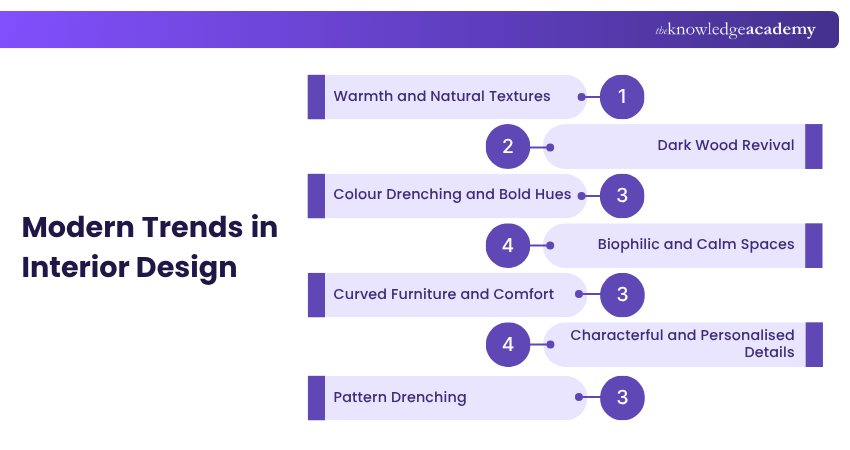
1) Warmth and Natural Textures
Modern interiors increasingly favour raw, tactile materials that create a sense of comfort and authenticity, moving away from overly polished finishes:
a) Natural Materials: Stone, lime plaster, clay, and textured fabrics are used to bring an earthy and grounded feel to interiors.
b) Layered Surfaces: Mixing materials such as wood, fabric, and stone adds depth, making spaces feel richer and more inviting.
c) Nature-inspired Feel: These elements help create calming environments that connect indoor spaces with nature.
2) Dark Wood Revival
There is a growing preference for deeper, richer wood tones that add warmth and character to interiors:
a) Deep Wood Shades: Materials like walnut, mahogany, and smoked oak are widely used in furniture and finishes.
b) Vintage Appeal: Slightly aged or rustic finishes give spaces a timeless and lived-in look.
c) Warm Atmosphere: Dark wood creates a cosy, sophisticated setting, especially when paired with soft lighting.
3) Colour Drenching and Bold Hues
Colour is being used more confidently to create immersive and cohesive interiors:
a) Full Coverage: Walls, ceilings, trims, and even furniture are painted in the same tone for a unified look.
b) Rich Colours: Deep greens, plum, and warm earthy shades add depth and personality.
c) Cohesive Look: This approach enhances visual impact while maintaining harmony across the space.
4) Biophilic and Calm Spaces
Interiors are increasingly designed to support well-being and create peaceful environments:
a) Nature Integration: Organic shapes, natural tones, and materials help bring the outdoors inside.
b) Minimal Distraction: Clean, simple layouts reduce visual noise and promote relaxation.
c) Wellness Focus: These spaces are designed to improve mood, reduce stress, and support a balanced lifestyle.
5) Curved Furniture and Comfort
Furniture design is shifting towards softer, more comfortable forms:
a) Organic Shapes: Rounded edges and curved silhouettes create a gentle and inviting look.
b) Comfort-first Design: Plush seating and ergonomic designs prioritise relaxation and usability.
c) Relaxed Aesthetic: Interiors feel more welcoming and less rigid, encouraging a lived-in atmosphere
6) Characterful and Personalised Details
Homes are becoming more reflective of individual personality and style:
a) Decorative Elements: Features like detailed cabinetry, trims, and unique finishes add visual interest.
b) Vintage Pieces: Blending antique and modern items creates a layered, curated appearance.
c) Personal Expression: Interiors are designed to tell a story, making spaces more meaningful and unique.
7) Pattern Drenching
Patterns are used more extensively to enhance texture and visual depth:
a) Layered Patterns: Small-scale prints such as florals, stripes, and geometric designs are combined thoughtfully.
b) Across Surfaces: Patterns are applied to walls, upholstery, curtains, and accessories for consistency.
c) Textural Effect: This technique adds richness and dimension without overwhelming the overall design
Learn to create basic shapes and scale sketches using Fusion 360 with our Fusion 360 Essential Training – Register today!
Importance of Interior Design
Interior Design performs an important role in shaping our daily experiences. Beyond visual appeal, it is important for several practical and lifestyle reasons:
1) Enhances Functionality: Interior Design ensures spaces are practical and well-organised, transforming inefficient areas into layouts that suit daily needs and improve ease of use.
2) Improves Aesthetic Appeal: It creates visually pleasing environments through the thoughtful use of colours, furniture, and décor, making spaces more inviting and enjoyable.
3) Boosts Mood and Well-being: Elements like lighting, colour schemes, and layout can positively influence mood, reduce stress, and support overall mental well-being.
4) Increases Property Value: A well-designed interior enhances the appeal of a property, making it more engaging and alluring to buyers and increasing its market value.
5) Supports Lifestyle Needs: Interior Design adapts spaces to match individual lifestyles, ensuring comfort, convenience, and better daily living experiences.
6) Encourages Safety and Accessibility: Good design considers layout, movement, and materials to create safe, accessible, and user-friendly environments.
7) Saves Time and Money: Effective planning helps avoid costly mistakes and reduces the need for future changes or renovations.
8) Boosts Productivity and Comfort: Well-designed spaces, especially work environments, improve focus, reduce fatigue, and enhance comfort through ergonomic and thoughtful design choices.
The Future of Interior Design
As we look ahead, it becomes evident that Interior Design will evolve in unprecedented ways, continuing to shape and be shaped by the world around us. Here are some considerations and speculations about its future trajectory.
1) Technological Innovations
The rise of 3D printing could revolutionise custom furniture and decor manufacturing. Designers will be able to create bespoke pieces tailored to fit specific spaces and tastes. Artificial intelligence might play a role in space planning and design conceptualisation, analysing users' behaviour and preferences to craft optimised interiors.
With advancements in touch-responsive technology and Augmented Reality, walls and surfaces might become more interactive, shifting colours or patterns based on moods or specific activities.
2) Environmental Consciousness
As the push towards sustainability intensifies, interiors will prioritise designs that support net-zero energy consumption, integrating renewable energy solutions seamlessly. The future will see a stronger emphasis on upcycled furniture and decor, reducing waste and championing a circular economy approach.
With increasing urban pollution, interior spaces will focus more on air purification systems and materials that enhance indoor air quality.
3) Adaptive and Fluid Spaces
With urban spaces shrinking, interiors will need to be more adaptive. Rooms might have multiple purposes, shifting from a home office during the day to a relaxation zone at night. Furniture design will lean towards modularity, enabling inhabitants to reconfigure spaces easily based on immediate needs.
Is Interior Designing Easy?
Yes, Interior Designing can be easy and enjoyable if you have a passion for creativity and a keen eye for detail. With interest and dedication, learning the basics of space planning, colours, and styles becomes exciting rather than difficult.
Today, many courses, tools, and design software make the process even more accessible. Like any skill, it gets easier with practice and experience. If you love designing spaces, Interior Design can feel more like fun than work.
How Long Does it Take to Become an Interior Designer?
The time it takes to Become an Interior Designer depends on your education path. A diploma course can take one to two years, while a bachelor’s degree in Interior Design usually takes about three to four years.
After completing the course, gaining practical experience or internships as an Interior Designer helps build skills. In some countries, becoming a certified designer may also require passing exams. Interior Designer salary potential often increases with certification, experience, and a strong portfolio. Overall, it can take around three to five years to start a professional career in Interior Design.
Conclusion
From choosing the right colours to creating layouts that improve comfort and flow, even small changes can make a big difference. With future trends focusing on wellness and eco-friendliness, it is easier than ever to design a space that truly works for you. Whether you're planning a full makeover or simple updates, being aware of What is Interior Design helps you look for good designs that add value and comfort.
Start your journey in design today – Explore our AutoCAD Courses and bring your ideas to life!
Frequently Asked Questions
What is the Main Purpose of Interior Design?

The primary objective of Interior Design is to improve the functionality and aesthetics of indoor spaces. By harmonising elements such as colour, lighting, furniture, and layout, Interior Design creates environments that optimise comfort, productivity, and overall well-being.
What is the Value of Interior Design?
Interior Design adds significant value by elevating the appeal and functionality of indoor spaces. It enhances quality of life by fostering comfortable, aesthetically pleasing environments conducive to productivity, relaxation, and emotional well-being, thereby enriching daily experiences and overall satisfaction.
What are the Other Resources and Offers Provided by The Knowledge Academy?
The Knowledge Academy takes global learning to new heights, offering over 3,000+ online courses across 490+ locations in 190+ countries. This expansive reach ensures accessibility and convenience for learners worldwide.
Alongside our diverse Online Course Catalogue, encompassing 17 major categories, we go the extra mile by providing a plethora of free educational Online Resources like Blogs, eBooks, Interview Questions and Videos. Tailoring learning experiences further, professionals can unlock greater value through a wide range of special discounts, seasonal deals, and Exclusive Offers.
What is The Knowledge Pass, and How Does it Work?
The Knowledge Academy’s Knowledge Pass, a prepaid voucher, adds another layer of flexibility, allowing course bookings over a 12-month period. Join us on a journey where education knows no bounds.
What are the Related Courses and Blogs Provided by The Knowledge Academy?
The Knowledge Academy offers various AutoCAD Courses, including the Interior Design Course, AutoDesk Maya Training, and the Fusion 360 Essential Training. These courses cater to different skill levels, providing comprehensive insights into Interior Designer Salary.
Our Office Applications Blogs cover a range of topics related to What is Interior Design, offering valuable resources, best practices, and industry insights. Whether you are a beginner or looking to advance your Designing skills, The Knowledge Academy's diverse courses and informative blogs have got you covered.

Richard Harris


Senior Full Stack Developer and Technology Educator
Richard Harris is a highly experienced full-stack developer with deep expertise in both frontend and backend technologies. Over his 12-year career, he has built scalable web applications for startups, enterprises and government organisations. Richard’s writing combines technical depth with clear explanations, ideal for developers looking to grow in modern frameworks and tools.

Upcoming Office Applications Resources Batches & Dates
Date
 Interior Design Course
Interior Design Course
Fri 28th Aug 2026
Interior Design Course
Fri 16th Oct 2026

 If you wish to make any changes to your course, please


