


 Top Rated Course

We may not have the course you’re looking for. If you enquire or give us a call on +60 1800812339 and speak to our training experts, we may still be able to help with your training requirements.
Importance of Waste Management: Why it Matters
Sienna Roberts 21 April 2026The Importance of Waste Management lies in protecting the environment, improving public health, reducing pollution, and ensuring long-term sustainability. It encourages responsible habits in communities and supports a cleaner, safer world for the future. Managing waste preserves our planet and promotes a sustainable way of living.

Training Outcomes Within Your Budget!
We ensure quality, budget-alignment, and timely delivery by our expert instructors.
Table of Contents
Related Courses
Modern living is a byproduct of waste, which is inevitable, and its management can impact our health, the environment, and the future resources in a far-reaching manner. The role that waste management plays is crucial as it assists in attaining sustainable development as well as minimising pollution. This blog explains the Importance of Waste Management, alongside its benefits and how they can be implemented.
Table of Contents
1) What is Waste Management?
2) Importance of Waste Management
3) What are the 5 Rs of Waste Management?
4) The Role of Technology in Waste Management
5) Is Waste Management Cost-Effective?
6) Conclusion
What is Waste Management?
Waste Management refers to handling waste from when it is created until it is safely disposed of. It involves several essential steps, such as collecting waste, transporting it to facilities, recycling, and disposing of it. This series of activities helps to manage the waste produced by homes, businesses, and everyday human activities.
Waste Management covers various types of waste, such as solid, liquid or gas waste. Each type requires its own method of treatment. The main aim is to reduce the amount of waste ending up in landfills. It treats waste as a useful resource that can be recycled and turned into energy. This keeps our environment cleaner and promotes a sustainable way of living.
Importance of Waste Management
Effective Waste Management promotes a circular economy by maximising the reuse and recovery of materials. Here are some points that highlight the Importance of Waste Management:

1) Eco Protection
Proper Waste Management reduces pollution and contamination of air, water, and soil while also protecting ecosystems and public health. It also minimises landfill waste, which lowers greenhouse gas emissions, which can affect climate change as well.
2) Resource Efficiency
Resource Efficiency focuses on using materials and resources in a smarter, more sustainable way. It encourages recycling, reusing, and choosing eco-friendly products to get the most value with the least waste. By improving efficiency, businesses and individuals can save money, lower their environmental impact, and help preserve natural resources.
3) Energy Conservation
Waste Management and energy conservation are crucial for a sustainable future. Reducing energy consumption and promoting efficient technologies conserves resources, minimises reliance on fossil fuels and lowers energy bills. These practices contribute to a cleaner environment.
4) Visual Enhancement
Proper Waste Management improves the appearance of our surroundings by reducing litter, overflowing bins, and unsightly waste piles. Clean streets, parks, and workplaces create a more pleasant and healthy environment for everyone. A visually clean space not only boosts community pride but also encourages people to follow good waste disposal habits.
5) Financial Gains
Effective Waste Management can reduce disposal costs, save on raw materials and even has the potential to create new revenue streams. Responsible Waste Management can also help businesses comply with regulations and avoid potential fines.
Improve safety management skills with NEBOSH HSE Certificate in Process Safety Management today!
6) Waste Volume Reduction
Waste Volume Reduction focuses on reducing the total amount of waste generated by individuals, businesses, and industries. By cutting down waste at the source, organisations can minimise the need for transportation, storage, and landfill space. This not only saves costs but also supports a cleaner, more sustainable environment.
7) Waste-to-energy Conversion
Waste-to-energy (WTE) conversion is an innovative solution that transforms non-recyclable waste into usable energy, like electricity or heat. This process reduces the volume of waste while providing a renewable energy source. WTE technology supports cleaner cities and decreases landfill dependency.
8) Adds Value to Waste
When waste materials receive proper management, they transform into valuable resources. A waste management provider enables businesses to achieve waste management through their waste reuse, recycling, and energy recovery processes. Direct financial benefits arise from the recycling of scrap metal and certain other materials.
9) Climate Mitigation
Proper Waste Management decreases the amount of waste sent to landfills, which helps reduce methane emissions, a potent greenhouse gas. By diverting waste through recycling, we can actively mitigate climate change. Every small action in reducing landfill waste contributes to slowing the worsening climate crisis.
Turn hazards into safe wins with our NEBOSH Award in Health and Safety at Work - Join today!
10) Regulatory Compliance
Compliance involves proper segregation, storage and disposal, maintaining records and using licensed waste carriers. Adhering to these and including proper regulations ensures that waste is managed in ways that protect the environment.
11) Sustainable Growth
Effective Waste Management is crucial for sustainable growth as it conserves resources, reduces pollution and minimises the environmental impact of human activities. This will also help in resource conservation, and provide social, economic, and environmental benefits.
12) Circular Economy
It is a system where materials are kept in use for as long as possible and waste is seen as a valuable resource. It focuses on reusing, repairing, and recycling to reduce waste and protect natural resources. Effective Waste Management plays a key role in supporting this sustainable cycle.
13) Saves Businesses Money
Waste management systems achieve their goal by decreasing both waste production and waste disposal expenses. Business operations become more cost-effective through enhanced efficiency because landfill taxes are rising.
14) Aligns with Customer Values
Companies demonstrate their dedication to environmental protection through their implementation of robust waste management systems. The business approach enables companies to attract environmentally aware customers while building trust with their target audience.
Explore essential waste and safety practices with the NEBOSH Award in Environmental Awareness at Work – Register today!
What are the 5 Rs of Waste Management?
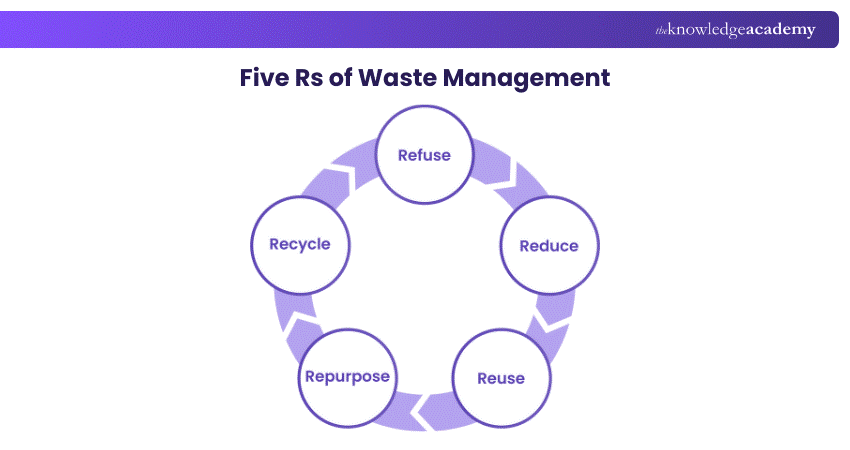
For the protection of the environment, businesses must adopt smarter and sustainable practices. The five points below help organisations to cut waste, manage money, and support a cleaner environment.
1) Refuse
The first step of effective Waste Management is to avoid waste from the start. Businesses must refuse items they do not require, such as single-use plastics or disposable products. By avoiding unnecessary or unwanted materials, less waste is created in the first place.
2) Reduce
It is essential to lower the amount of waste produced. Companies can reduce waste by adopting minimal packaging, switching to energy-efficient tools, such as paperless bills. By reducing waste, it cuts down costs and supports sustainability.
3) Reuse
Before throwing waste away, some of it can be used again. Items, such as cardboard boxes, packaging or scrap paper, can be reused for daily work needs. By reusing material, it cuts down waste and reduces the need for new supplies.
4) Repurpose
If any material or item does not serve its primary purpose, try to find ways to utilise it again. Items, such as old furniture, can be repaired and reused, while unused office items can be donated to charities. Repurposing helps to extend the lifecycle of a product and prevent landfill.
5) Recycle
The final step is to recycle materials, such as paper, glass, or metals. This can be done through providing recycling bins around workplaces and educating employees on the importance of responsible recycling. This keeps valuable resources in use and minimises environmental degradation.
The Role of Technology in Waste Management
Through its advanced collection methods, waste management practices achieve better environmental outcomes because technology improves their waste collection efficiency. The use of tracking systems and data analytics helps organisations optimise routes, reduce costs, and improve recycling performance.
Is Waste Management Cost-Effective?
Effective waste management practices decrease landfill usage while reducing disposal costs and enhancing operational efficiency. Recycling and resource recovery activities enable organisations to decrease expenses, which makes them an affordable solution.
Conclusion
To transform waste into a valuable resource, people need to make educated decisions. The environmental protection through better waste practices enables organisations to achieve their performance goals. This highlights the Importance of Waste Management in driving meaningful and measurable change.
Learn health and safety management with our NEBOSH Courses - Join today!
Frequently Asked Questions
Why is Waste Control Important?

Waste control is important for protecting the environment and public health. It lowers pollution, conserves natural resources, and minimises the amount of waste in landfills. This is valuable for creating cleaner communities and a sustainable future for everyone.
What is the Biggest Problem in Waste Management?
The problem is the growing amount of waste and the difficulty in finding ways to recycle and dispose of it. This is especially challenging with plastic waste, e-waste, and other hard-to-manage materials.
What are the Other Resources and Offers Provided by The Knowledge Academy?
The Knowledge Academy takes global learning to new heights, offering over 3,000 online courses across 490+ locations in 190+ countries. This expansive reach ensures accessibility and convenience for learners worldwide.
Alongside our diverse Online Course Catalogue, encompassing 17 major categories, we go the extra mile by providing a plethora of free educational Online Resources like Blogs, eBooks, Interview Questions and Videos. Tailoring learning experiences further, professionals can unlock greater value through a wide range of special discounts, seasonal deals, and Exclusive Offers.
What is The Knowledge Pass, and How Does it Work?
The Knowledge Academy’s Knowledge Pass, a prepaid voucher, adds another layer of flexibility, allowing course bookings over a 12-month period. Join us on a journey where education knows no bounds.
What are the Related Courses and Blogs Provided by The Knowledge Academy?
The Knowledge Academy offers various NEBOSH Courses, including the NEBOSH Working With Wellbeing Training, NEBOSH HSE Introduction To Incident Investigation Training, and NEBOSH HSE Certificate In Managing Stress At Work Training. These courses cater to different skill levels, providing comprehensive insights into Risk Control in IOSH.
Our Health & Safety Blogs cover a range of topics related to Waste Management, offering valuable resources, best practices, and industry insights. Whether you are a beginner or looking to advance your Health & Safety skills, The Knowledge Academy's diverse courses and informative blogs have got you covered.
Upcoming Health & Safety Resources Batches & Dates
Date
 NEBOSH Award in Environmental Awareness at Work
NEBOSH Award in Environmental Awareness at Work
Fri 7th Aug 2026
NEBOSH Award in Environmental Awareness at Work
Fri 27th Nov 2026

 If you wish to make any changes to your course, please


