


 Top Rated Course

We may not have the course you’re looking for. If you enquire or give us a call on +60 1800812339 and speak to our training experts, we may still be able to help with your training requirements.
What is Employee Wellbeing and Why It Matters in the Workplace
Amelia Williams 27 April 2026Employee Wellbeing is the overall state of an employee’s mental, emotional, social, financial, and physical health within an organisation. This can be measured by various factors, such as their relationship with colleagues, workplace safety, and fair pay. This fosters a positive work environment, productivity and engagement.

Training Outcomes Within Your Budget!
We ensure quality, budget-alignment, and timely delivery by our expert instructors.
Table of Contents
Many organisations still struggle to maintain Employee Wellbeing, despite growing awareness of its importance. This has become increasingly significant as the line between personal life and work continues to blur. As a result, professionals face increasing difficulty in balancing their professional and personal lives, making Employee Wellbeing a key priority for organisations striving for sustainable performance and employee satisfaction.
In this blog, we discuss what Employee Wellbeing is, why it matters, and how it can be improved. Read on to discover how small changes can make a meaningful difference to Employee Wellbeing. Let’s get started.
Table of Contents
1) What is Employee Wellbeing?
2) Why is Employee Wellbeing Important?
3) Elements of Employee Wellbeing
4) How to Improve Employee Wellbeing?
5) How Does Wellbeing Affect Employee Attraction and Retention?
6) Conclusion
What is Employee Wellbeing?
Employee Wellbeing refers to the overall physical, mental, emotional, and social health of employees in the workplace. It focuses on creating a supportive environment where individuals feel valued, safe, and motivated to perform their best.
Employee Wellbeing includes work-life balance, stress management, job satisfaction, positive workplace relationships, and access to health and wellbeing resources. It helps organisations improve productivity, engagement, and long-term employee retention.

Why is Employee Wellbeing Important?
Employee Wellbeing is important because it directly impacts performance, engagement, and organisational success. When employees feel supported physically and mentally, they are more productive, motivated, and committed to their roles.
Strong wellbeing practices help reduce stress, absenteeism, and burnout while improving morale and retention. Prioritising Employee Wellbeing also creates a positive workplace culture, strengthens employer reputation, and supports long-term business sustainability.
Elements of Employee Wellbeing
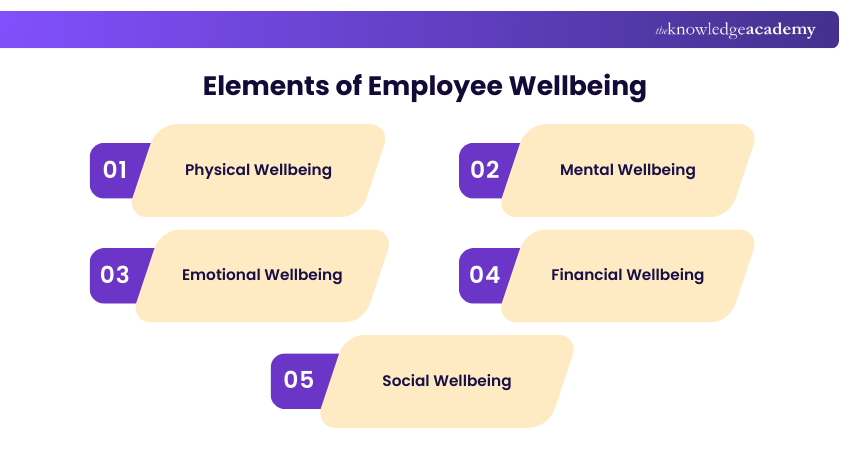
Employee Wellbeing comprises multiple elements. The key elements of Employee Wellbeing are:
1) Physical Wellbeing
Physical wellbeing focuses on supporting employee's physical health through healthy habits and lifestyle choices. It helps employees stay energetic, manage daily work demands effectively, and maintain overall physical wellness, which contributes to sustained performance and reduced absenteeism.
2) Mental Wellbeing
Mental wellbeing focuses on maintaining positive mental health at work by managing stress, thoughts, and emotional responses. It helps employees cope with workplace challenges, build resilience, and maintain focus and clarity, even during periods of pressure or change.
3) Emotional Wellbeing
Emotional wellbeing is closely linked to mental wellbeing. It involves understanding, expressing, and managing emotions in a healthy way. This enables employees to adapt to change, handle setbacks positively, and maintain emotional balance through self-awareness and emotional strength.
4) Financial Wellbeing
Financial wellbeing is about helping employees feel financially secure and confident in managing their money. It focuses on reducing financial stress, improving financial awareness, and supporting stability, rather than wealth, so employees can focus better on work and life.
5) Social Wellbeing
Social wellbeing refers to building healthy and supportive relationships at work and beyond. Strong social connections help employees feel valued, improve collaboration, boost confidence, and reduce workplace stress, contributing to a more inclusive and positive work environment.
Understand ethical principles for professional workplace behaviour by signing up for our Ethics in Workplace Training today!
How to Improve Employee Wellbeing?
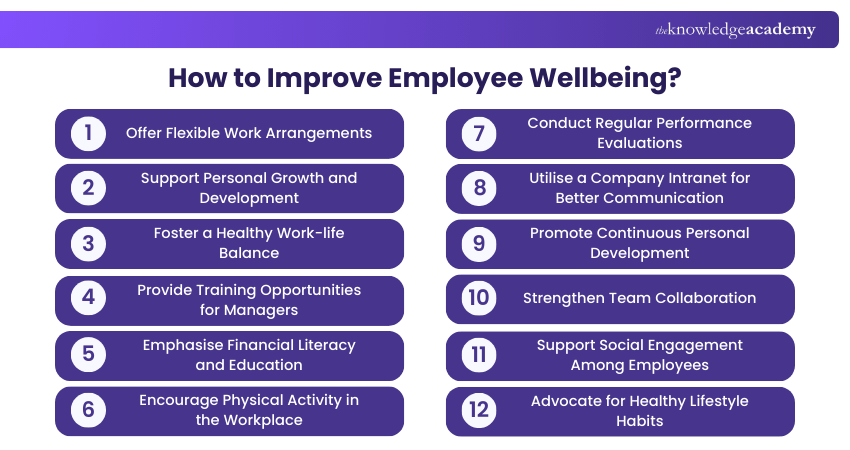
Organisations can implement several effective strategies to improve Employee Wellbeing. Workplace stress often arises not from physical conditions, but from a lack of balance, support, and opportunities for growth. Let’s look at a few ways through which Employee Wellbeing can be improved:
1) Offer Flexible Work Arrangements
Offering flexible work arrangements helps employees feel valued and supported. This strengthens work-life balance and positively influences both physical and mental wellbeing. Flexible work arrangements can lead to:
1) Reduced stress
2) Improved work-life balance
3) Better mental health
4) Enhanced physical health
2) Support Personal Growth and Development
Personal growth and development are one of the key aspects of Employee Wellbeing. It is continuous progress that primarily focuses on enhancing employee knowledge, skills, and required attributes to maximise their potential. Personal growth and development lead to:
1) Job satisfaction
2) Improved mental health
3) Increased engagement
4) Enhanced career confidence
3) Foster a Healthy Work-life Balance
Fostering a healthy work-life balance is important for both personal wellbeing and sustained employee productivity. When employees manage work and personal life effectively, it results in:
1) Fewer health problems
2) Increased productivity & engagement
3) Fewer stress
4) More mindfulness
4) Provide Training Opportunities for Managers
Consistent training opportunities for managers improve leadership quality and employee support. Managers are directly responsible for influencing Employee Wellbeing through their actions and decisions. This helps to achieve:
1) Proactive support
2) Positive culture
3) Increased engagement & loyalty
4) Career growth
5) Emphasise Financial Literacy and Education
Financial literacy is an essential wellbeing skill for employees across all roles and experience levels. It helps employees manage money confidently and reduce financial stress. Core components include:
1) Budgeting & money management
2) Saving & investing
3) Debt management
4) Risk management
6) Encourage Physical Activity in the Workplace
Encouraging physical activity in the workplace supports overall employee health and energy levels. Even short periods of movement can reduce health risks associated with inactivity. Physical activity supports:
1) Stress relief
2) Improved focus
3) Reduced chronic disease risk
4) Increased energy
7) Conduct Regular Performance Evaluations
Regular performance evaluations allow employees to develop a wide range of skills, which helps them perform their roles. This will enable them to progress both their career and their personal life. Feedback is important on a regular basis, which boosts:
1) Clarity
2) Growth & development
3) Accountability
4) Motivation
8) Utilise a Company Intranet for Better Communication
Utilising the company intranet helps employees to communicate, collaborate and stay connected with the team. It creates a centralised and accessible platform for updates, feedback, and resources. This aids:
1) Transparency
2) Centralised info
3) Peer-to-Peer recognition
4) Enhances work-life integration
Gain in-depth knowledge about various strategies for reducing stress by registering in our Work Place Stress and Mental Health Identification for Manager Course today.
9) Promote Continuous Personal Development
Continuous development integrates growth, work-life balance, and a positive environment. It is essential for employees as they can benefit from this. It benefits employees by:
1) Increased confidence
2) Enhanced resilience
3) Sense of purpose
4) Improved mental health
10) Strengthen Team Collaboration
Strengthening team collaboration builds trust and psychological safety in the workplace. Employees feel more comfortable sharing ideas and managing workloads together, which leads to:
1) Reduces stress
2) Builds trusts
3) Balances workloads
4) Improved communication and teamwork
11) Support Social Engagement Among Employees
Supporting social engagement helps to have transparent feedback and team brainstorming. This helps organisations grow while promoting:
1) Enhances collaboration
2) Fosters a sense of belonging
3) Builds innovation
4) Boosts morale
12) Advocate for Healthy Lifestyle Habits
Advocating healthy lifestyle habits means creating a supportive and flexible workplace culture. It encourages employees to prioritise physical and mental health, leading to:
1) Improved physical & mental health
2) Lower healthcare costs
3) Reduced absenteeism
4) Increased productivity
How Does Wellbeing Affect Employee Attraction and Retention?
Employee Wellbeing plays a key role in attracting and retaining talent. Organisations that prioritise wellbeing create supportive work environments that appeal to potential employees and encourage existing staff to stay long term. Let’s see how wellbeing supports both attraction and retention:
Attraction
1) Enhanced Employer Reputation: Organisations that actively support wellbeing build a stronger employer brand, making them more appealing to professionals seeking healthy workplace cultures.
2) Meets Employee Expectations: Many candidates now prioritise wellbeing initiatives when evaluating job opportunities, viewing them as essential rather than optional.
3) Wider Talent Pool: A strong wellbeing focus helps attract diverse talent, especially individuals seeking flexibility, balance, and a supportive work environment.
Retention
1) Increased Loyalty and Engagement: When employees feel their wellbeing is supported, they are more committed, trusting, and engaged.
2) Better Work-life Balance: Employees are less likely to leave organisations that help them maintain balance, reducing burnout and turnover.
3) Stronger Culture and Relationships: Wellbeing initiatives promote open communication, collaboration, and respect, strengthening workplace relationships and reducing conflicts.
Conclusion
Employee Wellbeing plays a crucial role in an organisation’s success, as it leads to increased productivity, engagement, and retention. By supporting employee’s physical, mental, and emotional health, the organisation reduces poor performance and stress. Prioritising wellbeing enables organisations to build a healthier workforce and sustain growth over time.
Learn strategies to boost morale and increase productivity among teams by registering for our Employee Engagement Training now!
Frequently Asked Questions
What are the 6 Pillars of Employee Wellbeing?

The 6 Pillars of Employee Wellbeing focus on employee health, resulting in a satisfied, high-performing workforce. The six pillars are:
1) Job Security
2) Financial Security
3) Health
4) Support
5) Protection
6) Work-life Balance
How to Measure Employee Wellbeing?
Employee Wellbeing can be measured through a combination of surveys, pulse checks, absenteeism rates, workload assessments, engagement scores, and feedback on stress levels and work-life balance. Tracking these indicators regularly helps organisations understand employee needs and identify areas requiring improvement.
What are the Other Resources and Offers Provided by The Knowledge Academy?
The Knowledge Academy takes global learning to new heights, offering over 3,000+ online courses across 490+ locations in 190+ countries. This expansive reach ensures accessibility and convenience for learners worldwide.
Alongside our diverse Online Course Catalogue, encompassing 19 major categories, we go the extra mile by providing a plethora of free educational Online Resources like Blogs, eBooks, Interview Questions and Videos. Tailoring learning experiences further, professionals can unlock greater value through a wide range of special discounts, seasonal deals, and Exclusive Offers.
What is The Knowledge Pass, and How Does it Work?
The Knowledge Academy’s Knowledge Pass, a prepaid voucher, adds another layer of flexibility, allowing course bookings over a 12-month period. Join us on a journey where education knows no bounds.
What are the Related Courses and Blogs Provided by The Knowledge Academy?
The Knowledge Academy offers various Employee Engagement Training, including Employee Relations Training, Employee Engagement Training and Team and Management Ethics Training. These courses cater to different skill levels, providing comprehensive insights into Employee Lifecycle.
Our HR Blogs cover a range of topics related to Employee Engagement, offering valuable resources, best practices, and industry insights. Whether you are a beginner or looking to advance your Human Resource skills, The Knowledge Academy's diverse courses and informative blogs have got you covered.

Amelia Williams


Senior Human Resources Consultant and Learning Specialist
Amelia Williams is a highly respected HR professional with over 12 years of experience in human capital management, talent development and workplace policy. She has worked across sectors including education, healthcare and corporate services, focusing on aligning people strategies with organisational goals. Amelia’s writing blends current HR trends with practical solutions for modern workplace challenges.

Upcoming HR Resources – Learn about Human Resources Batches & Dates
Date
 Employee Relations Training
Employee Relations Training
Fri 14th Aug 2026
Employee Relations Training
Fri 9th Oct 2026

 If you wish to make any changes to your course, please


