


 Top Rated Course

We may not have the course you’re looking for. If you enquire or give us a call on + 800 908601 and speak to our training experts, we may still be able to help with your training requirements.
What Is PPC? Pay-Per-Click Advertising Explained
The Knowledge Academy 18 April 2026Pay-Per-Click (PPC) is a digital advertising model where businesses pay a fee each time their ad is clicked, driving targeted traffic to their website or app. It helps businesses gain instant visibility on Search Engines while measuring performance through data-driven insights. It is commonly used in Search Engines, Social Media and more.

Training Outcomes Within Your Budget!
We ensure quality, budget-alignment, and timely delivery by our expert instructors.
Table of Contents
Curious about how a simple tool can give your business a clear, results-driven direction and a real boost? Pay-Per-Click (PPC) is more than just another Digital Marketing tool. It is a strategic way to drive targeted traffic to your website by having your ads on platforms such as Google, Bing, and Social Media, to reach the right audience at the right time.
Here is what makes PPC truly appealing. It can place your website at the top of search results, increase visibility, and ensure your message reaches people who are already searching for what you offer. In this blog, we’ll explore What is PPC, how it works, and why it has become an inevitable strategy for businesses looking to grow online. Let's dive in! To Know about PPC
Table of Contents
1) What is PPC? The Basics of Pay-Per-Click
2) Who Should Use PPC?
3) Different Types of PPC Ads
4) What are the Key Elements of PPC Strategy and Campaign Planning?
5) How Does Pay-Per-Click (PPC) Work in Marketing?
6) Top PPC Platforms
7) Advantages of PPC in Digital Marketing
8) Conclusion
What is PPC? The Basics of Pay-Per-Click
Pay-Per-Click (PPC) is an online marketing and advertising technique where businesses pay a fee each time someone clicks on their advertisement (ad). In simple terms, you are charged for the ad only when a user clicks on it. These ads are typically shown to users based on keywords, location, interests, or online behaviour, making PPC highly targeted and results-focused.
Rather than relying mainy on organic traffic, PPC allows businesses to buy targeted visits to their website through paid ads. This makes PPC a highly controlled and performance-driven marketing approach. It offers measurable results and immediate visibility, making it an ideal marketing approach for businesses of all sizes.
Who Should Use PPC?
PPC is suitable for businesses and professionals looking to achieve quick, measurable results online. Let's check who can use it:
1) Small and Medium-Sized Businesses: PPC helps smaller businesses get noticed online quickly without waiting for organic rankings.
2) Startups and New Businesses: Startups can use PPC to promote new products or services fast. It helps bring early visitors, leads, and feedback from the market.
3) E-commerce Businesses: Online stores use PPC to show their products to people who are ready to buy. This makes it easier to increase website visits and sales.
4) Service-Based Businesses: Service providers like agencies, consultants, and local businesses can use PPC to reach people searching for specific services, especially in their local area.
5) Businesses Needing Immediate Traffic and Leads: PPC is useful when quick results are needed. It helps bring instant traffic and leads to a website.
6) Established Brands and Enterprises: Well-known brands use PPC to promote offers, run campaigns, and stay visible in competitive markets.
Different Types of PPC Ads
Understanding the types of PPC Advertising can help businesses choose the right platforms and strategies to maximise their advertising effectiveness. Here are some of the key types of PPC Ads:
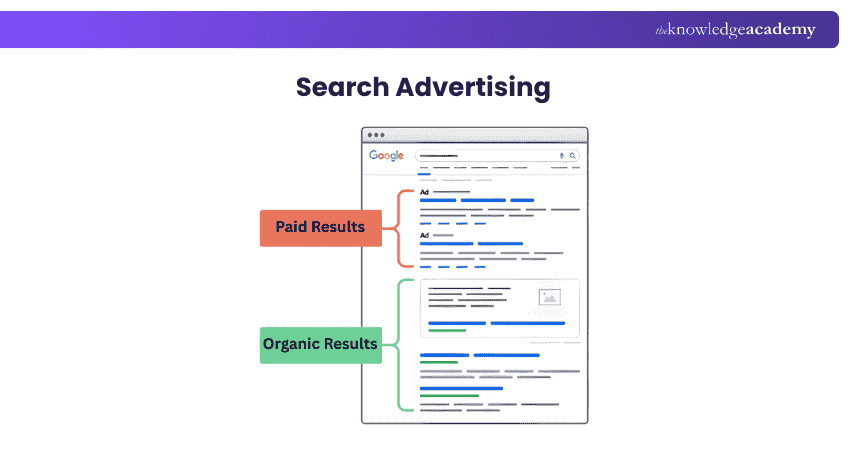
1) Search Advertising
This is one of the most common and widely used forms of PPC advertising. It involves displaying text ads on search results when users search for some keywords or phrases. The ads appear at either the top or bottom of the search results and are often labelled as “sponsored” or “ad.”
2) Display Advertising
Display advertising is a visual ad shown on websites, apps, and blogs across the internet. They help increase brand awareness by reaching users while they browse online, even if they are not actively searching.
3) Social Media Advertising
Social Media advertising is defined as the use of Facebook, Instagram, Twitter, and LinkedIn to enable businesses to create highly targeted ads. It allows businesses to engage with their audience and promote products or services. It also helps drive website traffic and generate vast leads.
4) Remarketing or Retargeting Approach
Remarketing is a process of user targeting who have visited a website of the business previously or shown interest in its products or services. This strategy allows businesses to display ads, particularly to these users.
5) Video Advertising
Video advertisements are shown on platforms like YouTube and other Social Media feeds. They help businesses tell their story, showcase products, and capture attention through engaging visual content.
Learn how to plan, create, and promote videos with our Video Marketing Course – Register today!
6) Shopping Ads
Shopping ads are designed for e-commerce businesses in order to promote their products within Search Engine results directly. These ads display product images, prices, and merchant information, further making them highly informative and visually appealing.
What are the Key Elements of PPC Strategy and Campaign Planning?
The key elements of PPC strategy and campaign planning are keyword research and ad scheduling. Here is a detailed overview of these key elements:
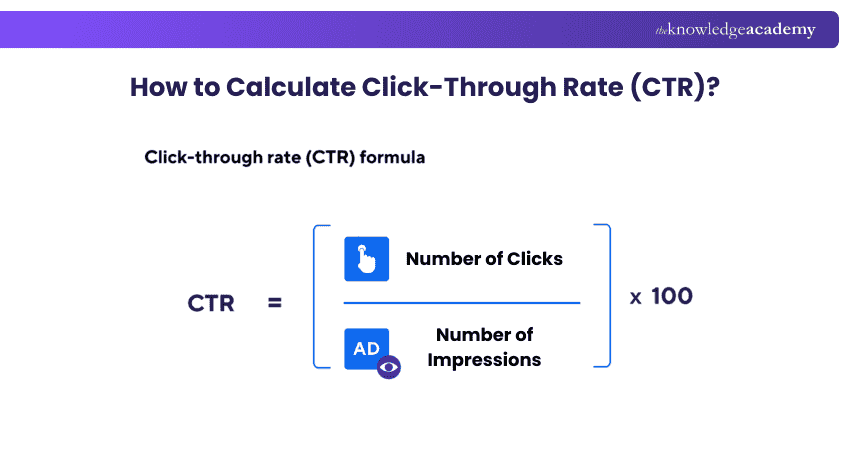
1) Click-Through Rate (CTR)
Click-Through Rate (CTR) measures the percentage of users who click on an ad after they view it. It is calculated by dividing the total ad click numbers by the number of ad impressions.
2) Conversion Rate (CR)
Conversion Rate (CR) measures the percentage of users who complete a desired action after clicking on your ad. This action could be for purchasing, filling out a form, or subscribing to a newsletter.
3) Return on Ad Spend (ROAS)
Return on Ad Spend (ROAS) measures the revenue earned for every dollar that are spent on advertising. It is calculated by dividing the total revenue generated from campaigns by the total overall campaign cost.
4) Quality Score
Quality Score is a key metric that is used by Search Engine platforms like Google Ads to evaluate their keyword quality. It is determined by several factors, which include the expected Click-Through Rate (CTR), ad relevance, landing page experience, and historical performance.
5) Cost Per Click (CPC)
Cost Per Click, is the amount organisations pay each time a user clicks on their ads. It is influenced by factors such as bid competition, ad relevance, and Quality Score. A well-optimised campaign and the dynamics of PPC and Google AdWords can help reduce CPC while still driving high-quality traffic.
6) Impressions
Impressions represent the times user ads are displayed, providing valuable insights into PPC campaigns reach and visibility. A high number of impressions indicates that a large audience is watching the ads.
7) Cost Per Conversion
Cost Per Conversion is the average cost spent on PPC advertising for each achieved conversion. It is calculated by dividing the total campaign costs by the total conversion numbers.
8) Analytics and Campaign Optimisation
Analytics and optimisation involve tracking performance data and making regular improvements. By analysing results, adjusting bids, refining keywords, and testing ad variations with PPC tools, businesses can continuously improve campaign performance.
Build effective, results-driven marketing plans with our Business Marketing Strategies Training – Join now!
How Does Pay-Per-Click (PPC) Work in Marketing?
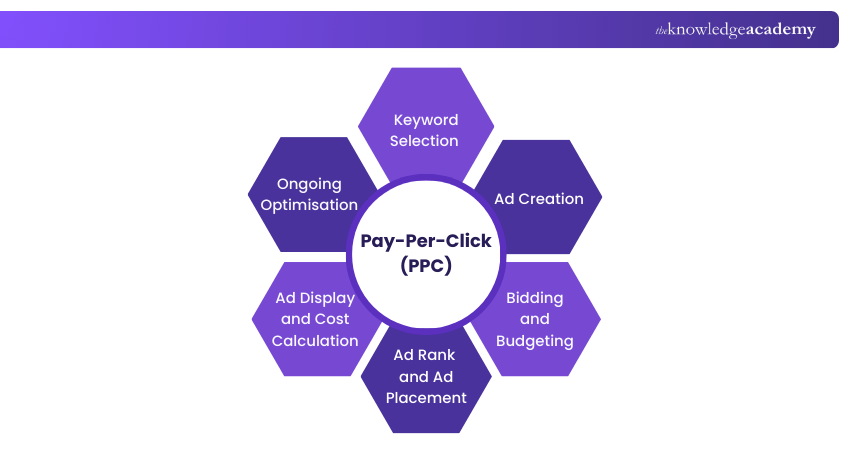
PPC advertising works by displaying paid ads to users based on selected keywords, audiences, or campaign goals. Advertisers choose a campaign type, set targeting options, define a budget and bidding strategy, add a landing page URL, and create the ad. Now that you know What is PPC, here's how you can do it in a detail view:
1) Keyword Selection
The foundation of any PPC campaign that are successful is keyword selection. Conducting detailed keyword research is essential to ensure these keywords align with user search intent and have adequate search volume.
2) Ad Creation
Once the keywords have been decided, the next step is to develop compelling ads to efficiently capture users’ attention. Strong ad copy should clearly communicate value, encourage clicks, and align with user intent to remain visually appealing.
3) Bidding and Budgeting
PPC operates on a type of bidding system where advertisers can set a maximum bid for ad placement based on selected keywords. However, ad position is influenced by more than just the bid amount.
4) Ad Rank and Ad Placement
Ad rank and ad placement are determined by Search Engines through a combination of factors. Ad rank is calculated based on the amount of bid and quality score, which includes the relevance of the ad, landing page experience, and expected Click-Through Rate (CTR).
5) Ad Display and Cost Calculation
Advertisers do not incur costs when a Search Engine Results Page (SERP) ad is displayed; costs are incurred only when a user performs ad clicking (Pay Per Click).
6) Ongoing Optimisation
Ongoing optimisation is a strategy where the brands make the most out of their PPC campaigns. In this, you can quickly refine your selection of keywords, adjust bidding and test different ad variations. You can drive better results and improve performance over time by continuously monitoring and analysing your campaign data.
Top PPC Platforms
Several platforms offer robust advertising solutions. Each of them offers their own features and benefits. Let's find out some of the top PPC platforms that businesses can use to maximise their advertising efforts:
1) Google Ads
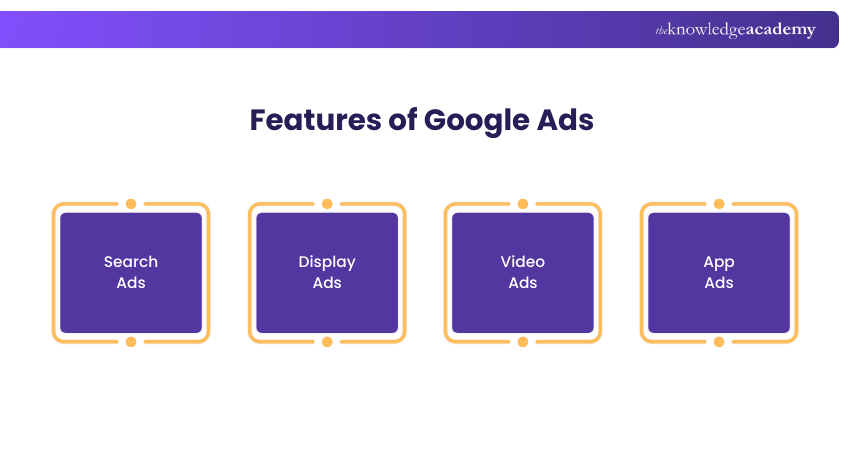
Google Ads is among the most popular ad placement platforms today. It (formerly Google AdWords) is defined as the PPC platform that offers various ad options, ranging from Search Ads and Video Ads to App Ads.
2) Microsoft Advertising
Businesses can showcase their ads on the Search Engine through Microsoft advertising along with Yahoo and AOL, which are similar partner sites. The platform offers ad formats identical to Google Ads.
3) Facebook Ads
Facebook Ads is another popular ad type that allows businesses to craft precisely targeted ads by leveraging demographics, interests, behaviours, and connections. The platform also offers various ad formats. These include image ads, video ads, carousel ads, and sponsored content.
4) Instagram Ads
Instagram Ads is a PPC platform tailored for advertising on popular images and video-sharing Social Media platforms. As part of Facebook Ads, it offers similar audience targeting options and ad formats.
5) Twitter Ads
Twitter Ads allow businesses to create promoted tweets and accounts to uplevel their visibility and platform engagement. Additionally, it provides a wide array of targeting options on the basis of demographics, interests, and keywords.
6) YouTube Ads
YouTube Ads allows businesses to reach a vast and more engaged audience through video ads. With its extensive targeting options, advertisers can choose specific demographics, interests, and their ad behaviours. Whether you are using skippable, non-skippable, or bumper ads, YouTube offers a high-level of flexibility in ad presentation.
7) LinkedIn Ads
LinkedIn Ads offer businesses a unique chance to target professionals on the basis of job titles, industries, and skills. This platform is particularly effective for Business-to-Business (B2B) advertising. It allows businesses to show their services to a highly specific, business-oriented audience.
Gain the confidence to lead marketing strategy with our Strategic Marketing Course – Sign up soon!
Advantages of PPC in Digital Marketing
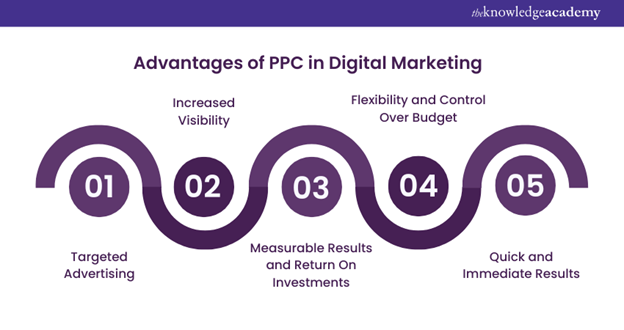
Pay-Per-Click offers several advantages that make it a profitable Digital Marketing strategy for businesses of all sizes. It helps marketers to control costs while driving relevant traffic and achieving specific business goals efficiently. Let's check the advantages of PPC marketing:
1) Targeted Advertising
PPC allows businesses to target their ads precisely to specific keywords, demographics, and locations. This level of targeting ensures that their ads are shown to the relevant audience, which increases the chances of attracting a large number of potential customers.
2) Increased Visibility
With PPC, many businesses can rely on relevant keywords. Their ads can appear prominently on SERPs, increasing brand visibility. This makes their brand more noticeable to users searching for terms related to their business.
3) Measurable Results and Return on Investments (ROI)
Businesses can monitor their campaign performance through PPC analytics and tracking tools. It further helps them gain insights into key aspects such as click-through rates, conversion rates, and cost per conversion.
4) Flexibility and Control Over Budget
In traditional advertising, fixed costs are unavoidable. However, this model lets businesses set a flexible budget, allocating funds according to their specific needs. They can adjust bids, pause campaigns, and make real-time modifications. This ensures their budget is utilised effectively and efficiently.
5) Quick and Immediate Results
PPC provides instant visibility. Once campaigns are set up and approved, the organisation’s ads can start appearing and almost instantly drive traffic to their website. This immediacy can particularly benefit businesses seeking immediate leads, sales, or promotional opportunities.
Conclusion
Pay-Per-Click marketing offers a practical and results-focused way for businesses to grow online. With proper knowledge of what is PPC and how it works, you can gain instant visibility, attract the right audience, and attain great results in a competitive digital space. When planned and optimised correctly, it turns into a strategic tool that strengthens an overall Digital Marketing strategy.
Learn marketing the smart way with our Marketing Courses – Explore immediately!
Frequently Asked Questions
What are the 4 C's of PPC?

The four Cs of PPC are Cost, which involves managing budgets and bids; Click-Through Rate, which measures the number of users who click on an ad; Conversion Rate, which tracks how many clicks result in actions such as sales or sign-ups; and Customer Lifetime Value, which focuses on the long-term value a customer brings to a business.
What's the Key Difference Between PPC and CPC?
Pay-per-click (PPC) is a broader model where advertisers pay for each click their ads receive. CPC (Cost Per Click) refers to the specific price an advertiser pays for each click in a PPC campaign. PPC is the strategy, while CPC is the cost metric used to measure its effectiveness.
What are the Other Resources and Offers Provided by The Knowledge Academy?
The Knowledge Academy takes global learning to new heights, offering over 3,000+ online courses across 490+ locations in 190+ countries. This expansive reach ensures accessibility and convenience for learners worldwide.
Alongside our diverse Online Course Catalogue, encompassing 17 major categories, we go the extra mile by providing a plethora of free educational Online Resources like Blogs, eBooks, Interview Questions and Videos. Tailoring learning experiences further, professionals can unlock greater value through a wide range of special discounts, seasonal deals, and Exclusive Offers.
What is The Knowledge Pass, and How Does it Work?
The Knowledge Academy’s Knowledge Pass, a prepaid voucher, adds another layer of flexibility, allowing course bookings over a 12-month period. Join us on a journey where education knows no bounds.
What are the Related Courses and Blogs Provided by The Knowledge Academy?
The Knowledge Academy offers various Marketing Courses, including the Pay Per Click (PPC) Course, Web Analytics Course, and Conversion Rate Optimisation Course. These courses cater to different skill levels, providing comprehensive insights into Marketing Campaign.
Our Digital Marketing Blogs cover a range of topics related to Pay-Per-Click, offering valuable resources, best practices, and industry insights. Whether you are a beginner or looking to advance your Digital Marketing skills, The Knowledge Academy's diverse courses and informative blogs have got you covered.

The Knowledge Academy


Global Training Provider
The Knowledge Academy is a world-leading provider of professional training courses, offering globally recognised qualifications across a wide range of subjects. With expert trainers, up-to-date course material, and flexible learning options, we aim to empower professionals and organisations to achieve their goals through continuous learning.

Upcoming Digital Marketing Resources Batches & Dates
Date
 Pay Per Click (PPC) Training
Pay Per Click (PPC) Training
Fri 26th Jun 2026
Pay Per Click (PPC) Training
Fri 28th Aug 2026
Pay Per Click (PPC) Training
Fri 13th Nov 2026

 If you wish to make any changes to your course, please


