


 Top Rated Course

We may not have the course you’re looking for. If you enquire or give us a call on + 800 908601 and speak to our training experts, we may still be able to help with your training requirements.
Change Management Roles and Responsibilities: A Complete Overview
The Knowledge Academy 28 April 2026Are you interested in learning about Change Management Roles and Responsibilities? Change Managers serve as the beacon for organisations during transitions by ensuring the smooth adoption of new processes. This blog explores the complexities of the roles and responsibilities involved in Change Management. Read on to learn more!

Training Outcomes Within Your Budget!
We ensure quality, budget-alignment, and timely delivery by our expert instructors.
Table of Contents
When it comes to navigating sudden changes through the uncharted waters of the corporate world, success hinges on the crew’s adaptability. Whether these changes are slow and incremental or mark a major shift in organisational structure, the key to smooth sailing lies in one process: Change Management. This blog explores this vital process and the various Change Management Roles and Responsibilities that can drive a wide range of organisational transformation. Let's dive in!
Table of Content
1) What is Change Management?
2) Change Manager Responsibilities
3) Change Manager Job Description
4) Required Skills for Change Manager
5) Required Qualifications for Change Manager
6) Conclusion
What is Change Management?
Change Management refers to the methods by which a company outlines and implements change within its internal and external processes. This may include preparing and supporting employees, establishing the crucial steps for change, and monitoring pre- and post-change activities to ensure seamless implementation.
When an organisation’s goals, processes, or technologies transform or transition, this significant change can be challenging and requires the cooperation of different independent entities within the organisation. Developing a structured approach to change is critical to ensure a beneficial transition while mitigating disruption.
Organisational change falls into two categories:
1) Incremental Change: It refers to a gradual change that updates products, processes, or evolving strategies.
2) Transformational Change: It's the sudden change that's larger in scope, such as a shift in the organisation’s mission or structure
A Change Manager is a pivotal figure in leading this change. This key role involves implementing changes with a strategic blend of purpose, precision, and minimal risk. Change Managers must adeptly balance the drive for transformation with the stability of the organisation's IT systems.
Change Manager Responsibilities
A Change Manager oversees and coordinates every aspect of the Change Management process. Their duties vary depending on the scope and nature of the changes they implement. But in general, a Change Manager is responsible for the following:
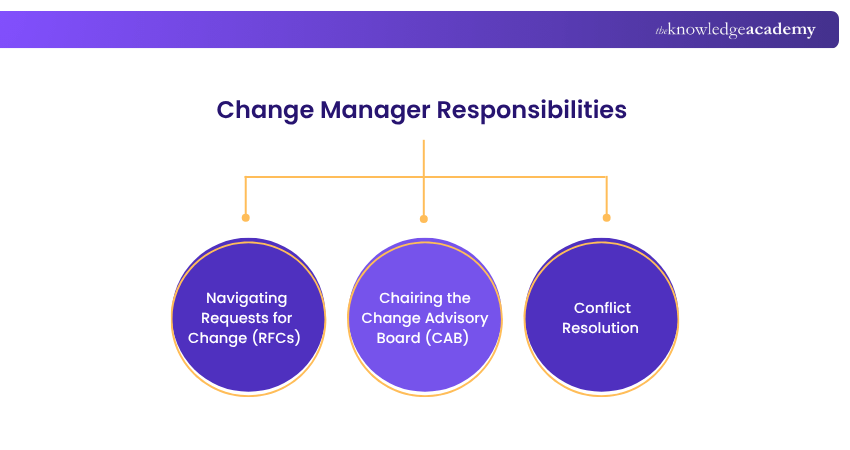
Navigating Requests for Change (RFCs)
The Change Manager's role is more than just processing these requests. It involves aligning them with the company's strategic objectives. This involves a deep understanding of how each RFC can affect the broader picture and a commitment to ensuring that every change serves a purpose and adds value.
Chairing the Change Advisory Board (CAB)
This is a critical forum where potential changes are scrutinised and debated. The Change Manager's role here is to guide these discussions, ensuring every member has the details they need to make informed decisions. This is the meeting point of potential risks and possible rewards and where strategic decisions are made.
Conflict Resolution
Conflicts are inevitable in Change Management. The Change Manager serves as the mediator, resolving disputes and aligning differing viewpoints with the organisation's goals. This requires diplomacy, a deep understanding of diverse perspectives, and finding common ground.
Become the master of Change Management through our Change Management Foundation & Practitioner Course – Sign up now!
Change Manager Job Description
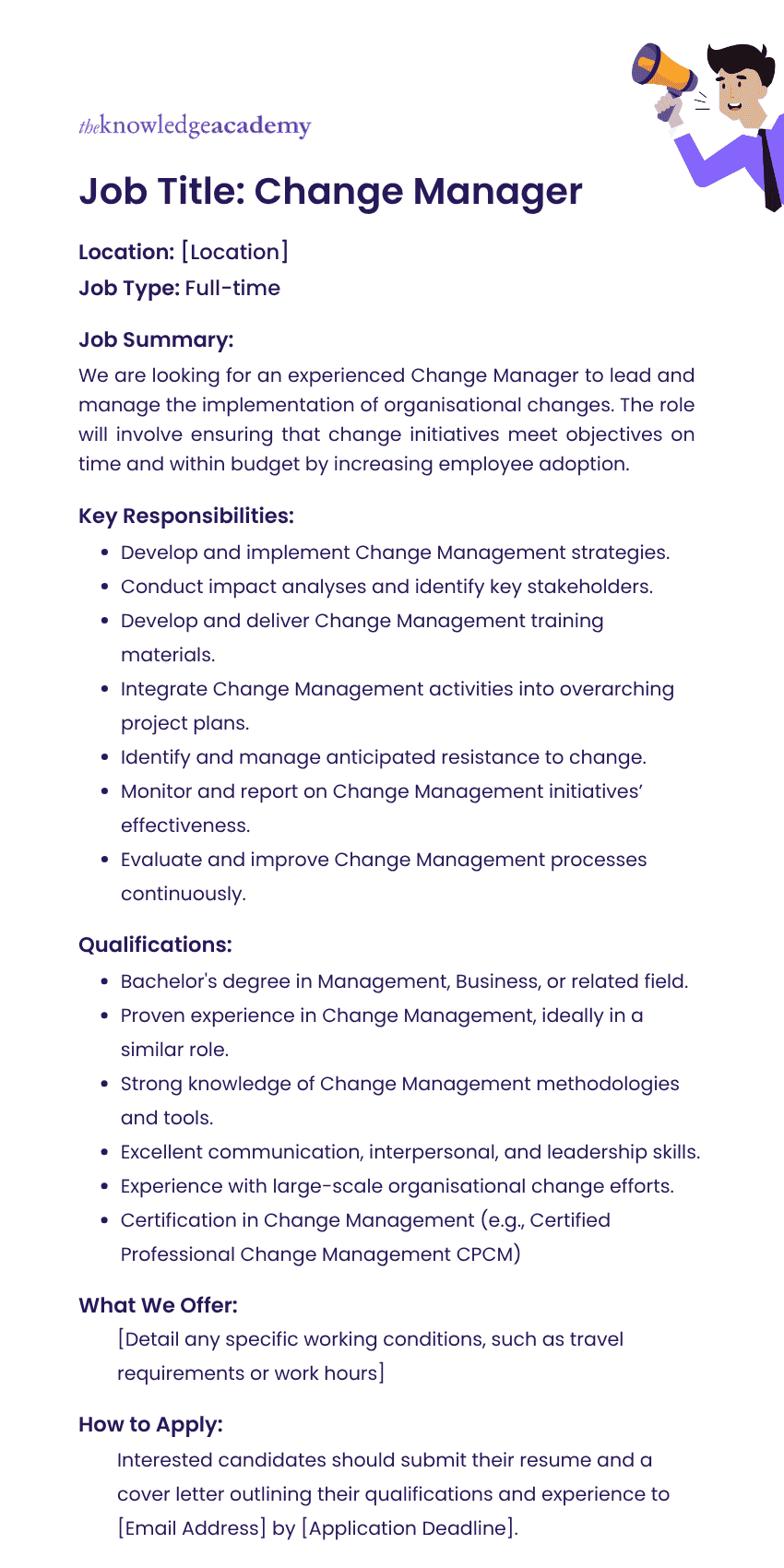
Download the Change Management Case Study now and gain actionable insights to manage and navigate change with confidence in your workplace.
Required Skills for Change Manager
Considering the massive responsibilities a Change Manager handles, the range of necessary skillsets will be vast as well. The essential skills include:
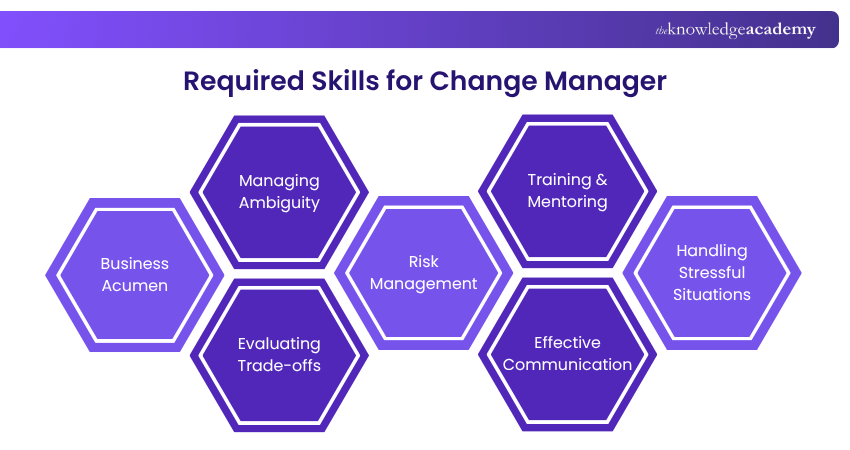
1) Business Acumen: A deep understanding of the business environment and ability to align change initiatives with organisational goals.
2) Change Management Skills: Proficiency in planning, executing, and overseeing change initiatives.
3) Attention to Detail: Rigorous scrutiny of the aspects of proposed changes to accurately assess benefits and risks.
4) Managing Ambiguity: Expertise in handling complex change scenarios and making well-informed decisions amid the Pros and Cons of Change Management in uncertain situations.
5) Evaluating Trade-offs: Ability to balance the benefits and disadvantages of implementing changes, recognising the nuances of each situation.
6) Risk Management: Competency in assessing and implementing risk mitigation strategies for chang0es affecting IT infrastructure and business processes.
7) Effective Communication: Exceptional communication skills are critical, especially in developing a comprehensive communication plan to engage with stakeholders, executives, and business users.
8) Training & Mentoring: Adept at educating and guiding others in Change Management processes and principles. This includes implementing training programs to build an informed organisational culture.
9) Handling Stressful Situations: Resilience in maintaining composure and effectiveness under pressure, particularly in time-sensitive business situations.
Elevate your Change Management skills with our Managing Change With Agile Methodology Training – Sign up now!
Required Qualifications for Change Manager
The qualifications needed for a Change Manager to grab the prospective employer’s attention include:
1) Bachelor's or Master's Degree: A degree, preferably in Business Administration, IT Management, or a related field, is necessary. It provides a foundational understanding of business and technology.
2) Relevant Industry Experience: Practical experience in IT Service Management, Project Management, or closely related areas is important.
3) Understanding IT infrastructure: Knowledge of contemporary IT practices and systems is crucial for effective Change Management.
Certifications for Change Manager
The following certifications are necessary for aspiring Change Managers and can amplify their employability prospects across diverse industries:
a) ITIL Certification: This credential validates a comprehensive understanding of ITIL Frameworks, which is essential for effective Change Management.
b) Certified Change Management Professional (CCMP): This credential indicates mastery of Change Management methodologies.
c) Project Management Professional (PMP): This certification helps you gain insights into the broader aspects of Project Management as they pertain to change initiatives.
d) Risk Management Certifications: Certifications such as PMI-RMP highlight specialised risk identification and mitigation skills in Change Management.
Conclusion
Understanding the key Change Management Roles and Responsibilities is essential for successful organisational transformation. By clearly defining each role, businesses can ensure a smooth transition, minimise resistance, and achieve the desired outcomes. We hope this blog helps you empower your team and confidently lead your organisation through change.
Struggling to assess and manage the risks associated with your project? Our Risk Management For Change Course will guide you - Sign up now!
Frequently Asked Questions
What Challenges are Commonly Faced by Those in Change Management Positions?

Common challenges faced by those in Change Management positions include:
a) Employee resistance to changes
b) No clear communication between management and team players
c) Implementation delays.
d) Change Management and budget issues
e) Lack of resources for Change Management
f) Difficulty with implementing new technology
How can Leaders Effectively Communicate Change Management Roles to Employees?
Strategies for communicating Change Management roles to employees include:
a) Clearly explaining the need for change
b) Communicating regularly using multiple channels
c) Targeting messages to different audiences
d) Explaining roles and responsibilities
e) Communicating the change plan
f) Highlighting the benefits of change
What are the Other Resources and Offers Provided by The Knowledge Academy?
The Knowledge Academy takes global learning to new heights, offering over 3,000+ online courses across 490+ locations in 190+ countries. This expansive reach ensures accessibility and convenience for learners worldwide.
Alongside our diverse Online Course Catalogue, encompassing 17 major categories, we go the extra mile by providing a plethora of free educational Online Resources like Blogs, eBooks, Interview Questions and Videos. Tailoring learning experiences further, professionals can unlock greater value through a wide range of special discounts, seasonal deals, and Exclusive Offers.
What is The Knowledge Pass, and How Does it Work?
The Knowledge Academy’s Knowledge Pass, a prepaid voucher, adds another layer of flexibility, allowing course bookings over a 12-month period. Join us on a journey where education knows no bounds.
What are the Related Courses and Blogs Provided by The Knowledge Academy?
The Knowledge Academy offers various Change Management Certification Courses, including the Change Management Foundation and Practitioner Course and the Certified Professional Change Management (CPCM) Course. These courses cater to different skill levels, providing comprehensive insights into Change Management Job Roles.
Our Project Management Blogs cover a range of topics related to Change Management, offering valuable resources, best practices, and industry insights. Whether you are a beginner or looking to advance your Change Management skills, The Knowledge Academy's diverse courses and informative blogs have got you covered.

The Knowledge Academy


Global Training Provider
The Knowledge Academy is a world-leading provider of professional training courses, offering globally recognised qualifications across a wide range of subjects. With expert trainers, up-to-date course material, and flexible learning options, we aim to empower professionals and organisations to achieve their goals through continuous learning.

Upcoming Project Management Resources Batches & Dates
Date
 Change Management Foundation & Practitioner
Change Management Foundation & Practitioner
Mon 3rd Aug 2026
Change Management Foundation & Practitioner
Mon 12th Oct 2026
Change Management Foundation & Practitioner
Mon 14th Dec 2026

 If you wish to make any changes to your course, please


