


 Top Rated Course

We may not have the course you’re looking for. If you enquire or give us a call on +352 20 33 17 60 and speak to our training experts, we may still be able to help with your training requirements.
What is Aerospace Engineering: Skills, Roles and Career Path
The Knowledge Academy 21 April 2026Aerospace Engineering focuses on the design, development, testing, and maintenance of aircraft, spacecraft, satellites, and related systems. It combines principles of aerodynamics and propulsion with materials science and avionics. They work together to create safe and innovative technologies for aviation and space exploration.

Training Outcomes Within Your Budget!
We ensure quality, budget-alignment, and timely delivery by our expert instructors.
Table of Contents
Have you ever looked up at an aircraft or spacecraft and wondered who makes these incredible machines possible? Aerospace Engineering is the driving force behind modern aviation and space exploration, shaping how we travel, communicate, and explore beyond Earth. But What is Aerospace Engineering?
It combines Science, innovation, and precision to design machines that operate in extreme environments. It shapes the future of global travel and discovery. This blog explores What is Aerospace Engineering, the essential skills it demands, and the career paths you can pursue in this dynamic profession. Let’s dive in!
Table of Contents
1) What is Aerospace Engineering?
2) Importance of Aerospace Engineering
3) Aerospace Engineering Branches
4) Where do Aerospace Engineers Work?
5) How to Become an Aerospace Engineer?
6) Roles and Responsibilities of Aerospace Engineers
7) Skills Required Becoming Aerospace Engineering
8) Aerospace Engineering Career Path
9) What is the Average Salary of an Aerospace Engineer?
10) Conclusion
What is Aerospace Engineering?
Aerospace Engineering is a specialised branch of engineering dealing with the design, development, testing, and production of aircraft (aeronautical), spacecraft (astronautical), satellites, and other related systems. It combines mechanical, electrical, and materials engineering to create innovative machines that operate within and beyond Earth’s atmosphere.
This field is broadly divided into two main areas: Aeronautical Engineering, which deals with aircraft within the Earth's atmosphere, and Astronautical Engineering, which focuses on vehicles operating outside the Earth’s atmosphere.
Importance of Aerospace Engineering
Aerospace Engineering is vital for advancing national defence, commercial aviation, and space exploration. It ensures safer, faster air travel and supports the development of modern aircraft, drones, and missiles. Its innovations enhance global connectivity and support industries such as logistics, tourism, and emergency services.
In space technology, Aerospace Engineers enable satellite deployment, space missions, and interplanetary research. Their work supports everyday tools like Global Positioning System (GPS), weather forecasting, and telecommunications. By pushing the limits of exploration, they expand human knowledge and contribute to global scientific and technological advancement.
Aerospace Engineering Branches
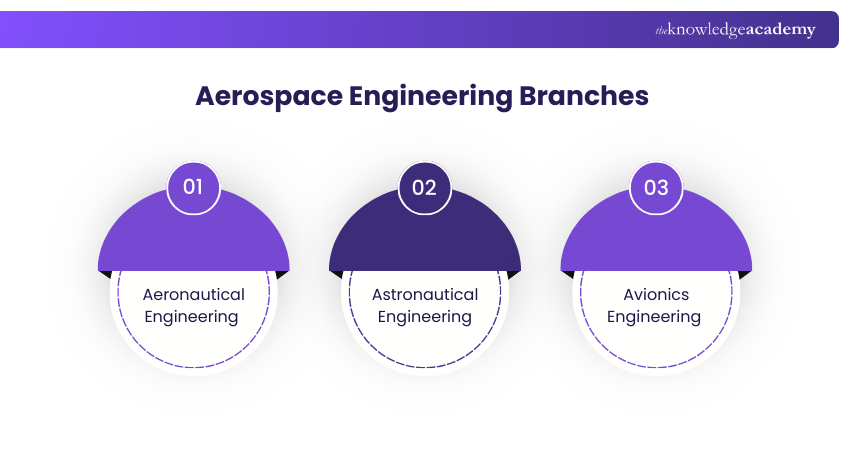
Aerospace Engineering is a broad discipline made up of several specialised branches. Each focuses on different aspects of flight and space systems, from designing aircraft to developing complex electronic systems. Let’s explore the three main branches of this field.
1) Aeronautical Engineering
Aeronautical Engineering focuses on the design, development, and maintenance of aircraft that operate within Earth’s atmosphere. This includes commercial planes, fighter jets, helicopters, and drones. Engineers in this field study aerodynamics, propulsion, avionics, and structural analysis to enhance aircraft performance and safety.
2) Astronautical Engineering
Astronautical Engineering is concerned with spacecraft and the technologies that support space missions. This includes designing rockets, artificial satellites, space probes, and space stations. Engineers must consider factors like zero-gravity environments, radiation exposure, and life-support systems in their designs.
3) Avionics Engineering
Avionics Engineering focuses on the electronic systems used in aerospace vehicles. These systems include navigation, communication, and control systems. Avionics engineers ensure that aircraft and spacecraft systems work flawlessly and safely under all conditions.
Where do Aerospace Engineers Work?
Aerospace Engineers work in government agencies like NASA and the European Space Agency, as well as defence contractors and commercial aviation companies. They are also employed by private space firms such as SpaceX and Blue Origin, contributing to aircraft innovation, space exploration, and military technologies.
Their work environments vary widely, including design offices, manufacturing plants, research laboratories, and testing facilities. Some roles may involve hands-on work with hardware, while others focus on simulations or Data Analysis. Academic institutions also employ Aerospace Engineers in teaching and research roles, advancing the next generation of aerospace technologies and professionals.
Sharpen your focus with our Attention Management Training – Sign up now!
How to Become an Aerospace Engineer?
Becoming an Aerospace Engineer requires a strong academic foundation, practical skill development, and long-term career planning. Here's what you can do:
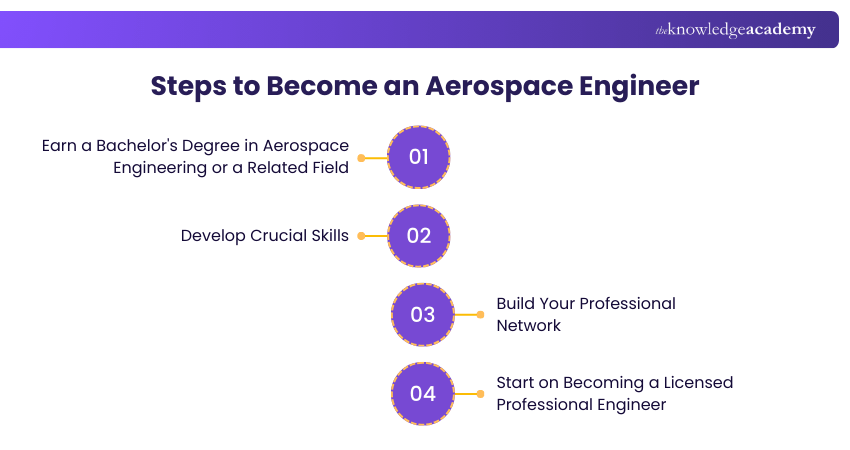
Step 1: Earn a Bachelor's Degree in Aerospace Engineering or a Related Field
The first step towards becoming an Aerospace Engineer is completing a bachelor’s degree in Aerospace Engineering, Aeronautical Engineering, or a closely related discipline such as Mechanical Engineering.
They build a strong foundation in mathematics, physics, aerodynamics, propulsion, structures, and materials. Many universities also include practical lab work, simulations, and design projects to gain hands-on experience.
Step 2: Develop Crucial Skills
Alongside formal education, aspiring Aerospace Engineers need to develop both technical and soft skills. Technical skills include Computer-aided Design (CAD), Data Analysis, programming, and Systems Engineering.
Apart from that, the soft skills that you can develop include problem-solving, critical thinking, teamwork, and communication skills, as aerospace projects often involve collaboration across multidisciplinary teams.
Step 3: Build Your Professional Network
Networking plays a major role in career growth within the aerospace industry. You need to build more connections through internships, industry events, aerospace societies, and engineering conferences.
You can also attend seminars or try joining professional organisations. Also, you can try engaging with mentors, and it can open doors to job opportunities, research projects, and valuable industry insights.
Step 4: Start on Becoming a Licensed Professional Engineer
In the UK, Aerospace Engineers can strengthen their career prospects by working towards professional registration through the Engineering Council. This usually involves gaining industry experience and achieving Chartered Engineer (CEng) or Incorporated Engineer (IEng) status via institutions like the Royal Aeronautical Society or IMechE.
While not legally required, professional registration enhances credibility and is particularly valuable for senior, leadership, and safety-critical roles.
Roles and Responsibilities of Aerospace Engineers
Now, let’s check the roles and responsibilities of Aerospace Engineers. They will:
1) Design and develop aircraft, spacecraft, artificial satellites, and aerospace systems
2) Use CAD tools, Artificial Intelligence (AI) and simulations to test concepts and designs
3) Conduct experiments, inspections, and performance testing of aerospace components
4) Analyse data to ensure systems meet regulatory, safety, and quality standards
5) Support manufacturing, installation, and maintenance processes
6) Identify technical problems and develop effective engineering solutions
7) Ensuring compliance with safety measures and regulations
8) Research, innovate, and develop sustainable aerospace technologies
Lead with confidence and stability through our Supervisor Training – Join now!
Skills Required Becoming Aerospace Engineering
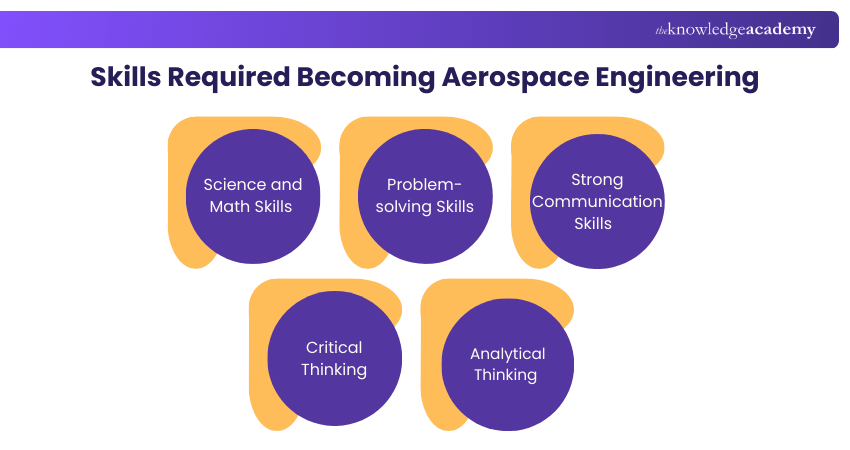
A successful Aerospace Engineer needs more than just technical knowledge. The role demands a set of skills that blend analytical thinking with creativity and collaboration. Here are the key skills required for thriving in this challenging and rewarding profession.
1) Science and Math Skills
Strong knowledge of mathematics and science forms the foundation of Aerospace Engineering. Subjects such as physics, calculus, algebra, and mechanics are essential for understanding aerodynamics, propulsion systems, and structural behaviour. These skills help engineers design, analyse, and optimise complex aerospace systems.
2) Problem-solving Skills
Aerospace Engineers regularly face complex technical challenges that require practical and creative solutions. Whether improving aircraft efficiency or resolving system failures, strong problem-solving skills allow engineers to evaluate options, test ideas, and implement effective solutions under strict constraints.
3) Strong Communication Skills
Aerospace Engineers regularly collaborate with diverse teams. Clear communication, both verbal and written, is vital for sharing ideas, presenting findings, and documenting work in a way that others can easily understand and implement.
4) Critical Thinking
Critical thinking enables Aerospace Engineers to assess designs, identify risks, and make informed decisions. This skill helps engineers question assumptions, evaluate data, and ensure systems meet safety, performance, and regulatory requirements.
5) Analytical Thinking
Analytical thinking allows Aerospace Engineers to interpret complex data, models, and simulations. By analysing results and identifying patterns, they can improve designs, enhance performance, and ensure reliability in demanding aerospace environments.
Learn how responsible actions can shape stronger communities with our Social Responsibility Course – Register today!
Aerospace Engineering Career Path
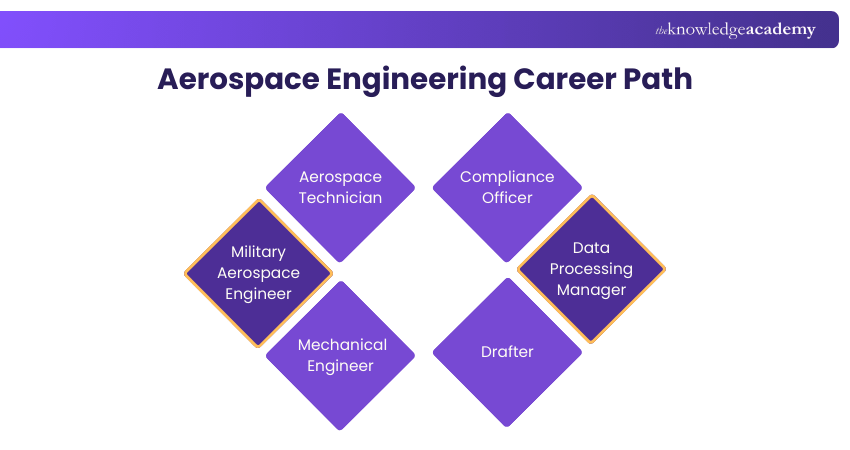
Aerospace Engineering offers a diverse array of career paths, each integral to the development and operation of aircraft and spacecraft. Below are the career paths you can explore:
1) Aerospace Technician
Aerospace technicians support engineers by assembling systems, performing maintenance, and carrying out inspections. Their hands-on work transforms digital designs into functioning aircraft and spacecraft components.
Key Responsibilities:
1) Assemble and test aerospace systems and structures
2) Perform inspections, diagnostics, and equipment repairs
3) Assist with quality assurance and routine servicing
2) Military Aerospace Engineer
Military Aerospace Engineers specialise in defence-related, advanced technologies, including fighter jets, missiles, and Unmanned Aerial Vehicles (UAVs). Their role is crucial in ensuring performance, security, and innovation in systems vital to national defence and military operations.
Key Responsibilities:
1) Design and develop advanced military aircraft and weaponry
2) Conduct rigorous testing to meet defence standards and operational requirements
3) Collaborate with defence agencies to integrate new technologies into military applications
3) Mechanical Engineer
Mechanical Engineers in aerospace focus on propulsion systems, structures, hydraulics, and thermal systems. They ensure these components withstand extreme environmental conditions while maintaining efficiency, safety, and performance.
Key Responsibilities:
1) Design and assess physical systems like engines and structures
2) Conduct stress and performance testing on mechanical parts
3) Collaborate with other teams for seamless integration
4) Compliance Officer
Compliance officers ensure all aerospace projects meet legal, safety, and environmental regulations. They conduct regular audits, maintain up-to-date records, and help organisations obtain and retain certifications.
Key Responsibilities:
1) Conduct audits to ensure regulatory and legal compliance
2) Maintain documentation and quality records
3) Advise teams on safety and environmental requirements
5) Data Processing Manager
Data Processing Managers handle vast amounts of information generated by simulations, test flights, and spacecraft missions. They analyse and interpret data to guide engineers in optimising design, performance, and safety.
Key Responsibilities:
1) Oversee data collection and processing workflows
2) Provide performance insights from test and mission data
3) Ensure data accuracy, security, and compliance
6) Drafter
Drafters convert engineers’ ideas into precise technical drawings using CAD software. These detailed schematics are used throughout the manufacturing and assembly processes, ensuring that designs are correctly interpreted and implemented.
Key Responsibilities:
1) Create technical drawings and 3D models from engineering concepts
2) Ensure drawings adhere to design specifications and standards
3) Collaborate with engineering and production teams to clarify requirements
What is the Average Salary of an Aerospace Engineer?
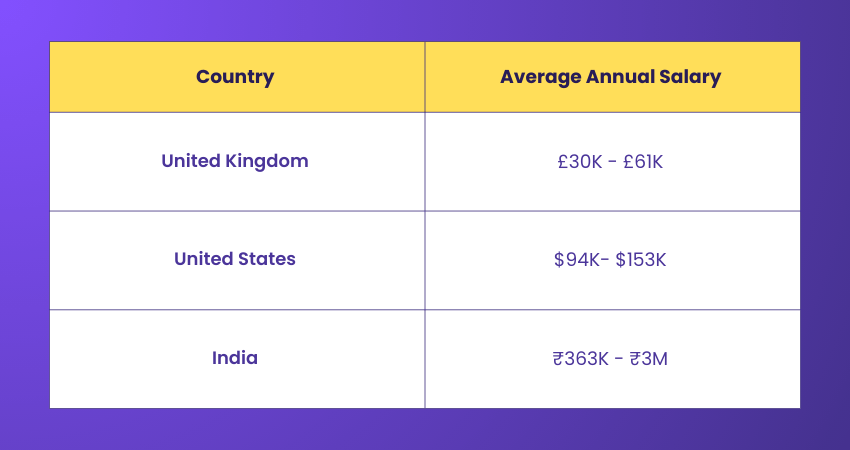
Now, let’s check the average annual salary of an Aerospace Engineer across different countries:
Conclusion
Aerospace Engineering stands at the intersection of innovation, precision, and exploration, offering a career that directly shapes how we fly, communicate, and explore beyond Earth. With profound technical skills, the right qualifications, and a clear understanding of What is Aerospace Engineering, aspiring engineers can access diverse roles across aviation, defence, and space industries.
Grow your confidence, mindset, and skills with Personal Development Courses – Explore now!
Frequently Asked Questions
Can You Become an Aerospace Engineer With a Degree in a Different Engineering Discipline?

Yes, many Aerospace Engineers start with degrees in mechanical, electrical, or systems engineering. With relevant skills, specialised training, or experience, transitioning into aerospace roles is entirely possible.
Are There Opportunities for Aerospace Engineers to Work in Fields Outside of Aviation and Space Exploration?
Yes, Aerospace Engineers can work in automotive, robotics, renewable energy, defence, and advanced manufacturing sectors. Their skills in design, Systems Engineering, Data Analysis, and problem-solving are valuable across many industries.
What are the Other Resources and Offers Provided by The Knowledge Academy?
The Knowledge Academy takes global learning to new heights, offering over 3,000+ online courses across 490+ locations in 190+ countries. This expansive reach ensures accessibility and convenience for learners worldwide.
Alongside our diverse Online Course Catalogue, encompassing 17 major categories, we go the extra mile by providing a plethora of free educational Online Resources like Blogs, eBooks, Interview Questions and Videos. Tailoring learning experiences further, professionals can unlock greater value through a wide range of special discounts, seasonal deals, and Exclusive Offers.
What is The Knowledge Pass, and How Does It Work?
The Knowledge Academy’s Knowledge Pass, a prepaid voucher, adds another layer of flexibility, allowing course bookings over a 12-month period. Join us on a journey where education knows no bounds.
What are Related App & Web Development Courses and Blogs Provided by The Knowledge Academy?
The Knowledge Academy offers various Personal Development Courses, including Engineering Skills Training, Time Management Training and Emotional Intelligence Training. These courses cater to different skill levels, providing comprehensive insights into the Types of Engineering.
Our Business Skills Blogs cover a range of topics related to Aerospace Engineering, offering valuable resources, best practices, and industry insights. Whether you are a beginner or looking to advance your Engineering skills, The Knowledge Academy's diverse courses and informative blogs have got you covered.

The Knowledge Academy


Global Training Provider
The Knowledge Academy is a world-leading provider of professional training courses, offering globally recognised qualifications across a wide range of subjects. With expert trainers, up-to-date course material, and flexible learning options, we aim to empower professionals and organisations to achieve their goals through continuous learning.

Upcoming Business Skills Resources Batches & Dates
Date
 Engineering Skills Training
Engineering Skills Training
Fri 17th Jul 2026
Engineering Skills Training
Fri 9th Oct 2026

 If you wish to make any changes to your course, please


