


 Top Rated Course

We may not have the course you’re looking for. If you enquire or give us a call on +800 312616 and speak to our training experts, we may still be able to help with your training requirements.
What is Recruitment Process Outsourcing (RPO)? Explained
Scarlett Adams 11 December 2025Recruitment Process Outsourcing (RPO) is when a company hires an external expert to manage the hiring process. Instead of doing everything in-house, the RPO provider handles tasks like sourcing candidates, screening resumes, and even onboarding. It helps companies save time, reduce hiring costs, and find better talent faster.

Training Outcomes Within Your Budget!
We ensure quality, budget-alignment, and timely delivery by our expert instructors.
Table of Contents

Let’s be real, recruiting today is wild. Endless resumes, ghosting candidates, missed deadlines, sound familiar? If your hiring feels more like chaos than strategy, it’s time to meet your secret weapon: Recruitment Process Outsourcing (RPO). This isn’t some cookie-cutter agency help. RPO is your full-service talent dream team, ready to scale with you, slash costs, and boost your hiring game.
Whether you’re hiring five or five hundred, they’ve got you covered. In this blog, you will unpack what RPO really is, how it compares to old-school recruiting, and why more businesses are ditching DIY hiring for this all-in-one solution. It’s fast. It’s flexible. It’s strategic. And best of all, it frees you up to focus on what you do best: running your business. Let’s dive in!
Table of Contents
1) What is Recruitment Process Outsourcing (RPO)?
2) How Does RPO Work?
3) Types of RPO Engagements
4) How Does RPO Differ from Traditional Recruiting?
5) Benefits of RPO
6) Challenges of RPO
7) RPO vs Internal Recruiting
8) Conclusion
What is Recruitment Process Outsourcing (RPO)?
Recruitment Process Outsourcing is a business strategy where an organisation transfers all or part of its recruitment activities to an external service provider. This provider, known as an RPO partner, acts as an extension of the company's HR or talent acquisition team. The main goals of RPO are to streamline recruitment, reduce time and cost per hire, and enhance the quality of talent acquisition through expert strategies, tools, and technologies.
Key Takeaways:
1) Workforce planning and analysis
2) Job advertising and employer branding
3) Sourcing and screening candidates
4) Interview coordination
5) Offer management and onboarding
6) Recruitment analytics and compliance

How Does RPO Work?
RPO providers typically embed recruiters directly within your company’s processes and culture. They operate under your brand name, using tools that align with your strategic hiring goals. Here's how the process usually flows:
Needs Analysis: Understand workforce goals and hiring challenges
Strategy Development: Build a custom hiring plan with KPIs
Talent Sourcing: Identify, attract, and nurture qualified candidates
Assessment & Interviews: Manage screening and interviews
Hiring & Onboarding: Support final offers and seamless onboarding
Analytics & Reporting: Track metrics to continuously improve
Types of RPO Engagements
RPO isn’t one-size-fits-all. Depending on your hiring needs, you can opt for:
End-to-end RPO: The provider manages the entire recruitment lifecycle
Project-based RPO: Ideal for seasonal or short-term hiring drives
On-demand RPO: Scalable support that kicks in when internal teams are overloaded
Selective RPO: Outsource recruitment process like sourcing or onboarding
Own the ISO 38500 Certification that shouts credibility. Register today to get best results!
How Does RPO Differ from Traditional Recruiting?
RPO and traditional recruiting both serve the purpose of filling job roles, but their methods, depth of involvement, and outcomes are quite different. Let’s break it down across four key areas:
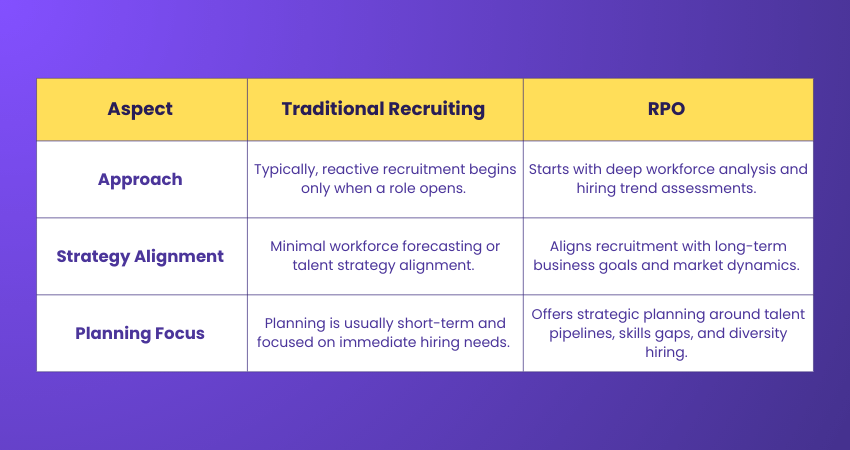
1) Analysis and Planning
PO provides a forward-looking, data-driven recruitment strategy, while traditional recruiting focuses on short-term role fulfillment.
2) Talent Sourcing and Outreach
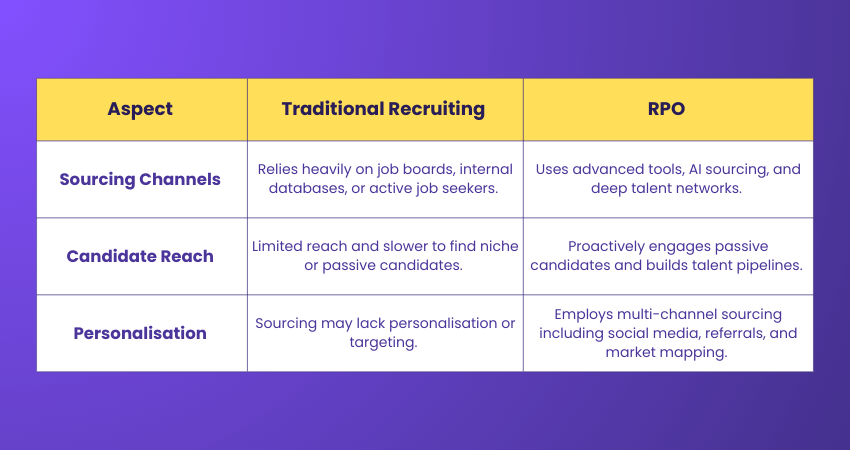
Talent sourcing is the backbone of successful hiring. Here's how traditional recruiting and RPO compare in their approach to finding the right candidates:
3) Job Advertising and Marketing
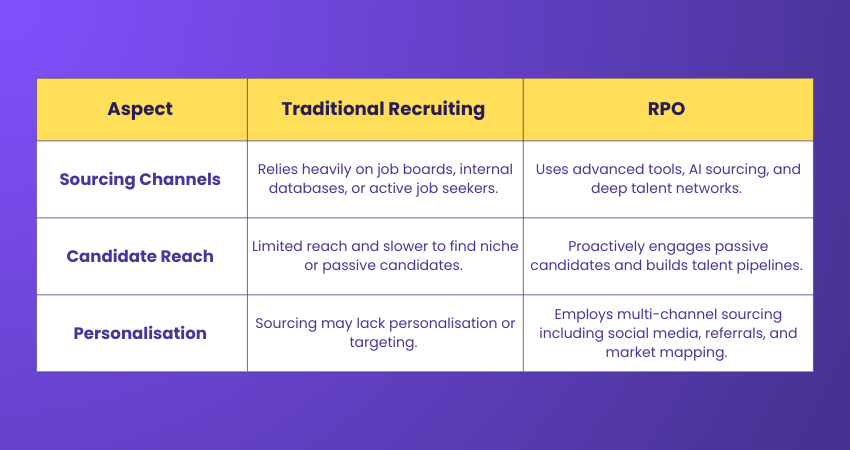
Job ads do more than announce vacancies; they shape how your brand is perceived. Here's how traditional recruiting and RPO differ in job advertising and marketing:
Benefits of RPO
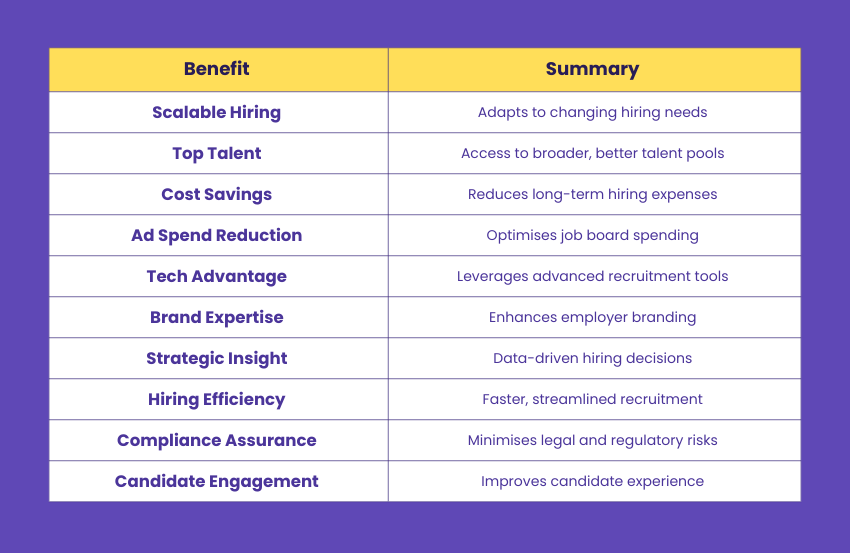
Recruitment isn’t just about filling seats but about finding the right people at the right time, in the most efficient way. Here’s how RPO delivers exceptional value across the entire hiring journey:
1) Scalable Hiring
RPO solutions adapt to your hiring needs, whether you're expanding rapidly, dealing with seasonal spikes, or scaling down. They can quickly ramp recruitment efforts up or down without the lag or cost of building internal capacity.
Go from average to ISO-certified excellence. Start your journey with ISO 22734 Training today!
2) Top Talent
RPO providers offer access to vast talent pools, including passive candidates, and use advanced sourcing tools. This ensures high-quality hires, even for hard-to-fill or niche roles.
3) Cost Savings
By streamlining recruitment processes and reducing time-to-hire, RPO significantly lowers cost-per-hire. It also minimises hidden costs tied to poor hires, process inefficiencies, and overburdened internal teams.
4) Ad Spend Reduction
RPO partners analyse the performance of job boards and advertising platforms, helping you spend smarter. This improves visibility and applicant quality while reducing overall ad costs.
5) Hiring Cost-cutting
Beyond ad spending, RPOs eliminate the need for costly recruitment agencies, reducing overhead for in-house recruiters. It consolidates technology costs, resulting in significant long-term savings.
6) Tech Advantage
RPO partners bring advanced tools like AI-driven sourcing, recruitment automation, and applicant tracking systems (ATS). You get access to enterprise-grade technology without the setup or licensing hassle.
Get the ISO 29100 Training that opens doors and closes deals. Join today!
7) Brand Expertise
RPO providers act as ambassadors of your employer brand. They ensure that every candidate interacts with ads, emails and interviews. It reflects your company’s values and voice, helping you stand out in a competitive market.
8) Strategic Insight
RPO isn’t just about execution; it’s about hiring strategy. With access to workforce analytics, market trends, and predictive hiring data, RPO providers help you make smarter, future-focused talent decisions aligned with business goals.
9) Hiring Efficiency
When specialists manage the entire recruitment lifecycle, it results in faster time-to-fill, better candidate matching, and reduced process delays. RPO streamlines each step, enhancing overall productivity for HR and hiring teams.
10) Compliance Assurance
With ever-changing labour laws and hiring regulations, staying compliant can be challenging. RPO providers are well-versed in legal requirements and best practices, helping you reduce risks, avoid penalties, and ensure audit readiness.
11) Candidate Engagement
RPO providers deliver a smooth and engaging candidate experience from first contact through onboarding. By keeping candidates informed, respected, and enthusiastic, they boost offer acceptance rates and enhance your employer brand reputation.
Make quality your signature - Get ISO 27032 Security Techniques Training with flair!
Challenges of RPO
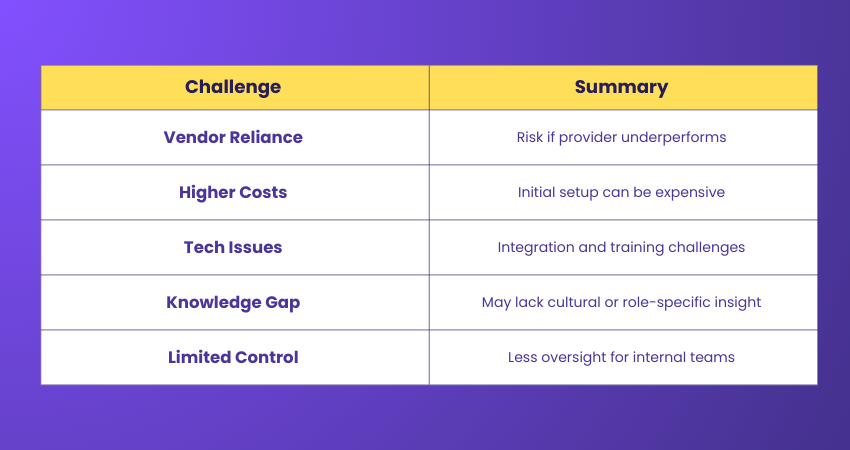
While RPO offers many benefits, it’s not without its hurdles. Understanding these challenges helps businesses make informed decisions and set up better partnerships. Here are the key downsides to watch out for:
1) Vendor Reliance
When Outsourcing recruitment, your company becomes dependent on the RPO provider for talent acquisition success. Building a strong, transparent partnership is essential to manage this risk.
2) Potentially Higher Costs
While RPO usually reduces costs over time, initial investments can be higher for small businesses or companies with minimal hiring needs. Customised solutions, technology integration, and setup fees may also add to the cost.
3) Tech Challenges
Integrating the RPO provider’s tools and platforms with your internal systems can be complex and time-consuming. There may also be a learning curve for your team, leading to temporary slowdowns or data silos if not handled properly.
4) Knowledge Gap
An external provider might not fully grasp your company culture, industry-specific needs, or the subtle nuances of certain roles. This can result in mismatched candidates or communication breakdowns, unless the RPO team invests in thorough onboarding and collaboration.
ISO 10002 Quality Management Training isn’t optional, but your next power move. Let’s go!
5) Limited Control
With the RPO provider managing most of the recruitment process, internal teams may feel they’ve lost oversight or decision-making power. This can be a concern for companies with sensitive roles or a strong desire for in-house involvement.
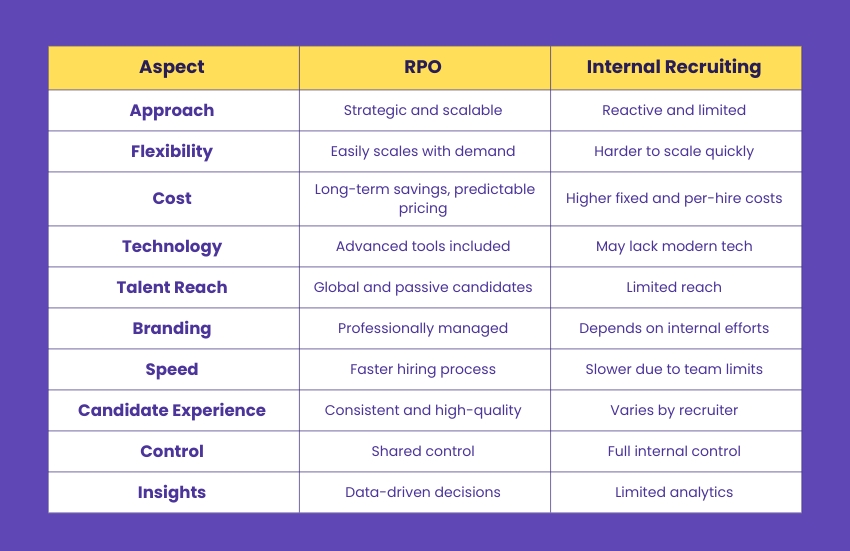
RPO vs Internal Recruiting
When choosing how to manage your hiring process, it's important to understand the key differences between RPO and Internal Recruiting. They differ significantly in terms of strategy, scalability, cost, and control. Here's a quick comparison to help you decide which approach best fits your business needs:
Conclusion
Recruitment Process Outsourcing (RPO) is a smart, strategic solution for businesses looking to streamline hiring, reduce costs, and access top talent with greater efficiency. However, the best choice ultimately depends on your company’s size and hiring goals. By understanding the differences and evaluating your needs, you can choose a recruitment approach that drives better results.
Your future wants ISO 22716 Lead Auditor Training on your resume. Start preparing now!
Frequently Asked Questions
What is the Difference Between RPO and BPO?

RPO focuses specifically on managing a company’s hiring process, while BPO (Business Process Outsourcing) refers to outsourcing various non-core business functions. They are finance, IT, or customer service. RPO is a niche form of BPO, centered solely on talent acquisition.
How Many Levels of RPO are There?
There are generally three levels of RPO:
a) End-to-End RPO (full recruitment lifecycle)
b) Project RPO (short-term or seasonal hiring)
c) Selective RPO (outsourcing specific parts like sourcing or screening)
What are the Other Resources and Offers Provided by The Knowledge Academy?
The Knowledge Academy takes global learning to new heights, offering over 3,000+ online courses across 490+ locations in 190+ countries. This expansive reach ensures accessibility and convenience for learners worldwide.
Alongside our diverse Online Course Catalogue, encompassing 19 major categories, we go the extra mile by providing a plethora of free educational Online Resources like Blogs, eBooks, Interview Questions and Videos. Tailoring learning experiences further, professionals can unlock greater value through a wide range of special discounts, seasonal deals, and Exclusive Offers.
What is The Knowledge Pass, and How Does it Work?
The Knowledge Academy’s Knowledge Pass, a prepaid voucher, adds another layer of flexibility, allowing course bookings over a 12-month period. Join us on a journey where education knows no bounds.
What are the Related Courses and Blogs Provided by The Knowledge Academy?
The Knowledge Academy offers various ISO Certification Courses, including the Certified Internal Auditor Training, ISO 14072 Life Cycle Assessment Training and the ISO 27032 Security Techniques Training. These courses cater to different skill levels, providing comprehensive insights into What is Outsourcing.
Our ISO & Compliance Blogs cover a range of topics related to Recruitment, offering valuable resources, best practices, and industry insights. Whether you are a beginner or looking to advance your Hiring skills, The Knowledge Academy's diverse courses and informative blogs have got you covered.
Upcoming ISO & Compliance Resources Batches & Dates
Date
 ISO 37301 Lead Auditor Training Dummy
ISO 37301 Lead Auditor Training Dummy
Tue 7th Apr 2026
ISO 37301 Lead Auditor Training Dummy
Mon 3rd Aug 2026
ISO 37301 Lead Auditor Training Dummy
Mon 2nd Nov 2026

 If you wish to make any changes to your course, please


