


 Top Rated Course

We may not have the course you’re looking for. If you enquire or give us a call on +800 312616 and speak to our training experts, we may still be able to help with your training requirements.
20+ Best Performance Review Questions & Answers: A Complete Guide
Olivia Taylor 09 February 2026Performance Review Questions explore achievements, goals, strengths, challenges, growth, and teamwork to assess progress and support employee development. These questions help identify areas for improvement and celebrate accomplishments. They motivate employees to reflect on their progress, define priorities, and plan for future success.
Home
 Resources
Accounting and Finance
20+ Best Performance Review Questions & Answers: A Complete Guide
Resources
Accounting and Finance
20+ Best Performance Review Questions & Answers: A Complete Guide
Resources
Accounting and Finance
20+ Best Performance Review Questions & Answers: A Complete Guide

Training Outcomes Within Your Budget!
We ensure quality, budget-alignment, and timely delivery by our expert instructors.
Table of Contents

A Performance Review is more than just a formal meeting. It acts as a pause in your career, allowing you to reflect on achievements, recognise challenges, and explore opportunities for growth. Beyond ticking boxes or meeting targets, it creates meaningful conversations that build confidence, strengthen skills, and highlight your true impact at work.
In this blog, we’ll explore what a Performance Review is and share smart Performance Review Questions for employees, practical questions for managers, and engaging questions for both that make every review more meaningful, positive, and growth-focused. Let’s get started!
Table of Contents
1) What is a Performance Review?
2) Performance Review Questions for Employees
3) Performance Review Questions for Managers
4) Conclusion
What is a Performance Review?
Performance Review is a systematic process to evaluate the employee’s past performance and articulate future expectations for the job. Performance Reviews serve two main purposes:
1) Managers utilise performance feedback to motivate employees, spotlight career development opportunities and clarify responsibilities and accountability.
2) Employees use performance feedback to reorient their efforts toward the right goals and accordingly moderate their behaviour.
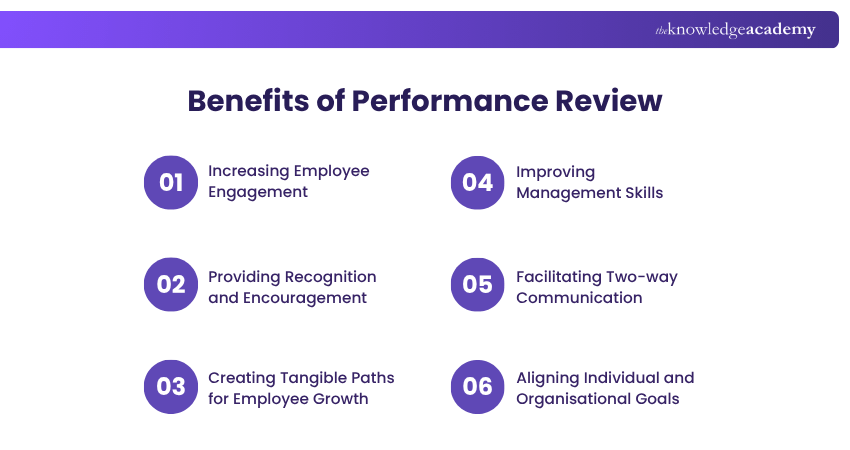
Fair, regular, and diverse feedback substantially improves employee performance and Employee Engagement and prevents talent attrition. To capture these benefits, regular Performance Reviews must be scheduled for each team member (typically once or twice a year).
Performance Review Questions for Employees
The following employee Performance Review Questions will help gain deeper insight into the employee’s work and ambitions. Evaluating the answers will reveal any shortage of resources or support that may hinder workflow, enabling the manager to take corrective action.
1) What accomplishment(s) are you most proud of?
This question is a great way to start off on a positive note, helping employees shake off any nerves and be comfortable during the rest of the meeting. The answer should include not just the successes or how they've been achieved, but also the challenges along the way.
Sample Answer: “This year, one of my proudest accomplishments was leading a cross-departmental project that streamlined our content creation process. Implementing a new Content Management System reduced our production time by 30%, allowing us to deliver high-quality work with greater efficiency.”
2) In which area(s) would you like to improve?
This is a natural follow-up to the previous question that shows whether an employee’s perception of their weaknesses aligns with the evaluation.
Sample Answer: “I want to improve my public speaking and Presentation Skills. While I’m comfortable communicating with the team, I recognise that elevating my ability to present ideas in larger forums would definitely increase my impact. I plan to seek out practice opportunities, such as presenting at team meetings.”
3) What have I done to help you do your job better? What have I done to hinder your job performance?
While the employee is the prime focus of the evaluation, Leadership is a major factor in the employee's success and shortcomings. This meeting is a great opportunity to gain honest feedback on how the guidance of company leaders affected the employees.
Sample Answer: “You have been incredibly supportive by providing regular feedback and direction on my projects, which has helped me grow significantly in my role. However, when multiple projects are assigned simultaneously, I sometimes feel overwhelmed by the competing priorities. Establishing clearer priorities will help me focus on delivering the best results.”
4) Do you have the resources and tools you need to perform your job?
This is one of the most constructive Performance Review Questions. This can inspire immediate plans for how the other employees, or the company as a whole, could provide to stronger performances from the employee being reviewed.
Sample Answer: “Yes, I have the essential resources and tools to handle my job well. Additionally, the recent upgrade to our Content Management System has streamlined so many of the processes. However, some additional training on the new features can further increase my efficiency and help me leverage the tools more effectively.”
5) How can I help our team succeed?
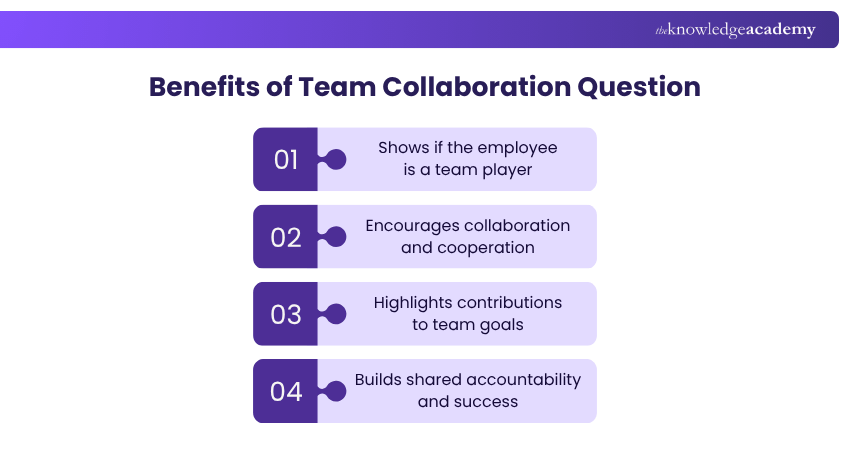
The answer to this question highlights to the manager whether the employee being reviewed is a team player. A quality employee wants the entire company to succeed, which can only happen through cooperation and collaboration. The answer spotlights what contributions the employee can make to help the team achieve its goals.
Sample Answer: “Encouraging more open communication within the team will greatly help us succeed. Hosting regular brainstorming sessions and team bonding activities can strengthen our dynamics and improve morale.”
6) What is your favourite and least favourite part of your role?
This question allows the employee to highlight what they like and dislike about the current role. These answers help their manager gain insight into any pain points they face while allowing the manager to learn what aspects of the job their direct report enjoys.
Sample Answer: “My favourite part is the creative process of brainstorming and advancing new content ideas. My least favourite part is the administrative tasks, such as scheduling revisions, which can sometimes be tedious and take time away from more creative pursuits.”
Improves supplier quality assessment and enhancement skills. Join our Supplier Quality Management Training now!
7) What are your goals for the next six months/year?
Identifying and discussing measurable benchmarks gives the employees a clear path to success at the next Performance Review. There should be a clear idea of what must be included in their short and long-term goals.
Sample Answer: “My goals for the next year include increasing my leadership skills by taking on more Project Management responsibilities. I also plan to complete a professional certification in Content Marketing.”
8) What were the main challenges you faced during the last period, and what do you think caused them?
This question lets employees discuss the main challenges they faced and why they happened. Their answers help managers understand how they handle setbacks, solve problems, and what support or resources they may need.
Sample Answer: “One of my biggest challenges was managing multiple deadlines at once, which sometimes affected the quality of my work. I believe this happened because I underestimated the time needed for certain tasks. I’m now improving my planning and prioritisation to handle workloads more effectively.”
9) Do you have any concerns about your work environment, and what changes could help you be more productive?
This question lets employees share honest feedback about their work environment and what helps them perform better. It shows that their comfort matters and helps boost motivation, focus, and teamwork.
Sample Answer: “The open office can be distracting at times. Having a quiet space or remote options for a few days a week would help me stay more focused and productive.”
10) Do you have any questions or concerns about the company’s future or your role in it?
This question encourages employees to reflect on their role and the company’s direction. It helps managers assess their commitment, alignment with goals, and any concerns needing reassurance.
Sample Answer: “I’m excited about the company’s growth plans but would like to know more about how my role might evolve with upcoming projects. Understanding this would help me plan my development better.”
11) Have you received any feedback since the last review that you’d like to discuss?
This question gives employees a chance to bring up any feedback they’ve received since the last review and to talk through it. It helps managers see how employees interpret and act on feedback and opens the door for guidance or clarification.
Sample Answer: “I received feedback that my time estimates are sometimes optimistic. I’d like to discuss this so I can better calibrate expectations, prioritise tasks, and improve communication going forward.”
12) Do you feel comfortable giving feedback to your managers or team leaders?
This question explores how comfortable employees feel giving honest feedback to managers or team leaders. It encourages open communication, builds trust, and helps create a positive, productive work culture.
Sample Answer: “I feel comfortable sharing feedback with my manager, but regular anonymous surveys could make it easier for everyone to convey their thoughts openly.”
13) Which skills would you like to improve or develop in the next few months?
This question helps employees identify areas for growth and development. It lets managers understand their goals and offer support through training or opportunities, encouraging continuous learning and alignment with company needs.
Sample Answer: “I’d like to strengthen my Project Management and communication skills. Improving these will help me handle larger projects and collaborate better with teams.”
Improve decision-making and problem-solving at senior levels. Join our Senior Management Training now!
Performance Review Questions for Managers
The following best Performance Review Questions and answers help assess the organisation’s leadership. They reveal how leadership supports or hinders progress, influencing both individual and team performance.
14) Am I meeting your expectations?
This question will involve the manager explaining their expectations and highlighting the areas the employee could improve on. If the employee is meeting expectations, the feedback should be positive.
Sample Answer: “Yes, you are meeting my expectations. Your constructive feedback and support have made a substantial difference in my performance. I appreciate your leadership style and feel inspired to bring new ideas to the table.”
15) How are you measuring my progress?
This question helps the employee understand the metrics the manager uses to measure progress. Going forward, the employee can rely on these metrics to analyse progress and improve. The manager generally has set criteria for employee progress, including progress reports, charts, or graphs.

Sample Answer: “Your progress is measured through Key Performance Indicators (KPI) related to quality of work, project completion, and feedback from team members. Regular check-ins help assess your achievements and any areas where you may need additional support or resources.”
16) How can I support my team better?
There might be times when the employee needs clarification on what task or goal to accomplish next. This question can help get ideas for things that can be done to help everyone. The key is to look for answers that explain what the coworkers might be struggling with.
Sample Answer: “You can support the team better by encouraging members to share their challenges and successes. Additionally, helping to balance workloads during peak times can help everyone remain motivated and productive.”
17) Are there any opportunities for professional development?
Many companies offer continued education for their employees. This question can help the employee determine whether the manager would be open to this or other professional development resources. They may share different courses or seminars offered by the company or outside sources.
Sample Answer: “Yes, there are several opportunities for professional development, including workshops and industry conferences that are focused on advanced content strategies. Additionally, we could explore online courses that prioritise specific skills related to our team goals.”
18) What would make me a candidate for a promotion?
If an employee seeks a promotion, this question helps clarify what steps are needed to reach that goal. A good response outlines the manager’s expectations, adds responsibilities to test readiness, and details about the company’s promotion process.
Sample Answer: “I would focus on exceeding performance metrics and taking on Project Leadership responsibilities. Additionally, seeking constant feedback and proactively mentoring junior team members would demonstrate my readiness for a more advanced role.”
19) How do you envision your role growing or changing over the next year?
This question helps employees think about how their role might evolve in the coming year. It lets managers understand their goals and support needs while aligning personal growth with company plans.
Sample Answer: “I’d like to take on more leadership responsibilities and mentor new team members. It would help me grow my management skills and contribute more to the team’s success.”
20) What challenges do you face that could be eased with more support?
This question helps employees share where they face challenges and need extra help. It allows managers to understand what support or resources can make work easier and boost confidence and performance.
Sample Answer: “I sometimes struggle with managing tight deadlines. Having clearer timelines and more support with task prioritisation would help me stay on track and deliver better results.”
Develop effective communication techniques to boost team understanding. Join our Performance Management Training now!
Performance Review Questions for Both Employees and Managers
The following questions for Performance Review Questions are for both employees and managers. They help highlight achievements beyond daily tasks and encourage open discussions about mindset, growth, and overall contributions.
21) What company values did you/your employee embody?
Every company wants its values to be more than just words on its website. This Performance Review question recalls employees and managers to retain company values at the forefront of their minds and do their best to embody them daily.
Sample Answer: “This employee embodies the values of innovation and collaboration. Their willingness to share knowledge and work with others reflects our commitment to teamwork, and their creative approach to Problem-solving aligns with our desire for innovation.”
22) What areas does this employee excel in?
This question aims to help employees learn more about themselves and see their abilities from an outside perspective, rather than just elicit praise. Once they are aware of their strengths, they can strategise how to use those skills at the company and throughout their careers.
Sample Answer: “This employee excels in creative thinking and collaboration. They consistently generate innovative ideas to enhance the content strategy process and are always willing to assist teammates.”
Conclusion
Performance Review Questions play a vital role in understanding employees’ progress, challenges, and aspirations. They open the door to honest communication, helping managers offer the right support and guidance. When used thoughtfully, these questions promote growth, strengthen engagement, and build a culture of trust where both employees and organisations can thrive together.
Develop essential communication, negotiation, and conflict resolution skills. Join our Management Courses today!
Frequently Asked Questions
What are Good Performance Review Questions?

Good Performance Review Questions are open-ended and meaningful, encouraging honest discussions about performance, goals, and growth. They help identify strengths, challenges, and future aspirations while aligning employee development with the organisation’s success.
How Should I Prepare for a Performance Review?
To prepare for a Performance Review, reflect on your achievements, challenges, and goals. Gather examples of your work, note improvement areas, and plan future objectives. Reviewing feedback and being ready to discuss support needs helps make the review more productive and growth-focused.
What are the Other Resources and Offers Provided by The Knowledge Academy?
The Knowledge Academy takes global learning to new heights, offering over 3,000+ online courses across 490+ locations in 190+ countries. This expansive reach ensures accessibility and convenience for learners worldwide.
Alongside our diverse Online Course Catalogue, encompassing 19 major categories, we go the extra mile by providing a plethora of free educational Online Resources like Blogs, eBooks, Interview Questions and Videos. Tailoring learning experiences further, professionals can unlock greater value through a wide range of special discounts, seasonal deals, and Exclusive Offers.
What is The Knowledge Pass, and How Does it Work?
The Knowledge Academy’s Knowledge Pass, a prepaid voucher, adds another layer of flexibility, allowing course bookings over a 12-month period. Join us on a journey where education knows no bounds.
What are the Related Courses and Blogs Provided by The Knowledge Academy?
The Knowledge Academy offers various Management Courses, including the Art of Performance Review Training, Performance Management Training, and the Supplier Quality Management Training. These courses cater to different skill levels, providing comprehensive insights into Operational Efficiency.
Our Business Skills Blogs cover a range of topics related to Performance Review, offering valuable resources, best practices, and industry insights. Whether you are a beginner or looking to advance your Performance Management skills, The Knowledge Academy's diverse courses and informative blogs have got you covered.

Olivia Taylor


Chartered Accountant and Financial Training Specialist
Olivia Taylor is a qualified chartered accountant with over a decade of experience in financial management, auditing and corporate reporting. Having worked with leading firms in both the public and private sectors, Olivia brings clarity to complex financial topics. Her writing focuses on helping professionals build confidence in key areas of accounting, compliance and financial planning.
View Detail
Upcoming Accounting and Finance Resources Batches & Dates
Date
 Art of Performance Review Training

 If you wish to make any changes to your course, please


