


 Top Rated Course

We may not have the course you’re looking for. If you enquire or give us a call on +44 1344 203 999 and speak to our training experts, we may still be able to help with your training requirements.
What is a Food Supply Chain? Definition, Types, and Stages
Scarlett Adams 17 December 2025The Food Supply Chain covers the full journey from farm to fork, including production, processing, distribution, consumption, and disposal of food products. Understanding how this chain operates is crucial for governments, businesses, and consumers, as it impacts food security, costs and environmental health and overall public well-being.

Training Outcomes Within Your Budget!
We ensure quality, budget-alignment, and timely delivery by our expert instructors.
Table of Contents
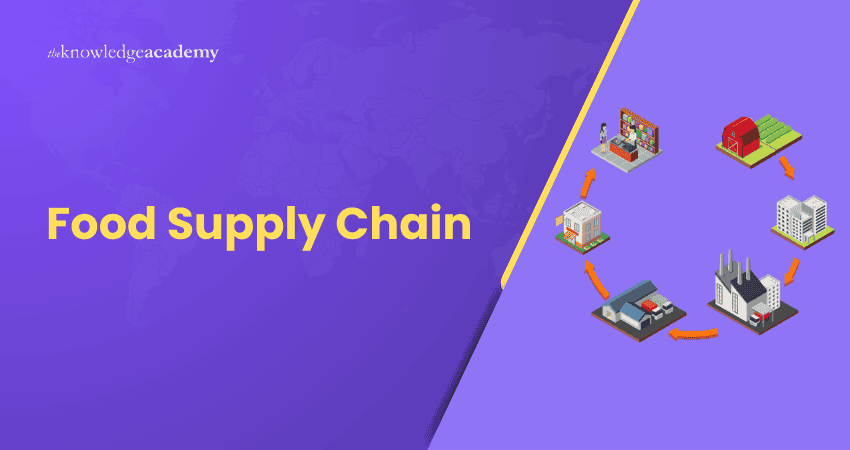
If you've ever wondered how your favourite snack found its way to the nearest store or your favourite meal ends up on your plate, you can thank the Food Supply Chain. It's a journey driven by a fascinating web of growers, processors, transporters, and retailers. Essentially, it’s the invisible engine behind every bite we take.
From fresh produce to packaged goods, every stage in this process plays a vital role to ensure safe, accessible and high-quality foods. This blog takes a deep dive into the Food Supply Chain highlighting its types, stages, benefits and more. So read on and learn how this powerful network powers global nutrition and, by association, our everyday life.
Table of Contents
1) What is a Food Supply Chain?
2) Why is the Food Supply Chain Important?
3) Stages in the Food Supply Chain
4) Types of Food Supply Chain
5) Challenges in the Food Supply Chain
6) Risk Management Strategies for the Food Supply Chain
7) Conclusion
What is a Food Supply Chain?
The Food Supply Chain covers everything involved in getting food to people, from growing crops and making products to finally reaching consumers. It’s a connected network of farmers, producers, transporters, retailers, restaurants, and customers, all working together. Its main purpose is to make sure food is available, accessible, and safe to eat.
From smart farming to digital tracking, modern supply chains focus on reducing waste, increasing transparency, and handling disruptions. Understanding this system is vital for businesses, governments and consumers, as it affects food security, costs, and the environment.
Why is the Food Supply Chain Important?
The Food Supply Chain is important for the following reasons:
1) The Food Supply Chain ensures that food consistently reaches the consumers on both local and global scale.
2) It protects the consumers by assuring proper handling, storage and monitoring of the food products.
3) The supply chain helps fight hunger by making food accessible and affordable for people all around the world.
4) It provides consistent employment opportunities for Farmers, Manufacturers, Transporters, and Retailers.
5) The system promotes best practices that can minimise waste and help protect the environment.
6) With modern tools such as digital tracking, it can build consumer trust by showing the origins of food.
7) It helps societies manage and recover from a range of disruptions such as pandemics, Climate Change or conflicts.
Stages in the Food Supply Chain
From production to consumption, let’s explore the main stages in the Food Supply Chain:
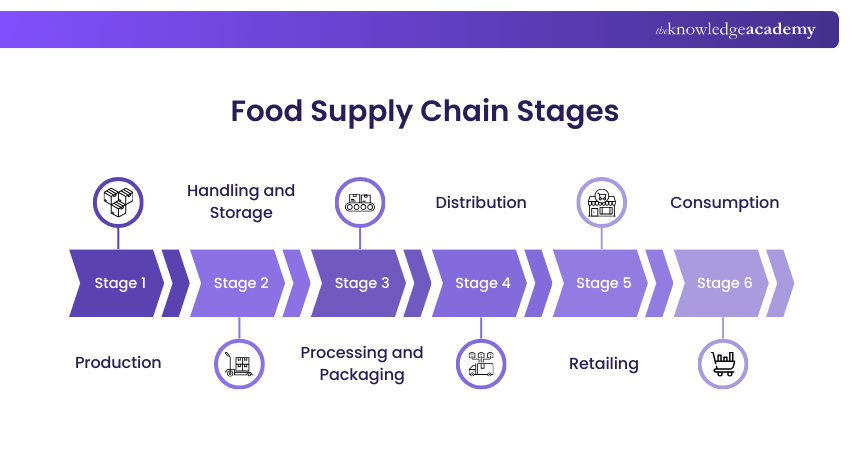
1) Production
1) The Food Supply Chain starts with production
2) This involves growing crops, raising livestock, or producing other food items
3) Farmers, ranchers and producers follow strict local and international standards
4) They assure Food Safety and quality from the very beginning
2) Handling and Storage
1) After harvesting, food is prepared for the next stage
2) This includes cleaning, sorting, grading, and storing in proper conditions
3) For example, fruits and vegetables are washed and sorted by quality
4) Then they are stored in cold facilities to keep them fresh
3) Processing and Packaging
1) Food is then processed into a form ready for consumption
2) This may include cutting, cooking, baking, or packaging
3) Safety rules are followed to ensure food is safe
4) Packaging often includes nutritional details and expiry dates for consumers
4) Distribution
1) At this stage, food is transported and delivered to Suppliers and Retailers
2) It involves logistics such as warehousing, Inventory Management and transportation
3) For instance, trucks deliver fresh produce to supermarkets
4) This helps ensure that these products arrive on time and in good condition
5) Retailing
1) Food is then made available to consumers
2) This is achieved through grocery stores, restaurants, and online platforms
3) This stage involves stocking, displaying, and selling products
4) This helps the customers access them easily
6) Consumption
1) Finally, customers buy and consume the food.
2) This may involve preparing meals at home or dining at restaurants
3) This marks the final step of the Food Supply Chain
From field to table, your journey to food safety Starts Here. Sign up for our ISO 22000 Training now!
Types of Food Supply Chain
Different types of Food Supply Chains help businesses serve customers effectively and keep products moving smoothly. Here are the main types:
1) Continuous Flow
This works best for products that are always in demand and don’t change much. For instance, a dairy company produces milk every day in large quantities without altering the product.
2) Fast-chain
This type is quick and adaptable, perfect for items with short shelf lives or that change often. Imagine a juice bar that offers new fruit blends every week to keep up with customer trends.
3) Efficient
An efficient supply chain focuses on consistency and cost-effectiveness. For instance, a rice mill that processes and delivers rice to supermarkets, ensuring it’s always available at a reliable standard.
4) Agile
Agile supply chains are ideal for customised or unique products. Think of a chocolatier making handcrafted chocolates tailored for weddings or festivals, adjusting to specific customer needs quickly.
5) Flexible
This type adapts to seasonal or shifting demands. A seafood Supplier, for example, adjusts offerings based on what’s freshly caught at different times of the year.
6) Custom Configured
Here, customers can personalise products. Imagine a salad bar where you choose the greens, toppings, and dressings to build your own meal.
Be the trusted watchdog of food safety. Sign up for our ISO 22000 Internal Auditor Training now!
Challenges in the Food Supply Chain
The Food Supply Chain can face many disruptions that affect production, distribution, and prices. Here are some common challenges associated with it:
1) Public Health Emergencies
Events like the COVID-19 pandemic can disrupt farms, factories, and stores by reducing the available workforce. Illness outbreaks or contamination on farms can also cause recalls and waste, lowering the amount of safe food available.
2) Severe Weather Events
Severe weather, such as floods, storms, or droughts, can damage crops, farms, and transport routes. This reduces production, slows deliveries, and creates shortages in the supply chain.
3) Energy Supply Challenges
Energy is needed at every stage of the Food Supply Chain, starting from farming and processing to packaging and delivery. Any disruption in fuel or electricity supply can lead to delays, reduced output, and increased food prices.
4) Geopolitical Tensions
Wars or political tensions can severely impact food supply. If key producing countries are affected, both local and international trade may be disrupted.
Grow food and trust in equal measures. Sign up for our Food Safety Manager Training now!
Risk Management Strategies for the Food Supply Chain
Managing risks in the Food Supply Chain is crucial to ensuring food safety, security, and sustainability. Here are some key strategies to consider for Food Supply Chain Risk Management:
1) Strengthening Collaboration
Working closely with suppliers, distributors, retailers, and even consumers helps share best practices and solve problems together. This can range from improving food safety to creating eco-friendly packaging solutions.
2) Implementing Standardised Practices
Using recognised food safety systems, such as ISO 22000 or GFSI standards like FSSC 22000, BRCGS Food, IFS Food, or SQF, can help manage risks at every stage. Independent certification can also build credibility and is often required for trading.
3) Embracing Technological Solutions
Advanced tools like AI and Data Analytics can predict risks, reduce food waste, and improve supply chain decisions. Technology makes it easier to spot problems before they grow.
4) Conducting Routine Audits and Monitoring
Conducting regular audits and monitoring processes enables the detection of issues early and their prompt resolution. Global standards recognised by GFSI also allow one audit to meet the needs of all customers.
5) Managing Supplier Relationships Effectively
Strong partnerships with Suppliers encourage better communication and cooperation. A structured Supplier qualification process further ensures reliability and consistent quality.
Conclusion
We hope this blog has helped you understand how the Food Supply Chain acts as the backbone of how the world eats and sustains itself. By exploring its definition, types, and stages, you can see how food reaches our tables in a safe and sustainable manner. Recognising its importance can empower us to make choices that strengthen global food security and resilience.
Become the architect of food safety excellence with our ISO 22000 Lead Implementer Training - Register now!
Frequently Asked Questions
What is an Example of a Food Supply Chain?

An example of a Food Supply Chain is the journey of wheat. It goes like this:
1) Farmers grow and harvest the crop
2) Mills process it into flour
3) Bakeries use the flour to make bread
4) Distributors deliver it to supermarkets
5) Consumers buy and eat the bread
What are the main Objectives of Food Supply Chain?
The main objectives of a Food Supply Chain are to ensure food is safe, high-quality and affordable, while making it available to consumers on time. It also aims to reduce waste, improve efficiency, support sustainability, and meet customer demands in an effective manner.
What are the Other Resources and Offers Provided by The Knowledge Academy?
The Knowledge Academy takes global learning to new heights, offering over 3,000 online courses across 490+ locations in 190+ countries. This expansive reach ensures accessibility and convenience for learners worldwide.
Alongside our diverse Online Course Catalogue, encompassing 19 major categories, we go the extra mile by providing a plethora of free educational Online Resources like Blogs, eBooks, Interview Questions and Videos. Tailoring learning experiences further, professionals can unlock greater value through a wide range of special discounts, seasonal deals, and Exclusive Offers.
What is The Knowledge Pass, and How Does it Work?
The Knowledge Academy’s Knowledge Pass, a prepaid voucher, adds another layer of flexibility, allowing course bookings over a 12-month period. Join us on a journey where education knows no bounds.
What are the Related Courses and Blogs Provided by The Knowledge Academy?
The Knowledge Academy offers various ISO 22000 Courses, including the ISO 22000 Lead Auditor Training, ISO 22000 Internal Auditor Training and the ISO 22000 Foundation Training. These courses cater to different skill levels, providing comprehensive insights into Food Safety Inspector Salary.
Our Health & Safety Blogs cover a range of topics related to Food Supply Chain, offering valuable resources, best practices, and industry insights. Whether you are a beginner or looking to advance your supply chain knowledge, The Knowledge Academy's diverse courses and informative blogs have got you covered.
Upcoming Health & Safety Resources Batches & Dates
Date
 ISO 22000 Foundation Training
ISO 22000 Foundation Training
Mon 1st Jun 2026
ISO 22000 Foundation Training
Mon 7th Sep 2026
ISO 22000 Foundation Training
Mon 14th Dec 2026

 If you wish to make any changes to your course, please


