


 Top Rated Course

We may not have the course you’re looking for. If you enquire or give us a call on +44 1344 203999 and speak to our training experts, we may still be able to help with your training requirements.
What is CCNA: Complete Certification Guide and Career Path
John Davies 05 December 2025CCNA is an entry-level certification that validates foundational networking skills, including routing, switching, IP services, security, and automation. It helps learners understand how networks operate and how devices communicate. It builds confidence in managing and troubleshooting network issues in real-world environments.
Home
 Resources
IT Infrastructure & Networking
What is CCNA: Complete Certification Guide and Career Path
Resources
IT Infrastructure & Networking
What is CCNA: Complete Certification Guide and Career Path
Resources
IT Infrastructure & Networking
What is CCNA: Complete Certification Guide and Career Path

Training Outcomes Within Your Budget!
We ensure quality, budget-alignment, and timely delivery by our expert instructors.
Table of Contents

Ever fixed a Wi-Fi issue or helped someone set up their internet? That problem-solving skill could lead to a rewarding IT career, and CCNA Certification is a great place to start. So, exactly What is CCNA? It’s a beginner-level certification from Cisco that teaches you how to set up, manage, and troubleshoot computer networks, skills that are needed in almost every industry today.
In this blog, we’ll explore What is CCNA and what you can do with it by covering what the certification involves, its key benefits, exam details, and career opportunities. Let’s dive in!
Table of Contents
1) What is CCNA?
2) CCNA Examination Details
3) What Salary Could I Earn With the CCNA Certification?
4) Benefits of CCNA Certification
5) Career Opportunities With CCNA
6) What Does CCNA Do?
7) Is CCNA Very Hard?
8) Conclusion
What is CCNA?
The Cisco Certified Network Associate (CCNA) is an entry-level credential to validate essential networking knowledge and skills. It is designed for beginners and professionals looking to build a strong foundation in managing and troubleshooting modern networks.
It covers key areas such as network fundamentals, routing and switching, Internet Protocol (IP) services, security basics, wireless concepts, and automation. It is widely recognised by employers and often used as the first step toward more advanced Cisco certifications and networking careers.

CCNA Examination Details
Although there are no official prerequisites, candidates with a strong background in Information Technology (IT) are often better prepared. Having some hands-on experience and foundational knowledge can make it easier to understand the concepts. Below are some commonly preferred skills and experience areas for candidates but it is not mandatory:
a) A minimum of one year of experience in using and working with Cisco products
b) Foundational knowledge of IP addressing
c) In-depth knowledge of network fundamentals
Exam Registration
To take the CCNA exam, you need to register through the official Cisco Certification website or authorised testing centres. The registration process typically involves creating an account, providing personal information, selecting the exam track, and paying the fee. Once registered, you can schedule your exam at a convenient time and location.
Exam Topics
The Cisco Certified Network Associate exam is a 120-minute exam which covers a wide range of topics and evaluates an individual's knowledge and skills in networking technologies. Here are the key components or mainly focused topics of the exam and their weightage:
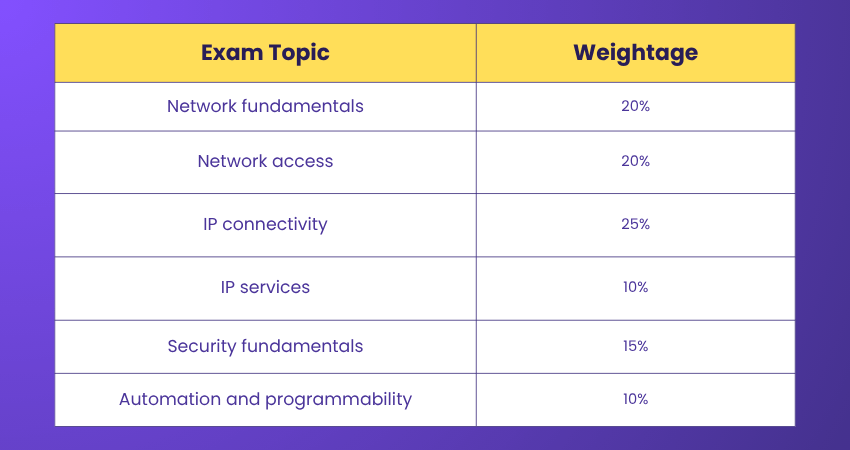
1) Network Fundamentals (20%): This section tests the foundational concepts of networking, including the Open Systems Interconnection (OSI) and Transmission Control Protocol/Internet Protocol (TCP/IP) models, IP addressing and subnetting, network protocols, network topologies, and network devices such as routers and switches.
2) Network Access (20%): The network access section covers topics related to Local Area Network (LAN) switching technologies, Ethernet standards, wireless LANs, and configuring and troubleshooting network access control.
3) IP Connectivity (25%): This section evaluates the ability to configure and troubleshoot IP connectivity, including the implementation and verification of IPv4 and IPv6 addressing, static routing, and basic troubleshooting techniques for common connectivity issues.
4) IP Services (10%): IP services cover additional network services and protocols, such as Network Address Translation (NAT), Dynamic Host Configuration Protocol (DHCP), Network Time Protocol (NTP), and Domain Name System (DNS).
5) Security Fundamentals (15%): The security fundamentals section focuses on network security concepts, including common security threats, securing network devices, implementing Access Control Lists (ACLs), and covering CCNA and CCNA Security along with basic security measures to protect network infrastructure.
6) Automation and Programmability (10%): For the DevNet track, there is a specific focus on automation and programmability in networking. This includes understanding the basics of Python Programming, APIs, network automation tools, and Software-defined Networking (SDN) concepts.
The passing score for the CCNA exam is set by Cisco and can be different each time. You need to get the minimum score to pass. To prepare well, you can follow simple CCNA Exam Tips. If you pass the test, you will get a certificate from Cisco that shows you understand networking.
Acquire the skills to design, configure, and troubleshoot network topologies. Join our Cisco Packet Tracer Course now!
What Salary Could I Earn With the CCNA Certification?
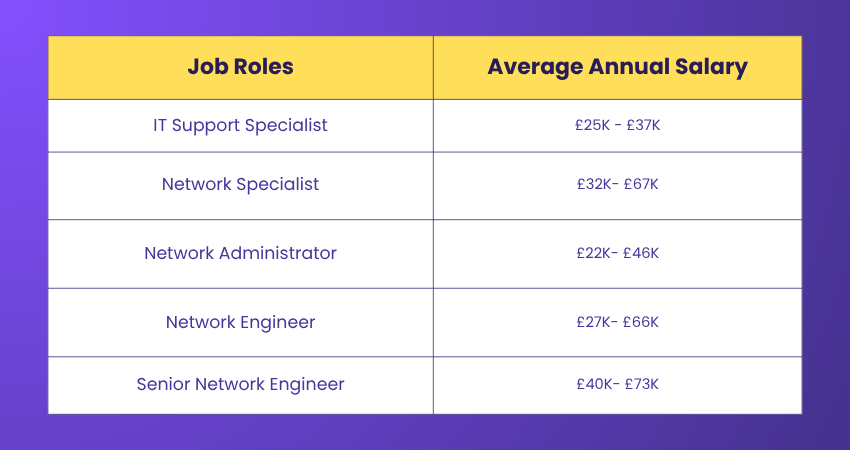
CCNA Certification can help you get both beginner and advanced jobs in networking. Here are some common job roles and their average yearly pay in the UK:
Source: Glassdoor
Benefits of CCNA Certification
The CCNA Certification holds significant importance in the IT industry and networking domain. Here are some of the Benefits of CCNA Certification:
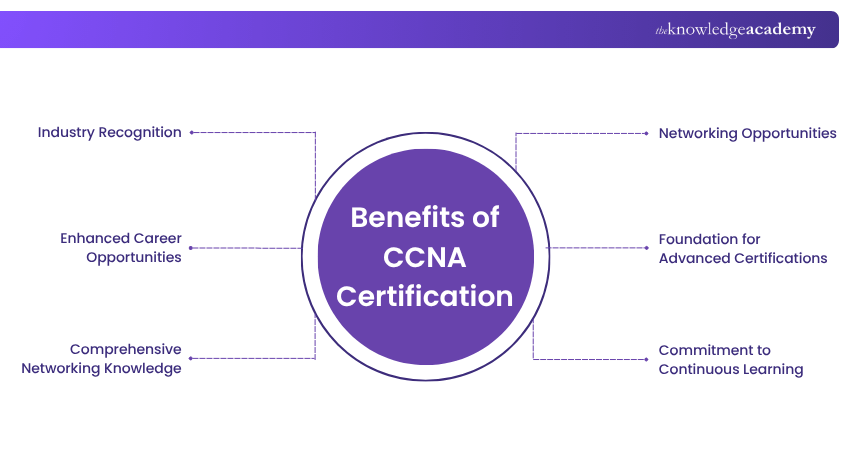
a) Industry Recognition
The CCNA is a globally recognised certification offered by Cisco, renowned for its prestige and credibility. It signifies that an individual has met Cisco's rigorous standards for networking knowledge and skills. Employers often prioritise candidates with a CCNA Certification, viewing it as a validation of their expertise in Cisco networking technologies.
b) Enhanced Career Opportunities
The CCNA Certificate helps you get many jobs in the networking field. It is a good starting point for roles like Network Administrator, Network Engineer, or Technical Support Engineer. People with CCNA are needed by all kinds of companies, big and small. They are trusted to set up, manage, and fix computer networks. Many also use Cisco Networking learning materials to keep their skills up to date.
c) Comprehensive Networking Knowledge
A CCNA Certification equips professionals with a broad understanding of networking concepts and technologies. It covers various topics, including routing and switching, network security, and wireless networking. This knowledge enables individuals to effectively troubleshoot network issues, design robust networks, and implement best practices for network performance and security.
d) Networking Opportunities
Becoming CCNA-certified opens up a wealth of networking opportunities. Professionals can connect with other CCNA-certified individuals, join networking forums, and attend industry events. These interactions provide opportunities to learn from experienced professionals, exchange knowledge and insights, and build valuable connections that enhance career prospects.
e) Foundation for Advanced Certifications
The CCNA is a first step toward higher Cisco Certificates, like CCNP and CCIE. Getting a CCNA helps you build strong basic skills in networking. It also lets you choose a special area to focus on. When comparing CCNA vs CCNP, the higher-level ones give deeper knowledge and lead to more expert jobs. These advanced roles often come with better pay and more responsibility.
f) Commitment to Continuous Learning
Earning a certificate in CCNA demonstrates your dedication to staying updated in the ever-changing world of networking. It shows employers that you are willing to learn, grow, and keep your skills relevant. Since the certification requires renewal, it encourages ongoing development and motivates you to stay current with new technologies.
Learn advanced networking and collaboration tools with our CCNP Collaboration Training now!
Career Opportunities with CCNA
Earning a CCNA Certification opens a wide range of career opportunities and provides a solid foundation for professional growth in networking. Preparing for CCNA Interview Questions can further enhance your chances of securing top roles. Here are some of the CCNA Job Roles which can be attained with a CCNA Certification:
1) Network Administrator
A Network Administrator plays an important role in a company. They take care of the network system that keeps everything connected and running. Let’s look at what they do:
a) Network Setup and Maintenance:
Network Administrators install and take care of devices like routers, switches, firewalls, and Wi-Fi points. They check the network to make sure it’s working well, fix problems, and keep it safe and stable.
b) Network Settings and Problem Solving:
They set up things like IP addresses, VLANs, and routing paths. When there’s a network issue, like slow speed or a lost connection, they find out what’s wrong and fix it quickly.
c) Network Records and Rules:
They keep records of the network setup, such as maps, device lists, and settings. They also watch how much data is being used, follow security rules, and make sure everything meets company standards. Learning from tools like a CCNA Study Guide helps them do their job better.
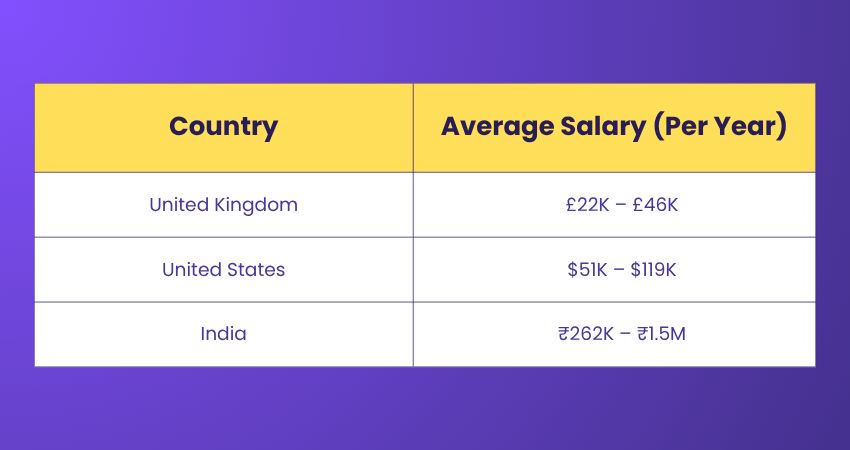
The pay for Network Administrators depends on things like experience, location, and company size. This role is well-respected and needed in many places, with salaries changing from country to country based on demand and skills.
Source: Glassdoor
2) Systems Engineer
A Systems Engineer is a key member of the IT team, helping to build and manage the systems that keep a company running smoothly. A CCNA-certified Systems Engineer has the knowledge to work on both networking and system-related tasks. Here are the main responsibilities:
a) Designing and Setting up Systems:
Systems Engineers plan and set up advanced IT systems like servers, storage, virtual machines, and network tools. They make sure everything is connected and works together smoothly.
b) Managing and Maintaining Systems:
They take care of the systems daily by running updates, applying security patches, and backing up important data. Their goal is to keep systems secure and running at their best.
c) Monitoring and Improving Performance:
Systems Engineers watch how systems are performing, check resource usage, and fix any slowdowns or problems. They work to make everything run faster and more efficiently.
d) Teamwork and Communication:
They often work with other IT experts like Network Engineers, security teams, and developers. They help plan, build, and check projects as a team. A System Engineer’s salary depends on experience, location, industry, and company size.
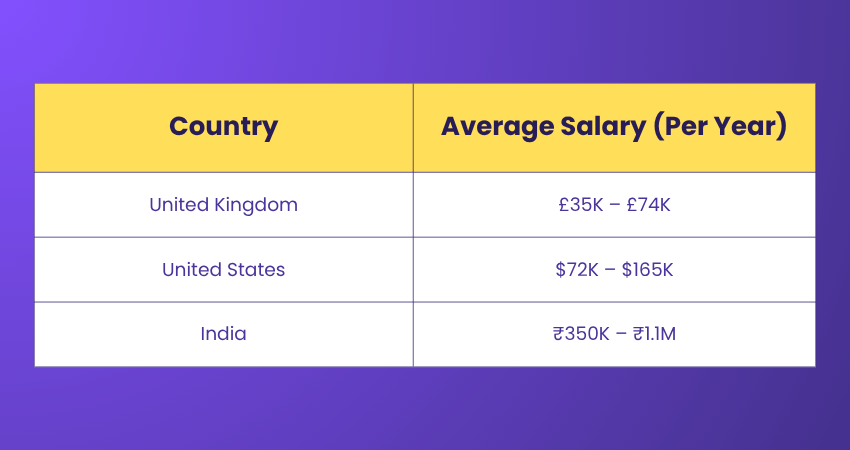
Source: Glassdoor
What Does a CCNA Professional do?
A CCNA-certified professional sets up, manages, and troubleshoots computer networks. They work with routers and switches to ensure smooth network operations. They may also handle basic security tasks, support remote access, and assist with automation and system updates.
Is CCNA Very Hard?
The CCNA is not hard, but it does require focused study and hands-on practice. Many beginners succeed with the right guidance, clear learning resources, and steady preparation. If you enjoy learning how networks work and put in regular effort, the CCNA becomes a very achievable and rewarding certification.
Conclusion
The CCNA remains one of the most trusted and valuable certifications for anyone looking to build a strong foundation in networking. Holding a proper knowledge about What is CCNA will equip you with practical, in-demand skills that open doors to well-paid roles and long-term career growth. Whether you’re starting out in IT or aiming to advance into specialised areas like security, cloud, or automation, CCNA provides the perfect foundation for your career.
Gain in-depth knowledge about network and security fundamentals. Join our CCNA Certification now!
Frequently Asked Questions
Is CCNA a Valuable Certification?

Yes, CCNA is a valuable certification. It provides foundational knowledge in networking, enhances career prospects, and is recognised globally by employers, making it a significant asset for IT professionals.
How Important is CCNA for Cyber Security?
CCNA is important for Cyber Security as it builds essential networking skills. Understanding network infrastructure is crucial for identifying vulnerabilities, implementing security measures, and ensuring overall network security. This makes CCNA a beneficial certification for Cyber Security professionals.
What are the Other Resources and Offers Provided by The Knowledge Academy?
The Knowledge Academy takes global learning to new heights, offering over 3,000 online courses across 490+ locations in 190+ countries. This expansive reach ensures accessibility and convenience for learners worldwide.
Alongside our diverse Online Course Catalogue, encompassing 19 major categories, we go the extra mile by providing a plethora of free educational Online Resources like Blogs, eBooks, Interview Questions and Videos. Tailoring learning experiences further, professionals can unlock greater value through a wide range of special discounts, seasonal deals, and Exclusive Offers.
What is The Knowledge Pass, and How Does it Work?
The Knowledge Academy’s Knowledge Pass, a prepaid voucher, adds another layer of flexibility, allowing course bookings over a 12-month period. Join us on a journey where education knows no bounds.
What are the Related Courses and Blogs Provided by The Knowledge Academy?
The Knowledge Academy offers various CCNA Training, including the CCNA Certification, Cisco Packet Tracer Course and CCNP Collaboration Training. These courses cater to different skill levels, providing comprehensive insights into the Benefits of CCNA Certification.
Our IT Infrastructure & Networking Blogs cover a range of topics related to CCNA, offering valuable resources, best practices, and industry insights. Whether you are a beginner or looking to advance your Network and Security skills, The Knowledge Academy's diverse courses and informative blogs have got you covered.

John Davies


Cyber Security Governance & Assurance Specialist
John Davies is a cybersecurity expert specialising in governance, risk management, and compliance. With over 15 years in the field, he has led enterprise-wide security programmes across finance, healthcare and public sector organisations. His content provides practical guidance on building secure environments, managing risk and aligning with regulatory frameworks.

Upcoming IT Infrastructure & Networking Resources Batches & Dates
Date
 CCNA Certification
CCNA Certification
Mon 4th May 2026
CCNA Certification
Mon 24th Aug 2026
CCNA Certification
Mon 5th Oct 2026

 If you wish to make any changes to your course, please


