


 Top Rated Course

We may not have the course you’re looking for. If you enquire or give us a call on +44 1344 203999 and speak to our training experts, we may still be able to help with your training requirements.
Cash Flow Budget: Definition, Steps and Example
Olivia Taylor 26 February 2026A Cash Flow Budget estimates a business’s cash inflows and outflows over a specific period to ensure liquidity, prevent shortages, and support growth. It helps organisations plan expenses wisely, maintain financial stability, and make smart decisions. This structured approach strengthens cash management and long-term sustainability.

Training Outcomes Within Your Budget!
We ensure quality, budget-alignment, and timely delivery by our expert instructors.
Table of Contents

Are you finding it challenging to keep your business finances in check? A Cash Flow Budget could be your game-changer! This essential tool helps you monitor and predict your cash inflows and outflows, ensuring you always have the funds to meet your financial commitments.
Picture having a straightforward, actionable plan that lets you foresee cash shortages and make smart decisions to keep your business thriving. Discover how to create and use a Cash Flow Budget to simplify your financial management and safeguard your business’s financial future.
Table of Contents
1) What is a Cash Flow Budget?
2) What Is Included in a Cash Flow Budget?
3) Who Should Have a Cash Flow Budget?
4) How Cash Flow Budgeting Works?
5) Example of a Cash Flow Budget
6) How to Utilise Your Cash Flow Budget?
7) How Do You Increase Cash Flow?
8) Is A Cash Flow Budget Different from A Regular Budget?
9) Tools to Track and Organise a Cash Flow Budget
10) Conclusion
What is a Cash Flow Budget?
A Cash Flow Budget is a projection of financial plan of an expected money that will enter and leave the business within a specific period, which in this case is weekly, monthly or quarterly. It gives an insight into the cash positions in the future, and businesses can know whether they will have enough cash to cover their financial obligations or not.
The Cash Flow Budget assists in determining whether there will be shortfalls or surpluses because it is an estimation of cash inflows (such as customer payments) and outflows (such as operating costs, paying suppliers, etc.). This enables organisations to act in good times, manage finances, and ensure good business operations.
What Is Included in a Cash Flow Budget?
A Cash Flow Budget should capture all the expected cash inflows and outflows your business anticipates during the budget period, giving a full picture of how money moves in and out. Fundamentally, it involves projected sales or revenue forecasts and all anticipated cash receipts and disbursements to help you know the money you have.
Some of the common items are sales forecasts, loan repayments, tax payments, refunds, and operating expenses such as payroll, rent, utilities, and other operating expenses. It also addresses the accounts payable (money due to suppliers) and the accounts receivable (money due to customers).
Short-term budgets will place more emphasis on cash requirements (salaries and bills) in the short-term, and long-term budgets can also incorporate capital spending, investments, and more significant financial obligations in the long run.

Who Should Have a Cash Flow Budget?
A Cash Flow Budget is essential for:
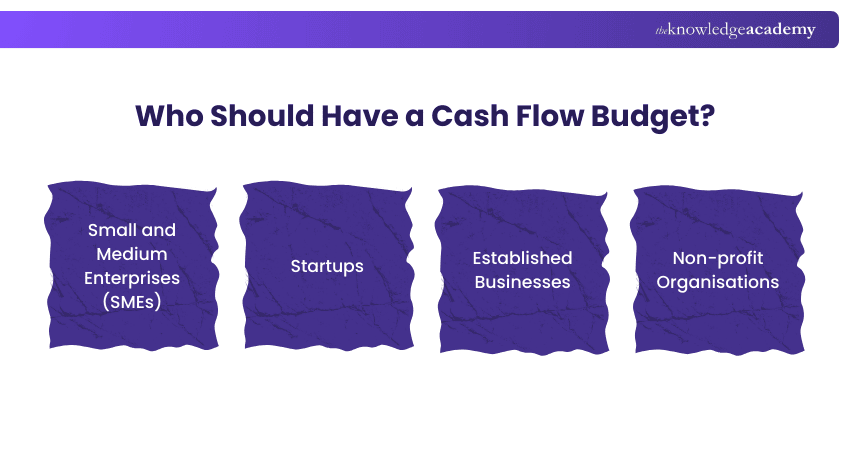
1) Small and Medium Enterprises (SMEs): To manage day-to-day finances, plan for growth, and avoid liquidity issues.
2) Startups: To forecast cash needs and ensure they can cover initial expenses and sustain operations.
3) Established Businesses: To monitor financial health, optimise cash management, and plan for investments or expansions.
4) Non-profit Organisations: To track donations and expenditures, ensuring they meet operational and project funding needs.
Essentially, any organisation or business aiming to maintain financial stability, make informed decisions, and achieve long-term goals should have a Cash Flow Budget.
Transform your career with expert training in Accounting and Financial Statement Analysis Training - Join now!
How Cash Flow Budgeting Works?
Cash Flow Budgeting, along with a well-structured Cash Budget, is a critical process that helps businesses manage their finances by forecasting cash inflows and outflows over a specified period. By following a systematic approach, businesses can gain a clear understanding of their financial position. This enables them to make informed decisions and ensure they have sufficient cash to meet their obligations. Here’s a step-by-step guide on how Cash Flow Budgeting works:
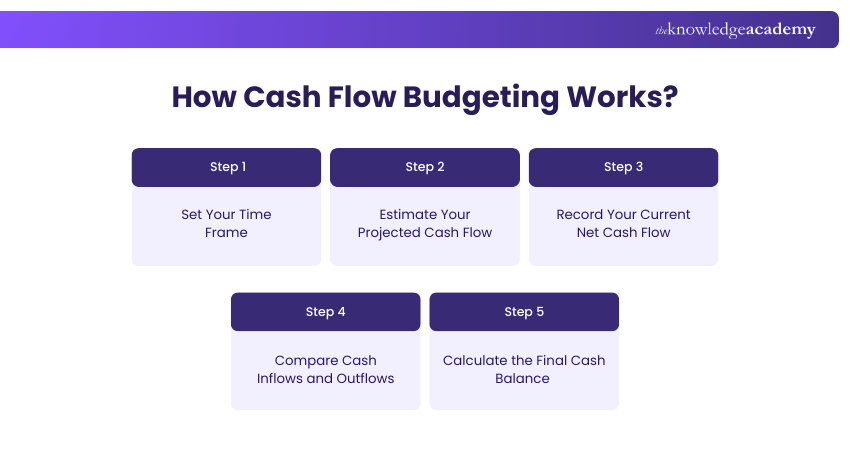
Step 1: Set Your Time Frame
The first step in Cash Flow Budgeting is to determine the period you want to cover, typically monthly or quarterly. This time frame will guide your projections and help you stay focused on short-term financial goals. It also allows you to monitor and maintain long-term financial stability.
Step 2: Estimate Cash Inflows
Calculate all the cash that your business is likely to get within the budget period. This covers the sales or service revenues, and other sources like loans, grants, or supplementary funds. Use previous financial history to make realistic forecasts and not to overestimate the receipts expected. This assists in making sure that your cash flow projection is correct and valid.
Step 3: Estimate Cash Outflows
Calculate all the cash that your business is going to pay within the budget period. This covers normal operating costs like rent, salaries, utilities, payment to suppliers, and repayment of loans. Make sure to include all fixed and variable expenses in a list, to ensure you do not underestimate cash requirements. The perfect estimates of outflow will assist you in better planning and prevent any sudden deficits.
Step 4: Compare Cash Inflows and Outflows
With your current and projected Cash Flow in hand, compare your cash inflows and outflows. This comparison will highlight any potential cash shortages or surpluses, allowing you to adjust your budget and plan for contingencies.
Step 5: Calculate the Final Cash Balance
Finally, calculate your final cash balance by adding your net Cash Flow to your starting cash balance. This final figure will help you determine whether your business is on track to maintain a positive cash position. If not, it will indicate whether adjustments are needed to avoid financial difficulties.
By following these steps, Cash Flow Budgeting can provide you with a comprehensive view of your business's financial health. This insight enables better planning and decision-making, contributing to sustained success.
Enhance your career with our expert-led Accounting Courses – Register now and take control of your financial future!
Example of a Cash Flow Budget
The basic example that is given to realise how a Cash Flow Budget works would be the following simplified situation.
The XYZ is a toy manufacturing company that wishes to make projections regarding its cash position in the last quarter of the year. The company records using last year figures as a baseline:
1) October: £25,000
2) November: £35,000
3) December: £50,000
As a result of growing business and a new marketing campaign, the company is projecting a 3% increase in October and November and a 5 percent increase in December. The revised forecasts are:
1) October: £25,750
2) November: £36,050
3) December: £52,500
In order to make a Cash Flow Budget in December, the company will first give an estimate of cash inflows in total, such as estimated sales, supplier payments, and any other income. The total expected inflows are 75,000 pounds, out of which 52,500 pounds come through sales.
It then determines anticipated cash outlays, including rent, payroll, utility, loan repayments and marketing expenses which amount to £45,000. By calculating the difference between the outflows and the inflows, the business expects to have a cash surplus of 30,000 at the end of the month of December, enabling the business to manage its financial future with a lot of confidence and ensuring its financial stability.
How to Utilise Your Cash Flow Budget?
Why invest time in calculating your Cash Flow Budget, especially when it’s not a precise figure? Despite its estimative nature, a Cash Flow Budget offers numerous benefits. It helps you anticipate upcoming bills, reduce uncertainty, and foresee potential challenges.
If your projected Cash Flow shows a negative balance, you can identify cost-cutting opportunities and take corrective action. Conversely, a positive projection reveals surplus cash, crucial for business growth or new product development. For these reasons, regularly assessing your Cash Flow position is a wise practice.
How Do You Increase Cash Flow?
Some of the practical solutions that businesses can implement in the process of enhancing cash flows and improving their financial situations include:
1) Increase Production and Prices
Find out how to make additional revenue out of your existing operations, like making more products, charging more where the market can, and providing custom work or diversifying distribution channels to reach new customers.
2) Cut Costs
Review your expenses and identify areas where you can reduce spending. This may include negotiating a better lease, reducing input costs, reducing labour costs, or identifying efficiencies that reduce cash outflows without damaging operations. Sell capital assets or postpone capital investments.
3) Sell Capital Assets or Delay Capital Investments
Get quick cash by selling off unnecessary items such as equipment or land. Alternatively, delay a scheduled capital expenditure until you have more cash to cover all your business expenditures.
4) Reduce Debt Payments
In the event that debt obligations are putting a strain on the cash reserves, consider restructuring, refinancing or consolidating loans with your lender to reduce frequent repayments and enhance monthly cash flow.
5) Look For Ways to Increase Non-farming Income
In addition to core business operations, other sources of income, including renting out property, selling related services, or finding new sources of income that complement your core business are also to be identified.
Is A Cash Flow Budget Different from A Regular Budget?
Yes, both are financial planning instruments, but they are not used for the same purpose. A Cash Flow Budget specifically concentrates on the amount of real cash available to you once all your inflows and outflows have been subtracted by the end of a specific period and whether you will have enough cash to meet any of your expenses or not.
By contrast, a normal budget is a plan of how money will be used and what money actually went to waste at the end of a given period and does not necessarily indicate when cash will be received and when it will be paid.
Tools to Track and Organise a Cash Flow Budget
In order to keep on track with your Cash Flow Budget, you are supposed to have tools that allow you to track income and expenses in a clear and consistent manner. The most popular way is to use special financial applications such as You Need a budget or Mint, which automatically group your cash flows and simplify the process of reviewing trends.
You also have platforms such as Notion that allow you to handle finances with other business activities and maintain flexibility and visibility in a single place. You can use Google Sheets and Excel to create your own cash flow trackers in a more manual way, and software like Adobe Acrobat can be used to digitise, arrange, and share financial records, like receipts and reports.
Conclusion
Mastering your business finances with a Cash Flow Budget is not just a smart move—it’s essential for your success. By tracking and Forecasting Your Cash Flow, you can anticipate challenges, seize opportunities, and ensure your business remains financially healthy. Start implementing a Cash Flow Budget today and take control of your financial future. Your business will thank you for it!
Boost your Financial Management Skills with our Cash Flow Training - Sign up now to secure your business’s growth!
Frequently Asked Questions
What Is the Primary Purpose of a Cash Flow Budget?

The primary purpose of a Cash Flow Budget is to monitor expected cash inflows and outflows over a set period to ensure sufficient liquidity. It helps businesses anticipate shortages, manage working capital effectively, and make informed financial decisions to maintain stable operations.
How to Calculate Cash Flow in Capital Budgeting?
To calculate cash flow in capital budgeting, estimate all expected project inflows and subtract the initial investment, operating costs, taxes, and other outflows. The result is the net cash flow, which helps determine whether the investment is financially viable.
What are the Other Resources and Offers Provided by The Knowledge Academy?
The Knowledge Academy takes global learning to new heights, offering over 3,000+ online courses across 490+ locations in 190+ countries. This expansive reach ensures accessibility and convenience for learners worldwide.
Alongside our diverse Online Course Catalogue, encompassing 19 major categories, we go the extra mile by providing a plethora of free educational Online Resources like Blogs, eBooks, Interview Questions and Videos. Tailoring learning experiences further, professionals can unlock greater value through a wide range of special discounts, seasonal deals, and Exclusive Offers.
What is The Knowledge Pass, and How Does it Work?
The Knowledge Academy’s Knowledge Pass, a prepaid voucher, adds another layer of flexibility, allowing course bookings over a 12-month period. Join us on a journey where education knows no bounds.
What are the Related Courses and Blogs Provided by The Knowledge Academy?
The Knowledge Academy offers various Accounting Courses, including Cash Flow Training, Inventory Accounting and Costing Course and Accounting and Financial Statement Analysis Course. These courses cater to different skill levels, providing comprehensive insights into What is Corporate Finance.
Our Accounting and Finance Resources cover a range of topics related to Accounting, offering valuable resources, best practices, and industry insights. Whether you are a beginner or looking to advance your Accounting and Finance Skills, The Knowledge Academy's diverse courses and informative blogs have got you covered.

Olivia Taylor


Chartered Accountant and Financial Training Specialist
Olivia Taylor is a qualified chartered accountant with over a decade of experience in financial management, auditing and corporate reporting. Having worked with leading firms in both the public and private sectors, Olivia brings clarity to complex financial topics. Her writing focuses on helping professionals build confidence in key areas of accounting, compliance and financial planning.
View Detail
Upcoming Accounting and Finance Resources Batches & Dates
Date
 Cash Flow Management Course
Cash Flow Management Course
Fri 20th Mar 2026
Cash Flow Management Course
Fri 15th May 2026
Cash Flow Management Course
Fri 17th Jul 2026
Cash Flow Management Course
Fri 20th Nov 2026

 If you wish to make any changes to your course, please


