


 Top Rated Course

We may not have the course you’re looking for. If you enquire or give us a call on 01344 203999 and speak to our training experts, we may still be able to help with your training requirements.
Project Integration Management for Coordinated Success
Grace Mitchell 26 May 2026Project Integration Management coordinates tasks, resources, and stakeholders to ensure smooth execution, aligned goals, and successful project outcomes. This includes making choices about resource allocation, managing trade-offs between competing objectives, and adapting the project to address changing requirements.

Training Outcomes Within Your Budget!
We ensure quality, budget-alignment, and timely delivery by our expert instructors.
Table of Contents
Every championship-winning sports team has a key feature: Individual players with unique roles moving in sync towards a shared goal. It's no different for a project in your organisation; in this case, Project Integration Management is the coach, crafting the game plan, calling the plays and ensuring every team member works together seamlessly. Whether it’s managing changes, balancing constraints, or uniting departments, integration is the key to a smooth project journey.
This blog explores in detail what goes into crafting the perfect Project Integration Management plan that turns individual efforts into a collective victory. So read on, learn its benefits and explore how integration can be the secret playbook behind every successful project!
Table of Contents
1) What is Project Integration Management?
2) 7 Steps of Project Integration Management
3) Importance of Project Integration Management
4) Tips for Effective Project Integration Management
5) Top Project Integration Management Tools
6) Conclusion
What is Project Integration Management?
Project Integration Management is an important part of Project Management. It helps ensure that all areas of the project are well-coordinated and work together smoothly. This means balancing different goals and options to meet stakeholders' wants and expectations. It also involves bringing together all project processes and ensuring that they support the overall project goals and the organisation’s objectives.
The main processes in Project Integration Management include everything from creating the project charter and tracking progress to formally closing the project or its phases. These steps help manage connections between tasks, solve problems, and review and approve any changes. Good Integration Management is essential for a project’s success because it helps make smart decisions and keeps everything on track.
7 Steps of Project Integration Management
Here are the key steps involved in Project Integration Management, from creating the project charter to closing the project:
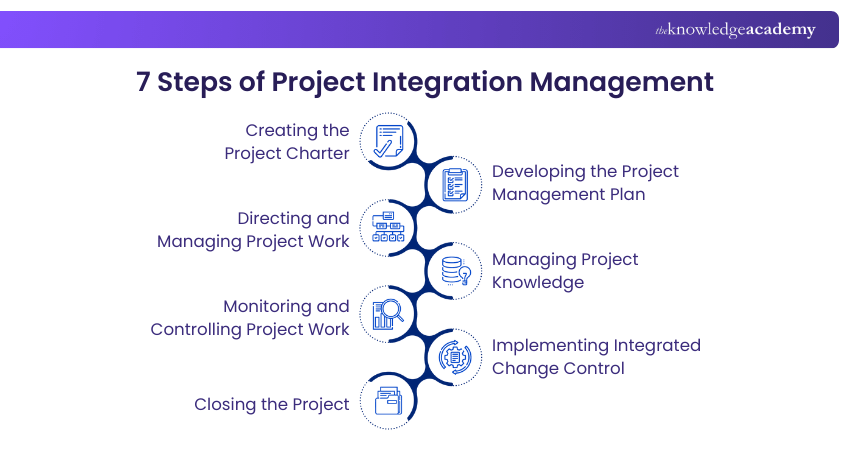
1) Creating the Project Charter
This is the first step where the project’s purpose and scope are defined. It helps gain approval from key people and provides a strong start for the project. A project charter is like a guide that shows teams what they need to do.
2) Developing the Project Management Plan
A project plan outlines tasks and resources needed to complete the project. It helps teams stay organised and ensures everything is done on time. A good plan reduces confusion and keeps the project on track.
3) Directing and Managing Project Work
This step involves carrying out tasks as planned to complete the project. The Manager assigns work, checks progress, and ensures everything is running smoothly. It helps keep the project moving forward without delays.
4) Managing Project Knowledge
Teams gather, share, and use valuable information to improve project decisions. Lessons from past projects help avoid mistakes and make processes better. Proper Knowledge Management ensures teams work efficiently.
5) Monitoring and Controlling Project Work
Project progress is checked regularly to ensure everything is on schedule. Any issues are identified early so that corrections can be made. This helps keep the project within budget and time limits.
6) Implementing Integrated Change Control
Changes in a project are reviewed and approved before implementation. This prevents unexpected issues and ensures all updates align with project goals. Proper change control avoids confusion and keeps work organised.
7) Closing the Project
Once the work is completed, the project is officially closed. Teams review the results, check if goals were met, and document lessons learned. A proper closure ensures everything is completed successfully and prepares teams for future projects.
Combine the power of sprints with the discipline of structure to turbocharge your projects! Sign up for our PRINCE2 Agile® Foundation (Version 2) Course now!
Importance of Project Integration Management
These points highlight the importance of Project Integration Management:
1) It aligns project objectives with organisational goals, so that every effort builds up to the bigger picture.
2) It acts as the central hub for coordinating all project processes and activities.
3) It helps you optimise the use of time, budget and resources by integrating various project elements.
4) It facilitates informed decision-making by considering the overall impact of changes and actions.
5) It manages changes in a structured way through integrated change control which reduces risks and disruptions.
6) It promotes better communication among stakeholders.
7) It increases the likelihood of delivering the project on time, within scope, and on budget.
Start and complete your Project Management journey with ease! Sign up for our PRINCE2® Foundation & Practitioner Training now!
Tips for Effective Project Integration Management
Here are some simple tips to help you manage project integration well:
1) Use Project Management Software: Using Project Management tools can make integration easier. These tools often include real-time updates, task tracking, and progress monitoring. Choosing the right software gives you better control and helps everything stay on track, especially if your team works online.
2) Build a Cross-functional Team: Many projects involve people from different departments. Forming a team with members from various business areas can help improve communication and teamwork. When different teams work well together, the project benefits.
3) Keep an Eye on Project Constraints: Projects are usually limited by scope, time, budget, and quality. By regularly checking scope, schedule, and budget, you can make sure the project meets its quality goals. Balancing these constraints can help you avoid delays, extra costs or poor results.
Top Project Integration Management Tools
To successfully manage project integration, you need the right tools to plan, monitor, and adjust project activities. Below are some of the most effective tools used in Project Integration Management.
Gantt Charts
a) Gantt charts help you visualise the entire project timeline.
b) They show tasks, deadlines, and dependencies in one place, making planning and coordinating work easier.
c) This tool is useful for spotting delays early and keeping all team members on the same page.
Kanban Boards
a) Kanban boards allow you to manage tasks through a visual workflow, usually with columns like “To Do,” “In Progress,” and “Done.”
b) They make tracking progress, assigning tasks, and adjusting workloads easy.
c) This supports better collaboration and real-time updates.
Project Dashboards
a) Project dashboards provide a clear, real-time overview of key metrics such as progress, budget, and deadlines.
b) With everything displayed in one place, Managers can quickly identify issues, make decisions, and share updates with stakeholders.
c) It helps ensure smooth project integration.
Conclusion
Project Integration Management is the glue that holds every part of a project together. By aligning tasks, teams and goals, it creates a seamless flow from start to finish. You can overcome challenges and deliver successful outcomes with the right processes, tools, and teamwork. So, mastering integration means mastering the art of coordinated project success.
Learn the art of anticipating the unseen and managing the unpredictable! Sign up for our Project Risk Management Course now!
Frequently Asked Questions
What Does Integration of Projects Mean?

Project Integration means combining all parts of a project to work efficiently. It ensures different tasks, teams, and resources are connected for better results.
What are the Six Main Processes Involved in Project Integration Management?
The six main processes include:
a) Creating a project charter
b) Developing a management plan
c) Managing work
d) Handling knowledge
e) Monitoring progress
f) Closing the project
What are the Other Resources and Offers Provided by The Knowledge Academy?
The Knowledge Academy takes global learning to new heights, offering over 3,000+ online courses across 490+ locations in 190+ countries. This expansive reach ensures accessibility and convenience for learners worldwide.
Alongside our diverse Online Course Catalogue, encompassing 17 major categories, we go the extra mile by providing a plethora of free educational Online Resources like Blogs, eBooks, Interview Questions and Videos. Tailoring learning experiences further, professionals can unlock greater value through a wide range of special discounts, seasonal deals, and Exclusive Offers.
What is The Knowledge Pass, and How Does it Work?
The Knowledge Academy’s Knowledge Pass, a prepaid voucher, adds another layer of flexibility, allowing course bookings over a 12-month period. Join us on a journey where education knows no bounds.
What are the Related Courses and Blogs Provided by The Knowledge Academy?
The Knowledge Academy offers various PRINCE2® Training, including PRINCE2 Agile® Foundation (Version 2) Training, PRINCE2® Foundation & Practitioner Training, and PRINCE2® Foundation Training. These courses cater to different skill levels, providing comprehensive insights into PRINCE2 Roles and Responsibilities.
Our Project Management Blogs cover a range of topics related to Project Management, offering valuable resources, best practices, and industry insights. Whether you are a beginner or looking to advance your Project Management skills, The Knowledge Academy's diverse courses and informative blogs have got you covered.

Grace Mitchell


Senior Project Management Consultant and Author
Grace Mitchell is a highly experienced project management professional with over 15 years of expertise in leading large-scale projects across industries, including construction, IT, and finance. With qualifications in PRINCE2®, PMP®, AgilePM®, and MSP®, Grace specialises in delivering complex programmes with precision and clarity. Her writing is grounded in real-world application and focuses on helping learners build confidence in project delivery and stakeholder management.
View Detail
Upcoming Project Management Resources Batches & Dates
Date
 PRINCE2® Foundation & Practitioner Training Course
PRINCE2® Foundation & Practitioner Training Course
Mon 6th Jul 2026
PRINCE2® Foundation & Practitioner Training Course
Mon 3rd Aug 2026
PRINCE2® Foundation & Practitioner Training Course
Mon 7th Sep 2026
PRINCE2® Foundation & Practitioner Training Course
Mon 5th Oct 2026
PRINCE2® Foundation & Practitioner Training Course
Mon 2nd Nov 2026
PRINCE2® Foundation & Practitioner Training Course
Mon 7th Dec 2026

 If you wish to make any changes to your course, please


