


 Top Rated Course


We may not have the course you’re looking for. If you enquire or give us a call on 01344 203999 and speak to our training experts, we may still be able to help with your training requirements.
CCNA Job Roles Explained: Careers, Skills and Progression
John Davies 09 April 2026CCNA Certification prepares for roles like Network Administrator, Network Engineer and NOC Technician, covering network setup, management, and troubleshooting. It builds strong skills in routing, switching, and network security. These skills support IT systems and help professionals move into advanced networking or security roles.
Home
 Resources
IT Infrastructure & Networking
CCNA Job Roles Explained: Careers, Skills and Progression
Resources
IT Infrastructure & Networking
CCNA Job Roles Explained: Careers, Skills and Progression
Resources
IT Infrastructure & Networking
CCNA Job Roles Explained: Careers, Skills and Progression

Training Outcomes Within Your Budget!
We ensure quality, budget-alignment, and timely delivery by our expert instructors.
Table of Contents

Networking is the backbone of every modern organisation, and skilled professionals are in constant demand. For those starting or advancing a career in IT, the CCNA Certification is often the first major step into the networking world.
This blog serves as a complete career guide to CCNA Job Roles, explaining the opportunities available, key responsibilities, and how the certification helps you build a stable and rewarding networking career.
Table of Contents
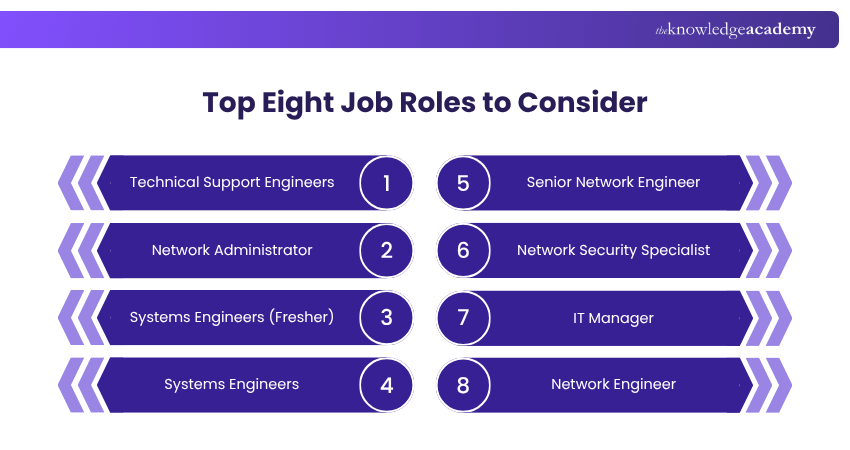
1) Top Eight Job Roles to Consider
a) Technical Support Engineers
b) Network Administrator
c) Systems Engineers (Fresher)
d) Systems Engineers
e) Senior Network Engineer
f) Network Security Specialist
g) IT Manager
h) Network Engineer
2) Career Progression Path for CCNA Roles
3) What Skills Are Required for CCNA Job Roles?
4) Can CCNA Lead to Cybersecurity Roles?
5) Conclusion
Top Eight Job Roles to Consider
CCNA stands for Cisco Certified Network Associate, a globally recognised entry-level certification offered by Cisco. It validates your understanding of networking fundamentals, including Internet Protocol (IP) connectivity, routing and switching, network access, security basics, and automation. Listed below are the top eight CCNA Job Roles to consider:

1) Technical Support Engineers
Technical Support Engineers are the real heroes of any organisation, providing essential troubleshooting and problem-solving expertise. They assist with network issues, ensuring minimal downtime and maintaining smooth operations.
A CCNA Certification equips you with the skills needed to diagnose and resolve network problems efficiently, making you a valuable asset in this role. Understanding the validity of the CCNA Certification is also important to ensure you stay up-to-date with industry standards.
2) Network Administrator
As a Network Administrator, you'll manage and maintain an organisation's Computer Networks. This role involves configuring network hardware, ensuring network security and optimising network performance. With a CCNA Certification, you’ll have the foundational knowledge to oversee network infrastructure, implement upgrades and ensure reliable connectivity.
3) Systems Engineers (Fresher)
For freshers, starting as a Systems Engineer can be a rewarding entry point into the IT field. This role involves designing, implementing and managing computer systems. A CCNA Certification provides a strong foundation in networking principles, making you well-prepared to tackle the complexities of system integration and support.
Gain in-depth knowledge about network and security fundamentals with our CCNA Meraki Training – Register today!
4) Systems Engineers
Experienced Systems Engineers take on more advanced responsibilities, including the design and deployment of large-scale systems. They ensure these systems operate efficiently and securely. With a CCNA Certification, you’ll have the necessary skills to understand and manage network components, contributing to the overall success of IT projects.
5) Senior Network Engineer
Senior Network Engineers lead the design, implementation, and management of complex network solutions. They play a main role in Strategic Planning and troubleshooting. A CCNA Certification provides the technical expertise required to handle advanced networking tasks and lead projects, positioning you for senior roles within the IT department.
6) Network Security Specialist
Network Security Specialists focus on protecting an organisation's network from security threats. This role involves implementing security measures, monitoring for vulnerabilities, and responding to incidents. A CCNA certification, especially when paired with a specialisation in security, gives you the skills to safeguard critical Network Infrastructure.
7) IT Manager
IT Managers oversee an organisation’s IT operations, ensuring all systems run smoothly and efficiently. This role requires a deep understanding of various IT disciplines, including networking. With a CCNA Certification, you’ll have the technical insight to make informed decisions, manage IT projects, and lead your team effectively.
8) Network Engineer
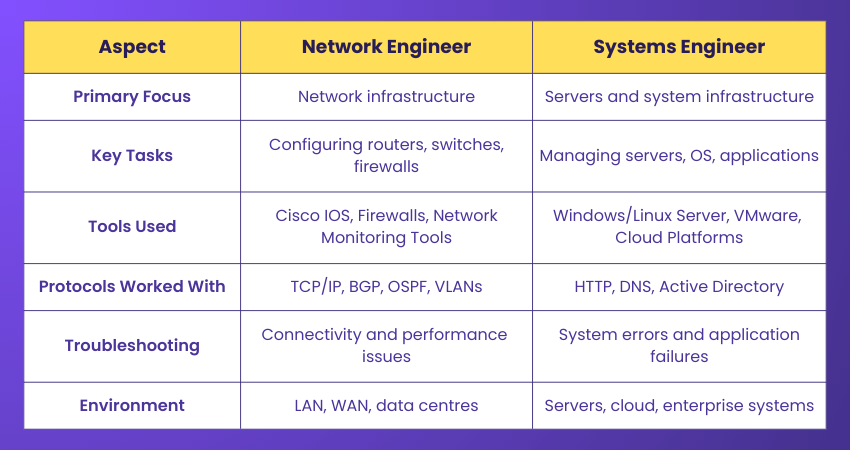
Network Engineers design, implement, and maintain network solutions for organisations. They ensure reliable and secure network operations. A CCNA Certification equips you with the foundational skills to configure and troubleshoot network devices, making you proficient in managing network infrastructure and supporting business objectives.
Career Progression Path for CCNA Roles
The career path for Cisco Certified Network Associate (CCNA) professionals is well-structured, progressing from entry-level support roles to advanced engineering and architecture positions. The certification builds core skills in networking, security, and automation, enabling steady career growth.
1) Entry-Level Roles (0–2 Years Experience)
Professionals begin with roles focused on monitoring, troubleshooting, and basic configurations.
a) Network Support Engineer (L1/L2): Resolves issues and monitors network performance
b) NOC Engineer: Manages network operations and escalates problems
c) Junior Network Administrator: Handles switches, VLANs, and basic setups
d) IT Support / Desktop Engineer: Supports hardware, OS, and network issues
2) Mid-Level Roles (2–5 Years Experience)
With experience, professionals take on more responsibility in managing and designing networks.
a) Network Engineer: Designs and maintains LAN/WAN systems
b) System Administrator: Manages servers and network environments
c) Network Security Specialist: Focuses on firewalls, VPNs, and security
d) Cloud Support Engineer: Works with hybrid and cloud-based networks
3) Senior and Specialised Roles (5+ Years Experience)
Advanced roles focus on strategy, design, and specialisation.
a) Senior Network Engineer: Leads complex network design and troubleshooting
b) Network Security Engineer: Handles advanced cybersecurity tasks
c) Cloud/Network Architect: Designs large-scale infrastructure solutions
d) Network Automation Specialist: Automates networks using tools like Python
This progression allows CCNA professionals to grow from foundational roles to highly specialised and leadership positions.
Learn the essentials of Interconnecting Cisco Networking Devices with our Interconnecting Cisco Networking Devices Part 1 Training – Sign up now!
What Skills Are Required for CCNA Job Roles?
Cisco Certified Network Associate (CCNA) job roles require a mix of strong networking knowledge, hands-on technical skills, and basic automation understanding. These skills help professionals perform roles such as Network Engineer, Network Administrator, and Technical Support Engineer effectively.
1) Core Technical Skills: Understanding networking basics like OSI model, TCP/IP, IP addressing, routing, switching, and protocols such as OSPF is essential, along with knowledge of IP services, wireless networking, and security fundamentals.
2) Automation and Modern Networking: Basic knowledge of network automation, SDN concepts, APIs, and scripting (such as Python), along with tools like Ansible, is increasingly important in modern networking environments.
3) Practical and Troubleshooting Skills: Hands-on experience with Cisco IOS CLI, diagnostic tools like ping and traceroute, and simulation tools such as Packet Tracer helps in solving real-world network issues efficiently.
4) Soft Skills: Strong communication, problem-solving, and teamwork skills are important for collaborating with teams and handling technical challenges effectively.
Explore the skills to design, configure, and troubleshoot network topologies with our Cisco Packet Tracer Course – Register now!
Can CCNA Lead to Cybersecurity Roles?
Cisco Certified Network Associate (CCNA) can lead to cybersecurity roles, especially in areas like network security, security engineering, and SOC operations. While CCNA focuses on networking, it provides a strong foundation for protecting digital systems.
1) Builds Security Fundamentals: CCNA covers key security concepts such as ACLs, VPNs, threat detection, and basic infrastructure protection, helping professionals understand how to secure network traffic and devices.
2) Supports Entry-level Security Roles: It is highly valued for roles like SOC Analyst, Network Security Engineer, and Cloud Security Specialist, where understanding network behaviour is essential for identifying threats.
3) Strong Technical Foundation: CCNA offers hands-on, practical networking knowledge, making it a strong “show-me” certification that proves your ability to manage and secure real-world networks.
4) Requires Further Specialisation: While helpful, CCNA is not a dedicated cybersecurity certification. Advancing into security roles often requires additional certifications like Security+ or CyberOps, along with practical experience in networking roles.
Overall, CCNA acts as a solid starting point for building a successful career in cybersecurity.
Conclusion
CCNA Job Roles with CCNA Certification offer a strong foundation for anyone looking to build a successful career in networking and IT field. By understanding the responsibilities, skills, and career opportunities associated with these roles, professionals can make informed career decisions. Investing in CCNA Job Roles sets the foundation for long-term growth and career stability.
Start your networking career with our CCNA Training and gain the skills needed to succeed in today’s IT industry - Join now!
Frequently Asked Questions
Is CCNA in Demand?

Yes, the CCNA Certification is highly sought after and is internationally recognised for validating essential knowledge and skills in networking dynamics.
What is the Goal of CCNA?
The goal of CCNA is to equip individuals with the foundational knowledge and skillsnecessary for Network Administration and engineering. It covers essential networking concepts, including IP addressing, routing, switching, and security, preparing candidates for entry-level roles in the IT and networking industry.
What are the Other Resources and Offers provided by The Knowledge Academy?
The Knowledge Academy takes global learning to new heights, offering over 3,000+ online courses across 490+ locations in 190+ countries. This expansive reach ensures accessibility and convenience for learners worldwide.
Alongside our diverse Online Course Catalogue, encompassing 17 major categories, we go the extra mile by providing a plethora of free educational Online Resources like Blogs, eBooks, Interview Questions and Videos. Tailoring learning experiences further, professionals can unlock greater value through a wide range of special discounts, seasonal deals, and Exclusive Offers.
What is The Knowledge Pass, and How Does it Work?
The Knowledge Academy’s Knowledge Pass, a prepaid voucher, adds another layer of flexibility, allowing course bookings over a 12-month period. Join us on a journey where education knows no bounds.
What are the Related Courses and Blogs Provided by The Knowledge Academy?
The Knowledge Academy offers various CCNA Training, including CCNA Certification, Cisco Packet Tracer Course and the CCNP Collaboration Training. These courses cater to different skill levels, providing comprehensive insights into the Importance of CCNA.
Our IT Infrastructure and Networking Blogs cover a range of topics related to CCNA Job Roles, offering valuable resources, best practices, and industry insights. Whether you are a beginner or looking to advance your IT and Networking skills, The Knowledge Academy's diverse courses and informative blogs have got you covered.

John Davies


Cyber Security Governance & Assurance Specialist
John Davies is a cybersecurity expert specialising in governance, risk management, and compliance. With over 15 years in the field, he has led enterprise-wide security programmes across finance, healthcare and public sector organisations. His content provides practical guidance on building secure environments, managing risk and aligning with regulatory frameworks.


 If you wish to make any changes to your course, please


