




Tokyo is the capital of Japan. It has a population of around 8.9 million people but it has the largest populous metropolitan area in the world at a whopping 13 million people. Tokyo is split into 23 separate wards which operate and are governed as separate cities. The city also hosts 51 of the Fortune Global 500 companies, a record of any city in the world. Because of its population, Tokyo has a vast amount of schools. Public elementary and primary schools are run by the local wards, secondary schools are run by the Tokyo Metropolitan Government Board of Education and there are also many private schools. Some universities provide classes which are taught in English and teach the Japanese language to students such as the Sophia University, International Christian University and Waseda University. There are a number of large, prestigious universities in Tokyo such as University of Tokyo, Keio University and Hitotsubashi University. University of Tokyo is the highest rated university in Asia and enrols around 30,000 students a year. It was established in 1877 and provides a number of undergraduate and graduate programs in law, science, engineering and more. A small percentage of people in Japan speak fluent English, around 3%. English is taught in schools, however it is mostly just reading and writing skills. The unemployment rate in Japan runs at about 3.4%. The unemployment rate in Tokyo runs roughly the same at a rate of 3.5%.
Six Sigma Green Belt Training | Six Sigma Training in Tokyo
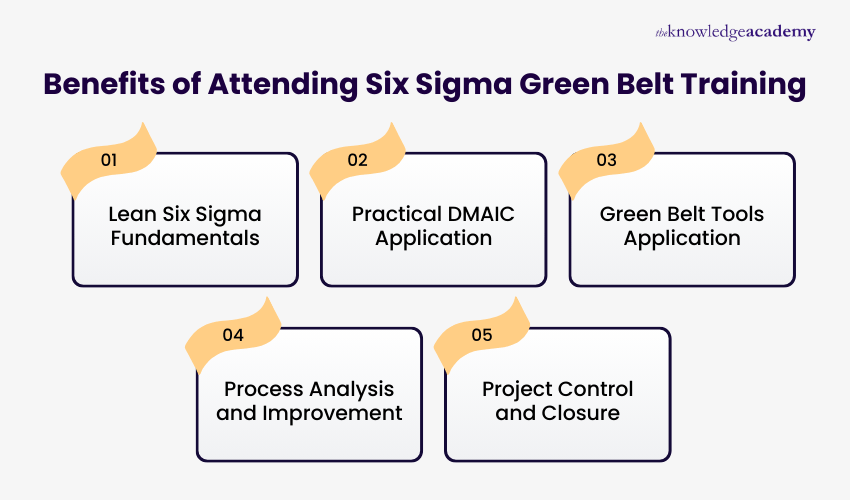
Six Sigma Green Belt in Tokyo focuses on improving processes through data analysis and structured problem solving. This course helps learners apply DMAIC techniques to reduce variation, improve quality, and support measurable operational improvements.
- Learn core Six Sigma principles for improving processes and reducing defects
- Use DMAIC for effective project management and better problem-solving skills
- Attain skills with our Six Sigma Green Belt Course


 If you miss out, enquire to get yourself on the waiting list for the next day!














 If you wish to make any changes to your course, please


