


 Top Rated Course

We may not have the course you’re looking for. If you enquire or give us a call on + 1-866 272 8822 and speak to our training experts, we may still be able to help with your training requirements.
Software Tester Roles And Responsibilities: A Complete Guide
Richard Harris 15 July 2026Explore our comprehensive blog, which will provide a valuable understanding of Software Tester Roles and Responsibilities. This blog provides tailored insights for all levels, ensuring you're equipped to excel in the dynamic field of Software Testing. Read ahead for a comprehensive understanding of Software Tester roles.

Training Outcomes Within Your Budget!
We ensure quality, budget-alignment, and timely delivery by our expert instructors.
Table of Contents

Have you ever pondered the intricate world of Software Testing and Software Tester Roles and Responsibilities? It's not just about running tests and finding bugs. In this dynamic realm, every role, from junior testers to seasoned Managers, shapes software quality and reliability. But what exactly do these roles include?
Let's explore the world of Software Testing, where every role, big or small, plays a vital role in crafting Software that works seamlessly. We'll explore the ins and outs of Software Tester Roles and Responsibilities, uncovering what it takes to excel in this fast-paced and ever-changing industry.
Table of Contents
1) Software Tester Roles and Responsibilities
2) Critical skills for hiring Software Testers
3) Advantages of Software Testing
4) Disadvantages of Software Testing
5) Conclusion
Software Tester Roles and Responsibilities
Listed below are the key aspects of Software Tester Roles and Responsibilities. Let’s have a look:
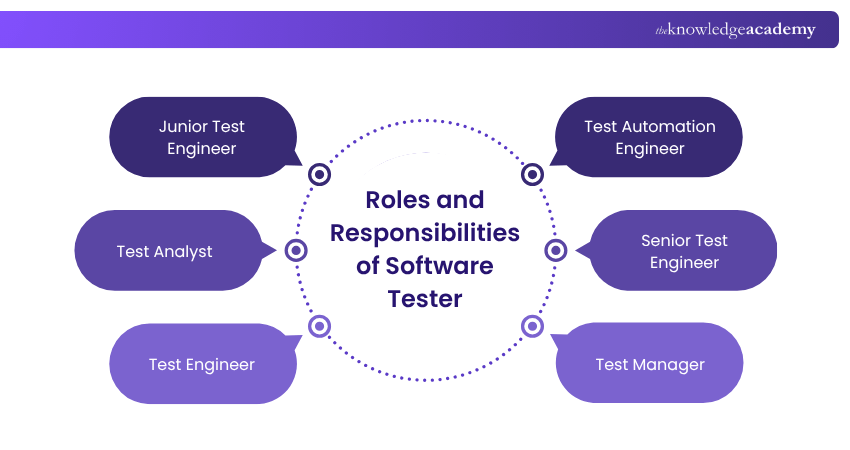
1) Junior Test Engineer
Junior Test Engineers generally work under the guidance of senior members of the testing team. Their primary role involves carrying out test cases, recording the outcomes of these tests, and pinpointing any issues or defects that arise during testing. Additionally, they might be involved in the initial phases of test planning and offer insights to improve testing procedures. Overall, they support the senior members in ensuring the quality and effectiveness of the testing process.

2) Test Analyst
Test Analysts are responsible for analysing software requirements, designing test cases, and executing tests to ensure that software products meet specified requirements. They also play a crucial role in identifying defects and collaborating with development teams to resolve issues.
3) Test Engineer
Test Engineers are involved in the design, development, and execution of test cases to evaluate the functionality and performance of software applications. They work closely with developers to understand product requirements and ensure comprehensive test coverage.
4) Test Automation Engineer
Test Automation Engineers specialise in developing automated test scripts and frameworks to streamline the testing process and improve efficiency. They are proficient in scripting languages and automation tools and play a crucial role in continuous integration and delivery pipelines.
Unlock your potential with ISTQB Software Testing certification! Gain recognized skills and advance your career in software testing today!
5) Senior Test Engineer
Senior Test Engineers lead testing efforts, develop test strategies, and mentor junior members of the testing team. They possess extensive knowledge of testing methodologies and tools and are responsible for ensuring the overall quality of software products.
6) Test Manager
Test Managers oversee testing activities, allocate resources, and define testing strategies to meet project objectives. They collaborate with stakeholders to prioritise testing efforts and ensure that testing processes align with project timelines and goals.
Unlock your potential with ISTQB Software Testing Foundation Training and certification. Join now to boost your career in Software Testing!
Key Skills of a Software Tester
A Software Tester plays a crucial role in ensuring applications function correctly, securely, and efficiently before release. To perform effectively, testers need a mix of technical expertise and soft skills that help them identify defects, improve software quality, and collaborate with development teams. Strong testing skills help organisations deliver reliable and user-friendly software products.
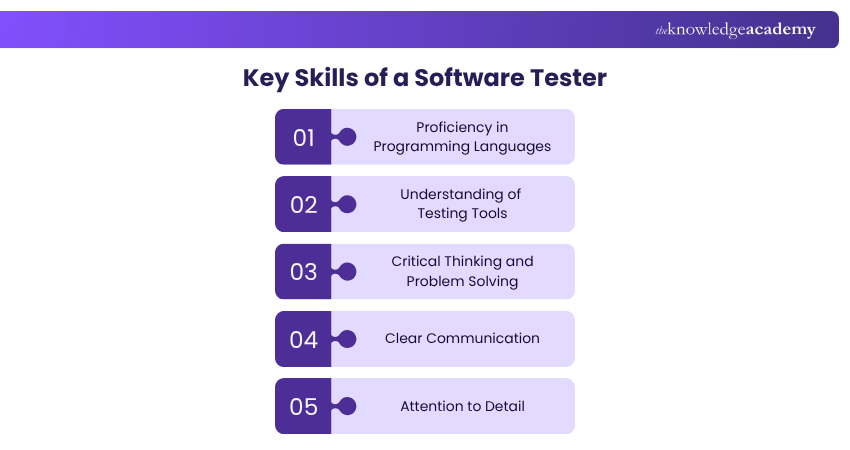
1) Proficiency in Programming Languages
Software Testers benefit greatly from understanding programming languages such as Java, Python, JavaScript, or SQL. Knowledge of coding helps testers understand application logic, automate repetitive tasks, and identify defects more effectively. It also enables them to work closely with developers during the testing process.
Programming skills are especially important in automation and performance testing. Testers who can write scripts and understand code can create efficient test cases and improve overall testing accuracy. This technical expertise increases efficiency and supports faster software delivery.
2) Understanding of Testing Tools
A strong understanding of testing tools is essential for modern software testing. Tools such as Selenium, JIRA, TestNG, and LoadRunner help testers automate tasks, track defects, and manage testing workflows efficiently. These tools improve productivity and ensure consistent testing practices.
Testing tools also help teams handle complex projects with greater accuracy and speed. By using automation and reporting features, Software Testers can identify issues quickly and maintain software quality throughout the development lifecycle. Familiarity with these tools is highly valued in the industry.
3) Critical Thinking and Problem Solving
Critical thinking allows Software Testers to analyse applications carefully and identify hidden defects or usability issues. Testers must evaluate different scenarios, anticipate user behaviour, and determine how systems may fail under certain conditions. This helps improve the reliability of software products.
Problem-solving skills are equally important when investigating bugs and finding their root causes. Software Testers often work with developers to resolve issues efficiently and prevent recurring problems. These skills contribute to smoother software performance and better user experiences.
4) Clear Communication
Clear communication is essential for Software Testers because they regularly interact with developers, managers, and stakeholders. They must explain technical issues, write detailed bug reports, and provide feedback in a way that is easy to understand. Effective communication ensures issues are resolved quickly.
Good communication also improves collaboration within development teams. When testers clearly describe defects and testing outcomes, developers can fix problems more efficiently. This creates a smoother workflow and helps maintain project timelines and quality standards.
5) Attention to Detail
Attention to detail is one of the most important qualities of a Software Tester. Even small errors in software can lead to major issues for users, making it essential for testers to examine applications carefully. This skill helps identify hidden bugs, inconsistencies, and performance issues.
Detailed testing ensures software functions correctly across different devices, platforms, and scenarios. Testers with strong attention to detail can create accurate test cases and maintain high-quality standards throughout the software development process. This ultimately improves customer satisfaction and product reliability.
Advantages of Software Testing
Software Testing provides several important benefits that help organisations deliver reliable, secure, and high-performing applications. Here are some key advantages of Software Testing:
1) Detects Defects Early: Identifies bugs and issues in the early stages of development, reducing costly fixes later.
2) Improves Software Quality: Ensures applications perform reliably and meet expected quality standards before release.
3) Validates Functional Requirements: Confirms that the software works according to user needs and business requirements.
4) Reduces Development Costs: Minimises maintenance and rework expenses by resolving defects before deployment.
5) Enhances Customer Satisfaction: Delivers smooth, reliable, and user-friendly applications that improve customer experience.
6) Minimises Business Risks: Reduces the chances of financial losses, security issues, and reputational damage caused by software failures.
7) Strengthens Product Competitiveness: Helps organisations deliver high-quality software with better performance and reliability than competitors.
Elevate your career with Certified Software Testing Professional (CSTP) Training. Sign up now to become a certified testing expert!
Disadvantages of Software Testing
Despite its importance in delivering reliable applications, Software Testing also comes with certain challenges that organisations must manage effectively. Understanding these limitations helps teams improve testing strategies and ensure better software quality.
1) Limited Testing Time: Tight project deadlines can reduce the depth of testing and leave some issues undiscovered.
2) Dependence on Automation: Excessive reliance on automated testing may overlook usability and human interaction issues.
3) No Complete Bug Guarantee: Testing can minimise defects, but it cannot ensure completely error-free software.
4) Complex System Challenges: Modern software complexity can make test planning, execution, and maintenance more difficult.
5) Unclear Requirements: Incomplete documentation or changing requirements can affect the accuracy of test cases.
6) Environment Constraints: Limited access to real-world environments may impact the reliability of testing outcomes
Master your skills with Certified Software Testing Manager (CSTM) Training. Sign up now to become a Certified Testing Manager.
Conclusion
Understanding Software Tester Roles and Responsibilities, including Key Responsibilities of an Agile Tester, is paramount for ensuring the success of software projects. From Junior Test Engineers to Test Managers, each role contributes uniquely to the testing process, fostering collaboration, efficiency, and quality. Embracing these roles and responsibilities empowers testers to uphold software quality standards.
Advance your career with the ISTQB Advanced Level Test Manager Course. Join now to excel in Software Testing management!
Frequently Asked Questions
Is Software Testing a good career?

A career in Software Testing is lucrative and full of possibilities for growth. As our dependency on technology expands, there is a need for skilled testers in numerous industries to ensure the quality of software.
Is Software Testing high paying?
A job in Software Testing can be quite profitable, particularly for experienced professionals with specialised training. Factors like industry, region, experience level, and degree of skill affect salary variations.

Richard Harris


Senior Full Stack Developer and Technology Educator
Richard Harris is a highly experienced full-stack developer with deep expertise in both frontend and backend technologies. Over his 12-year career, he has built scalable web applications for startups, enterprises and government organisations. Richard’s writing combines technical depth with clear explanations, ideal for developers looking to grow in modern frameworks and tools.


 If you wish to make any changes to your course, please


