


 Top Rated Course

We may not have the course you’re looking for. If you enquire or give us a call on +44 20 4538 6376 and speak to our training experts, we may still be able to help with your training requirements.
Top 6 Root Cause Analysis Tools for Problem-solving
John Davies 20 June 2026Root Cause Analysis Tools are structured methods used to uncover the underlying causes of problems and enable effective, long-term solutions. Common tools such as Fishbone Diagrams, Pareto Analysis, and Fault Tree Analysis help organisations enhance processes, minimise risks, and prevent recurring issues by addressing root causes.

Training Outcomes Within Your Budget!
We ensure quality, budget-alignment, and timely delivery by our expert instructors.
Table of Contents

Every problem has a cause, but identifying the real cause is often more challenging than addressing the symptoms. When underlying issues go unnoticed, the same problems can continue to affect performance, productivity, and outcomes.
Root Cause Analysis (RCA) Tools help organisations investigate problems systematically, uncover their true causes, and implement effective solutions. In this blog, we'll explore some of the most widely used RCA tools and how they can help prevent problems from recurring.
Table of Contents
1) Fishbone Diagram
2) Pareto Analysis
3) Fault Tree Analysis
4) Scatter Diagram
5) DMAIC Template
6) 8D Report Template Checklist
7) What are the Five Ps of Root Cause Analysis?
8) What is the Common Tool Used During Root Cause Analysis?
9) Conclusion
1) Fishbone Diagram
One way to understand a problem is to draw it out. Visualising the information can help identify cause-and-effect relationships. A Fishbone Diagram, also known as a cause-and-effect or Ishikawa diagram, organises potential causes into categories, each branching out into more specific factors. This approach is especially useful when exploring concepts like Causal Analysis vs. Root Cause Analysis to uncover underlying issues.
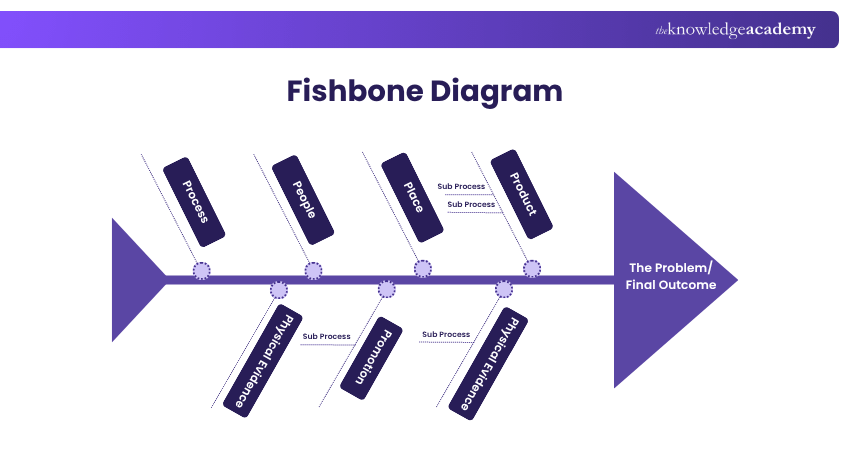
For example, the main problem is at the "head" of the fish. The causes are the "bones" branching from the main line. Here’s a simple breakdown of the steps:
a) Define the Problem: Clearly state the issue at the head of the fish.
b) Identify the Major Cause Categories: Label the main “bones” with broad categories that include people, methods, machines, materials, measurements, and environment.
c) Add Sub-causes: Create smaller branches from each category to dig deeper into specific causes, like training issues or equipment malfunctions.
d) Analyse Relationships: Look for connections between the causes to uncover underlying problems.

2) Pareto Analysis
Pareto Analysis is a critical technique within Root Cause Analysis (RCA), which helps pinpoint the main contributors to a problem. It's rooted in the Pareto Principle, often referred to as the 80/20 rule, suggesting that approximately 80% of problems arise from 20% of the causes.
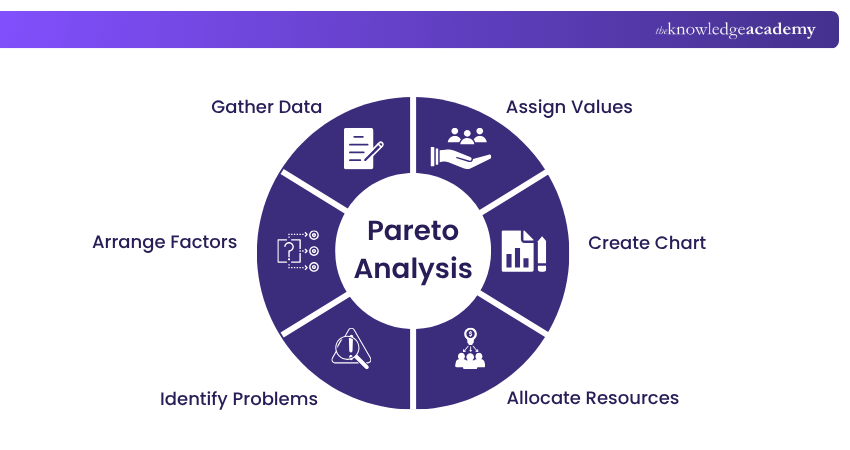
When using Pareto Analysis in Root Cause Analysis (RCA), the process starts by collecting data on the potential causes of a problem, such as defects or errors in a process. The steps include:
a) Identify Causes: List all possible causes that may be contributing to the issue.
b) Gather Data: Measure how often each cause occurs or its level of impact.
c) Build a Pareto Chart: Arrange the causes on a chart from the most to the least significant.
d) Add a Cumulative Line: Include a cumulative line to show the total impact of the causes together.
e) Focus on Key Causes: Pinpoint the "vital few" causes that have the most considerable impact and prioritise them.
Take the first step in mastering IT Service Management with our ITIL® 4 Foundation Certification Course– join us now!
3) Fault Tree Analysis (FTA)
FTA is a method of finding the causes of problems. It uses a top-down approach to trace failures back to their root causes. It works by creating a tree-like diagram that shows different possible reasons for a failure.
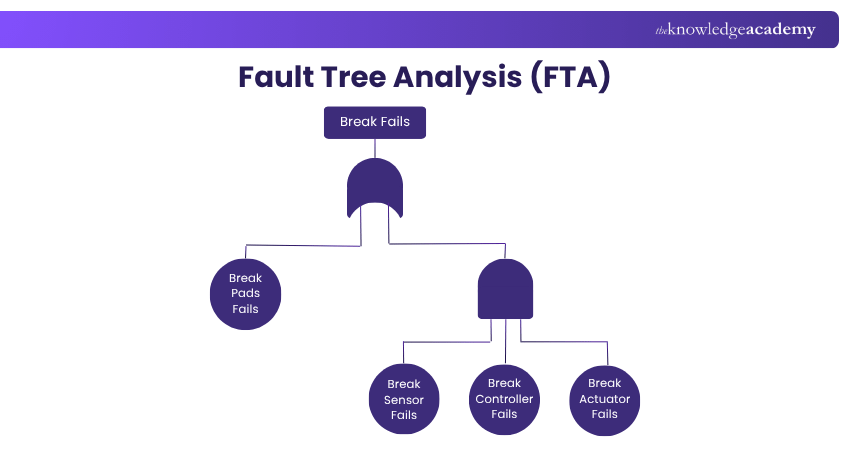
Here’s a simple breakdown of the steps in Fault Tree Analysis:
a) Define the Problem: Clearly outline the failure or issue you’re investigating.
b) Identify the Top Event: Determine the main failure or undesired outcome that you are analysing.
c) Break Down Causes: Trace the causes leading to the top event, identifying potential contributors at each level.
d) Create the Tree Diagram: Use logical gates to map the relationships between events and their causes.
e) Analyse the Tree: Identify the most likely or critical causes that lead to the top event.
f) Take Action: Apply the insights to implement corrective actions and prevent future issues.
Learn the essentials of IT Service Management with the ITIL® 5 Foundation Certification Training – Join now!
4) Scatter Diagram
A Scatter Diagram, or Scatter Plot, is one of the widely used Root Cause Analysis Tools. It is used to investigate and understand the potential relationship between two variables. It helps RCA by providing the following:
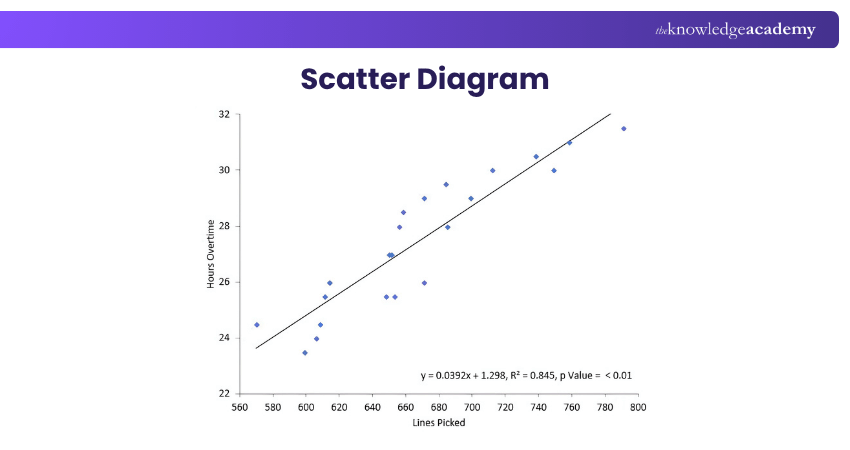
Here’s how you can use it:
a) Plot the Data: Start by mapping the data points on a graph, with each axis representing one of the variables.
b) Look for Trends: Analyse the chart for any noticeable patterns or trends that suggest a relationship between the two variables.
c) Identify Correlations: Check if there is a positive, negative, or no correlation between the variables.
d) Spot Outliers: Highlight any outliers in the data, as they could point to unusual factors influencing the results.
e) Explore Cause-and-effect:Use the diagram to hypothesise how one variable might affect the other.
f) Compare Data Sets: You can also compare different data sets to see how patterns or correlations vary.
Drive service excellence across organisations by joining the Certified IT Service Manager (CITSM) Certification Training today!
5) DMAIC Template
The DMAIC template is a highly structured approach that provides a framework for processing and tackling the problems arising in multiple processes. Every letter of the acronym refers to a different step in problem-solving procedure. They are as follows:
a) D- Define
Define is the first step in DMAIC. In this stage, team members identify and articulate a specific problem or goal. The purpose here is to set a clear understanding of the issue so that the team may focus on it.
b) M- Measure
This phase focuses on tracking or measuring the problem using specific metrics. It’s normal to use tools like Pareto charts on a project to pinpoint important areas that need attention. It helps to track progress over time.
c) A- Analyse
Analysing is the next step. You can break down the possible causes of problems that you are dealing with using Root Cause Analysis. This can help prevent the issue from happening again in the future. Sometimes, the root causes are unknown. In those cases, it is important to list and prioritise the potential causes so as to tackle them efficiently.
d) I- Improve
This stage aims at examining the performance improvements that could be used to eliminate some of the root causes of issues. During this stage, all improvements should lead to positive changes. Otherwise, they should be reconsidered or replaced with more suitable solutions.
e) C- Control
Control is an approach to Management that is both powerful and systematic in nature. This final component is important for landing and maintaining the outcomes achieved through the former stages and ensuring that these outcomes are long-standing. Moreover, it prevents waste of time and unnecessary efforts and helps an organisation to monitor performance against its targets and goals.
6) 8D Report Template Checklist
The 8D report template checklist is a comprehensive tool designed to document root-cause analysis using the eight disciplines of problem-solving. The 8D method involves a series of structured steps to effectively address and resolve issues that arise. Here’s an expanded explanation of each step:
1) Establish a Team: Create a multidisciplinary team specifically tasked with addressing issues and finding effective solutions. This team should include members with diverse skills and knowledge relevant to the problem at hand.
2) Define the Problem: Clearly articulate the problem before attempting to solve it. This involves gathering detailed information and evidence to understand the scope and impact of the issue.
3) Contain the Problem: Implement immediate actions to contain the problem, ensuring that it does not disrupt daily business operations. The objective is to minimise the impact and prevent the problem from escalating or causing further complications.
4) Find the Root Cause: Conduct Root Cause Analysis to identify the underlying cause of the problem. Use techniques such as the 5 Whys or Fishbone Diagram to systematically drill down to the core issue.
5) Define Corrective Measures: Develop and implement appropriate corrective actions to address the root cause. These measures should be designed to eliminate the problem and prevent its recurrence.
6) Track Progress: Monitor and document the progress of the corrective actions. Keeping a detailed record ensures that the implementation is effective and any adjustments can be made in a timely manner.
7) Establish Preventative Measures: Put in place preventative measures to avoid future occurrences of the problem. This may involve revising processes, improving training, or implementing new controls.
8) Recognise the Team:Acknowledge and reward the team’s efforts and successes in resolving the issue. Recognising the team’s hard work fosters a culture of continuous improvement and teamwork.
The goal of finalising an 8D report within eight days serves as a benchmark for timely problem resolution, though it may not always be feasible. Striving for this timeline encourages efficiency and prompt action in addressing and resolving issues.
Connect experience with modern IT Service Management practices with the ITIL® Version 5 Foundation Bridge Training – Sign up today!
What are the Five Ps of Root Cause Analysis?
The five Ps of Root Cause Analysis helps identify the main cause of a problem. They are:
a) People: Human errors or actions
b) Processes: Faulty methods or workflows
c) Products: Issues with materials or design
d) Procedures: Missing or unclear guidelines
e) Policies: Rules that may create problems
What is the Common Tool Used During Root Cause Analysis?
A Fishbone Diagram (Ishikawa Diagram) is a common Root Cause Analysis tool. It visually maps possible causes of a problem into categories like People, Process, Equipment, Materials, Environment, and Management. Other tools include Five Whys, Pareto Charts, and Fault Tree Analysis.
Conclusion
Root Cause Analysis Tools help organisations identify the underlying causes of problems rather than simply addressing their symptoms. By selecting the right tool for the situation, teams can improve decision-making, prevent recurring issues, enhance process efficiency, and implement effective long-term solutions that support continuous improvement and organisational success.
Strengthen Service Management capabilities with the ITIL® Certification Training – Sign up now!
Frequently Asked Questions
Can Learning Root Cause Analysis Tools Open up New Career Opportunities?

Yes, learning Root Cause Analysis Tools enhances analytical and problem-solving skills, making you valuable in quality management, operations, IT, and Project Management. These in-demand skills can support career growth and progression into leadership roles.
How do These Tools Contribute to Effective Problem-solving?
Root Cause Analysis Tools help break down complex problems to identify their true origin rather than surface symptoms. They provide structured techniques like Fishbone Diagrams and Pareto Analysis to guide decision-making. This leads to more accurate solutions, reduced errors, and long-term process improvement.
What are the Other Resources and Offers Provided by The Knowledge Academy?
The Knowledge Academy takes global learning to new heights, offering over 3,000+ online courses across 490+ locations in 190+ countries. This expansive reach ensures accessibility and convenience for learners worldwide.
Alongside our diverse Online Course Catalogue, encompassing 17 major categories, we go the extra mile by providing a plethora of free educational Online Resources like Blogs, eBooks, Interview Questions and Videos. Tailoring learning experiences further, professionals can unlock greater value through a wide range of special discounts, seasonal deals, and Exclusive Offers.
What is The Knowledge Pass, and How Does it Work?
The Knowledge Academy’s Knowledge Pass, a prepaid voucher, adds another layer of flexibility, allowing course bookings over a 12-month period. Join us on a journey where education knows no bounds.
What are the Related Courses and Blogs Provided by The Knowledge Academy?
The Knowledge Academy offers various ITIL® Certification Training, including ITIL® 5 Foundation Certification Course, ITIL® 5 Service Certification, and ITIL® 5 Managing Professional Certification Course. These courses cater to different skill levels, providing comprehensive insights into What is Automatic Call Distribution.
Our IT Service Management blogs cover a range of topics related to Root Cause Analysis Tools,offering valuable resources, best practices, and industry insights. Whether you are a beginner or looking to advance your Root Cause Analysisskills, The Knowledge Academy's diverse courses and informative blogs have got you covered.

John Davies


Cyber Security Governance & Assurance Specialist
John Davies is a cybersecurity expert specialising in governance, risk management, and compliance. With over 15 years in the field, he has led enterprise-wide security programmes across finance, healthcare and public sector organisations. His content provides practical guidance on building secure environments, managing risk and aligning with regulatory frameworks.

Upcoming IT Service Management Resources Batches & Dates
Date
 ITIL® 5 Experience Certification
ITIL® 5 Experience Certification
Mon 24th Aug 2026
ITIL® 5 Experience Certification
Mon 19th Oct 2026
ITIL® 5 Experience Certification
Mon 14th Dec 2026

 If you wish to make any changes to your course, please


