


 Top Rated Course

We may not have the course you’re looking for. If you enquire or give us a call on +44 20 4538 6376 and speak to our training experts, we may still be able to help with your training requirements.
What is Reverse Psychology? Tips, Signs and Examples
The Knowledge Academy 14 February 2026Reverse Psychology works by suggesting the opposite of your goal, making you feel in control while guiding you towards the intended decision. It subtly shifts your perspective to influence thoughtful and informed choices. This technique is often used to encourage desired behaviour without direct persuasion.

Training Outcomes Within Your Budget!
We ensure quality, budget-alignment, and timely delivery by our expert instructors.
Table of Contents
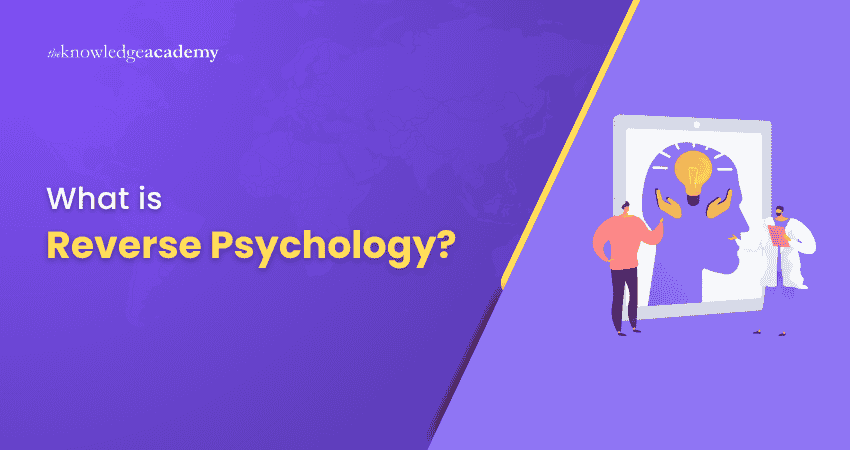
Picture being influenced into doing something (or not) simply by someone telling you not to. Reverse Psychology may sound contradictory, but it works surprisingly well. This art cleverly utilises this principle of not doing and helps to influence behaviour without directly applying pressure. We are going to explain exactly how it works and what makes it so effective in this blog.
Table of Contents
1) Understanding Reverse Psychology
2) Signs of Reverse Psychology
3) How to Practice Reverse Psychology?
4) Tips for Using Reverse Psychology
5) Impacts of Reverse Psychology
6) Examples of Reverse Psychology
7) Conclusion
Understanding Reverse Psychology
Have you ever been told not to do something and immediately felt the urge to do it anyway? That reaction is known as Reverse Psychology, a persuasion method where someone promotes the opposite of what they truly want. Also called strategic self-anticonformity, it works by triggering a person’s natural resistance and encouraging them to act in the desired way.
For example, a parent might insist their child wouldn’t enjoy a certain food, which makes the child eager to try it. Similarly, being told not to watch a friend’s favourite show can make you even more curious to see what it’s about.
Signs of Reverse Psychology
Recognising when someone is using Reverse Psychology can help you avoid subtle manipulation. Here are a few common signs to look out for:
a) Indirect Communication: The person avoids stating what they truly want, instead trying to steer you subtly toward a particular choice.
b) Challenging Your Ability: They might tell you that you cannot do something or doubt your capability, prompting you to “prove them wrong.”
c) Personal Gain: The individual often benefits from the outcome, even if it seems like they are encouraging the opposite.
d) Inconsistent Behaviour: What they say contradicts their known preferences or past statements, signalling they might be influencing your actions deliberately.
Immerse yourself in the compelling study of the Introduction to Psychology of Personality Course – Register now!
How to Practice Reverse Psychology?
If you wish to use Reverse Psychology to influence someone’s behaviour, there are several techniques you can try. These include:
1) Understand the Individual
Recognise that Reverse Psychology tends to work best with individuals who are naturally resistant or oppositional. Assess whether the person is likely to respond favourably to this approach.
2) Use Sparingly
Overusing Reverse Psychology can lead to mistrust or feelings of manipulation. Reserve it for situations where other methods have proven ineffective.
3) Craft Your Message Carefully
Frame your statements in a way that suggests the opposite of what you desire. For example, if you want someone to clean their room, you might say, "It's okay if you don't clean your room; it's probably too much work for you anyway."
4) Maintain a Nonchalant Attitude
Deliver your statements casually, without pressure, to avoid arousing suspicion. The effectiveness of Reverse Psychology often relies on the subtlety of the suggestion.
5) Monitor Reactions
Pay attention to the individual's response. If they seem resistant or aware of the tactic, it's best to discontinue its use.
6) Ethical Considerations
Ensure that your use of Reverse Psychology doesn't manipulate or harm the individual. It's essential to prioritise the person's well-being and autonomy.
Remember, while Reverse Psychology can be effective in certain situations, it should be employed thoughtfully and ethically.
Tips for Using Reverse Psychology
When used with awareness and care, Reverse Psychology can help motivate others or shift unproductive patterns. Here are some key tips to use it effectively:
1) Keep it Lighthearted: Approach the situation with a sense of humour rather than pressure. A playful tone prevents defensiveness and makes the conversation more natural. Using sarcasm or gentle teasing can work, but ensure it feels kind, not manipulative.
2) Use it When You're Stuck: Reverse Psychology can be powerful when facing resistance, whether from yourself or others. For instance, if someone avoids a task or feels indecisive, lightly suggesting the opposite might spark motivation and confidence.
3) Stay Patient and Consistent: Changing behaviours or thought patterns does not happen overnight. Give yourself and others time to respond, and use reverse psychology only when it serves a positive purpose. Practice self-compassion throughout the process.
4) Know Your Audience: This technique works best when you understand the other person’s mindset. Overusing it or applying it to someone highly self-aware can backfire, so use it sparingly and thoughtfully.
5) Focus on Positive Outcomes: Always ensure your intention is constructive, to encourage growth, confidence, or motivation, rather than to manipulate or control.
Embark on Social Psychology Training to deepen your knowledge of social dynamics – Book your spot now!
Impacts of Reverse Psychology
Reverse Psychology can influence behaviour in meaningful ways, both helpful and harmful. Its success largely depends on how thoughtfully and ethically it is applied in different situations.
Let’s delve into the advantages and disadvantages of using Reverse Psychology:
1) Advantages
Used carefully, Reverse Psychology can motivate people and create positive behavioural change. Here are some of its main benefits:
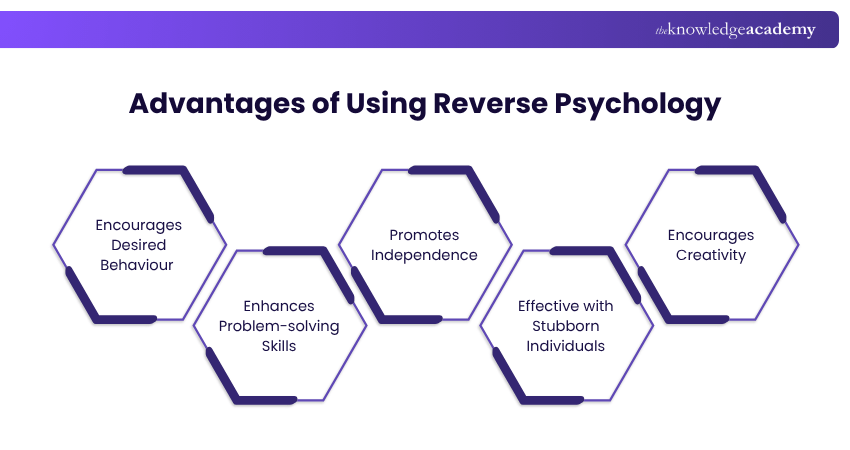
1) Encourages self-motivation by allowing individuals to feel in control of their choices
2) Reduces direct confrontation and resistance in challenging situations
3) Helps promote positive behaviour subtly without applying pressure
4) Useful for parents, teachers, or leaders to inspire cooperation
5) Can make communication more creative and less forceful
2) Disadvantages
If used frequently or manipulatively, Reverse Psychology can damage trust and relationships. Its drawbacks include:
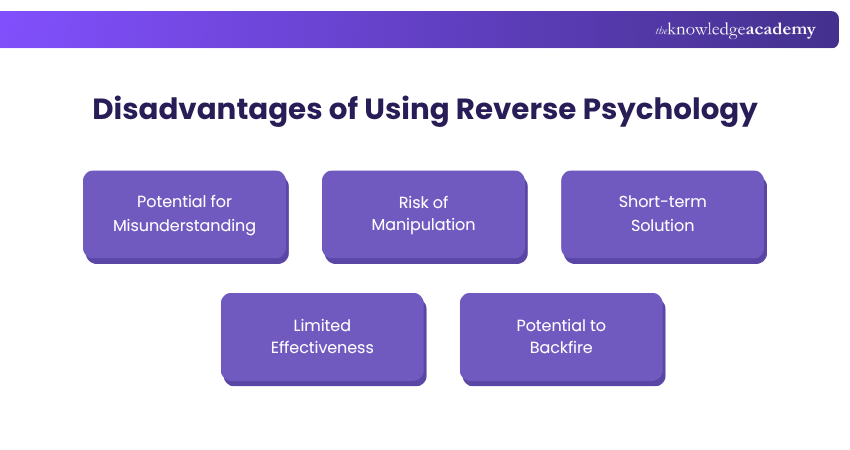
1) Creates feelings of manipulation or deceit when people realise the intent
2) May harm emotional trust and lead to resentment over time
3) Can cause misunderstandings or backfire if the person resists further
4) Does not always lead to lasting behavioural changes
5) Often less effective than honest and open communication for long-term outcomes
Explore Mental Health Courses for comprehensive learning in an accredited environment – Register today!
Examples of Reverse Psychology
Many people have stories of using or experiencing Reverse Psychology. Here are some scenarios where people can use this:
1) Parenting
Situation: A child refuses to get dressed for school.
Reverse Psychology Approach: The parent says, "It's fine if you go to school in your pyjamas; maybe your friends will think it’s funny."
Why it Works:
Many children dislike standing out or being different in a way they didn't choose. By suggesting that wearing pyjamas to school might make them feel awkward, the child may change into regular clothes to avoid embarrassment.
2) Relationships
Situation: A person wants their partner to spend time with them but doesn’t want to appear needy.
Reverse Psychology Approach: They say, "You don’t have to spend time with me this weekend; I’m sure you’ll have more fun with your friends."
Why it Works:
The partner may feel guilty or want to prove they value the relationship, so they decide to spend time together instead of going out with friends.
2) Relationships
Situation: A company wants to persuade customers to buy a product.
Reverse Psychology Approach: An ad states, "This exclusive offer isn’t for everyone; only those who truly appreciate quality will be interested."
Why it Works:
People often want to prove they belong to an exclusive or elite group. By positioning the product as something only a select few would appreciate, consumers are more likely to buy it to affirm their status.
Conclusion
When used appropriately and with care, Reverse Psychology can be a very productive strategy. While you may want someone to think for themselves or encourage a reluctant person to comply with a suggestion, this methodology ultimately depends on timing, motive, and the particular individual involved. It's also essential not to use it regularly or carelessly and inappropriately.
Transform your workplace dynamics with our Psychology of Behaviour at Work Training - join us now!
Frequently Asked Questions
Can Reverse Psychology be Used in Marketing?

Yes, Reverse Psychology is used in marketing to create demand by making products seem exclusive or unavailable. Phrases like "Only a few people will appreciate this deal" make consumers want to prove they belong to the select group.
What are Some Examples of Reverse Psychology in Everyday Life?
1) A parent telling a child, " This dish is only for adults; I’m not sure you’d enjoy it," encouraging them to try it.
2) A teacher saying, "This test is really hard; only a few will pass," motivating students to study harder.
What are the Other Resources and Offers Provided by The Knowledge Academy?
The Knowledge Academy takes global learning to new heights, offering over 3,000+ online courses across 490+ locations in 190+ countries. This expansive reach ensures accessibility and convenience for learners worldwide.
Alongside our diverse Online Course Catalogue, encompassing 19 major categories, we go the extra mile by providing a plethora of free educational Online Resources like Blogs, eBooks, Interview Questions and Videos. Tailoring learning experiences further, professionals can unlock greater value through a wide range of special discounts, seasonal deals, and Exclusive Offers.
What is The Knowledge Pass, and How Does it Work?
The Knowledge Academy’s Knowledge Pass, a prepaid voucher, adds another layer of flexibility, allowing course bookings over a 12-month period. Join us on a journey where education knows no bounds.
What are the Related Courses and Blogs Provided by The Knowledge Academy?
The Knowledge Academy offers various Mental Health Courses, including the Introduction To Psychology Of Personality Course, Positive Psychology Course, and Mental Capacity Training. These courses cater to different skill levels, providing comprehensive insights into Emotional Wellbeing.
Our Health & Safety Blogs cover a range of topics related to Reverse Psychology, offering valuable resources, best practices, and industry insights. Whether you are a beginner or looking to advance your Health & Safety skills, The Knowledge Academy's diverse courses and informative blogs have got you covered.

The Knowledge Academy


Global Training Provider
The Knowledge Academy is a world-leading provider of professional training courses, offering globally recognised qualifications across a wide range of subjects. With expert trainers, up-to-date course material, and flexible learning options, we aim to empower professionals and organisations to achieve their goals through continuous learning.

Upcoming Health & Safety Resources Batches & Dates
Date
 Psychology Course
Psychology Course
Fri 10th Jul 2026
Psychology Course
Fri 18th Sep 2026
Psychology Course
Fri 4th Dec 2026

 If you wish to make any changes to your course, please


