


 Top Rated Course

We may not have the course you’re looking for. If you enquire or give us a call on +44 20 4538 6376 and speak to our training experts, we may still be able to help with your training requirements.
ArchiMate® Modelling Language: Align Business and IT Strategy
James Smith 03 June 2026Have you ever been curious how the ArchiMate® Modelling Language works while modelling architecture for organisations? This blog will take you through components of the ArchiMate® Modelling Language, defining core concepts, layers and how relationships and views work. It helps you use the ArchiMate® Modelling Language for structuring models.

Training Outcomes Within Your Budget!
We ensure quality, budget-alignment, and timely delivery by our expert instructors.
Table of Contents
The ArchiMate® Modelling Language is a visual modelling language designed for describing, analysing, and visualising enterprise architectures. It provides a standardised and systematic approach to represent and communicate complex architectural concepts and relationships within organisations. This blog will explore the key components of the ArchiMate® Modelling Language and its advantages.
Table of Contents
1) Components of the ArchiMate® Modelling Language
a) Core Concepts
b) Layers and Aspects
c) Relationships and Views
2) How to Use the ArchiMate® Modelling Language
a) Modelling Structure
b) Notation and Symbols
3) Benefits of Using the ArchiMate® Modelling Language
4) Conclusion
Components of the ArchiMate® Modelling Language
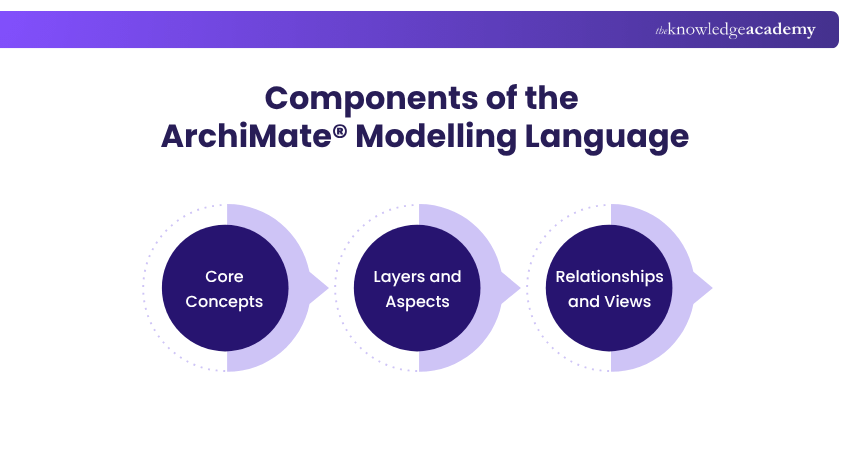
The ArchiMate® Modelling Language consists of several components that together form a comprehensive modelling framework. These components are as follows:
Core Concepts
At its core, you'll find fundamental concepts such as the business, application, and technology layers. These layers represent an organisation's different perspectives and help structure the architectural models accordingly. When analysing the ArchiMate® Modelling Language vs UML , it is essential to understand that while the ArchiMate® Modelling Language is specifically designed for enterprise architecture modelling, UML is primarily used for software design and system development.

Layers and Aspects
It organises the enterprise architecture into different layers, each focusing on a specific aspect of the organisation. These layers include business, application, and technology. By segregating Business Architecture with the ArchiMate® Modelling Language into layers, it becomes easier to understand and analyse the relationships and dependencies between different components.
Relationships and Views
It provides a rich set of relationships that allow architects to depict how different elements interact and depend on each other. Additionally, it offers various views, such as structural, behavioural, and composition, which help present different aspects of the architecture to different stakeholders.
How to Use the ArchiMate® Modelling Language
To effectively use it, architects follow a structured approach that involves modelling structure, using the Notation in the ArchiMate® Modelling Language and symbols, and considering example use cases.
Modelling Structure
When creating architectural models using the language, it is essential to define the scope, identify the relevant layers and aspects, and establish the relationships between different elements. This structured approach ensures clarity and coherence in the architectural representation.
Notation and Symbols
It offers a standardised notation and a set of symbols to represent different architectural elements and their relationships. By understanding the ArchiMate® Modelling Language Core Framework, architects can familiarise themselves with these symbols to create models that are consistent and easy to interpret.
Gain extensive knowledge of the ArchiMate® modelling language basics with the ArchiMate® 3 Training Course: Level 1 – Register now!
Benefits of Using the ArchiMate® Modelling Language
The adoption of this language brings several benefits to enterprise architects and organisations:
a) Clear Communication: It provides a standardised visual representation that simplifies complex architectures, enabling effective stakeholder communication.
b) Holistic View: It allows architects to view the entire enterprise from different perspectives, ensuring a holistic understanding of the architecture and its interdependencies.
c) Alignment with Business Goals: It facilitates the alignment of business goals with IT capabilities, ensuring that architecture supports the organisation's strategic objectives.
d) Better Decision-Making: It enables architects to analyse the impact of changes, evaluate alternative scenarios, and make informed decisions based on reliable models.
e) Efficient Collaboration: It serves as a common language for architects, business managers, and IT professionals, fostering collaboration and shared understanding.
Unlock power of the ArchiMate® with our ArchiMate® 3 Course: Level 1 – sign up now!
Conclusion
The ArchiMate® Modelling Language is a powerful tool for enterprise architects to communicate complex architectural concepts. The ArchiMate® Modelling Language Cheat Sheet can significantly improve the efficiency and effectiveness of enterprise architects by providing a readily accessible reference for key concepts, notations, and best practices. By utilising its key concepts, components, and modelling approaches, organisations can gain a holistic understanding of their enterprise architecture and make informed decisions. Despite its limitations, it continues to be a valuable asset in enterprise architecture.
Acquire expertise in interoperability and integration frameworks with the ArchiMate® 3 Training Course – Join today!
Frequently Asked Questions
How Many Layers are in the ArchiMate® Modelling Language?

The ArchiMate® modelling language has three main layers: Business, Application, and Technology. These represent processes, software, and infrastructure, helping structure enterprise architecture clearly and improve understanding across an organisation.
Is the ArchiMate® Modelling Language an Open Standard?
Yes, the ArchiMate® modelling language is an open standard maintained by The Open Group®. It is publicly available and widely used for enterprise architecture modelling, allowing organisations to adopt it without vendor lock-in and ensuring consistency across tools and teams.
What are the Other Resources and Offers Provided by The Knowledge Academy?
The Knowledge Academy takes global learning to new heights, offering over 3,000+ online courses across 490+ locations in 190+ countries. This expansive reach ensures accessibility and convenience for learners worldwide.
Alongside our diverse Online Course Catalogue, encompassing 17 major categories, we go the extra mile by providing a plethora of free educational Online Resources like Blogs, eBooks, Interview Questions and Videos. Tailoring learning experiences further, professionals can unlock greater value through a wide range of special discounts, seasonal deals, and Exclusive Offers.
What is The Knowledge Pass, and How Does it Work?
The Knowledge Academy’s Knowledge Pass, a prepaid voucher, adds another layer of flexibility, allowing course bookings over a 12-month period. Join us on a journey where education knows no bounds.
What are the Related Courses and Blogs Provided by The Knowledge Academy?
The Knowledge Academy offers The ArchiMate® Training on various courses including the ArchiMate® 3 Training Course, the ArchiMate® 3 Training Course: Level 1, and the ArchiMate® 3 Training Course: Level 2. These courses cater to different skill levels, providing comprehensive insights into the User Authentication.
Our Business Improvement Blogs cover a range of topics related to the ArchiMate® Modelling Language Principles and Concepts, offering valuable resources, best practices, and industry insights. Whether you are a beginner or looking to advance your Business Improvement skills, The Knowledge Academy's diverse courses and informative blogs have got you covered.

James Smith


Digital Marketing Manager and Trainer
James Smith is a digital marketing professional with over a decade of experience in SEO, content strategy, paid media and analytics. He has supported both SMEs and global brands in transforming their digital presence. James’s writing and training are rooted in results-driven tactics and the latest marketing trends.
View Detail
Upcoming Business Improvement Resources Batches & Dates
Date
 ArchiMate® 3 Training Course
ArchiMate® 3 Training Course
Wed 5th Aug 2026
ArchiMate® 3 Training Course
Wed 4th Nov 2026

 If you wish to make any changes to your course, please


