


 Top Rated Course

We may not have the course you’re looking for. If you enquire or give us a call on +39 800580270 and speak to our training experts, we may still be able to help with your training requirements.
Scrum of Scrums | Agile Framework Guide
David Evans 02 May 2026Scrum of Scrums is a coordination technique that helps Agile teams align, communicate, resolve issues quickly, and deliver efficiently across complex projects. It ensures smoother workflows, improves transparency, reduces effort duplication, and helps teams stay focused on shared goals while managing interdependencies effectively.

Training Outcomes Within Your Budget!
We ensure quality, budget-alignment, and timely delivery by our expert instructors.
Table of Contents
Imagine a busy kitchen where several chefs are preparing different dishes for the same meal. If they don’t communicate, food gets burnt, steps get repeated, and the whole service falls apart. That’s exactly what happens in large Agile projects without proper coordination. Scrum of Scrums is like the head chefs checking in with each other to make sure everything comes together just right.
Scrum of Scrums brings order to the chaos. It helps teams share what they’re working on, flag any blockers, and stay aligned with the bigger goal. Instead of working in silos, teams connect regularly, making sure nothing slips through the cracks and everyone moves forward together.
Table of Contents
1) What is Scrum of Scrums?
2) Purpose of Scrum of Scrums
3) Who is Involved in a Scrum of Scrums?
4) The Benefits of Scrum of Scrums
5) Scrum of Scrums Best Practices
6) What is the Outcome of a Scrum of Scrums?
7) Conclusion
What is Scrum of Scrums?
Scrum of Scrums (SoS) is a method used to scale Scrum practices across multiple teams working on the same project. It helps large organisations coordinate efforts, align progress, and solve issues that affect more than one team.
In this approach, each Scrum team continues to hold its own daily stand-up. In addition, representatives from these teams meet in a separate daily session known as the Scrum of Scrums. These meetings allow them to discuss shared goals, dependencies, blockers, and any work that overlaps. It creates a rhythm that keeps everyone moving in the same direction.
Scrum of Scrums improves communication across teams, supports early risk detection, and ensures that work is delivered smoothly. It provides a simple way to manage complexity and encourages collaboration without disrupting each team's individual workflow.
History of Scrum of Scrums
Scrum of Scrums was introduced in 1996 by Jeff Sutherland and Ken Schwaber, the creators of the Scrum framework. It was inspired by daily stand-ups and aimed to improve coordination across multiple teams. Over time, the Agile community adopted it as a practical way to scale Scrum and strengthen team collaboration.
The concept has since influenced popular scaling frameworks like SAFe and LeSS. It highlights Agile’s flexible, iterative nature and offers a solution for managing complex, large-scale projects effectively.

Purpose of Scrum of Scrums
The purpose of the Scrum of Scrums is to scale the Scrum practices of various Scrum Teams. This is accomplished by combining the efforts of the smaller individual teams on a joint project. Here are a few more purposes of a Scrum of Scrums meeting:
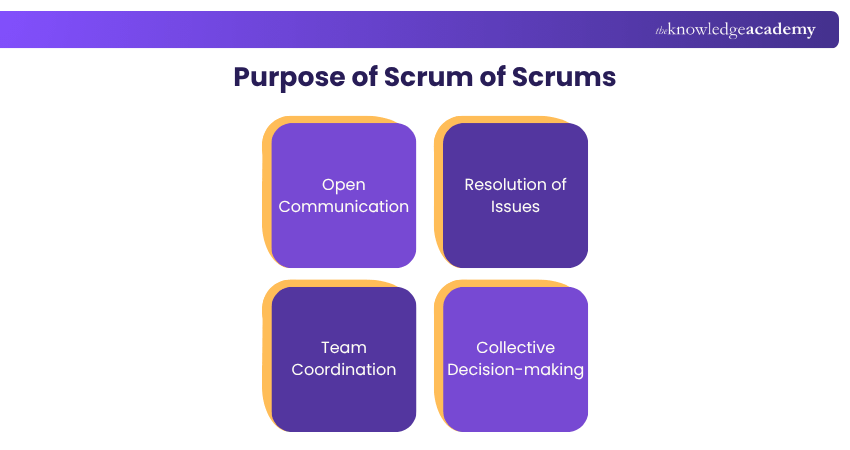
1) Open Communication: The information about the activities and progress status of the smaller Scrum Teams, is conveyed to the larger Scrum group. This helps keep everyone updated and in the loop.
2) Resolution of Issues: Problems are promptly addressed and tackled by prioritising and working on urgent issues.
3) Team Coordination: Overseeing the interaction and collaboration among the smaller individual Scrum Teams streamlines team management.
4) Collective Decision-making: A Scrum of Scrums entails that the decision-making takes place in a more collective manner as that would help keep the ball rolling for all teams.
Transform Teamwork with Practical Scrum Skills. Join our Scrum For Teams – Today!
Who is Involved in a Scrum of Scrums?
A Scrum of Scrums brings together selected members from different Scrum teams to improve coordination and address shared challenges. Each team usually appoints one person to participate in these meetings, often the Scrum Master or a senior team member. This representative share progress updates, highlights any blockers, and works with others to align efforts and manage dependencies.
Sometimes, a separate Scrum of Scrums Master leads these sessions, helping to guide conversations and resolve cross-team issues. The Product Owner may also be involved to clarify priorities and ensure that all teams are working towards common goals. Depending on the complexity of the project, specialists such as QA leads or technical experts may be included to provide additional support and insight.
Product Owner
The Product Owner plays a key role in representing the customer’s needs and business goals. They ensure that every team is working on the most valuable tasks by maintaining and prioritising the product backlog. In a Scrum of Scrums setup, Product Owners may collaborate to align priorities across teams, especially when features or tasks are shared. Their clear direction helps keep development focused and consistent with stakeholder expectations.
Scrum of Scrums Master
The Scrum of Scrums Master is responsible for facilitating coordination between teams. Much like a regular Scrum Master supports a single team, the SoS Master focuses on the broader picture. They lead the Scrum of Scrums meetings; help identify and remove cross-team blockers and ensure smooth communication among different teams. Their goal is to support delivery at scale by fostering collaboration and resolving challenges that affect multiple teams.
Scrum of Scrums Team Members
Each Scrum team selects a representative to participate in the Scrum of Scrums meetings. These members are usually team leads, Scrum Masters, or experienced contributors who can speak confidently about the team’s progress and challenges. They share updates, raise risks, and coordinate work that involves other teams. Their input helps maintain alignment and ensures that all teams stay on track toward shared goals.
Learn about the Scrum terminologies by signing up for our Scrum Overview Course - now!
The Benefits of Scrum of Scrums
Scrum of Scrums offers several key advantages for organisations working with multiple Agile teams. It helps maintain the core principles of Scrum while expanding its impact across larger, more complex projects. Below are some of the main benefits of scrum:
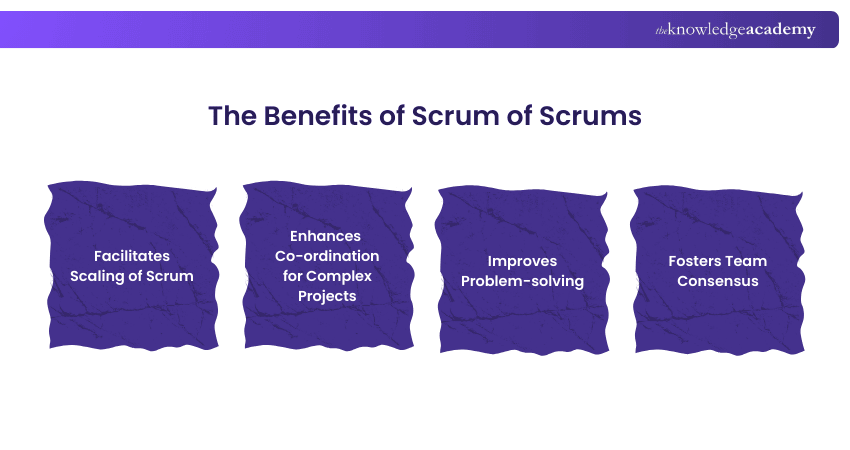
Facilitates Scaling of Scrum
a) Helps apply Scrum across multiple teams working on a common objective
b) Avoids merging all teams into one large Scrum
c) Keeps teams focused on their tasks while staying connected through cross-team updates
Enhances Co-ordination for Complex Projects
a) Offers a structured way for teams to align on timelines, priorities, and resources
b) Reduces bottlenecks and confusion across interdependent tasks
c) Ensures smooth progress across all parts of the project
Improves Problem-solving
a) Creates space to raise concerns or blockers early
b) Allows teams to share solutions and learn from each other
c) Leads to quicker resolutions and fewer delays
Fosters Team Consensus
a) Builds open communication and shared understanding between teams
b) Encourages alignment on goals, deadlines, and quality standards
c) Strengthens teamwork and shared accountability across the organisation
Acquire knowledge of Scrum Team roles and responsibilities. Join our Scrum for Teams Training- Now!
Scrum of Scrums Best Practices
Applying the right practices is key to making Scrum of Scrums effective. These practices help maintain coordination, accountability, and clarity across multiple teams working together on a shared goal.
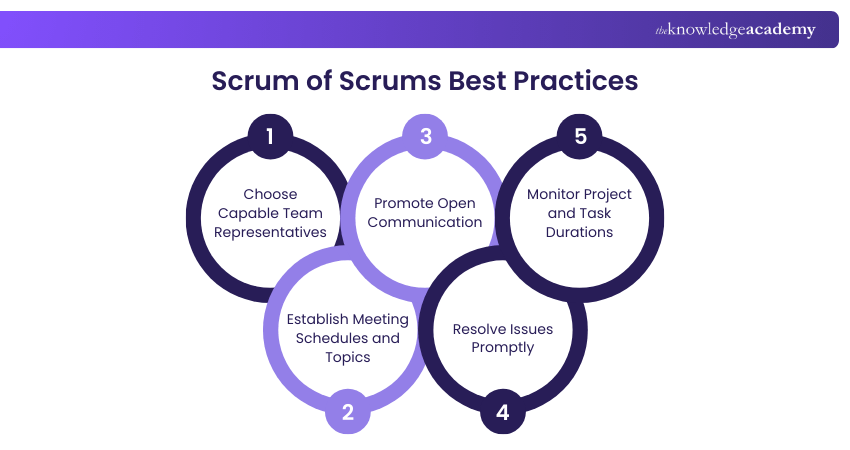
Choose Capable Team Representatives
a) Select someone who understands both technical and strategic details
b) Preferably a Scrum Master or technical lead
c) Must be confident, clear in communication, and able to represent the team effectively
Establish Meeting Schedules and Topics
a) Set a regular meeting schedule based on project needs
b) Daily or several times a week is ideal for fast-paced projects
c) Use a focused agenda that includes updates, blockers, and cross-team dependencies
Promote Open Communication
a) Create a safe space where team reps can speak openly
b) Encourage sharing of blockers, risks, and any concerns
c) Honest conversations build trust and lead to stronger teamwork
Resolve Issues Promptly
a) Follow up quickly on any blockers or raised risks
b) Ensure action is taken to remove obstacles
c) This keeps progress steady and avoids delays across teams
Monitor Project and Task Durations
a) Track how long tasks take, especially those involving multiple teams
b) Spot delays early and adjust timelines when needed
c) Helps teams stay aligned and meet project goals on time
What is the Outcome of a Scrum of Scrums?
1) Improved coordination between multiple Scrum teams
2) Faster identification and resolution of cross-team blockers
3) Clear visibility into project-wide progress and risks
4) Better alignment of team goals with overall objectives
5) Increased efficiency in handling inter-team dependencies
6) Stronger communication channels across all teams involved
Conclusion
Scrum of Scrums brings structure to collaboration in large, multi-team projects. By improving communication, resolving blockers faster, and aligning efforts, it turns complexity into clarity. When done right, it becomes the key to delivering smoother, faster, and more successful outcomes at scale.
Learn about the key Scrum and Scrum Master techniques with our Scrum Master Certification now!
Frequently Asked Questions
How Often to do a Scrum of Scrums?

The frequency of Scrum of Scrums depends on the project's size, complexity, and pace. For fast-moving projects or those with high inter-team dependencies, daily meetings are ideal. In other cases, two to three times a week may be enough to stay aligned and resolve issues on time.
What is the Agenda for a Scrum of Scrums?
A typical Scrum of Scrums agenda includes brief updates from each team representative on:
1) What their team has completed
2) What they plan to work on next
3) Any blockers or issues impacting progress
4) Dependencies on other teams
5) Risks or coordination needs across teams
What are the Other Resources and Offers Provided by The Knowledge Academy?
The Knowledge Academy takes global learning to new heights, offering over 3,000+ online courses across 490+ locations in 190+ countries. This expansive reach ensures accessibility and convenience for learners worldwide.
Alongside our diverse Online Course Catalogue, encompassing 17 major categories, we go the extra mile by providing a plethora of free educational Online Resources like Blogs, eBooks, Interview Questions and Videos. Tailoring learning experiences further, professionals can unlock greater value through a wide range of special discounts, seasonal deals, and Exclusive Offers.
What is The Knowledge Pass, and How Does it Work?
The Knowledge Academy’s Knowledge Pass, a prepaid voucher, adds another layer of flexibility, allowing course bookings over a 12-month period. Join us on a journey where education knows no bounds.
What are the Related Courses and Blogs Provided by The Knowledge Academy?
The Knowledge Academy offers various Scrum Certification, including the Scrum Master Certification and Scrum Developer Training, and the Agile and Scrum Awareness. These courses cater to different skill levels, providing comprehensive insights into Scrum Theory.
Our Project Management Blogs cover a range of topics related to Scrum Training, offering valuable resources, best practices, and industry insights. Whether you are a beginner or looking to advance your Project Management skills, The Knowledge Academy's diverse courses and informative blogs have got you covered.

David Evans


Certified Project Trainer and Agile Delivery Expert
David Evans brings over a decade of hands-on experience in project delivery, Agile transformation, and team leadership. With a background in technology and business consulting, David has led cross-functional teams through Agile and Waterfall projects in both public and private sectors. He combines technical knowledge with practical insights to help readers navigate the challenges of modern project environments.

Upcoming Project Management Resources Batches & Dates
Date
 Scrum Master Certification
Scrum Master Certification
Thu 25th Jun 2026
Scrum Master Certification
Thu 9th Jul 2026
Scrum Master Certification
Thu 23rd Jul 2026
Scrum Master Certification
Thu 6th Aug 2026
Scrum Master Certification
Thu 20th Aug 2026
Scrum Master Certification
Thu 3rd Sep 2026
Scrum Master Certification
Thu 17th Sep 2026
Scrum Master Certification
Thu 1st Oct 2026
Scrum Master Certification
Thu 15th Oct 2026
Scrum Master Certification
Thu 29th Oct 2026
Scrum Master Certification
Thu 12th Nov 2026
Scrum Master Certification
Thu 26th Nov 2026
Scrum Master Certification
Thu 10th Dec 2026
Scrum Master Certification
Wed 23rd Dec 2026

 If you wish to make any changes to your course, please


