


 Top Rated Course

We may not have the course you’re looking for. If you enquire or give us a call on +39 800580270 and speak to our training experts, we may still be able to help with your training requirements.
Wellbeing at Work: Importance and Best Practices
The Knowledge Academy 01 May 2026Wellbeing at work is a holistic approach to creating a positive and healthy work environment that supports employees' physical, mental, and financial health. Organisations that prioritise employee wellbeing often see improved morale, productivity and retention. A supportive culture also fosters trust and long-term engagement.

Training Outcomes Within Your Budget!
We ensure quality, budget-alignment, and timely delivery by our expert instructors.
Table of Contents
A healthy workplace is a must-have for teams that are productive and motivated. If the workers consider that they are supported and valued, the performance and retention will be higher when coping with it. In this blog, we examine the main factors affecting Wellbeing at Work and ways of creating the right atmosphere for people to succeed.
Table of Contents
1) What is Wellbeing at Work?
2) The Elements of Wellbeing
3) The Value of Employee Wellbeing at Work
4) Measuring the Impact of Workplace Wellbeing Initiatives
5) What to Do if Your Mental Health is Affecting Your Job?
6) Conclusion
What is Wellbeing at Work?
Wellbeing at Work is not only about physical health but also about emotional and mental aspects through the prism of career, relationships, finance, community, and physical health. When workers experience a positive impact on their wellbeing in these areas, they feel more content not only with their jobs but also with their everyday lives.
The higher wellbeing of the employees fosters even more engagement, performance, and triumph in the workplace culture. Moreover, it assists corporations in talent retention and in making their places of work conducive for the flourishing of the people.

The Elements of Wellbeing
Here are the key elements of wellbeing:
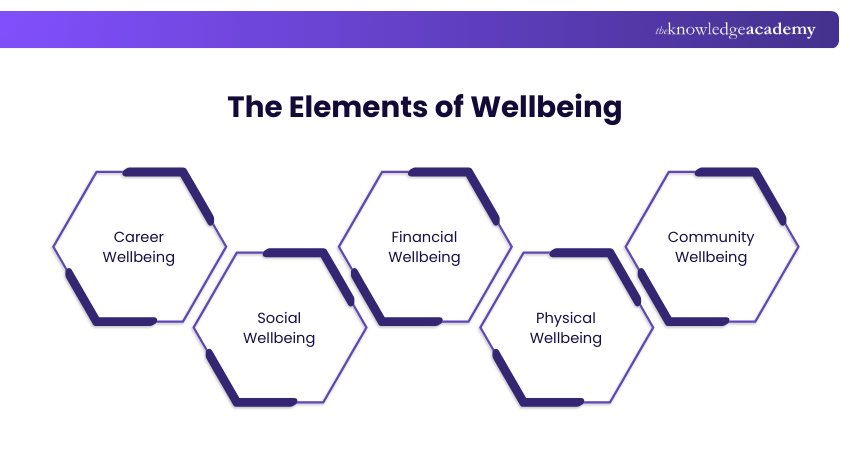
1) Physical Wellbeing
Physical Wellbeing refers to possessing the vitality and power to carry out everyday tasks with ease. It depends on the adoption of healthy practices like physical activity, a nutritious diet, ample sleep, and adequate intake of fluids.
2) Mental and Emotional Wellbeing
Mental and emotional wellbeing refers to the state of feeling positively connected, supported, and self-assured through healthy relationships, important activities, and good self-care. It includes physical activities, acquiring new hobbies, and volunteering as ways to ensure balanced and better mental health.
3) Social Wellbeing
Social Wellbeing refers to the process of creating significant relationships that result in connection, belongingness, and support. The presence of strong social networks makes people more likely to feel appreciated, thus enhancing their resilience and promoting good mental health overall.
4) Financial Wellbeing
Financial Wellbeing is the capability to manage your everyday financials, to meet your expenses with no worries, and to be assured about your future. It covers the management of financial shocks, sticking to your goals and making life decisions without feeling stressed about money.
5) Workplace Environment
The term Workplace Environment encompasses both the physical and emotional conditions under which the employees perform their duties, which are influenced by the company's culture, the layout of the office, and the availability of assistance.
6) Work-life Balance
The term "Work-life Balance" refers to a situation where the employee's work obligations and personal life are in perfect harmony, allowing the worker to take care of both areas and not letting one of them interfere with the other at all. Studies indicate that a better work-life balance has been a source of greater job satisfaction and enhanced productivity, thus, showing its significance for the individual's total wellbeing.
7) Professional Growth and Development
Professional Growth and Development is an approach that helps people always improve their skills, knowledge, and confidence so that they can develop in their jobs. Continuous growth like this increases job satisfaction, career advancement, and adaptability, thus making it easier for individuals to be up-to-date and stay motivated in a fast-changing workplace.
Learn regulatory requirements with our Environmental Awareness Training – Join today!
The Value of Employee Wellbeing at Work
Here are the key areas where employee Wellbeing at Work makes a big difference:
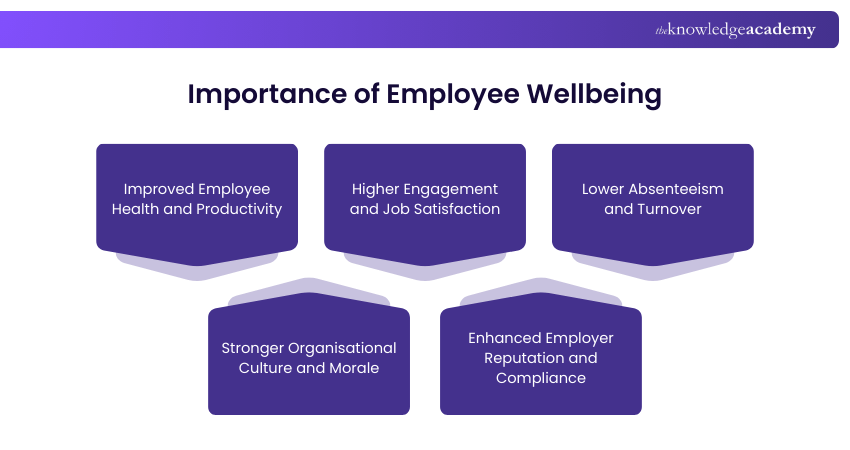
1) Improved Employee Health and Productivity
When employees feel healthy and supported, they can do their jobs better. Good Wellbeing at Work helps reduce stress and health problems. It also boosts energy and focus during the day. Healthy teams tend to finish tasks faster and with better quality.
a) Helps employees stay active and alert
b) Reduces sick days and health complaints
c) Supports better focus and time management
d) Increases output and work quality
e) Encourages healthier daily habits
2) Higher Engagement and Job Satisfaction
Employees are happier when their wellbeing is taken seriously. They feel valued, supported, and more connected to their work. This leads to better motivation and teamwork. Happy employees are more likely to stay loyal to the company.
a) Builds a stronger connection to the job
b) Encourages employees to do their best
c) Improves relationships between team members
d) Makes the workplace more positive
e) Helps employees feel more confident at work
3) Lower Absenteeism and Turnover
When people feel good at work, they take fewer sick days and stay longer in their jobs. A focus on wellbeing helps reduce burnout and stress. It also shows that the company cares about its staff. This lowers the chances of employees leaving the company.
a) Fewer unplanned days off
b) Reduces the cost of hiring new staff
c) Keeps experienced staff in the company
d) Helps build stable and reliable teams
e) Shows the company values long-term staff
4) Stronger Organisational Culture and Morale
Wellbeing at Work programmes show that the company respects and values its people. This helps build a culture of trust, respect, and teamwork. When people feel good, they support each other more. A strong culture boosts team spirit and confidence.
a) Builds trust between staff and managers
b) Creates a positive and friendly workplace
c) Encourages teamwork and open communication
d) Boosts team confidence and energy
e) Makes employees proud to be part of the company
5) Enhanced Employer Reputation and Compliance
Companies that care for their staff stand out as great places to work. This helps attract top talent and keep current staff happy. It also shows that the business follows health and safety rules. A good reputation makes a big difference in a competitive market.
a) Attracts skilled people to join the company
b) Builds a positive image in the industry
c) Shows commitment to legal and ethical standards
d) Helps win trust of clients and partners
e) Improves chances of winning awards and recognition
Measuring the Impact of Workplace Wellbeing Initiatives
Measuring the impact of Wellbeing at Work initiatives is important for understanding their effectiveness and making necessary improvements. Key metrics to consider include:
a) Employee engagement and satisfaction scores
b) Health and wellness programme participation rates
c) Absenteeism and turnover rates
d) Productivity and performance metrics
e) Feedback from employee surveys and focus groups
Learn how to ensure food safety with our Food Safety Training – Join today!
What to Do if Your Mental Health is Affecting Your Job?
If your mental health is making work hard, here are some things you can try:
a) Talk to your manager or HR and ask for help
b) Take short breaks during the day to rest your mind
c) Try to manage your workload and say no when needed
d) Speak to a doctor or mental health expert for advice
e) Use any support services your workplace may offer
Conclusion
Wellbeing at Work is a major factor in the establishment of teams that are healthy, hardworking, and able to endure. It is clear that organisations that put the health of their employees first will get the best from the employees since they will feel that the company backs them up. All the above-mentioned organisations will not only create a better environment but will also be able to nurture a culture of excellence that ultimately translates into success over the years.
Learn to act quickly in medical emergencies with our First Aid at Work Course – Join today!
Frequently Asked Questions
How Can Leaders Promote Wellbeing at Work?

Leaders can promote wellbeing by creating a safe, supportive, and positive work environment. They should listen to employees, encourage open conversations, and offer help when needed. Simple actions like flexible hours, regular check-ins, and saying thank you can also make a big difference.
What are the Benefits of Promoting Wellbeing at Work?
Promoting Wellbeing at Work helps employees feel happier, healthier, and more valued. It can lead to better teamwork, higher job satisfaction, and less sick leave. A workplace that supports wellbeing often sees improved performance and stronger employee loyalty.
What are the Other Resources and Offers Provided by The Knowledge Academy?
The Knowledge Academy takes global learning to new heights, offering over 3,000+ online courses across 490+ locations in 190+ countries. This expansive reach ensures accessibility and convenience for learners worldwide.
Alongside our diverse Online Course Catalogue, encompassing 19 major categories, we go the extra mile by providing a plethora of free educational Online Resources like Blogs, eBooks, Interview Questions and Videos. Tailoring learning experiences further, professionals can unlock greater value through a wide range of special discounts, seasonal deals, and Exclusive Offers.
What is The Knowledge Pass, and How Does it Work?
The Knowledge Academy’s Knowledge Pass, a prepaid voucher, adds another layer of flexibility, allowing course bookings over a 12-month period. Join us on a journey where education knows no bounds.
What are the Related Courses and Blogs Provided by The Knowledge Academy?
The Knowledge Academy offers various Mental Health Courses, including the Mental Capacity Training, Mindfulness Training, and Positive Psychology Course. These courses cater to different skill levels, providing comprehensive insights into Hypertension.
Our Health & Safety Blogs cover a range of topics related to Wellbeing at Work, offering valuable resources, best practices, and industry insights. Whether you are a beginner or looking to advance your Health & Safety skills, The Knowledge Academy's diverse courses and informative blogs have got you covered.

The Knowledge Academy


Global Training Provider
The Knowledge Academy is a world-leading provider of professional training courses, offering globally recognised qualifications across a wide range of subjects. With expert trainers, up-to-date course material, and flexible learning options, we aim to empower professionals and organisations to achieve their goals through continuous learning.

Upcoming Health & Safety Resources Batches & Dates
Date
 First Aid at Work
First Aid at Work
Fri 7th Aug 2026
First Aid at Work
Thu 13th Aug 2026
First Aid at Work
Fri 6th Nov 2026
First Aid at Work
Thu 10th Dec 2026

 If you wish to make any changes to your course, please


