


 Top Rated Course

We may not have the course you’re looking for. If you enquire or give us a call on +39 800580270 and speak to our training experts, we may still be able to help with your training requirements.
Root Cause Analysis Templates: With Examples
John Davies 15 June 2026Root Cause Analysis Templates provide a clear, structured approach to identifying and addressing the root causes of problems. These templates include key elements like issue description, timeline, personnel, root cause, and methods. They help streamline problem-solving and ensure effective corrective actions for lasting solutions.

Training Outcomes Within Your Budget!
We ensure quality, budget-alignment, and timely delivery by our expert instructors.
Table of Contents

We all face problems even if at work or in our personal life that seem not possible to resolve. They remain, like rigid puzzles, leaving us frustrated and searching for answers. But what if there was an approach to handle these problems head-on? Enter Root Cause Analysis Templates (RCA), your secret tool for unveiling the true reasons of problems and settling them at the root.
From simple to complicated matters, Root Cause Analysis Templates are diverse tools that help you break down issues, connect the dots and find lasting solutions. In this blog, we'll discuss some of the most effective RCA templates, showing you how they can change chaos into clarity, saving you time and effort. Ready to say goodbye to repeating problems? Keep reading!
Table of Contents
1) What is a Root Cause Analysis Template?
2) Root Cause Analysis Templates
3) How to Perform a Root Cause Analysis?
4) What are the Principles of Root Cause Analysis?
5) Conclusion
What is a Root Cause Analysis Template?
A Root Cause Analysis Templates is a tool used by teams to constantly detect the root factors of repeating challenges and discover remedial actions to avoid future incidents. This template usually includes:
1) Issue Description:
Details of the problem, including when and who discovered it
2) Timeline:
A series of occurrences leading up to, during and after the event
3) Personnel:
Team members engaged in the analysis and their roles
4) Root Cause:
The underlying cause, backed by supporting data
5) Methods:
Actionable steps to avoid repetition
By using a Root Cause Analysis Template, businesses can effectively examine issues, implement solutions and enhance processes across different areas. Like IT, engineering and manufacturing.

Root Cause Analysis Templates
Root Cause Analysis Templates are of various types, each designed to suit different problem-solving methodologies and industries. Here are some of those common types:
1) Six Sigma DMAIC Methodology
This Template aligns with the Define, Measure, Analyse, Implement, Control (DMAIC) approach used in the Six Sigma methodology. It guides users through the five stages of the DMAIC process, providing a structured framework to identify Root Causes and implement improvement strategies. By using this template, teams can improve efficiency, reduce defects, and ensure high-quality outcomes.
Develop expertise in digital product management with ITIL® 5 Experience Certification Training and deliver value-driven IT services.
2) '5 Whys'
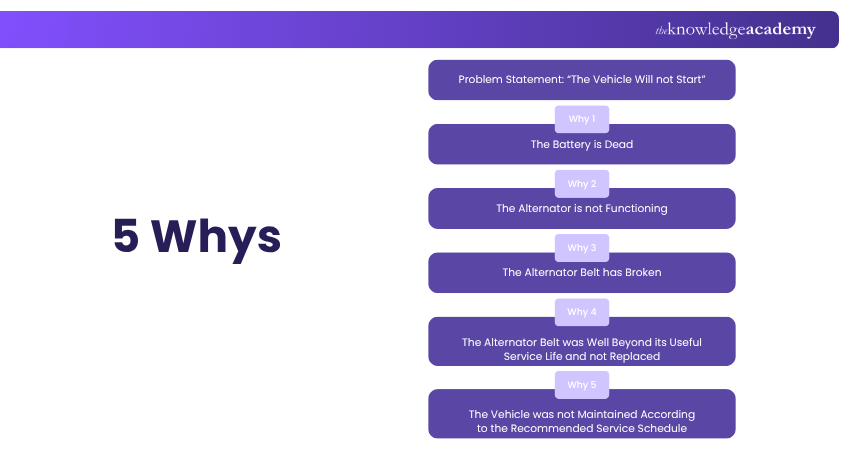
The “5 Whys” technique is a simple yet powerful Root Cause Analysis tool. By asking “Why?” five times in succession, teams can trace a problem back to its root. This method avoids surface-level fixes and promotes deeper understanding. Each answer leads to the next 'why,' encouraging thoughtful investigation until the core issue is revealed.
3) Excel-based Root Cause Analysis Templates
Excel-based templates provide a flexible and customisable approach to Root Cause Analysis. Users can create their own templates or utilise pre-designed ones available in Excel. These templates offer a versatile platform for data collection, analysis, and visualisation of findings. With Excel’s functionalities, users can easily organise data, generate charts and graphs, and track progress over time.
4) Fishbone Diagram
The Fishbone Diagram, also known as the Cause-and-effect Diagram, is a graphical tool shaped like a fish skeleton. It places the core problem at the "head," with major contributing categories such as People, Processes, Equipment, Materials, Environment, and Management as "bones." Using a template simplifies this process, allowing teams to focus on identifying causes rather than constructing the diagram from scratch.
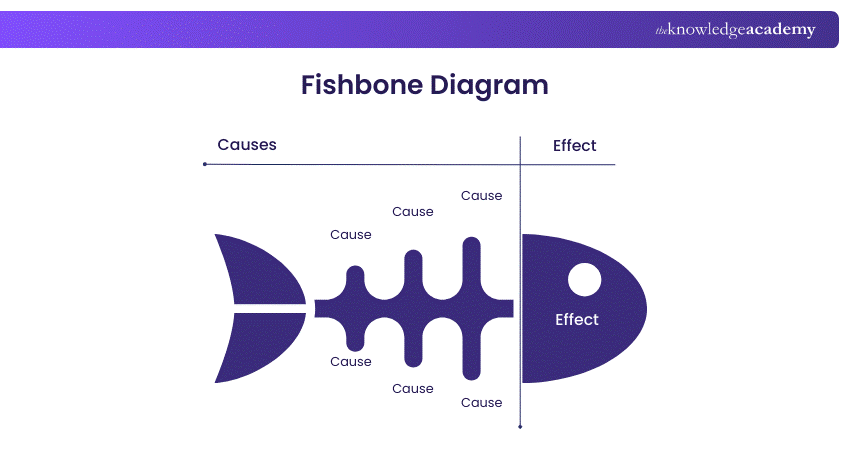
The Fishbone Diagram in Root Cause Analysis helps identify multiple contributing factors across categories such as people, processes, equipment, environment, and management. It aids in promoting a comprehensive understanding of the problem.
5) The Pareto Chart
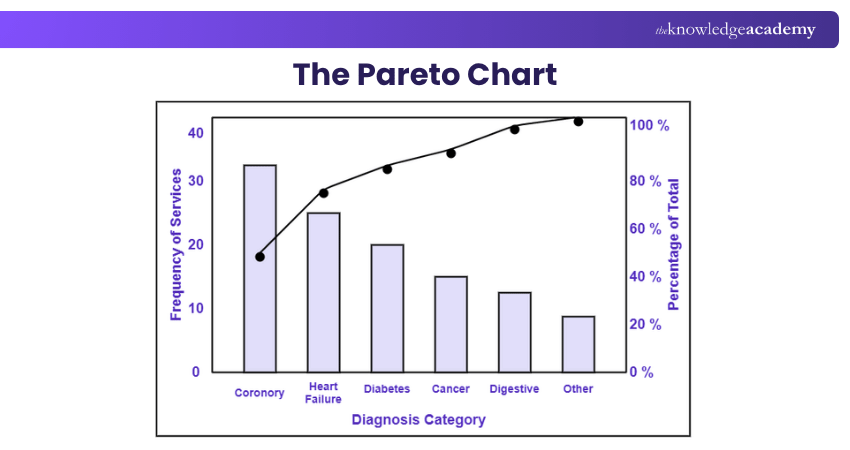
The Pareto Chart is based on the 80/20 principle, which suggests that 80% of problems stem from 20% of causes. This chart helps visualise which issues have the greatest impact.
To use it:
a) Collect and categorise data on the causes
b) Count the frequency of each
c) Plot them in descending order
d) Overlay a cumulative percentage line to highlight major contributors
This visual guide directs focus to the most significant issues for targeted resolution.
Develop expertise in digital product management with ITIL® 5 Product Certification Training and deliver value-driven IT services.
6) Scatter Diagram
A Scatter Diagram graphically shows the relationship between two variables by designing data points on a graph. The x-axis represents one variable, and the y-axis represents the other, helping determine trends or correlations, like positive or negative relationships.
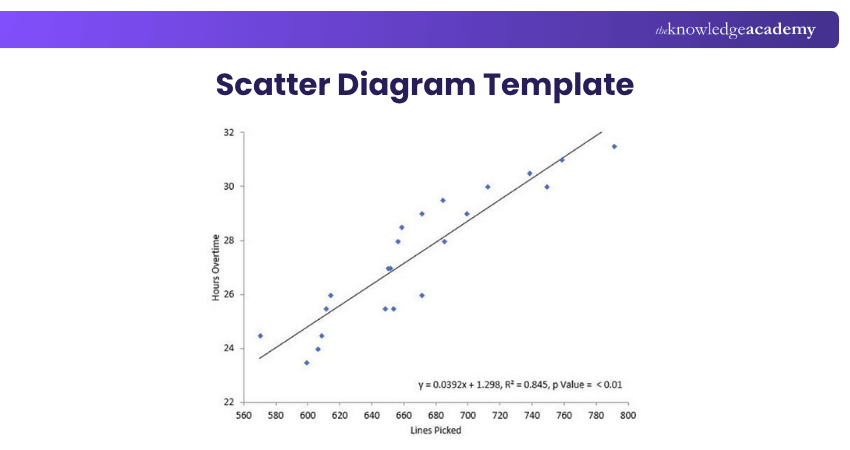
This tool is especially useful for large datasets, revealing patterns that may not be evident otherwise. It supports more analysis and decision-making and can be created using tools like Excel or Google Sheets.
7) Failure Mode and Effective Analysis (FMEA)
Failure Mode and Effects Analysis (FMEA) is a structured method used to identify potential failure points in systems, processes, or products before they occur. It evaluates each risk based on severity, likelihood, and detectability, assigning a Risk Priority Number (RPN) to help prioritise issues.
Introduced in the 1950s, FMEA blends qualitative and quantitative analysis to address high-risk failures early. Widely used in manufacturing, healthcare, and aerospace, it enhances safety, reliability, and performance by preventing critical failures and streamlining improvements. FMEA supports proactive decision-making and continuous improvement across various industries.
8) Events and Causal Factor Analysis
Event and Causal Factor Analysis (ECFA) is a technique used to investigate the sequence of events and the factors that contributed to a particular issue or incident. By examining these events and their causes, teams can identify the root causes of problems and detect patterns that may not be immediately obvious.
The process involves mapping out the events in detail, identifying key factors, and analysing how they interacted. This helps teams understand how various elements led to the issue, enabling them to take preventive action for the future. ECFA is a valuable tool in fields like healthcare, engineering, and safety, improving problem-solving and reducing risks.
Build a strong ITSM foundation with ITIL® 5 Foundation Certification Training and gain globally recognised, future-ready skills.
How to Perform a Root Cause Analysis?
To perform a Root Cause Analysis, start by clearly defining the problem and gathering relevant information about the incident. Choose an analysis method, such as the 5 Whys or Fishbone Diagram, to identify the contributing factors.
Next, ask questions and break down the problem to uncover the underlying causes. Once the root cause is identified, implement solutions to prevent it from happening again, and monitor the results to ensure continuous improvement.
What are the Principles of Root Cause Analysis?
Root Cause Analysis is guided by several key principles that ensure the process is thorough, objective, and effective. These principles help teams dig beneath surface-level symptoms to uncover the true cause of a problem.
1) Focus on the Root, Not the Symptoms: Solve the real issue, not just effects
2) Be Systematic and Evidence-based: Use facts and structured investigation steps
3) Involve the Right People: Include knowledgeable, process-aware team members
4) Ask "Why" Multiple Times: Dig deeper by repeating “why” questions
5) Consider All Possible Causes: Explore every potential contributing factor
6) Use Visual Tools: Map causes using diagrams or charts
7) Implement and Monitor Solutions: Take action and track results consistently
Conclusion
Root Cause Analysis Templates are powerful tools that can help you tackle even the most persistent problems. By identifying the true causes and implementing lasting solutions, these templates save you time, effort, and frustration. Ready to solve your challenges at the root? Start using RCA Templates today!
Advance your expertise with ITIL® Version 5 Foundation Bridge Training and stay aligned with the latest IT service management practices.
Frequently Asked Questions
How can Organisations Benefit from Incorporating Root Cause Analysis Templates?

Root Cause Analysis Templates provide a structured approach to identifying underlying issues rather than just symptoms. They improve consistency, speed up problem-solving, and support data-driven decision-making. This leads to reduced recurring issues, better efficiency, and stronger operational performance.
What Role do Root Cause Analysis Templates Play in Continuous Improvement Initiatives?
They standardise how problems are analysed, making improvements measurable and repeatable. Templates help teams document insights, track patterns, and build organisational knowledge over time. This supports ongoing optimisation, prevents future failures, and drives a culture of continuous improvement.
What are the Other Resources and Offers Provided by The Knowledge Academy?
The Knowledge Academy takes global learning to new heights, offering over 3,000+ online courses across 490+ locations in 190+ countries. This expansive reach ensures accessibility and convenience for learners worldwide.
Alongside our diverse Online Course Catalogue, encompassing 17 major categories, we go the extra mile by providing a plethora of free educational Online Resources like Blogs, eBooks, Interview Questions and Videos. Tailoring learning experiences further, professionals can unlock greater value through a wide range of special discounts, seasonal deals, and Exclusive Offers.
What is The Knowledge Pass, and How Does it Work?
The Knowledge Academy’s Knowledge Pass, a prepaid voucher, adds another layer of flexibility, allowing course bookings over a 12-month period. Join us on a journey where education knows no bounds.
What are the Related Courses and Blogs Provided by The Knowledge Academy?
The Knowledge Academy offers various ITIL® Certification Training, including ITIL® 5 Foundation Certification Course, ITIL® 5 Service Certification Training, and ITIL® 5 Managing Professional Certification Course. These courses cater to different skill levels, providing comprehensive insights into What is Automatic Call Distribution.
Our IT Service Management Blogs cover a range of topics related to Root Cause Analysis Templates,offering valuable resources, best practices, and industry insights. Whether you are a beginner or looking to advance your Management skills, The Knowledge Academy's diverse courses and informative blogs have got you covered.

John Davies


Cyber Security Governance & Assurance Specialist
John Davies is a cybersecurity expert specialising in governance, risk management, and compliance. With over 15 years in the field, he has led enterprise-wide security programmes across finance, healthcare and public sector organisations. His content provides practical guidance on building secure environments, managing risk and aligning with regulatory frameworks.

Upcoming IT Service Management Resources Batches & Dates
Date
 ITIL® 5 Foundation Certification
ITIL® 5 Foundation Certification
Mon 29th Jun 2026
ITIL® 5 Foundation Certification
Wed 1st Jul 2026
ITIL® 5 Foundation Certification
Mon 6th Jul 2026
ITIL® 5 Foundation Certification
Wed 8th Jul 2026
ITIL® 5 Foundation Certification
Mon 13th Jul 2026
ITIL® 5 Foundation Certification
Wed 15th Jul 2026
ITIL® 5 Foundation Certification
Mon 20th Jul 2026
ITIL® 5 Foundation Certification
Wed 22nd Jul 2026
ITIL® 5 Foundation Certification
Mon 27th Jul 2026
ITIL® 5 Foundation Certification
Wed 29th Jul 2026
ITIL® 5 Foundation Certification
Mon 3rd Aug 2026
ITIL® 5 Foundation Certification
Wed 5th Aug 2026
ITIL® 5 Foundation Certification
Mon 10th Aug 2026
ITIL® 5 Foundation Certification
Wed 12th Aug 2026
ITIL® 5 Foundation Certification
Mon 17th Aug 2026
ITIL® 5 Foundation Certification
Wed 19th Aug 2026
ITIL® 5 Foundation Certification
Mon 24th Aug 2026
ITIL® 5 Foundation Certification
Wed 26th Aug 2026
ITIL® 5 Foundation Certification
Tue 1st Sep 2026
ITIL® 5 Foundation Certification
Mon 7th Sep 2026
ITIL® 5 Foundation Certification
Wed 9th Sep 2026
ITIL® 5 Foundation Certification
Mon 14th Sep 2026
ITIL® 5 Foundation Certification
Wed 16th Sep 2026
ITIL® 5 Foundation Certification
Mon 21st Sep 2026
ITIL® 5 Foundation Certification
Wed 23rd Sep 2026
ITIL® 5 Foundation Certification
Mon 28th Sep 2026
ITIL® 5 Foundation Certification
Wed 30th Sep 2026
ITIL® 5 Foundation Certification
Mon 5th Oct 2026
ITIL® 5 Foundation Certification
Wed 7th Oct 2026
ITIL® 5 Foundation Certification
Mon 12th Oct 2026
ITIL® 5 Foundation Certification
Wed 14th Oct 2026
ITIL® 5 Foundation Certification
Mon 19th Oct 2026
ITIL® 5 Foundation Certification
Wed 21st Oct 2026
ITIL® 5 Foundation Certification
Mon 26th Oct 2026
ITIL® 5 Foundation Certification
Wed 28th Oct 2026
ITIL® 5 Foundation Certification
Mon 2nd Nov 2026
ITIL® 5 Foundation Certification
Wed 4th Nov 2026
ITIL® 5 Foundation Certification
Mon 9th Nov 2026
ITIL® 5 Foundation Certification
Wed 11th Nov 2026
ITIL® 5 Foundation Certification
Mon 16th Nov 2026
ITIL® 5 Foundation Certification
Wed 18th Nov 2026
ITIL® 5 Foundation Certification
Mon 23rd Nov 2026
ITIL® 5 Foundation Certification
Wed 25th Nov 2026
ITIL® 5 Foundation Certification
Mon 30th Nov 2026
ITIL® 5 Foundation Certification
Wed 2nd Dec 2026
ITIL® 5 Foundation Certification
Mon 7th Dec 2026
ITIL® 5 Foundation Certification
Wed 9th Dec 2026
ITIL® 5 Foundation Certification
Mon 14th Dec 2026
ITIL® 5 Foundation Certification
Mon 21st Dec 2026
ITIL® 5 Foundation Certification
Wed 23rd Dec 2026
ITIL® 5 Foundation Certification
Tue 29th Dec 2026

 If you wish to make any changes to your course, please


