




We may not have the course you’re looking for. If you enquire or give us a call on +39 800580270 and speak to our training experts, we may still be able to help with your training requirements.
CISSP vs. CISMP: Explained in Detail
John Davies 06 April 2026CISSP and CISMP are Information Security certifications designed for different professional levels. CISSP focuses on advanced technical and managerial security expertise, while CISMP concentrates on security management practices and controls. Both certifications help strengthen organisational security understanding and career progression.

BCS CISMP (Certificate in Information Security Management Principles)
 Top Rated Course
Top Rated Course
Exclusive 40% OFF
Training Outcomes Within Your Budget!
We ensure quality, budget-alignment, and timely delivery by our expert instructors.
Table of Contents
In today's interconnected world, the need for robust cybersecurity measures has become paramount. As businesses strive to protect their sensitive data and maintain the trust of their customers, professionals with expertise in information security management are in high demand. Two certifications that stand out in this field are CISSP (Certified Information Systems Security Professional) and CISMP (Certificate in Information Security Management Principles). In this blog, we’ll delve into the similarities and differences between CISSP and CISMP, providing a comprehensive overview of these certifications.
Table of Contents
1) CISSP: Certified Information Systems Security Professional
2) CISMP: Certificate in Information Security Management Principles
3) Comparing CISSP and CISMP
4) The Benefits of CISSP and CISMP Certifications
5) Conclusion
CISSP: Certified Information Systems Security Professional
CISSP is a globally recognised certification offered by (ISC)², an international nonprofit organisation dedicated to cybersecurity education and certifications. It is designed for professionals who possess advanced skills in designing, implementing, and managing an organisation's cybersecurity programme. CISSP covers a broad range of topics, providing a holistic approach to information security management.
Curious about Information Security Analyst salaries? Get insights into the earning potential in this field!
CISSP Domains
The CISSP certification is structured around several domains that cover the core areas of information security knowledge and professional practice.
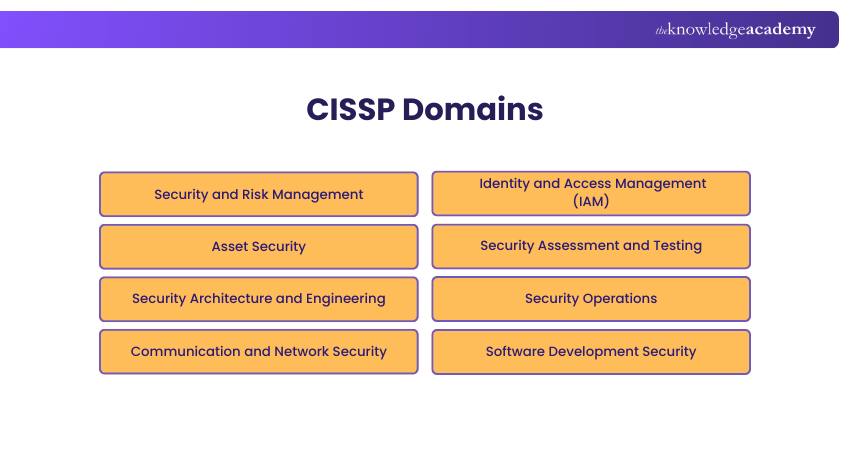
a) Security and Risk Management: This area of expertise concentrates on the development and implementation of security policies and procedures, comprehension of legal and regulatory matters, as well as the management of risks.
b) Asset Security: This domain deals with protecting and managing an organisation's information assets, including data classification, data retention, and secure disposal.
c) Security Architecture and Engineering: It covers the principles, design, and implementation of secure systems and architectures, addressing topics such as secure design principles, security models, and cryptography.
d) Communication and Network Security: This domain focuses on securing network components, network protocols, and communication channels, including topics such as secure network architecture, secure transmission methods, and network attacks.
Explore the key skills and certifications you need to excel as an Information Security Analyst!
e) Identity and Access Management(IAM): It encompasses managing user identities and their access to resources, including authentication methods, access control models, and identity management systems.
f) Security Assessment and Testing: This domain involves conducting security assessments, vulnerability assessments, and penetration testing to ensure the effectiveness of security controls.
g) Security Operations: It covers the day-to-day operations of an organisation's security program, including incident response, disaster recovery, and managing security operations centers (SOCs).
h) Software Development Security: This domain emphasises the integration of security measures into the Software Development Lifecycle (SDLC) and the identification and mitigation of security vulnerabilities in software applications.

CISMP: Certificate in Information Security Management Principles
CISMP is a certification offered by the British Computer Society (BCS), a professional body for IT practitioners. This is intended for people who oversee or handle information security in an organisation.
CISMP provides a comprehensive understanding of Information Security Management principles and practices, making it a valuable qualification for those seeking British Computer Society Member opportunities or British Computer Society Jobs in cybersecurity and IT management.
CISMP Modules
The CISMP certification is organised into key modules that provide a foundational understanding of information security principles and best practices across organisations.
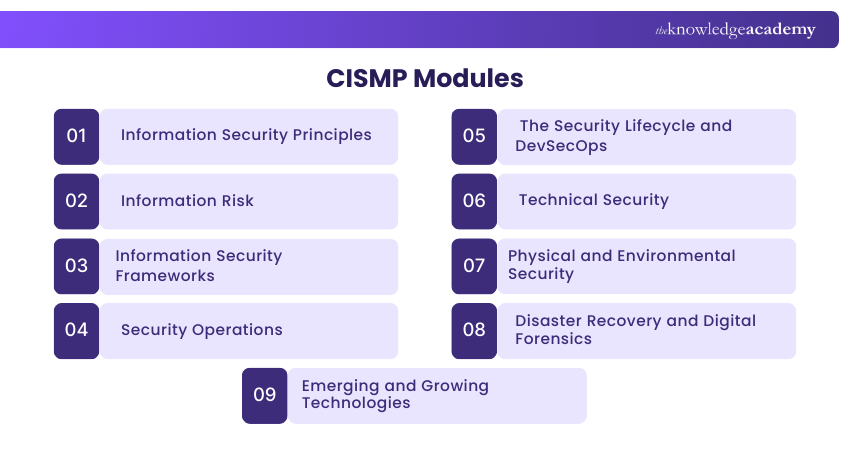
a) Information Security Principles: In this module, you'll learn about the basic concepts and principles of information security management. This includes information security governance, risk management, as well as legal and regulatory requirements.
b) Information Risk: It focuses on risk assessment and management techniques, incident management, and business continuity planning.
c) nformation Security Frameworks: This module explores various security frameworks, such as ISO/IEC 27001, and international standards for information security management.
d) Security Operations: This focuses on daily security monitoring, threat detection, access control, vulnerability management, and operational incident response activities.
e) The Security Lifecycle and DevSecOps: This explains integrating security into development, secure design, testing practices, and collaboration between development and operations.
f) Technical Security: This module covers technical aspects of information security, including network security, system security, cryptography, and malware protection.
g) Physical and Environmental Security: It addresses the importance of people and physical security measures, including personnel security, security awareness, and physical access controls.
h) Disaster Recovery and Digital Forensics: This module focuses on incident response, business continuity planning, recovery procedures, and investigation of security breaches.
i) Emerging and Growing Technologies: This introduces security risks in cloud computing, mobile platforms, virtualisation, and other evolving technology environments.
Comparing CISSP and CISMP
1) Depth vs Breadth: CISSP offers a broader and more comprehensive coverage of information security domains, while CISMP provides a more focused understanding of Information Security Management principles.
2) Global Recognition: CISSP is globally recognised and highly valued in the industry, making it suitable for professionals seeking international opportunities. CISMP, on the other hand, is widely recognised in the United Kingdom and Europe.
Prepare like a pro: explore must-know Interview Questions for Information Security Analysts.
3) Professional Experience: CISSP requires a minimum of five years of cumulative, paid work experience in two or more CISSP domains, while CISMP does not have a specific experience requirement.
4) Exam Format: CISSP is a Computerised-Adaptive Test (CAT) containing 100–150 questions to be completed in three hours, with a passing score of 700 out of 1000. Questions include multiple-choice and advanced formats. CISMP is a one-hour, online, multiple-choice examination involving 40 questions and requires a minimum passing score of 65%.
The Benefits of CISSP and CISMP Certifications
Earning certifications in Information Security Management, such as CISSP and CISMP, offers numerous advantages for professionals in the field. Let's explore the Benefits of CISSP and Benefits of CISMP certifications in detail:
A) Industry Recognition: CISSP and CISMP are globally recognised certifications that hold significant value in the industry. They demonstrate your knowledge and expertise in Information Security Management, enhancing your professional credibility and opening doors to better career opportunities.
B) Career Advancement: CISSP and CISMP certifications can greatly enhance your career prospects. Many organisations prioritise certified professionals for managerial and leadership positions, as these certifications validate your ability to design and implement information security strategies.
C) Expanded Skill Set: The comprehensive curriculum of CISSP and CISMP equips you with a wide range of knowledge and skills in Information Security Management. From risk assessment to security operations, these certifications provide a holistic understanding of the field, enabling you to tackle complex challenges with confidence.
Discover whether CISMP is the right certification for boosting your career in cybersecurity!
D) Networking Opportunities: Achieving CISSP or CISMP certification connects you with a huge network of professionals in the field. Joining industry meetings, attending conferences, and participating in online forums specific to these certifications can facilitate valuable networking, knowledge sharing, and career growth.
E) Enhanced Salary Potential: CISSP and CISMP certifications are often associated with higher earning potential. Employers recognise the value of professionals who are certified and are willing to offer competitive salaries to attract and retain individuals with these credentials.
F) Continuous Professional Development: Both CISSP and CISMP certifications require certified professionals to maintain their knowledge and skills through ongoing professional development activities. This ensures that certified individuals stay up to date with the latest trends, technologies, and best practices in Information Security Management.
Find out how CISM compares to CISMP and choose the right path for your career growth!
G) Global Opportunities: CISSP, in particular, is recognised worldwide, making it valid for professionals seeking international opportunities. With organisations operating on a global scale, possessing a globally recognised certification can open doors to exciting roles across borders.
H) Industry Resilience: The demand for cybersecurity professionals continues to increase as cyber threats become more sophisticated. CISSP and CISMP certifications provide you with a competitive edge and make you valuable to organisations that prioritise information security.
Boost your CISSP ISSAP exam prep with the CISSP ISSAP Study Guide.
Conclusion
Earning CISSP or CISMP certification demonstrates your commitment to professional excellence in Information Security Management. These certifications not only validate your knowledge and skills but also provide you with a range of benefits, including industry recognition, career advancement, expanded skill sets, networking opportunities, higher earning potential, continuous professional development, and CCSP Study Guide for global opportunities and industry resilience. Whether you choose CISSP vs CISMP, both certifications can elevate your career and position you as a trusted expert in the dynamic and crucial field of cybersecurity.
Strengthen your information security knowledge with CISSP Courses – Join now!
Frequently Asked Questions
Which Certification is Best After CISSP?

After obtaining a CISSP, professionals often consider Certifications like Certified Information Security Manager (CISM), Certified Information Systems Auditor (CISA), or Certified Cloud Security Professional (CCSP) to further specialise and advance their careers.
Is CISSP in High Demand?
Yes, the CISSP Certification is highly sought after, with a growing demand for CISSP-certified professionals globally. This often leads to lucrative salaries and diverse job opportunities in various industries.
What are the Other Resources and Offers Provided by The Knowledge Academy?
The Knowledge Academy takes global learning to new heights, offering over 3,000+ online courses across 490+ locations in 190+ countries. This expansive reach ensures accessibility and convenience for learners worldwide.
Alongside our diverse Online Course Catalogue, encompassing 19 major categories, we go the extra mile by providing a plethora of free educational Online Resources like Blogs, eBooks, Interview Questions and Videos. Tailoring learning experiences further, professionals can unlock greater value through a wide range of special discounts, seasonal deals, and Exclusive Offers.
What is the Knowledge Pass, and How Does it Work?
The Knowledge Academy’s Knowledge Pass, a prepaid voucher, adds another layer of flexibility, allowing course bookings over a 12-month period. Join us on a journey where education knows no bounds.
What are the Related Courses and Blogs Provided by The Knowledge Academy?
The Knowledge Academy offers various CISSP Training, including the ISSMP Training, Chief Information Security Officer Training and CISSP Course. These courses cater to different skill levels, providing comprehensive insights into What is CCSP.
Our IT Security & Data Protection Blogs cover a range of topics related to CISSP vs CISMP, offering valuable resources, best practices, and industry insights. Whether you are a beginner or looking to advance your Cyber Security skills, The Knowledge Academy's diverse courses and informative blogs have got you covered.

John Davies


Cyber Security Governance & Assurance Specialist
John Davies is a cybersecurity expert specialising in governance, risk management, and compliance. With over 15 years in the field, he has led enterprise-wide security programmes across finance, healthcare and public sector organisations. His content provides practical guidance on building secure environments, managing risk and aligning with regulatory frameworks.

Upcoming IT Security & Data Protection Resources Batches & Dates
Date
 BCS CISMP (Certificate in Information Security Management Principles)

 If you wish to make any changes to your course, please


