




We may not have the course you’re looking for. If you enquire or give us a call on + 1-866 272 8822 and speak to our training experts, we may still be able to help with your training requirements.
Become an Information Security Analyst: A Step-by-Step Roadmap
John Davies 14 July 2026To become an Information Security Analyst, you must earn a CS or IT degree, gain hands-on experience, learn security tools, and obtain CISMP certification. Information Security Analysts are the first line of defence against data breaches. They protect sensitive information by implementing and monitoring security measures.
Home
 Resources
IT Security & Data Protection
Become an Information Security Analyst: A Step-by-Step Roadmap
Resources
IT Security & Data Protection
Become an Information Security Analyst: A Step-by-Step Roadmap
Resources
IT Security & Data Protection
Become an Information Security Analyst: A Step-by-Step Roadmap

BCS CISMP (Certificate in Information Security Management Principles)
 Top Rated Course
Top Rated Course
Exclusive 40% OFF
Training Outcomes Within Your Budget!
We ensure quality, budget-alignment, and timely delivery by our expert instructors.
Table of Contents

Cyber threats are evolving faster than ever, which means organisations need skilled professionals to stay protected. That’s where Information Security Analysts step in. From defending networks to analysing risks, this role sits at the heart of modern Cyber Security. If you are wondering How to become an Information Security Analyst, you've come to the right place.
In this blog, we take a deep dive into How to Become an Information Security Analyst. Here we outline the skills you need, the steps to follow and what salary you can expect in this field. So read on and enjoy sustained growth and rewards in this dynamic career path!
Table of Contents
1) What Does an Information Security Analyst Do?
2) How to Become an Information Security Analyst?
3) Salary and Job Roles in Cyber Security
4) Is Becoming an Information Security Analyst Hard?
5) Is AI Replacing Cyber Security Jobs?
6) Conclusion
What Does an Information Security Analyst Do?
An Information Security Analyst is responsible for safeguarding an organisation’s networks, systems, and data from cyber threats and security breaches. Their role focuses on identifying risks, strengthening defences, and ensuring information remains secure.
1) They monitor and respond to security incidents across physical, software and network environments to protect organisational systems and data.
2) They conduct compliance checks and control testing to ensure security standards and policies are met.
3) They recommend security improvements and develop training initiatives to reduce organisational risk.
4) They stay updated on emerging cyber threats by engaging with external sources and industry developments.
5) They collaborate with internal teams and management to implement security measures.
6) They prepare clear security reports for partners, leadership and other key stakeholders.
7) They are vital in organisations that handle sensitive data across sectors such as business, government, technology, finance, energy, and more.

How to Become an Information Security Analyst?
Becoming an Information Security Analyst requires technical knowledge, analytical thinking, and continuous learning. After all, as the world grows more digitised, the skills of Information Security Analysts will continue to attract sky-high demands. Here we explore the qualifications you'll need to succeed in this field:
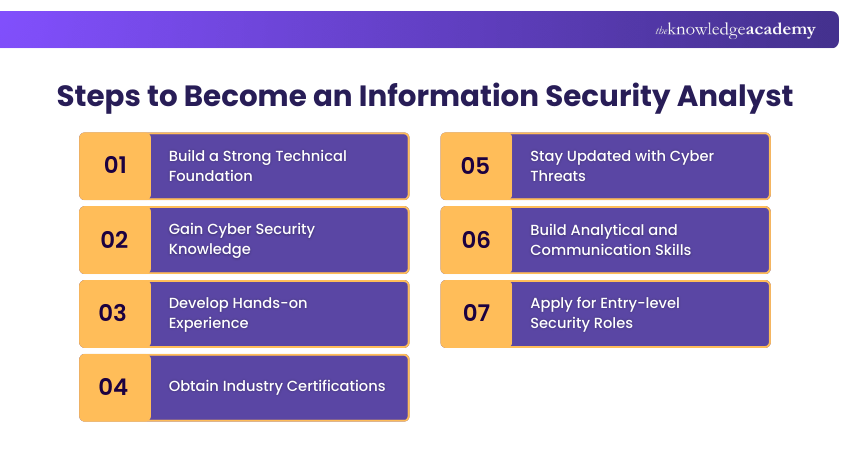
Qualifications for an Information Security Analyst
Employers recruiting for graduate roles often look for a degree in Science, Technology, Engineering or Mathematics (STEM) subjects, though requirements vary by organisation. Consider the following points:
1) Relevant degree backgrounds include cyber/information/Network Security, Computer Science, computing and information systems/software/Network Engineering, Physics, and other IT or security-related fields.
2) A degree apprenticeship offers an alternative route. It combines paid work experience with formal study towards a recognised qualification.
3) Entry is also possible with a non-technical or unrelated degree. Many graduate schemes value strong interest in technology and Cyber Security, along with technical skills and teamwork.
4) A postgraduate qualification, like a Master’s degree, is optional but can be advantageous, especially for individuals transitioning from a different academic background.
Embrace the blend of leadership and Information Security expertise with our comprehensive CISSP Training. Sign up now!
Salary and Job Roles in Cyber Security
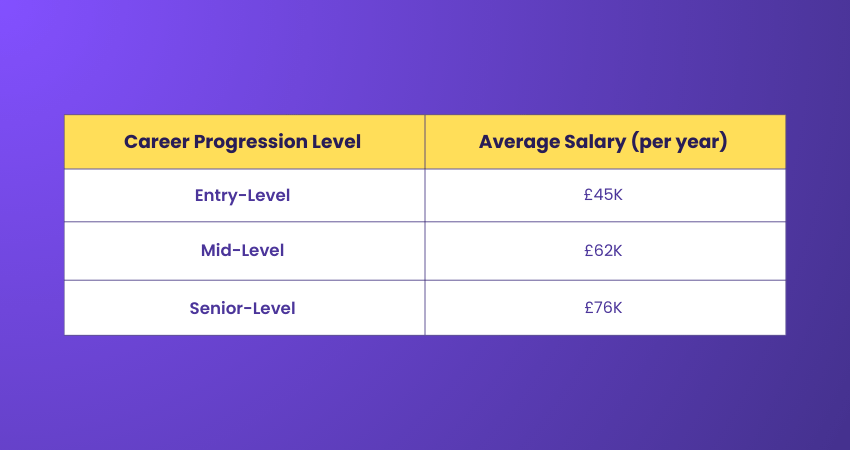
Information Security Analysts are in high demand as the sophistication and frequency of cyber threats increase. Here are some prominent job roles that Information Security Analysts can opt for:
1) Entry-Level Roles (0–3 Years Experience): Job titles include:
a) Junior Security Analyst: They monitor security systems, identify threats and support incident response activities under senior supervision.
b) Cyber Security Specialist: They implement and maintain security measures to protect systems, networks and data from cyber threats.
c) Trainee or Junior Cyber Security Engineer: They assist in configuring, maintaining and securing IT infrastructure while developing core technical security skills.
2) Mid-Level Roles (3–7 Years Experience): Common roles include
a) Security Analyst: They analyse security events, assess risks and recommend improvements to strengthen organisational security posture.
b) Penetration Tester: They simulate cyber attacks to identify vulnerabilities and provide remediation recommendations before real threats occur.
c) Incident Response Analyst: They investigate security breaches, contain incidents, and support recovery efforts to minimise impact.
d) Cyber Security Manager: They lead security teams, manage policies and controls, and oversee organisational Cyber Security strategy.
3) Senior-Level Roles (7–10+ Years Experience):
a) Cyber Security Engineer: They design, implement and maintain advanced security solutions to protect complex IT environments.
b) Security Architect: They develop secure system architectures and long-term security designs aligned with business and risk requirements.
c) Chief Information Security Officer (CISO): They set and oversee the organisation’s overall Information Security strategy, governance and Risk Management.
Is Becoming an Information Security Analyst Hard?
Securing an Information Security Analyst role can be a challenge, but it can be done with the right approach. The role demands strong technical knowledge, problem-solving skills and continuous learning due to evolving cyber threats. With structured training, hands-on experience and consistent skill development, many professionals successfully enter and grow in this field.
Command the frontlines of information security with our Chief Information Security Officer Training - Register now!
Is AI Replacing Cyber Security Jobs?
Whether Artificial Intelligence (AI) can replace human expertise in Cyber Security is a complex topic. While AI excels at automation and pattern recognition, it cannot replicate human intuition or ethical judgement. These human qualities remain essential for understanding context, making critical decisions and managing complex security scenarios.
The prevailing view within the Cyber Security community is that AI complements rather than replaces human professionals. Although automation raises concerns about job displacement, experts widely agree that AI will boost Cyber Security roles by handling routine tasks. Human oversight is still required to interpret AI-driven insights accurately and make informed decisions.
Conclusion
Learning How to Become an Information Security Analyst is a journey of continuous learning, curiosity and problem-solving. With the right training and hands-on experience, you can build a career that protects organisations from evolving threats while offering strong earning potential in today’s digital world.
Master the essentials to manage Information Security like a pro in our BCS CISMP (Certificate in Information Security Management Principles) - Sign up now!
Frequently Asked Questions
What is an Entry-level Cyber Security Analyst?

An entry-level Cyber Security Analyst supports organisations by analysing data to identify potential risks and security threats. Then they assist in implementing measures to protect networks, systems and assets. In this role, individuals work under the guidance of Senior Analysts, gaining hands-on experience with security tools.
What is the Lowest Position in Cyber Security?
The most junior Cyber Security roles are typically entry-level positions such as IT Support Specialist, Junior Security Analyst and SOC Analyst. These roles offer a strong starting point for building core practical Cyber Security.

John Davies


Cyber Security Governance & Assurance Specialist
John Davies is a cybersecurity expert specialising in governance, risk management, and compliance. With over 15 years in the field, he has led enterprise-wide security programmes across finance, healthcare and public sector organisations. His content provides practical guidance on building secure environments, managing risk and aligning with regulatory frameworks.


 If you wish to make any changes to your course, please


