
Learning and Development Courses

Online Instructor-led (1 days)

Classroom (1 days)

Online Self-paced (8 hours)

Learning and Development Training Course Outline

Module 1: Introduction to Learning and Development

  • Defining L&D and its Importance in Organisations
  • Overview of the L&D Landscape
  • Aligning L&D with Organisational Goals

Module 2: Understanding Adult Learning Theories

  • Principles of Andragogy
  • Motivation in Adult Learning

Module 3: Needs Assessment and Analysis

  • Identifying Organisational and Individual Training Needs
  • Tools and Techniques for Effective Needs Assessment

Module 4: Designing Effective Learning Programmes

  • ADDIE Model
  • Blended Learning
  • Crafting Learning Objectives and Outcomes

Module 5: Developing Content and Learning Materials

  • Selecting Appropriate Learning Platforms and Tools
  • Designing Engaging Training Materials
  • Utilising Multimedia and Technology in Content Creation

Module 6: Delivery and Facilitation Skills

  • Effective Presentation Techniques
  • Engaging Diverse Learner Groups
  • Handling Challenging Situations and Participants

Module 7: Evaluating L&D Effectiveness

  • Four Levels of Training Evaluation
  • Gathering Feedback
  • Continuous Improvement in L&D Processes

Module 8: L&D Strategy and Integration

  • Integrating L&D Initiatives with HR Processes
  • Promoting a Continuous Learning Culture within Organisations
  • Forecasting Future L&D Requirements and Trends

Show moredown

Who Should Attend this Learning and Development Course?

This Learning and Development Course is designed for anyone who is interested in improving their ability to create, manage, and evaluate effectively. However, it is more beneficial for:

  • HR Managers
  • Training Coordinators
  • Educational Professionals
  • Performance Consultants
  • Career Development Advisors
  • Instructional Designers
  • Change Management Consultants

Prerequisites of the Learning and Development Training Course

There are no formal prerequisites for this Learning and Development Training. However, delegates with a basic understanding of organisational dynamics or Human Resources may find it easier to relate the concepts to workplace practices.

Learning and Development Training Course Overview

Learning and Development Training is designed to develop the knowledge and practical understanding required to create, deliver, and evaluate effective workplace learning initiatives. It focuses on supporting employee development while aligning learning activities with organisational goals.

This course equips delegates with skills in training needs analysis, adult learning principles, instructional design, content development, blended learning, facilitation, and training evaluation. Delegates will also learn how to develop learning solutions that address organisational and workforce needs.

This 1-Day Learning and Development Training Course by The Knowledge Academy enables delegates to design, deliver, and evaluate workplace learning programmes, identify skills gaps, and implement learning initiatives that support employee development and organisational performance.

Learning and Development Training Course Objectives

  • To identify training needs and align them with organisational and individual goals
  • To apply the ADDIE model and blended learning approaches for effective programme design
  • To create engaging training content using multimedia and digital tools
  • To deliver training effectively and engage diverse learner groups
  • To manage challenging learning situations with confidence
  • To evaluate L&D effectiveness using structured assessment methods
  • To use coaching and mentoring techniques to support employee development

Upon completion, delegates will be able to apply Learning and Development principles to create engaging learning experiences, address organisational learning needs, and evaluate the impact of training initiatives.
 

Show moredown

What’s Included in this Learning and Development Training Course?

  • World-class training sessions from Experienced Instructors
  • Learning and Development Training Course Certificate
  • Digital Delegate Pack

Show moredown

Online Instructor-led (2 days)

Classroom (2 days)

Online Self-paced (16 hours)

Certified Training and Development Manager Exam

Certified Training and Development Manager Course Outline

Module 1: Human Resources Overview

  • Human Resources Overview
    • Definition of Human Resources
    • Objectives of Human Resources
    • Role of HR in a Business Context
    • Structure of the HR Department
    • Challenges Faced by an HR Department

Module 2: What is Training and Development?

  • What is Training & Development?
  • Importance of Training and Development
  • Difference Between Training and Development
  • Training and Development Objectives
  • Training and Development Best Practice
  • Training Requirements
  • Training Approaches and Types of Training

Module 3: Identifying Training and Development Requirements

  • Identifying Skill Gaps
  • Decision Making
  • Undertaking Training Needs Analysis

Module 4: Providing Training and Development

  • Arranging Training
  • Delivering Training
  • Managing Relationships with External Training Providers
  • Providing Professional Advice, Coaching, and Guidance

Module 5: Other Responsibilities

  • Talent Management
  • Budget Management
  • Supporting the HR Team

Show moredown

Who Should Attend this Certified Training and Development Manager Course?

The Certified Training and Development Manager Course is suitable for professionals seeking to enhance their knowledge and skills in managing Learning and Development functions within organisations. The following professionals can benefit from attending this course:

  • HR Managers
  • Training and Development Specialists
  • Learning and Development Managers
  • Talent Management Professionals
  • Organisational Development Consultants
  • Operations Managers
  • Corporate Trainers
  • Performance Improvement Specialists

Prerequisites of the Certified Training and Development Manager Course

There are no formal prerequisites for the Certified Training and Development Manager Course. However, familiarity with Human Resources functions or Learning and Development practices can help delegates understand the course concepts more effectively.

Certified Training and Development Manager Course Overview

Certified Training and Development Manager Training is designed to develop the knowledge and practical understanding required to manage workplace learning and development functions effectively. It provides a structured approach to planning, implementing, and overseeing training initiatives.

This course equips delegates with skills in training needs analysis, learning strategy development, coaching, talent management, training delivery, budget management, and training evaluation.

This 2-Day Certified Training and Development Manager Course by The Knowledge Academy enables delegates to plan, manage, and evaluate Learning and Development initiatives, oversee training programmes, support workforce capability, and align employee development activities with organisational goals.

Certified Training and Development Manager Course Objectives

  • To understand the role and importance of Training and Development within Human Resources
  • To identify training requirements through effective training needs analysis and skill gap assessment
  • To apply appropriate training approaches and delivery methods to meet organisational needs
  • To manage training budgets and resources effectively
  • To build and maintain effective relationships with external training providers
  • To apply coaching and guidance techniques to support employee development
  • To align training and development activities with organisational objectives

Upon completion, delegates will be able to identify organisational learning needs, develop and manage effective training initiatives, evaluate learning outcomes, and support workforce development through strategic Learning and Development practices.

Show moredown

What’s included in this Certified Training and Development Manager Course?

  • Certified Training and Development Manager Examination
  • World-Class Training Sessions from Experienced Instructors
  • Certified Training and Development Manager Certificate
  • Digital Delegate Pack

Show moredown

Certified Training and Development Manager Exam Information 

To achieve the Certified Training and Development Manager, candidates will need to sit for an examination. The exam format is as follows: 

  • Question Type: Multiple Choice 
  • Total Questions: 40 
  • Total Marks: 40 Marks 
  • Pass Mark: 65%, or 26/40 Marks 
  • Duration: 60 Minutes  
  • Open Book/ Closed Book: Closed Book

Show moredown

Online Instructor-led (2 days)

Classroom (2 days)

Online Self-paced (16 hours)

Certified Training Professional Exam

Certified Training Professional Course Outline

Module 1: Human Resources Overview

  • Definition of Human Resources
  • Objectives of Human Resources
  • Role of Human Resources in a Business Context
  • Structure of the HR Department
  • Challenges Faced by an HR Department
  • Collaborating with Other HR Team Members

Module 2: What is Training and Development?

  • Importance of Training and Development
  • Difference Between Training and Development
  • Training and Development Objectives
  • Training and Development Best Practice
  • Training Benefits
  • Training Requirements
  • Performance Management
  • Providing a Proactive Training and Development Division

Module 3: Administration

  • General Administration
  • Personnel Support
  • Job Evaluation
  • Planning, Coordinating, and Scheduling Training
  • External Training Providers
  • Maintaining Online Folders and Schedules
  • Booking Meetings
  • Joining Instructions
  • Employee Assistance Programme

Module 4: Training Analysis

  • Identifying Skill Gaps
  • Gap Analysis Research – Identifying Areas of Training Needs
  • Analysis of Existing Approaches
  • Surveys
  • Identifying New Training Approaches
  • Delivery Methods
  • Advising on Training
  • Stakeholder Relationships

Module 5: Reporting on Training

  • Collecting Feedback
  • Analysis of Feedback and Results
  • Reporting on the Success/Failures of Training
  • Revising Training Policies
  • Presenting Progress and Plans

Show moredown

Who Should Attend this Certified Training Professional Course?

The Certified Training Professional Course is ideal for professionals responsible for designing, delivering, and evaluating workplace training programmes. The following professionals can benefit from attending this course:

  • Corporate Trainers
  • Learning and Development Specialists
  • Training Coordinators
  • HR Managers and Directors
  • Talent Acquisition Teams
  • Subject Matter Experts (SMEs)
  • Team Leaders

Prerequisites of the Certified Training Professional Course

There are no formal prerequisites for the Certified Training Professional Course. However, familiarity with workplace training practices or Learning and Development principles can help delegates understand the course concepts more effectively.

Certified Training Professional Course Overview

Certified Training Professional Course is designed to develop the knowledge and practical understanding required to plan, coordinate, deliver, and evaluate workplace training programmes. It provides a structured approach to managing training activities that support employee development and organisational learning.
This course equips delegates with skills in training needs analysis, training administration, delivery methods, learning coordination, feedback collection, reporting, and evaluating training effectiveness. Delegates will also gain knowledge of Human Resources functions and workplace training practices.
This 2-Day course by The Knowledge Academy enables delegates to coordinate and deliver effective training programmes, assess learning needs, monitor training outcomes, and support continuous improvement in workplace learning and development.

Certified Training Professional Course Objectives

  • To develop skills for effective training research and analysis
  • To design and plan structured training activities
  • To improve presentation and facilitation skills for diverse learner groups
  • To use training aids and technology to support learning outcomes
  • To engage delegates effectively and manage group dynamics
  • To collect feedback and analyse training results
  • To report training progress and support continuous improvement

Upon completion, delegates will be able to coordinate and deliver workplace training, assess learning needs, evaluate training effectiveness, and support continuous improvement in Learning and Development practices.

Show moredown

What’s Included in this Certified Training Professional Course?

  • Certified Training Professional Examination
  • World-Class Training Sessions from Experienced Instructors
  • Certified Training Professional Certificate
  • Digital Delegate Pack

Show moredown

Certified Training Professional Exam Information

To achieve the Certified Training Professional, candidates will need to sit for an examination. The exam format is as follows: 

  • Question Type: Multiple Choice 
  • Total Questions: 40 
  • Total Marks: 40 Marks 
  • Pass Mark: 65%, or 26/40 Marks 
  • Duration: 60 Minutes  
  • Open Book/ Closed Book: Closed Book

Show moredown

Online Instructor-led (1 days)

Classroom (1 days)

Online Self-paced (8 hours)

Training Needs Analysis Course Outline

Module 1: Introduction to Training Needs Analysis

  • Overview of Training Needs Analysis
  • Key Concepts in Training Needs Analysis
  • Linking Training Needs Analysis to Organisational Goals
  • Stakeholder Engagement
  • Ethical Considerations in Training Needs Analysis
  • Challenges in Training Needs Analysis

Module 2: Planning and Preparation for Training Needs Analysis

  • Setting Clear Objectives
  • Identifying Target Audience
  • Data Collection Methods
  • Selecting Training Needs Analysis Tools
  • Resource Allocation
  • Legal and Regulatory Compliance

Module 3: Conducting a Training Needs Analysis

  • Data Gathering Techniques
  • Competency Mapping
  • Gap Analysis
  • Prioritising Training Needs
  • SWOT Analysis in Training Needs Analysis
  • Feedback and Validation

Module 4: Designing Training Programs

  • Learning Objectives and Outcomes
  • Choosing Training Methods
  • Content Development
  • Instructional Design Principles
  • Measuring Training Effectiveness
  • Budgeting for Training Programs

Module 5: Implementation and Delivery

  • Rolling Out Training Initiatives
  • Monitoring and Evaluation During Training
  • Adapting to Feedback
  • Addressing Resistance to Training
  • Ensuring Accessibility and Inclusivity
  • Post-Training Support

Module 6: Evaluation and Feedback

  • Levels of Evaluation
  • Collecting Feedback from Delegates
  • Analysing Training Impact
  • Identifying Areas for Continuous Improvement
  • Reporting and Documentation
  • Communicating Results to Stakeholders

Module 7: Integration with Performance Management

  • Aligning Training Needs Analysis with Performance Goals
  • Performance Appraisal and Training Needs Analysis
  • Linking Training to Career Development
  • Succession Planning
  • Feedback Loops in Performance Management
  • Strategies for Sustaining Training Impact

Module 8: Future Trends in Training Needs Analysis

  • Technological Innovations
  • Remote and Virtual Training Trends
  • Personalised Learning and Microlearning
  • Globalisation and Cultural Competence
  • Agile Training Approaches
  • Professional Development for Training Needs Analysis Practitioners

Show moredown

Who Should Attend this Training Needs Analysis Course?

This Training Needs Analysis Course is ideal for individuals who want to identify skill gaps, assess organisational learning needs, and design targeted learning solutions that improve performance.

You should attend this course if you are:

  • Human Resources Professionals
  • Learning and Development Specialists
  • Managers and Team Leaders
  • Training Coordinators
  • Organisational Development Specialists
  • Performance Analysts

Prerequisites for the Training Needs Analysis Course

There are no formal prerequisites for attending this Training Needs Analysis Course. However, a basic understanding of training, learning and development, or performance management concepts can be beneficial for delegates. 

Training Needs Analysis Course Overview

This Training Needs Analysis Course teaches delegates how to identify skills gaps within an organisation. It focuses on assessing workforce capabilities and learning requirements. The course helps align employee development with business objectives.

Delegates will learn how to evaluate performance needs and identify areas for improvement. They will gain skills in data collection, analysis, and stakeholder engagement. These skills support informed learning and development decisions.

This 1-Day Training Needs Analysis course by The Knowledge Academy enables delegates to apply Training Needs Analysis techniques in the workplace. They can use these skills to design targeted learning solutions and improve employee performance. This helps organisations maximise the impact of their development initiatives.

Training Needs Analysis Course Objectives

  • To understand the principles of Training Needs Analysis (TNA)
  • To identify skill gaps and improvement areas within the workforce
  • To collect and analyse data to assess training needs
  • To align training initiatives with organisational goals and strategies
  • To recommend effective training solutions based on identified needs
  • To optimise training budgets by focusing on high-impact areas

Upon completion of this Training Needs Analysis Course, delegates will receive certification, validating their expertise in conducting TNAs that support employee development and contribute to achieving organisational objectives.

Methods and Approaches You’ll Learn in Training Needs Analysis Course

Effective Training Needs Analysis (TNA) uses structured methods to identify skill gaps, learning needs, and performance challenges. It helps organisations design training that supports employee development and aligns with business goals.

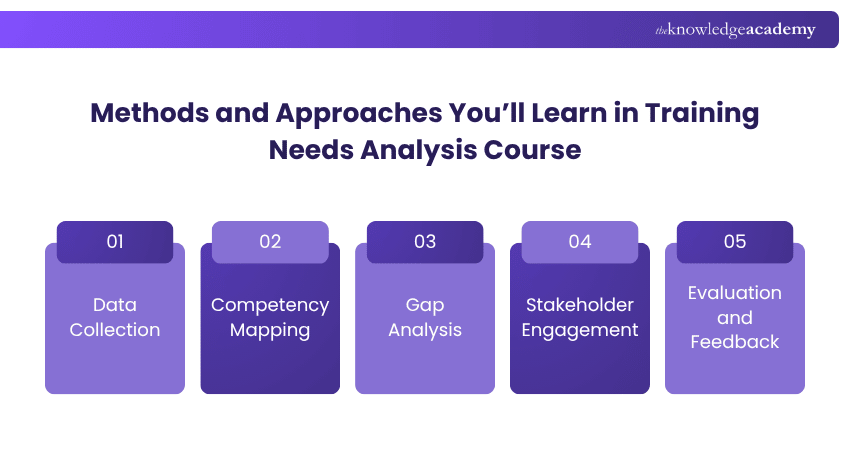
Methods and Approaches You’ll Learn in Training Needs Analysis Course 

  • Data Collection: Use surveys, interviews, focus groups, observations, and performance reviews to understand current skills and training needs.
  • Competency Mapping: Compare existing employee skills with the skills required for specific roles to identify capability gaps.
  • Gap Analysis: Assess the difference between current performance and desired outcomes to prioritise training needs.
  • Stakeholder Engagement: Involve managers, employees, and decision-makers to ensure training needs are accurate and relevant.
  • Evaluation and Feedback: Collect feedback and measure training impact to improve future training programmes.

Show moredown

What’s Included in this Training Needs Analysis Course?

  • World-Class Training Sessions from Experienced Instructors
  • Training Needs Analysis Course Certification
  • Digital Delegate Pack

Show moredown

Online Instructor-led (1 days)

Classroom (1 days)

Online Self-paced (8 hours)

Digital Transformation in HR Training Course Outline

Module 1: Growing the Digital Economy Alongside Disruptions

  • Overview of the Digital Economy and the New Industrial Age
  • Objectives
  • Disruptions Across Industries and Functions
  • Impact on Future Work models and the Workforce

Module 2: Need for and Having the Right Mindset

  • Fast-Changing Uncertain World
  • What Does Transformation Mean?
  • Growth Mindsets in the Digital Age
  • Why We Need to Adapt or Die

Module 3: Game Changers: Culture, Data and Strategy

  • Objectives
  • Transformation Starts with a Change in Culture
  • Data-Driven Transformation with Analytics
  • Building a Sustainable Agile Digital Strategy for HR

Module 4: Value Prepositions

  • Objectives
  • Multidimensional Operating Models
  • Enabling Sensible Business Efficiency and Value
  • Achieving Effective Functional Excellence

Module 5: Demand for the Human-Centric Experience

  • Objectives
  • Forgetting the Human in Human Resources
  • Focusing on Inspiring Employee Moments and Experiences
  • Designing Future Workplaces
  • Importance of Relationships and Wellbeing Programmes

Model 6: Evolving the future of work, jobs and the workforce

  • Objectives
  • Basis for the Future of Work and the Need for Adaptive Working
  • Impact of the Gig Economy and the Next Generation in Jobs
  • Preparing HR for the Future of Work, Jobs, and Workforce

Module 7: Ongoing Augmentation, Reskilling and Collaboration

  • Objectives
  • Rise of Automation, Artificial Intelligence, and Augmentation
  • Reskilling Imperative and Solutions for the Organisation
  • Human and Machine Collaboration
  • Ethics, Protection, Risks, and Humanity

Module 8: Recreating the Organisation as a Living Organism

  • Objectives
  • Evolution of Modern Organisation and Movements
  • Transforming an Organisation from a Machine to a Living System
  • Enabling a Responsive and Sustainable Organisation

Module 9: Driven by Innovation and Led by People

  • Objectives
  • Unlocking New Values with Innovation
  • Establishing the Innovation Culture

Module 10: Sustainable Evolution and a Fairer Society

  • Objectives
  • Caring for Sustainable Development and Creating a Fairer Society
  • Growing Ecosystems and Social Capital
  • Community-Driven Learning in Organisation

Show moredown

Who Should Attend this Digital Transformation in HR Training Course?

The Digital Transformation in HR Training Course is ideal for professionals involved in Human Resources, workforce planning, and organisational development who are responsible for adopting or managing digital HR practices. The following professionals can benefit from attending this course:

  • HR Professionals
  • HR Managers
  • Talent Acquisition Specialists
  • Learning and Development Specialists
  • HR Consultants
  • HR Analytics Professionals
  • Organisational Development Specialists

Prerequisites of the Digital Transformation in HR Training Course

There are no formal prerequisites for this Digital Transformation in HR Course. However, a basic understanding of Human Resources practices and organisational processes may be beneficial for delegates.

Digital Transformation in HR Training Course Overview

Digital Transformation in HR Training is designed to develop the knowledge and practical understanding required to integrate digital technologies into Human Resources functions. It provides a structured approach to modernising HR processes, enhancing employee experiences, and supporting organisational transformation.

This course equips delegates with skills in digital HR strategy, data analytics, automation, Artificial Intelligence, human-centric design, future work models, reskilling, innovation, and sustainable HR practices. Delegates will also gain knowledge of implementing digital solutions to improve HR effectiveness.

This 1-Day course by The Knowledge Academy enables delegates to apply digital technologies to Human Resources processes, support data-driven decision-making, implement digital HR initiatives, and contribute to workforce transformation and organisational development.

Digital Transformation in HR Training Course Objectives

  • To understand the fundamentals of HR Digital Transformation
  • To develop strategic insights for HR Transformation
  • To embrace technological advancements and automation
  • To foster a growth mindset in the digital age
  • To navigate the complexities of the digital economy
  • To enhance data-driven decision-making in HR

Upon completion, delegates will be able to support HR Digital Transformation initiatives, improve digital HR practices, and contribute to organisational growth. They will also be able to apply data, automation, and agile strategies to build more efficient and future-ready HR functions.

Show moredown

What’s Included in this Digital Transformation in HR Training Course?

  • World-Class Training Sessions from Experienced Instructors
  • HR Digital Transformation in HR Certificate
  • Digital Delegate Pack

Show moredown

Online Instructor-led (1 days)

Classroom (1 days)

Online Self-paced (8 hours)

Training Delivery Skills for New Trainers Course Outline

Module 1: Introduction to Training Delivery

  • Understanding the Role of a Trainer
  • Importance of Effective Training Delivery
  • Identifying the Needs of Adult Learners

Module 2: Preparing for Training Sessions

  • Setting Clear Training Objectives
  • Designing Engaging Training Materials
  • Creating a Positive Learning Environment

Module 3: Presentation Skills

  • Techniques for Effective Communication
    • Verbal and Non-verbal Communication
    • Storytelling and Examples
    • Voice Modulation and Clarity
  • Using Visual Aids and Multimedia
    • Designing Effective Visuals
    • Integrating Multimedia Tools
    • Best Practices for PowerPoint Presentations
  • Managing Nervousness and Building Confidence
    • Strategies to Overcome Nervousness
    • Building Self-Confidence as a Trainer
    • Practice and Preparation Techniques

Module 4: Engaging Learners

  • Methods to Encourage Participation
  • Interactive Training Techniques
  • Handling Difficult Learners and Situations

Module 5: Facilitation Techniques

  • Role of a Facilitator
    • Facilitator vs. Trainer: Key Differences
    • Core Skills of an Effective Facilitator
    • Balancing Content Delivery and Facilitation
  • Group Dynamics and Managing Group Activities
    • Understanding Group Dynamics
    • Techniques for Managing Group Activities
    • Encouraging Teamwork and Collaboration
  • Encouraging Collaboration and Discussion
    • Methods to Foster Group Discussion
    • Techniques for Inclusive Participation
    • Managing Conflicts and Divergent Views

Module 6: Delivering the Training

  • Structuring a Training Session
  • Time Management During Training
  • Practical Delivery Tips and Best Practices

Module 7: Feedback and Assessment

  • Techniques for Giving and Receiving Feedback
    • Effective Feedback Models
    • Constructive Feedback Techniques
    • Receiving Feedback Gracefully
  • Assessing Learner Understanding and Progress
    • Designing Assessments and Quizzes
    • Monitoring Learner Progress
    • Using Assessment Results to Improve Training
  • Adjusting Training Based on Feedback
    • Analysing Feedback for Improvement
    • Adapting Training Techniques
    • Continuous Improvement Strategies

Module 8: Post-Training Evaluation

  • Methods for Evaluating Training Effectiveness
  • Collecting and Analysing Feedback
  • Continuous Improvement in Training Delivery

Show moredown

Who Should Attend this Training Delivery Skills for New Trainers Course? 

The Training Delivery Skills for New Trainers Course is designed to provide aspiring trainers with the fundamental skills and techniques needed to deliver effective training sessions. This course is particularly beneficial for: 

  • New Trainers
  • Training Coordinators
  • Instructional Designers
  • Training Managers
  • HR Professionals
  • Team Leaders
  • Subject Matter Experts (SMEs)

Prerequisites of the Training Delivery Skills for New Trainers Course

There are no formal prerequisites for this Training Delivery Skills for New Trainers Course. However, a basic understanding of workplace communication or training responsibilities may be beneficial for delegates.

Training Delivery Skills for New Trainers Course Overview

Training Delivery Skills for New Trainers Course is designed to develop the knowledge and practical understanding required to plan, deliver, and evaluate effective training sessions. It provides a structured approach to engaging learners and creating positive learning experiences in a variety of training environments.

This course equips delegates with skills in training preparation, presentation techniques, facilitation, learner engagement, visual aids, multimedia tools, group dynamics, feedback, learner assessment, and training evaluation. Delegates will also develop techniques for managing training sessions with confidence and professionalism.

This 1-Day course by The Knowledge Academy enables delegates to deliver engaging training sessions, facilitate effective learning, assess learner progress, and evaluate training effectiveness to support successful workplace learning initiatives.

Training Delivery Skills for New Trainers Course Objectives

  • To understand the foundational principles of adult learning
  • To explore various Training Delivery methods and techniques
  • To apply effective communication strategies in Training sessions
  • To analyse and interpret learner feedback for continuous improvement
  • To optimise Training Delivery for improved learner engagement and retention
  • To comprehend ethical considerations in Training and development

Upon completing this course, delegates will have acquired the knowledge and skills necessary to design and deliver impactful Training sessions, making them invaluable assets in their professional fields.

Show moredown

What’s Included in this Training Delivery Skills for New Trainers Course?

  • World-Class Training Sessions from Experienced Instructors   
  • Training Delivery Skills for New Trainers Certificate
  • Digital Delegate Pack

Show moredown

Online Instructor-led (1 days)

Classroom (1 days)

Online Self-paced (8 hours)

Training Delivery for Experienced Trainers Course Outline

Module 1: Advanced Training Techniques

  • Overview of adult learning theories
  • Techniques for engaging diverse learner groups
  • Utilising advanced instructional strategies

Module 2: Curriculum Development

  • Designing Comprehensive Training Programmes
    • Identifying learning objectives and outcomes
    • Structuring content for maximum impact
    • Incorporating different learning styles
  • Integrating Multimedia and Technology into Training
    • Utilising video, audio, and interactive elements
    • Leveraging online platforms and virtual classrooms
    • Best practices for blended learning approaches
  • Developing Assessments and Evaluation Methods
    • Creating formative and summative assessments
    • Techniques for evaluating learner progress
    • Aligning assessments with training objectives

Module 3: Facilitation Mastery

  • Advanced facilitation skills for experienced trainers
  • Handling challenging training situations
  • Encouraging active participation and collaboration

Module 4: Customising Training Programmes

  • Adapting training materials for different audiences
  • Tailoring content to meet specific organisational needs
  • Best practices for personalised learning experiences

Module 5: Evaluating Training Effectiveness

  • Methods for Measuring Training Impact and ROI
    • Key performance indicators (KPIs) for training
    • Cost-benefit analysis of training programmes
    • Linking training outcomes to business objectives
  • Collecting and Analysing Feedback
    • Designing effective feedback forms and surveys
    • Qualitative and quantitative data analysis
    • Using feedback to improve training delivery
  • Continuous Improvement Through Reflective Practice
    • Implementing a cycle of continuous improvement
    • Reflective practice techniques for trainers
    • Case studies of successful training improvements

Module 6: Leadership in Training

  • Leading and mentoring new trainers
  • Building a training culture within organisations
  • Staying current with industry trends and developments

Show moredown

Who should attend this Training Delivery for Experienced Trainers Course? 

This Training Delivery for Experienced Trainers Course is ideal for seasoned trainers seeking to enhance their instructional techniques, refine their presentation skills, and stay updated with the latest training methodologies and best practices. This course can be beneficial for a wide range of professionals, including:

  • Corporate Trainers
  • Training Managers
  • Learning and Development Specialists
  • Human Resources Professionals
  • Educational Consultants
  • Instructional Designers
  • Facilitators
  • Workshop Leaders

Prerequisites of this Training Delivery for Experienced Trainers Course

There are no formal prerequisites for this Training Delivery for Experienced Trainers Course. However, prior experience in delivering training or facilitating learning sessions may be beneficial for delegates.

Training Delivery for Experienced Trainers Course Overview

Training Delivery for Experienced Trainers Course is designed to develop the knowledge and practical understanding required to enhance training delivery through advanced facilitation and instructional techniques. It provides a structured approach to creating engaging, learner-centred training experiences that meet diverse organisational needs.

This course equips delegates with skills in adult learning theories, curriculum development, advanced instructional strategies, blended learning, multimedia integration, learner engagement, assessment design, feedback analysis, ROI measurement, and reflective practice. 

This 1-Day course by The Knowledge Academy enables delegates to deliver advanced training programmes, adapt learning experiences to different audiences, evaluate training effectiveness, and apply best practices to improve learner engagement and organisational learning outcomes.

Training Delivery for Experienced Trainers Course Objectives 

  • To refine advanced presentation and communication skills
  • To incorporate interactive and engaging training methods
  • To manage diverse learner needs and adapt delivery styles accordingly
  • To handle difficult training scenarios with confidence
  • To utilise technology effectively in training sessions
  • To evaluate and improve training effectiveness continuously

Upon completion, delegates will be able to deliver advanced, engaging, and impactful training sessions. They will also be able to evaluate training effectiveness and continuously improve their delivery approach. 

Show moredown

What’s Included in this Training Delivery for Experienced Trainers Course?

  • World-Class Training Sessions from Experienced Instructors
  • Training Delivery for Experienced Trainers Certificate
  • Digital Delegate Pack

Show moredown

Online Instructor-led (1 days)

Classroom (1 days)

Online Self-paced (8 hours)

Organisational Skills Course Outline

Module 1: What is an Organisation?

  • Fundamentals of Effective Organisation
  • Facets of Organisation within a Company
  • Interconnectivity of Planning Skills

Module 2: Self-Management

  • Self-Management
    • Stress Management
    • Self-Motivation
    • Self-Confidence
    • Time Management and Organisational Skills
    • Healthy and Balanced Lifestyle

Module 3: Methods of Organisation

  • Methods of Organisation
    • General Organising
    • Planning
    • Scheduling
    • Coordinating Resources
    • Time Management

Module 4: Time Management

  • Introduction
    • The Importance of Time Management
    • Fundamental Skills for Managing a Schedule
    • Features of a Schedule
  • Ways to Improve Your Time Management Skills
  • Delegate Tasks
  • Prioritise Your Work
  • Avoid Procrastination
  • Schedule Tasks
  • Avoid Stress
  • Establish Deadlines
  • Avoid Multitasking
  • Start Early
  • Take Breaks
  • Further Time Management Skills

Module 5: Personal Action Plan

  • Identify Objectives and Goals
  • Creating a Plan
  • Evaluation

Module 6: Staying Organised within a Team

  • Interpersonal Conflict
  • Styles of Conflict
  • Overcoming Interpersonal Conflict
  • Attributes of an Organised Team

Show moredown

Who Should Attend this Organisational Skills Course?

The Organisational Skills Course is ideal for professionals who want to improve their ability to manage workloads, prioritise tasks, and work more efficiently in a professional environment. The following professionals can benefit from attending this course:

  • Project Managers
  • Administrative Assistants
  • Sales Executives
  • Human Resources (HR) Managers
  • Executives and Directors
  • Team Leaders
  • Sales and Marketing Team Managers

Prerequisites of the Organisational Skills Course

There are no formal prerequisites for attending this Organisational Skills Training Course. However, a willingness to improve personal productivity, time management, and workplace organisation will be beneficial for delegates.

Organisational Skills Course Overview

Organisational Skills Training is designed to develop the knowledge and practical understanding required to manage tasks, time, resources, and workplace responsibilities effectively. It provides a structured approach to improving planning, prioritisation, and personal organisation in professional environments.
This course equips delegates with skills in self-management, planning, scheduling, time management, action planning, resource coordination, and conflict management. Delegates will also develop techniques for prioritising workloads, meeting deadlines, and maintaining workplace efficiency.

This 1-Day course by The Knowledge Academy enables delegates to organise workloads effectively, prioritise tasks, manage time and resources efficiently, and apply organisational skills to improve individual productivity and team performance.

Organisational Skills Course Objectives

  • To enhance the ability to prioritise and manage tasks efficiently
  • To improve time management and scheduling skills
  • To develop techniques for effective resource utilisation
  • To learn strategies for maintaining an organised workspace
  • To cultivate skills for managing workflow and deadlines
  • To foster a systematic approach to professional tasks

Upon completion, delegates will be able to prioritise tasks, manage workloads effectively, coordinate resources, and apply organisational techniques to improve day-to-day workplace performance.

Show moredown

What’s Included in this Organisational Skills Course?

  • World-Class Training Sessions from Experienced Instructors
  • Organisational Skills Certificate
  • Digital Delegate Pack

Show moredown

Online Instructor-led (1 days)

Classroom (1 days)

Online Self-paced (8 hours)

High Speed Work Training Course Outline

Module 1: Introduction to High Speed Work

  • Need for Speed in the Modern Workplace
  • Balancing Speed with Quality and Accuracy
  • Addressing Common Myths About Fast Work

Module 2: Psychology of Productivity

  • Mindsets that Foster Productivity and Speed
  • Overcoming Mental Blocks and Procrastination
  • Cultivating Focus and Minimising Distractions

Module 3: Time Management Essentials

  • Significance of the Pareto Principle (80/20 Rule)
  • Effective Time Allocation: The Time Blocking Method
  • Prioritising Tasks Using the Eisenhower Box

Module 4: Speed Reading and Information Absorption

  • Techniques for Rapid Reading and Comprehension
  • Filtering Relevant Information from Noise
  • Practical Exercises for Enhancing Reading Speed

Module 5: Rapid Decision Making

  • Developing a Decisive Mindset
  • Tools for Making Informed Decisions Quickly
  • Balancing Instinct with Data in Decision-Making

Module 6: Technology and Tools for Efficiency

  • Overview of Productivity Software and Apps
  • Streamlining Tasks Using Automation and Integrations
  • Keyboard Shortcuts and Speed Techniques for Popular Platforms

Module 7: Effective Communication at High Speed

  • Clear and Concise Communication Practices
  • Rapid Meeting Formats: Stand-Ups and Huddles
  • Email and Messaging Techniques

Module 8: Delegation and Team Collaboration

  • Recognising Tasks to Delegate Vs. Handle Personally
  • Strategies for Effective Delegation
  • Collaborative Tools and Platforms for Team Efficiency

Module 9: Stress Management and Burnout Prevention

  • Recognising the Signs of Burnout in High-Speed Environments
  • Techniques for Rapid Relaxation and Recentering
  • Setting Boundaries for Work-Life Balance

Module 10: Agile and Lean Work Methodologies

  • Introduction to Agile and Lean Principles
  • Rapid Iteration and Feedback Loops

Show moredown

Who Should Attend this High-Speed Work Training Course?

The High Speed Work Training Course is suitable for professionals responsible for managing multiple priorities, tight deadlines, and high workloads who wish to improve their efficiency and workplace performance. The following professionals can benefit from attending this course:

  • Executives
  • Managers
  • Team Leaders
  • Project Managers
  • Entrepreneurs
  • Business Owners

Prerequisites of the High-Speed Work Training Course

There are no formal prerequisites for attending this High-Speed Work Training Course. However, a willingness to improve productivity, time management, and workplace efficiency will be beneficial for delegates.

High Speed Work Training Course Overview

High Speed Work Training is designed to develop the knowledge and practical understanding required to improve productivity, efficiency, and performance in fast-paced work environments. It provides a structured approach to managing workloads, maintaining focus, and making effective decisions under pressure.

This course equips delegates with skills in time management, prioritisation, speed reading, rapid decision-making, communication, delegation, stress management, and productivity techniques. Delegates will also gain knowledge of the Pareto Principle, time blocking, the Eisenhower Box, automation tools, and burnout prevention.

This 1-Day course by The Knowledge Academy enables delegates to prioritise workloads, manage time effectively, make informed decisions quickly, and apply productivity techniques to maintain efficiency and quality in demanding workplace environments.

High Speed Work Training Course Objectives

  • To develop a proactive and focused mindset to enhance productivity
  • To enhance communication skills for concise and effective interactions
  • To implement technology and tools for streamlined task execution
  • To mitigate stress and maintain well-being in high-speed work environments
  • To employ delegation and collaboration strategies for optimal teamwork
  • To comprehend and apply agile and lean work methodologies for adaptability

Upon completion, delegates will be able to prioritise tasks, manage time effectively, make informed decisions quickly, and maintain productivity and quality in fast-paced work environments.

Show moredown

What’s Included in this High Speed Work Training Course?

  • World-class training sessions from Experienced Instructors
  • High Speed Work Training Course Certificate
  • Digital Delegate Pack

Show moredown

Online Instructor-led (1 days)

Classroom (1 days)

Online Self-paced (8 hours)

Organisational Culture Change Training Course Outline

Module 1: Introduction to Organisational Culture Change

  • What is Organisational Culture?
  • What Causes Organisational Change?
  • Types of Organisational Change
  • Why is Organisational Change Management Important?
  • Principles of Organisational Culture
  • Identifying Key Components of Current Culture
  • Analysing Cultural Impact on Organisational Performance
  • Mapping Cultural Strengths and Areas for Improvement

Module 2: Overview of Organisational Change

  • Importance of Company Culture
  • What is Cultural Change in Organisation?
  • What Motivates a Shift in Organisation?
  • How Do You Change Bad Company Culture?
  • Challenges to Managing Culture Change in the Workplace
  • Solutions for Managing Culture Change in the Workplace
  • Organisational Culture Change
  • Motivating Employees to Accept Company Culture
  • Preserving Positive Aspects of Culture During Change

Module 3: Organisational Culture and Climate

  • Concept of Organisational Culture
  • Basic Elements of Culture
  • Functions of Organisational Culture
  • Factors Influencing Organisational Culture
  • Impact of Organisational Culture
  • Culture-Person Compatibility
  • Developing Organisational Culture
  • Concept of Organisational Climate
  • Dimensions of Organisational Climate
  • Creating Favourable Organisational Climate

Module 4: Managing Organisational Culture

  • How to Improve Organisational Culture?
  • Organisational Culture and Employee Behaviour
  • Factors that Affect Organisational Culture
  • Culture: Your Environment for People at Work

Module 5: Metrics for Measuring Change Management

  • Growth Trend of Change Management and Reporting
  • Measuring Organisational Performance
  • Measuring Individual Performance
  • Measuring Change Management Performance
  • Change Management Activity Effectiveness

Show moredown

Who Should Attend this Organisational Culture Change Training Course?

The Organisational Culture Change Training focuses on helping professionals with the tools, strategies, and insights needed to drive and manage cultural change within organisations. This course can be beneficial for various professionals, including:

  • HR Directors
  • Change Management Analysts
  • Business Transformation Consultants
  • Head of Internal Communications
  • Diversity and Inclusion Managers
  • Talent Development Managers
  • Strategic Planning Managers
  • Mergers and Acquisitions (M&A) Specialists

Prerequisites of the Organisational Culture Change Training Course

There are no prerequisites required for the Organisational Culture Change Training Course. However, a basic understanding of organisational structures and workplace practices may be beneficial for delegates.

Organisational Culture Change Training Course Overview

Organisational Culture Change Training is designed to develop the knowledge and practical understanding required to manage and support cultural change within organisations. It provides a structured approach to aligning workplace values, behaviours, and practices with organisational objectives.

This course equips delegates with skills in organisational culture analysis, change management, employee behaviour, organisational climate assessment, culture improvement strategies, and measuring the effectiveness of cultural change. Delegates will also gain knowledge of addressing challenges associated with organisational transformation.

This 1-Day course by The Knowledge Academy enables delegates to support culture change initiatives, assess organisational culture, implement strategies that encourage positive behavioural change, and evaluate the impact of cultural transformation on organisational performance.

Organisational Culture Change Training Course Objectives

  • To understand the key elements that constitute organisational culture
  • To explore the impact of culture on organisational performance and employee behaviour
  • To identify the triggers and barriers to successful cultural change
  • To develop strategies for effectively managing and leading culture change initiatives
  • To apply diagnostic tools for assessing organisational culture and its alignment with business objectives
  • To comprehend the role of leadership in shaping and sustaining a positive organisational culture

Upon completing this training, delegates will have acquired the knowledge and skills necessary to lead cultural change efforts, making them indispensable assets in creating a dynamic and forward-thinking organisational environment.

Show moredown

What’s Included in this Organisational Culture Change Training Course?

  • World-Class Training Sessions from Experienced Instructors
  • Organisational Culture Change Training Certificate
  • Digital Delegate Pack

Show moredown

Not sure which course to choose?

Speak to a training expert for advice if you are unsure of what course is right for you. Give us a call on +353 12338944 or Enquire.

Key Skills from Learning and Development Courses

Our Learning and Development Courses equip learners with the knowledge and practical skills to design, deliver, and evaluate effective workplace learning initiatives. They also help foster employee development, improve learning outcomes, and support a culture of continuous improvement across organisations. The following skills are covered in these courses:

  • Instructional Design: Gain expertise in designing practical, result-driven learning experiences based on research-proven educational models.
  • Mentoring: Professionals can gain coaching and interpersonal skills that improve employee interaction, motivation, and retention.
  • Training Delivery: Acquire efficient techniques for leading both virtual and in-person sessions that cater to a range of learner demands.
  • Stakeholder Communication: Working with internal teams to match training programmes with organisational objectives and quantifiable performance results.
  • Facilitation and Presentation Skills: Understanding how to skillfully engage audiences, maintain participation, and manage interactive training environments.
     

Core Concepts in Learning and Development Training

Concepts in Learning and Development Training

The Knowledge Academy's Learning and Development Courses equip professionals with the knowledge and practical skills to plan, deliver, and evaluate workplace learning initiatives. The following concepts are covered across our courses:

  • Training Needs Analysis (TNA): Professionals learn to identify performance gaps, assess employee skill requirements, and align training initiatives with strategic business objectives.
  • Instructional Design and Curriculum Development: Learners explore models like ADDIE and Bloom’s Taxonomy to create structured, engaging, and outcome-based training.
  • Training Delivery and Facilitation: The focus lies on presentation techniques, learner engagement, time management, and facilitation methods suited for both classroom and virtual environments.
  • Coaching and Mentoring Practices: Strengthens leadership and interpersonal development. Learners acquire the tools to guide, motivate, and support team members through ongoing feedback, performance improvement, and personal growth strategies.
  • Leadership and Development Management: Learners gain insights into managing and leading L&D departments effectively.
Show more blue-arrow

Package deals for Learning and Development Courses

Our training experts have compiled a range of course packages on a variety of categories in Learning and Development Courses, to boost your career. The packages consist of the best possible qualifications with Learning and Development Courses, and allows you to purchase multiple courses at a discounted rate.

Swipe for more. Don’t miss out!

Learning and Development Courses FAQs

Our Learning and Development Courses are designed to develop the knowledge and practical skills required to plan, deliver, and evaluate workplace learning initiatives. They cover key Learning and Development practices that support employee development, organisational learning, and professional growth.

Learning and Development (L&D) is a strategic process of enhancing employee skills, knowledge, and performance. It supports personal growth, organisational capability, and continuous improvement through structured training and professional development initiatives.

Yes, we offer corporate training designed to help organisations upskill their workforce. Our Learning and Development Courses can be tailored to business requirements, enabling teams to strengthen their capabilities and improve workplace performance.

Yes, we provide dedicated support for delegates attending our Learning and Development Courses by phone and email before, during, and after training. Whether you need assistance with course access, scheduling, learning materials, or general course-related queries, our support team is available to help throughout your learning journey.

Our Learning and Development Courses are significant because they equip professionals with the knowledge and practical skills needed to support workplace learning and employee development. They help organisations address skills gaps, improve workforce performance, and foster a culture of continuous learning.

Our Learning and Development Courses help organisations develop a skilled workforce by enhancing employee knowledge and workplace capabilities. They also support employee engagement, change management, continuous learning, and long-term organisational performance.

Yes, our Learning and Development Certifications demonstrate that delegates have developed practical knowledge and skills in workplace learning and employee development. They can strengthen professional credibility and showcase a commitment to continuous learning and career development.

Our Learning and Development Courses help you build the knowledge and practical skills required to design, deliver, and evaluate workplace learning initiatives. They also support career progression in Learning and Development, Human Resources, and organisational development roles.

Salary increases vary depending on factors such as job role, industry, experience, location, and employer. While no specific salary increase can be guaranteed, our Learning and Development Training can strengthen your professional profile and support career progression.

A Learning Management System (LMS) is a digital platform used to create, deliver, manage, and monitor learning activities. It helps organisations deliver consistent training, track learner progress, and manage learning resources more efficiently.

Training focuses on developing the knowledge and skills required for a specific role or task. Learning and Development takes a broader approach by supporting continuous professional growth, long-term capability, and organisational learning.

Training focuses on developing the knowledge and skills required for a specific role or task. Learning and Development takes a broader approach by supporting continuous professional growth, long-term capability, and organisational learning.

Upskilling helps individuals build on their existing knowledge and skills to perform more effectively in their current role. Reskilling focuses on developing new capabilities to prepare for different roles or changing business requirements.

Our Learning and Development Training Courses cover topics such as training needs analysis, instructional design, adult learning principles, facilitation techniques, coaching, mentoring, learning evaluation, digital learning, and organisational development.

Our Learning and Development Courses can prepare delegates for roles in Learning and Development, Human Resources, organisational development, instructional design, training coordination, and learning management across a range of industries.

After completing our Learning and Development Courses, delegates can apply their knowledge in workplace learning initiatives, progress to more advanced Learning and Development or Human Resources training, or take on greater responsibility for organisational learning activities.

Our Learning and Development Courses introduce delegates to a range of methods and tools used in workplace learning, including Learning Management Systems (LMS), training needs analysis techniques, learning evaluation methods, digital learning platforms, and feedback frameworks.

Our Learning and Development Courses will help you understand how to identify learning needs, develop effective learning solutions, facilitate engaging training, evaluate learning effectiveness, and contribute to workplace learning strategies.

Our Learning and Development Certification Courses provide knowledge and skills that are applicable across Human Resources, Learning and Development, organisational development, employee training, coaching, and performance improvement. These capabilities are valued across a wide range of industries and organisational settings.

The Knowledge Academy stands out as a prestigious training provider known for its extensive course offerings, expert instructors, adaptable learning formats, and industry recognition. It's a dependable option for those seeking this certification.

The Knowledge Academy is one of the Leading global training provider for Learning and Development Courses.

The training fees for Learning and Development Courses in Ireland starts from €1795

Show more down

Why we're the go to training provider for you

icon

Best price in the industry

You won't find better value in the marketplace. If you do find a lower price, we will beat it.

icon

Trusted & Approved

Recognised by leading certification bodies, we deliver training you can trust.

icon

Many delivery methods

Flexible delivery methods are available depending on your learning style.

icon

High quality resources

Resources are included for a comprehensive learning experience.

barclays Logo
deloitte Logo
Thames Water Logo

"Really good course and well organised. Trainer was great with a sense of humour - his experience allowed a free flowing course, structured to help you gain as much information & relevant experience whilst helping prepare you for the exam"

Joshua Davies, Thames Water

santander logo
bmw Logo
Google Logo

Looking for more information on Learning and Development Courses

cross

Upgrade Your Skills. Save More Today.

superSale Unlock up to 40% off today!

WHO WILL BE FUNDING THE COURSE?

close

close

Thank you for your enquiry!

One of our training experts will be in touch shortly to go over your training requirements.

close

close

Press esc to close

close close

Back to course information

Thank you for your enquiry!

One of our training experts will be in touch shortly to go overy your training requirements.

close close

Thank you for your enquiry!

One of our training experts will be in touch shortly to go over your training requirements.