


 Top Rated Course

We may not have the course you’re looking for. If you enquire or give us a call on +353 12338944 and speak to our training experts, we may still be able to help with your training requirements.
What is Negotiation: A Complete Guide
Charlotte Wilson 26 March 2026Negotiation is the process of discussion between parties to reach an agreement through compromise and mutual understanding. It is not about winning over others, but understanding needs, finding common ground, and creating value for all sides. It involves communication, preparation, listening, problem-solving, and decision-making skills.

Training Outcomes Within Your Budget!
We ensure quality, budget-alignment, and timely delivery by our expert instructors.
Table of Contents

From a business professional to a team leader, understanding the art of Negotiation is key to navigating conflicts effectively. It empowers individuals to influence others and achieve mutually beneficial outcomes. But do you know What is Negotiation?
Negotiation is an exchange of dialogue involving different opinions between two individuals. It can also be referred to as a process of finding resolutions to disputes and reaching common ground. In this blog, you will learn about What is Negotiation, its types, stages, and more. Keep reading to learn more!
Table of Contents
1) What is Negotiation?
2) Types of Negotiation
3) What are the Stages of the Negotiation Process?
4) Seven Elements of Negotiations
5) Examples of Negotiations
6) Effective Strategies for Negotiating Success
7) What Makes a Good Negotiator?
8) Conclusion
What is Negotiation?
Negotiation is a dynamic and interactive communication exchange of ideas to resolve differences, reach agreements, and find common ground among the parties involved. To truly master these skills, it is essential to understand their definition, importance, and the various types that exist.
At its core, it is a dialogue-based process wherein two or more parties engage in discussions, presentations, and proposals to reach an agreement that satisfies the interests of all involved. It involves a thoughtful exchange of ideas, perspectives, and positions with the ultimate goal of finding a mutually acceptable solution, with various Factors Affecting Negotiation influencing the dynamics and outcome of this process.

Types of Negotiation
After reading What is Negotiation, it’s time to learn about its various types. Understanding its various types can provide valuable insights into the dynamics and strategies involved. Here, we will explore some common types of Negotiation:
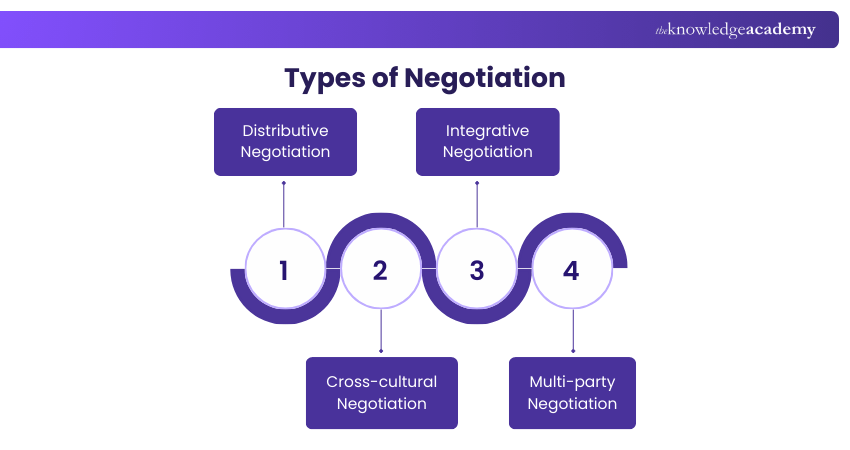
1) Distributive Negotiation
Distributive Negotiation, also known as win-lose Negotiation, is a competitive approach where each party tries to maximise their own gain. It happens when resources are limited and must be divided. Here, one side typically gains, while the other side is at a loss.
The focus is on positions and concessions to secure the best personal outcome. Common tactics include high initial demands, persuasive arguments, and the use of bargaining power. If handled poorly, this approach can damage relationships and reduce long-term value.
2) Integrative Negotiation
Integrative negotiation, also known as win-win negotiation, is a collaborative approach where parties work together to create value and reach mutually beneficial agreements. Instead of competing over limited resources, they aim to expand the available value through creative solutions.
This type of negotiation focuses on problem-solving, open communication, and cooperation. Parties explore underlying interests and identify trade-offs to achieve better outcomes. Integrative negotiation builds trust, strengthens relationships, and often produces results that exceed expectations.
3) Cross-cultural Negotiation
Cross-cultural Negotiations happen when people from different cultural backgrounds negotiate. Differences in values, norms, and communication styles can affect the process and results. Understanding these differences is important for success.
Adapting communication, showing cultural respect, and being flexible are fundamental factors for the success of this Negotiation type. Also, trust and rapport help to bridge gaps and support mutually acceptable agreements.
4) Multi-party Negotiation
Multi-party negotiation involves more than two parties working towards a shared agreement. It is often more complex because multiple stakeholders may have different goals, interests, and priorities. This type of negotiation is common in mergers, public projects, and community decision-making.
Success depends on clear communication, structured discussions, and careful interest balancing. Also, managing relationships well helps to achieve a consensus and maintain long-term cooperation.
Unlock your full potential and take your Negotiation skills to the next level with our Communication Skills Course!
What are the Stages of the Negotiation Process?
If you want to carry out a good Negotiation, then you can follow these stages. They are as follows:

1) Preparation
Before a Negotiation takes place, the agenda needs to be decided. To decide these agendas, clauses, etc., a time and place are agreed upon by both parties. A time limit is also determined so that the Negotiation can come to fruition in less time. Both parties decide on the points that need to be discussed before the Negotiation.
2) Discussion
This is the stage where each side explains how they view the situation and presents their position. Both parties share facts, concerns, and expectations. Here, key skills include active listening and questioning. Also, taking notes helps to avoid confusion and each side must get equal time to speak during the discussion.
3) Clarifying Goals
After the discussion is over, both sides define their goals, interests, and priorities. This step helps to manage expectations and creates a mutual understanding of what success must look like. Listing priorities in order makes trade-offs easier. Also, clarifying goals often reveals common grounds and reduces the risk of misunderstanding.
4) Negotiate Toward a Win-win Outcome
In this step, work together to find a solution where both parties feel satisfied and respected. Here, the focus shifts to shared interest, flexible thinking, and fair compromise. Both sides explore options, adjust their positions, and look for ways to create mutual value. Also, open communication and willingness to understand help to produce balanced agreements.
5) Agreement
An agreement is reached when both parties formally accept the outcome. It should be clearly written or clearly stated, logically structured, and aligned with the agreed goals. Terms, responsibilities, and timelines must be specific to avoid confusion later. A well-documented agreement ensures clarity, accountability, and long-term success.
6) Implementing a Course of Action
An effective Negotiation does not end with agreement. It is when decisions are put into action, and progress is reviewed. Follow-up checks to ensure commitments are met and allow adjustments if needed. This step helps to protect relationships and ensures the negotiated outcome delivers real results.
Communicate with clarity and confidence. Build communication skills that drive real workplace impact with Business Communication Course – Join now!
Seven Elements of Negotiations
Most people aren't natural-born negotiators, but research shows that education, preparation, and practice can significantly improve negotiation skills. The Harvard Negotiation Project developed a framework called the Seven Elements to help people prepare more effectively.
This framework outlines essential elements to identify goals, minimise surprises, and seize opportunities in negotiations. Here’s an overview of the seven elements:

1) Interests: These are the fundamental drivers of Negotiation. It involves our basic needs, wants, and motivations. They often guide what we do and say, even if they remain hidden. Experienced negotiators try to understand their counterparts' underlying interests by probing their stated positions.
2) Legitimacy: The pursuit of a fair deal influences many Negotiation decisions. If you feel the other party is taking advantage, you might reject their offer, even if it benefits you. Success in Negotiation requires putting forth proposals that are perceived as fair.
Build the skills that drive success and make every conversation count with our Business Communication Course – Register soon!
3) Relationships: Whether you have an ongoing connection with your counterpart or not, managing your relationship effectively is crucial. Building rapport and maintaining high ethical standards strengthen relationships, which is especially important when future interactions are at stake.
4) Alternatives and BATNA: Your alternatives, or what you'll do if the current deal fails, play a crucial role in Negotiations. Knowing your BATNA (Best Alternative to a Negotiated Agreement) helps you prepare and stay grounded during negotiations.
5) Options: These are choices that parties might consider satisfying their interests, including conditions, contingencies, and trades. Options can create value and improve satisfaction by leveraging similarities and differences.
6) Commitments: These are agreements, demands, offers, or promises made by parties. Commitments can range from setting a meeting time to signing a formal contract.
7) Communication: The way you communicate during Negotiations can determine success. Choices such as threatening or collaborating, and asking questions versus making assumptions, are critical.
Understanding these elements helps you prepare to create and claim value, address fairness concerns, and reach the best possible deal for both sides.
Negotiate stronger contracts and better deals to deliver real results with Contract Negotiation Training – Join today!
Examples of Negotiations
To help you fully grasp the meaning of Negotiation, let us look at some examples:
a) Salary Negotiation: When employees join a new company, they negotiate their salary with the Human Resource professionals. According to the Salary Negotiation, the employee decides their salary and vice versa.
b) Partnership Negotiations: Let’s say you have recently launched a business. However, you want your friend or colleague or an individual with the potential of carrying out the leadership in your organisation. In this scenario, you need to have a partnership agreement where all the terms and conditions from both parties are decided and negotiated accordingly. Only after all the words are fulfilled the partnership agreement can be fulfilled.
c) Trade Agreements: Trade agreements are also a form of Negotiation where several countries negotiate or agree on exporting and importing goods and services across borders.
d) Budget Negotiation: In a company, when any projects are getting onboarded, the senior management or the Project Managers negotiate with the clients regarding budget allocation.
e) Political Negotiation: When two or more parties come together to form a coalition, they need to agree with the coalition agreements that come from both sides of the party. This is called a Political Negotiation.
Develop the skills to manage disagreements with our Conflict Resolution and Negotiation for Change Training – Explore anytime!
Effective Strategies for Negotiating Success
To achieve successful outcomes, negotiators need to combine preparation, empathy, and self-control during their Negotiations. However, here are some key strategies that you can follow for making good Negotiations:
1) Justify Your Position: Go into Negotiations with facts and clear reasons to support your ideas. Being well-prepared helps you speak with confidence and earn respect.
2) Consider the Other Side: Think about what the other person wants and find ways to meet both side’s needs without giving up too much.
3) Keep Emotions in Check: Stay calm and polite, even if things get tense. Don’t let anger or frustration affect your decisions.
4) Focus on Common Interests: Look for shared goals instead of sticking too firmly to one side. This helps create a win-win result.
5) Know When to Walk Away: Understand your limits and be ready to step back if the deal doesn’t meet your needs.
6) Build Rapport: Build trust by listening carefully, showing respect, and keeping communication open.
What Makes a Good Negotiator?
A good negotiator is a blend of communicator, strategist, and listener. They stay composed, adaptable, and empathetic even in tense situations. Strong negotiators prioritise understanding over dominance, seek common ground, and remain patient throughout the process.
They also demonstrate integrity and clarity, which are the essential traits that inspire trust and credibility. By preparing thoroughly, reading non-verbal cues, and balancing assertiveness with empathy, good negotiators create outcomes where all parties feel respected and satisfied.
Conclusion
Negotiation is a practical skill that helps to reach better agreements, manage conflicts, and build stronger professional and personal relationships. Understanding What is Negotiation gives you the foundation to prepare well, communicate clearly, and find balanced solutions. This will help your future Negotiations lead to results that are fair, effective, and long-lasting.
Learn to express yourself clearly with our Effective Communication Skills – Sign up today!
Frequently Asked Questions
What is the First Rule of Negotiation?

The first rule of negotiation is to listen actively. Understanding the other party's needs, interests, and concerns is crucial for finding a mutually beneficial solution.
What is a Successful Negotiation?
A successful negotiation results in an agreement where all parties feel their interests and needs have been fairly addressed. The goal is to create a win-win situation where everyone involved benefits.
What are the Other Resources and Offers Provided by The Knowledge Academy?
The Knowledge Academy takes global learning to new heights, offering over 3,000+ online courses across 490+ locations in 190+ countries. This expansive reach ensures accessibility and convenience for learners worldwide.
Alongside our diverse Online Course Catalogue, encompassing 17 major categories, we go the extra mile by providing a plethora of free educational Online Resources like Blogs, eBooks, Interview Questions and Videos. Tailoring learning experiences further, professionals can unlock greater value through a wide range of special discounts, seasonal deals, and Exclusive Offers.
What is The Knowledge Pass, and How Does it Work?
The Knowledge Academy’s Knowledge Pass, a prepaid voucher, adds another layer of flexibility, allowing course bookings over a 12-month period. Join us on a journey where education knows no bounds.
What are the Related Courses and Blogs Provided by The Knowledge Academy?
The Knowledge Academy offers various Communication Skills Courses, including Assertiveness Skills Training, Effective Communication Skills Training, and Negotiation Skills Training. These courses cater to different skill levels, providing comprehensive insights into Nonverbal Communication.
Our Business Skills Blogs cover a range of topics related to Negotiation, offering valuable resources, best practices, and industry insights. Whether you are a beginner or looking to advance your Communication skills, The Knowledge Academy's diverse courses and informative blogs have got you covered.

Charlotte Wilson


Soft Skills and Business Training Manager
Charlotte Wilson is an expert in soft skills development, with over 14 years of experience helping individuals and teams improve communication, productivity and emotional intelligence in the workplace. Her training content is focused on enhancing interpersonal effectiveness and fostering positive, collaborative environments across all levels of an organisation.
View Detail
Upcoming Business Skills Resources Batches & Dates
Date
 Public Speaking Course
Public Speaking Course
Fri 31st Jul 2026
Public Speaking Course
Fri 2nd Oct 2026
Public Speaking Course
Fri 27th Nov 2026

 If you wish to make any changes to your course, please


