


 Top Rated Course

We may not have the course you’re looking for. If you enquire or give us a call on +353 12338944 and speak to our training experts, we may still be able to help with your training requirements.
What is Payroll Outsourcing : A Complete Guide
The Knowledge Academy 16 July 2026Payroll Outsourcing involves hiring third-party experts to manage salaries and taxes to reduce errors, save time and resources, and ensure timely worker payments. Depending on organisational requirements, you can opt for full-service payroll providers or go with DIY Payroll Solutions, which provides payroll processing software.

Training Outcomes Within Your Budget!
We ensure quality, budget-alignment, and timely delivery by our expert instructors.
Table of Contents

It is tedious to work late nights crunching numbers to manage employee salaries, taxes, and compliance. But what if payroll could run itself? That’s precisely the power of Payroll Outsourcing. By handing off these responsibilities to experts, businesses can free up time to focus on what truly matters: growth and innovation.
Outsourcing brings accuracy, security and cost savings, whether you are opting for a fully managed service or a flexible cloud-based solution. This blog explores the Payroll Outsourcing process in detail, outlining its key features, types, benefits and more. So, read on and transform payroll into a powerhouse of employee satisfaction!
Table of Contents
1) What is Payroll Outsourcing?
2) Key Features of Payroll Outsourcing Services
3) Types of Payroll Services
4) How Does Payroll Outsourcing Work?
5) Benefits of Outsourcing Payroll
6) How to Select the Right Payroll Provider?
7) Conclusion
What is Payroll Outsourcing?
Payroll Outsourcing is when a business hires a third-party provider to manage its payroll processes. This includes tasks like calculating wages, processing payments, and handling tax filings. After all, running payroll can be complicated and time-consuming. Plus, there are many legal requirements, which means there are risks to getting things wrong. For these reasons, so many business owners prefer to leave it to the experts. It frees up their time and mind for other tasks.

For example, a small business with 50 employees manually processing payroll risks errors, delays, and compliance issues. The HR team spends hours on calculations, and a single mistake could lead to penalties or unhappy employees. By outsourcing, payroll is automated, ensuring accurate payments, timely tax submissions, and full compliance, saving time and reducing costly risks.

Key Features of Payroll Outsourcing Services
Payroll Outsourcing services equipped with the right knowledge and technology offer these key features:
a) Automated Payroll Processing: Ensures accurate salary calculations, National Insurance contributions, and benefits administration.
b) Seamless Accounting & HR Integration: Syncs payroll with accounting and HR systems for smooth financial reporting.
c) Secure Payroll Tax Management: Handles PAYE tax calculations, deductions, and HMRC submissions to ensure compliance.
d) Employee Self-service Portal: Allows employees 24/7 access to payslips, P60s, and payroll records.
e) Multiple Payment Options: Supports BACS payments, direct deposits, and pay cards for flexible salary disbursement.
f) Year-end Tax & Compliance Reporting: Manages P60s, P45s, and payroll submissions to HMRC for legal compliance.
g) Wage Garnishment & Deductions: Automates pension contributions, student loan repayments, and court-ordered deductions.
h) Custom Payroll Reporting & Analytics: Generates detailed reports on labour costs, tax obligations, and workforce trends.
Master the Sage Payroll software and its functionalities in our comprehensive Sage Payroll Course - Sign up now!
Types of Payroll Services
Payroll service providers come in many forms, from bookkeepers and accountants to specialist payroll companies. They can differ in the service level they provide and how they deliver it. Here are the main categories of Payroll Services:
1) Full-service Payroll Providers
A full-service payroll provider manages the entire payroll process, including wage calculations, tax filings, employee payments, and compliance with HMRC regulations. Businesses simply provide employee details and timesheets, and the provider takes care of the rest.
a) Ideal for businesses looking for a hands-off, fully managed payroll solution
b) Reduces administrative burden and ensures legal compliance
c) May include additional HR and benefits management services
2) DIY Payroll Solutions
A DIY payroll solution provides businesses with payroll processing software that automates key functions while keeping some tasks in-house. Employers manage employee records, time tracking, and approvals, while the Payroll Software calculates wages, taxes, and deductions.
a) Suitable for small businesses with minimal payroll needs
b) More affordable than full-service options but requires manual oversight
c) Ensures automation of calculations while retaining control over payroll processes
3) Accountant or Bookkeeper Payroll Services
Many businesses rely on accountants or bookkeepers to handle payroll alongside other financial tasks. This approach offers customised payroll management while maintaining financial reporting accuracy.
a) Best for businesses that already work with an accountant for tax and bookkeeping
b) Offers personalised support and flexibility in payroll processing
c) It may not be as automated as full-service payroll providers
4) Cloud-based Payroll Software
Cloud-based payroll solutions provide secure, remote payroll management, allowing businesses to process payroll from anywhere. These platforms integrate with HR, accounting, and tax systems for seamless data flow.
a) Ideal for businesses needing flexibility and accessibility
b) Reduces paperwork and enables real-time payroll processing
c) Often includes employee self-service portals for payslips and tax documents
How Does Payroll Outsourcing Work?
Whether you manage the payroll in-house or outsource it to a third-party provider, the whole process follows similar steps. Here are the key steps involved
1) Choosing a Payroll Provider
a) Select a reliable payroll provider that aligns with your business needs.
b) Some providers focus solely on payroll, while others offer additional HR services.
c) Find a provider with a strong reputation and secure payroll processing systems.
2) Submitting Required Information
You are required to provide the provider with initial information to set up your account alongside ongoing details like hours, time off and bonuses. Most providers ask for the following information:
a) Any state-specific tax withholding forms
b) W-9 tax forms for any independent contractors
c) W-4 tax forms
d) Job application
e) Bank information for direct deposit
f) I-9 forms
g) Medical insurance information, if applicable
h) Retirement plan information, if applicable
3) Tracking Employee Hours
a) Businesses must monitor employee work hours based on their payment structure, whether salaried or hourly. Accurate tracking is essential for correct payroll processing and compliance with labour laws.
b) Employers must regularly submit employee timesheets to the payroll company, where the work hours, overtime and any adjustments to wages are detailed.
c) Many payroll providers offer digital time-tracking tools that allow employees, employers and payroll processors to access and update work hours easily.
4) Approving Payroll Amounts
a) Submit any necessary deductions for court-ordered wage garnishments.
b) Share details of any bonuses or additional compensation for employees.
c) Review and confirm final payroll amounts before processing.
5) Handling Taxes and Withholdings
a) Voluntary deductions like health insurance, retirement contributions or other benefits are subtracted.
b) The providers deduct required taxes, including social security, income tax and Medicare, as per the legal regulations.
c) After all deductions and withholdings are applied, the final paycheck amount is determine.
6) Issuing Paychecks
a) The providers make sure the salaries are calculated and finalised for distribution.
b) They provide paper checks for employees who prefer traditional payment methods.
c) They transfer salaries directly into employees’ bank accounts for quicker and more secure payment.
7) Generating Reports
a) The payroll service provider will maintain accurate records of employee wages, taxes, and deductions.
b) They will prepare detailed reports on payroll expenses, tax filings, and compliance.
c) They will also make sure that the required reports are filed with relevant government agencies and organisations.
Want to learn about payroll processes, regulations, and compliance requirements? Sign up for our Payroll Course now!
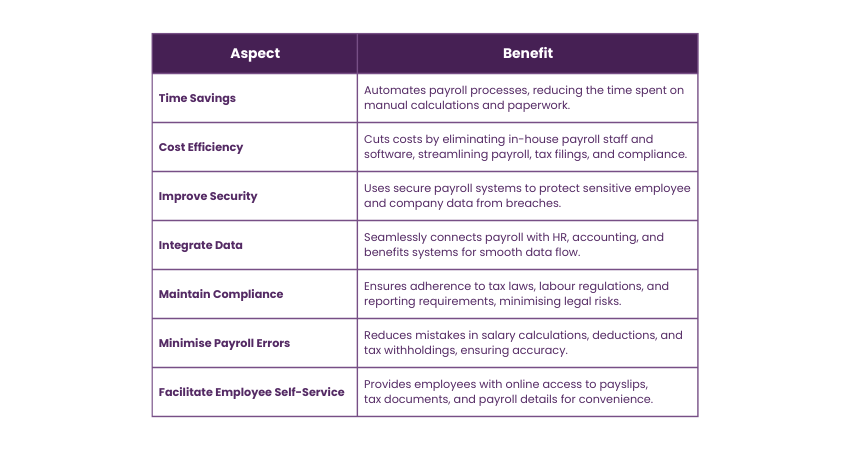
Benefits of Outsourcing Payroll
Here are the main benefits of Payroll Outsourcing
How to Select the Right Payroll Provider?
Understanding what to consider in a full-service payroll provider can simplify the transition. When evaluating potential providers, you can follow these steps to ensure a successful Payroll Outsourcing process.
1) Identify the Business Needs: Managing multiple pay frequencies and employee classifications can make payroll complex, so it’s essential to define specific requirements.
2) Ensure Compliance: Payroll providers must navigate multi-state and international regulations, making adherence to legal requirements a key factor.
3) Assess Provider Reputation: Established providers with stable ownership, strong financial backing, and a track record offer more reliability.
4) Consider Peer Feedback: Reviews from industry experts and existing clients can help you validate the choice.
5) Gain Stakeholder Support: Securing buy-in from employees and leadership will help in a smoother transition to outsourced payroll.
Understand how to streamline payroll processes for elevated accuracy in our Xero Payroll Training - Register now!
Conclusion
Payroll Outsourcing is a game-changer for businesses. By choosing the right provider, you can streamline Payroll Management, ensure compliance and become free to focus on growth and innovation. Similarly, IT Outsourcing allows businesses to leverage expert solutions, reduce operational costs, and enhance efficiency. Whether through fully managed services or Cloud-based solutions, outsourcing payroll transforms a tedious task into a stress-free process.
Master the essentials of Payroll Management for better administration in our comprehensive Payroll Training - Sign up now!
Frequently Asked Questions
Is Outsourcing Legal in the UK?

Yes, outsourcing is legal in the UK. Many businesses outsource various functions to other companies, both domestically and internationally, to reduce costs and improve efficiency.
Is Outsourcing Legal in the UK?
These are the potential risks associated with Payroll Outsourcing:
a) Loss of control
b) Security breaches
c) Noncompliance
d) Hidden fees
e) Lack of customisation
f) Employee dissatisfaction
g) Incomplete data transfer

The Knowledge Academy


Global Training Provider
The Knowledge Academy is a world-leading provider of professional training courses, offering globally recognised qualifications across a wide range of subjects. With expert trainers, up-to-date course material, and flexible learning options, we aim to empower professionals and organisations to achieve their goals through continuous learning.


 If you wish to make any changes to your course, please


