


 Top Rated Course

We may not have the course you’re looking for. If you enquire or give us a call on +353 12338944 and speak to our training experts, we may still be able to help with your training requirements.
Event Manager Job Description: A Brief Career Guide
Sophia Ellis 18 March 2026An Event Manager plans and delivers events by managing budgets, logistics, suppliers, and on-site operations to ensure successful, safe experiences. They coordinate with clients, negotiate with vendors, and monitor event timelines closely. They require creativity, strong communication, attention to detail, and problem-solving ability.

Training Outcomes Within Your Budget!
We ensure quality, budget-alignment, and timely delivery by our expert instructors.
Table of Contents

Ever been to a wedding, concert, or corporate event where everything felt perfect? The lights, the food, the vibe, all flawless. Behind that smooth experience is an Event Manager, working tirelessly to make sure nothing goes wrong. They handle the stress, chaos, and last-minute surprises so you can enjoy the moment.
In this blog, we’ll explore what an Event Manager Job Description includes, covering their responsibilities, key skills, and qualifications. We’ll also discuss salaries, typical employers, and give you a peek into their daily lives. Let's get started!
Table of Contents
1) What is an Event Manager Job Description?
2) Responsibilities of the Event Manager
3) What are the Requirements to Become an Event Manager?
4) Skills of an Event Manager
5) Average Salary of an Event Manager
6)Tips for Aspiring Event Managers
7) What is a Day in the Life of an Events Manager?
8) Conclusion
What is an Event Manager Job Description?
An Event Manager Job Description explains what an Event Manager does and the skills needed for the job. Event Managers plan and organise different types of events, like conferences, product launches, networking sessions, and promotional campaigns.
They take care of everything related to the event, such as managing the budget, working with vendors, handling logistics, and talking to service providers. Their job is to make the event enjoyable and engaging for the audience, improve brand awareness, and build good relationships with clients or customers. Good Event Management helps a company grow and achieve its goals.

Responsibilities of the Event Manager
An Event Manager plays an important role in bringing life to events, ensuring each one is a memorable experience. Their responsibilities include various tasks that require both creative vision and meticulous attention to detail. Here are the aspects that an Event Manager is responsible for:
1) Conceptualising Event Themes and Designs
Ideation for the event's concept and visualising the overall design to create a memorable and engaging atmosphere.
2) Budget Management
Allocate resources carefully, negotiate costs and manage the entire Budget to deliver the best possible experience without overspending.
3) Risk Management
Identify risks and be ready to take action when the causes of any issues in the future arise.
4) Selection of Venue
Selecting the suitable place so that it matches the theme and demands of the event coupled with choosing the date for the event are the challenges.
5) Client Liaison
It is important to strive for a good understanding of the clients and their requirements and to pass this information to the team properly.
6) Team Leadership
Managing a group of trained individuals in tasks and seeing to it that everyone is in sync and working towards the common goal.
7) Marketing and Promotion
The development of Marketing Campaigns to engage the target participants in the event.
8) Logistics Planning
Overseeing the flow of the event by taking care of transportation, accommodation, and time scheduling.
9) Quality Control
Making sure each aspect of the event is up to the required quality standards, and, in accordance with regulatory specifications.
10) Post-event Evaluation
Evaluating the success of the event in terms of the information provided, gathering feedback and making recommendations for further amelioration.
Develop an understanding of different employee behaviours. Join our Introduction to Managing People Training now!
What are the Requirements to Become an Event Manager?
Becoming an Event Manager does not always demand a single fixed qualification, but employers usually look for a mix of education, practical experience, and strong interpersonal skills. Let's check the requirements of an Event Manager Job Description:
Educational Qualifications:
You can have a bachelor’s degree in Event Management, Hospitality, Tourism, Marketing, Business Administration, or any other related field.
Key Skills Required:
An Event Manager requires certain key skills related to Event Management and some interpersonal skills. The following are the skills required:
1) Communication and negotiation skills
2) Time management and multitasking ability
3) Budget planning and financial awareness
4) Problem-solving and decision-making skills
5) Leadership and team coordination
6) Attention to detail
7) Creativity and presentation sense
Practical Experience:
Relevant experiences are required for the role of an Event Manager. Many begin as Event Assistants, Coordinators, or interns with event companies, hotels, wedding planners, or marketing agencies. This helps you build the necessary skills and become an expert in what you do.
Technical and Industry Knowledge:
There are a lot of technologies used for Event Management in the current world. So, it is better to get acquainted with those trends and tools to organise events effectively. Some of those include a basic knowledge of event planning software and scheduling tools, marketing and social media promotion, vendor management, and contract handling.
Learn advanced data visualization and dashboard skills with a Microsoft Power BI Course!
Skills of an Event Manager
An Event Manager needs a wide range of skills because the job is not only about planning an event, but also about managing people, time, money, and unexpected situations. The better these skills are, the smoother the event will run. Here are the mandatory skills for an Event Manager:
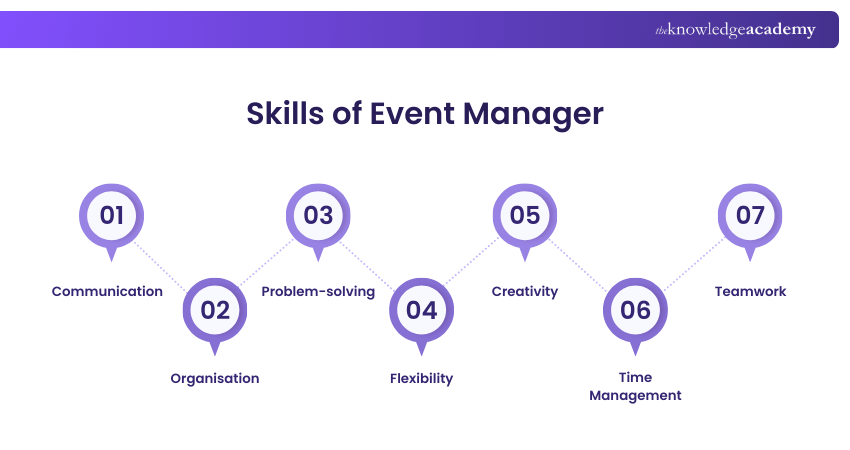
1) Communication
Event Managers constantly interact with clients, vendors, team members, and guests. Clear speaking and listening help them understand requirements properly and avoid confusion. Good communication also helps in giving instructions and solving problems quickly.
2) Organisation
Planning an event involves handling many tasks at the same time, such as booking venues, arranging catering, managing invitations, and tracking schedules. Strong organisational skills help keep everything arranged and on time.
3) Problem-solving
Unexpected issues are common in events, like delayed vendors, technical failures, or weather problems. An Event Manager must think quickly and find practical solutions without causing panic.
4) Flexibility
Plans may change at the last moment due to weather, client requests, or technical issues. An Event Manager must quickly adjust schedules and arrangements without affecting the event's quality.
5) Creativity
Creativity is important for designing themes, decorations, layouts, and guest experiences. It helps make the event unique and memorable.
6) Time Management
Events run on strict deadlines. An Event Manager must create schedules, follow timelines, and make sure every activity happens at the right moment. Poor timing can affect the whole event.
7) Teamwork
An event cannot be managed alone. Event Managers must cooperate with their team and support staff, listen to suggestions, and coordinate efforts so all activities run smoothly together.
Improve vendor relationships and business performance with the Introduction to Supplier Management Course – Sign up soon!
Average Salary of an Event Manager
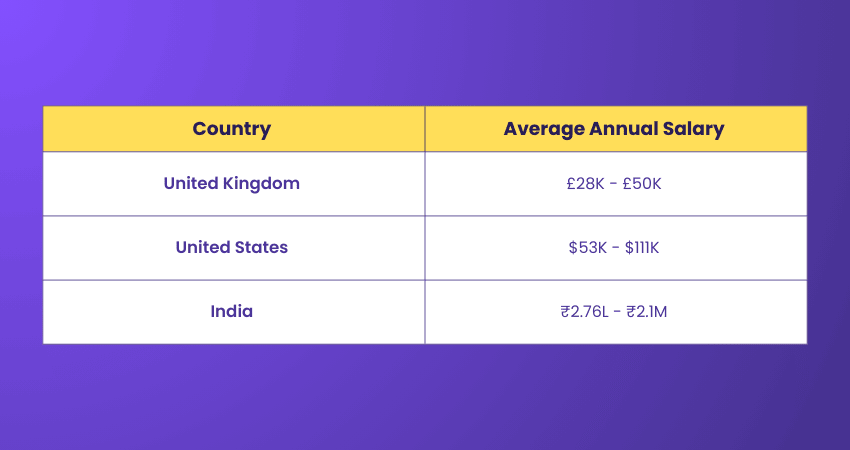
The average annual salary of an Event Manager can vary depending on experience, industry, and location. Here's the table highlighting the average salary of an Event Manager in the different countries:
Tips for Aspiring Event Managers
You can build a successful career in Event Management with the right approach and mindset. The tips below will help you in developing your skills listed in Event Manager Job Description with confidence:
1) Gain Practical Experience: Start with internships or assistant jobs in event companies, hotels, or wedding planners. Working on real events helps you understand how the work is done.
2) Build Strong Communication Skills: You will talk to clients, vendors, and team members every day. Speak clearly, listen carefully, and be polite while dealing with people.
3) Learn Budget Management: Learn basic processes of how to plan and control expenses. You should know how to manage costs and plan an event within the client’s budget.
4) Grow Your Network: Build good relationships with Decorators, Caterers, Photographers, and Venue Owners. Good contacts make your job much easier.
5) Stay Organised: Keep a checklist or planner for tasks. Writing things down helps you avoid forgetting important work.
6) Be Flexible and Calm: Problems can happen at any time during an event. Stay calm and quickly adjust your plans when needed.
What is a Day in the Life of an Events Manager?
These are the roles of an Event Manager:
1) Plan and organise events from start to end
2) Talk to clients and create themes, schedules, and budgets
3) Select venues and coordinate with suppliers
4) Oversee setup, manage guests, guide staff, and solve issues
5) Review success, collect feedback, and ensure smooth closure
6) Requires communication, organisation, problem-solving, flexibility, and creativity
Conclusion
An Event Manager Job Description covers planning, organising, and managing events from start to finish. Event Managers handle clients, budgets, venues, and suppliers while ensuring smooth execution on the event day. With strong communication, organisation, and problem-solving skills, they create memorable experiences and meet client expectations. This career gives exciting opportunities for those who enjoy creativity, multitasking, and working in dynamic environments.
Develop essential communication, negotiation, and conflict resolution skills. Join our Management Courses now!
Frequently Asked Questions
How Long Does it Take to Become an Event Manager?

It usually takes around three to five years to become an Event Manager. This includes completing a relevant degree and gaining practical experience through internships or assistant roles. With strong skills and real event exposure, some professionals grow into the role even faster.
What Industries Hire Event Managers the Most?
Event Managers are mostly hired in hospitality, corporate companies, marketing agencies, tourism, media, and entertainment industries. They also work in wedding planning firms, exhibition companies, educational institutions, and non-profit organisations that regularly host conferences, promotional events, and large gatherings.
What are the Other Resources and Offers Provided by The Knowledge Academy?
The Knowledge Academy takes global learning to new heights, offering over 3,000+ online courses across 490+ locations in 190+ countries. This expansive reach ensures accessibility and convenience for learners worldwide.
Alongside our diverse Online Course Catalogue, encompassing 17 major categories, we go the extra mile by providing a plethora of free educational Online Resources like Blogs, eBooks, Interview Questions and Videos. Tailoring learning experiences further, professionals can unlock greater value through a wide range of special discounts, seasonal deals, and Exclusive Offers.
What is The Knowledge Pass, and How Does it Work?
The Knowledge Academy’s Knowledge Pass, a prepaid voucher, adds another layer of flexibility, allowing course bookings over a 12-month period. Join us on a journey where education knows no bounds.
What are the Related Courses and Blogs Provided by The Knowledge Academy?
The Knowledge Academy offers various Management Courses, including the Event Management Course, Introduction to Managing People Training, and the Productivity and Time Management Training. These courses cater to different skill levels, providing comprehensive insights into Hotel Management.
Our Business Skills Blogs cover a range of topics related to the Event Manager Job Description, offering valuable resources, best practices, and industry insights. Whether you are a beginner or looking to advance your Business skills, The Knowledge Academy's diverse courses and informative blogs have got you covered.
Upcoming Business Skills Resources Batches & Dates
Date
 Event Management Course
Event Management Course
Fri 7th Aug 2026
Event Management Course
Fri 30th Oct 2026

 If you wish to make any changes to your course, please


