


 Top Rated Course

We may not have the course you’re looking for. If you enquire or give us a call on +36 18508731 and speak to our training experts, we may still be able to help with your training requirements.
What is Double-Entry Bookkeeping? Rules, Types and Advantages
Olivia Taylor 16 July 2026Double-Entry Bookkeeping is an accounting system where every transaction affects two accounts, ensuring the accounting equation stays balanced. For each transaction, one account is debited and another is credited, with the total debits always equalling the total credits. It's the foundation of modern accounting practices.

Training Outcomes Within Your Budget!
We ensure quality, budget-alignment, and timely delivery by our expert instructors.
Table of Contents

Ever wondered what successful businesses have in common? They always know the full story behind every single transaction. The secret lies in Double-Entry Bookkeeping. Think of it as the perfect balance of debit and credit, working together to keep finances accurate, accountable and crystal clear. By capturing both sides of every movement, it highlights errors and builds a reliable financial picture.
In this blog, we will explore What is Double-Entry Bookkeeping and how it can benefit everyone, from small business owners to managers of growing enterprises. Stick around and discover how you can become the storyteller behind every financial decision.
Table of Contents
1) What Is Double-Entry Bookkeeping?
2) The Rules of the Double-Entry Bookkeeping
3) Different Types of Accounts in Double-Entry Bookkeeping
4) How to Perform Double-Entry Bookkeeping?
5) Advantages of Double-Entry Bookkeeping
6) Double-Entry Bookkeeping Examples
7) Conclusion
What is Double-Entry Bookkeeping?
Double-Entry Bookkeeping is a systematic accounting method in which every business transaction is recorded twice in the general ledger, with equal but opposite entries. This approach reflects the principle that each transaction has two components: a Debit and a Credit.
They ensure that the accounts remain balanced and reduce the likelihood of reporting errors. The core of this system lies in the accounting equation: Assets = Liabilities + Equity. This equation must always stay in balance. If your entries don’t align, it usually signals an error, such as an incorrect debit or credit posting.

The Rules of the Double-Entry Bookkeeping
The Double-Entry system is built on three key principles:
1) Each business transaction must be recorded in a minimum of two accounts.
2) For every transaction, the total amount debited must exactly match the total amount credited.
3) A company’s total assets must always equal its total liabilities plus equity (net worth or capital).
4) Both sides of this accounting equation must remain balanced at all times.
Different Types of Accounts in Double-Entry Bookkeeping
In Double-Entry Bookkeeping, every transaction is categorised into one or more of five fundamental account types. Let’s explore these categories:
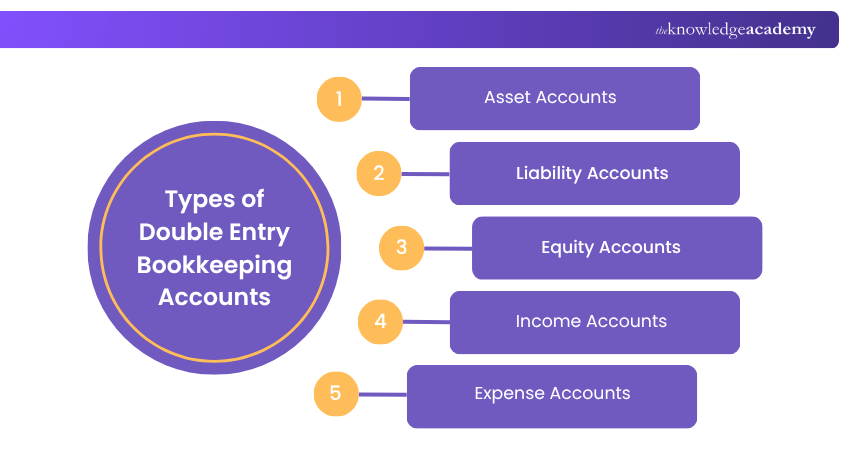
1) Asset Accounts
Asset accounts track everything the business owns that has monetary value. This includes both tangible assets like buildings, machinery, vehicles and equipment, and intangible assets such as patents or trademarks. Cash held in bank accounts, accounts receivable from customers and prepaid expenses are also part of asset accounts. These accounts reflect the resources the business uses to operate and grow.
2) Liability Accounts
Liability accounts record the business’s financial obligations; what it owes to others. This may include short-term liabilities such as accounts payable, credit card balances, and lines of credit, as well as long-term liabilities like loans, leases or mortgages. Tracking liabilities ensures the business maintains an accurate view of its debts and future payment responsibilities.
3) Equity Accounts
Equity represents the residual interest in the business after liabilities are subtracted from assets. It reflects the owner’s stake or the book value of the company. Common equity accounts include owner’s capital, retained earnings and stock. These accounts help understand the net worth of the business and how profits are reinvested or distributed to owners or shareholders.
4) Income Accounts
Income accounts capture all inflows of money generated through business activities. This includes sales revenue from goods and services, rental income, interest income or any other earnings. Monitoring income accounts helps businesses evaluate their performance, forecast growth and identify their most profitable products and services.
5) Expense Accounts
Expense accounts record all outflows of money related to running the business. These include operating expenses like payroll, rent, advertising, utilities, and insurance, as well as non-operating costs such as interest payments or depreciation. Tracking expenses enables businesses to manage budgets, identify areas of overspending and maintain healthy profit margins.
Become the financial brain behind your business with our expert-led Accounting Courses - Register now!
How to Perform Double-Entry Bookkeeping?
The purpose of Double-Entry Bookkeeping is to record every financial transaction in a way that captures its full impact on the business. Let’s try to understand how it works:
1) Understanding Account Structure
Every transaction is linked to one of the five main account categories: assets, liabilities, equity, income, and expenses. This structure applies to all businesses, whether small or large, and keeps financial records organised.
2) Purpose of Account Setup
Accounts are grouped in this way so businesses can prepare financial statements. A balance sheet shows assets, liabilities and equity, while a profit and loss statement shows income and expenses. These reports give a clear picture of performance and financial health.
3) Role of the Chart of Accounts
The chart of accounts is a detailed list of all categories a business uses to record transactions, such as sales, rent, or wages. Each transaction is placed into the right account, ensuring it appears correctly in financial statements and avoids confusion.
4) Recording Financial Transaction
In Double-Entry, every transaction affects at least two accounts. For example, if a business buys equipment with cash, the Equipment account (asset) increases and the Cash account (asset) decreases. This way, the books remain balanced and the full effect of the transaction is shown. Accounting software often automates this process, but the principle stays the same.
Learn how to keep businesses balanced and thriving by maintaining financial order. Sign up for our Bookkeeper Course now!
Advantages of Double-Entry Bookkeeping
While very small or new businesses can manage with single-entry bookkeeping, the Double-Entry method is the preferred approach for most growing organisations. Here are some of its benefits:
1) Ensures Accuracy
One of the key strengths of Double-Entry bookkeeping is its high level of accuracy. It's achieved through the matching principle. This principle ensures that expenses are recorded in relation to the revenues they help generate. By capturing both sides of every transaction, businesses can calculate profit and loss with precision and maintain reliable financial records.
2) Helps Prevent Errors
Human mistakes can easily distort financial information. Double-Entry Bookkeeping reduces this risk by introducing built-in checks and balances. Since every transaction requires equal debit and credit entries, discrepancies reveal themselves pretty quickly. This makes errors easier to detect and correct. While it doesn’t eliminate mistakes entirely, it minimises their occurrence and impact.

3) Creates an Audit Trail
Double-Entry Bookkeeping naturally establishes a clear audit trail. It plays a crucial role in reducing fraud and increasing transparency. Every transaction recorded in the general ledger can be traced back to its origin. For instance, if the cash balance on a balance sheet seems unusually high, you can follow the trail of entries to verify accuracy and uncover any irregularities.
4) Facilitates Financial Statement Preparation
Preparing financial statements becomes more straightforward and efficient with Double-Entry Bookkeeping. Since all data flows directly from the Double-Entry records, companies can generate accurate reports quickly. They’re also essential for external stakeholders like investors and lenders who rely on them to evaluate a company’s financial stability and creditworthiness.
Learn how to interpret financial data with unparalleled clarity in our Accounting and Financial Statement Analysis Training - Sign up now!
Double-Entry Bookkeeping Examples
Let’s explore some practical examples of how Double-Entry Bookkeeping works in everyday business scenarios:
1) Purchasing Goods on Credit
You purchase £1,250 worth of inventory on credit. When you receive the inventory, your Inventory (Asset) increases by £1,250 and your Accounts Payable (Liability) also increases by £1,250.
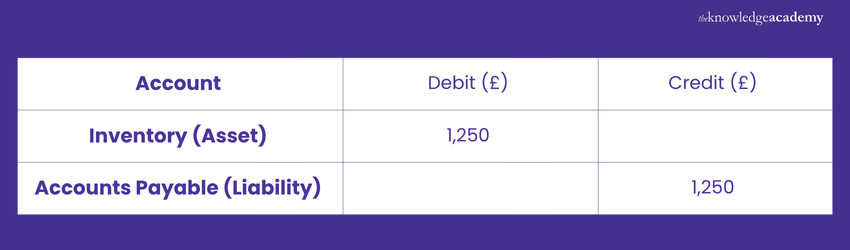
Later, when you pay the supplier, your Accounts Payable decreases by £1,250 and your Cash (Asset) decreases by £1,250.

2) Securing a Business Loan
You are approved for a £12,000 business loan. Upon receiving the funds, your Cash (Asset) increases by £12,000 and your Loan Payable (Liability) increases by £12,000.

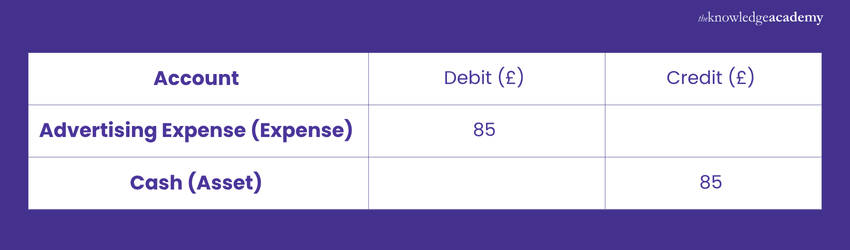
3) Paying for Operating Expenses
You pay £85 for a website domain. This increases your Advertising Expense by £85 and decreases your Cash by £85.
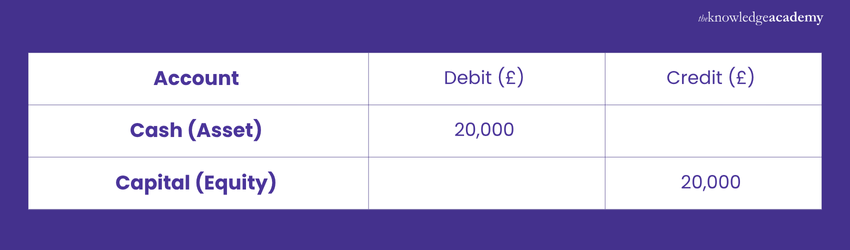
4) Contributing Capital to the Business
You invest £20,000 of personal funds into your new catering business. When the money is deposited into the business account, Cash increases by £20,000, and Owner’s Equity increases by £20,000.
Conclusion
Double-Entry Bookkeeping is a mindset that brings structure, balance and clarity to your financial world. By capturing both sides of every transaction, it can build trust, sharpen decision-making, and keep your books in harmony. Understanding What is Double-Entry Bookkeeping can turn everyday financial records into a roadmap for sustainable business success.
Master the lifecycle of assets with our Fixed Assets Accounting and Management Course - register now and become the go-to asset expert!
Frequently Asked Questions
Can You Really Make Money as a Bookkeeper?

Absolutely. Bookkeeping can be a lucrative career. Skilled Bookkeepers are in high demand across businesses of all sizes. You can work in-house, join an accounting firm or start your own freelance practice. Offering specialised services or working with multiple clients can significantly increase earnings.
What are the Three Golden Rules of Double-Entry Bookkeeping?
The three golden rules form the foundation of Double-Entry Bookkeeping:
1) Debit whatever comes in, credit what goes out for real accounts (assets).
2) Credit the giver and debit the receiver and for personal accounts.
3) Debit all expenses and losses, credit all the incomes and gains for nominal accounts.

Olivia Taylor


Chartered Accountant and Financial Training Specialist
Olivia Taylor is a qualified chartered accountant with over a decade of experience in financial management, auditing and corporate reporting. Having worked with leading firms in both the public and private sectors, Olivia brings clarity to complex financial topics. Her writing focuses on helping professionals build confidence in key areas of accounting, compliance and financial planning.
View Detail

 If you wish to make any changes to your course, please


