


 Top Rated Course

We may not have the course you’re looking for. If you enquire or give us a call on +36 18508731 and speak to our training experts, we may still be able to help with your training requirements.
What is Stakeholder Engagement? Process, Importance and Tips
William Brown 12 February 2026Stakeholder Engagement is the structured process of identifying, analysing and collaborating with key stakeholders to build trust and deliver success. It involves understanding their interests, expectations, and levels of influence. This approach helps organisations minimise risks, resolve conflicts and strengthen long-term relationships.

Training Outcomes Within Your Budget!
We ensure quality, budget-alignment, and timely delivery by our expert instructors.
Table of Contents
Who truly determines the success of your project? The answer is not just your team or leadership. It is every individual or group that has a part in the outcome, from clients and investors to employees and regulators. These people are called stakeholders, and they are more likely to support each business decision and contribute positively. This is where Stakeholder Engagement becomes essential.
Their expectations and level of support can shape whether a project moves forward smoothly or faces resistance. In this blog, we explore what is Stakeholder Engagement, its process, why it matters, and practical tips to strengthen your approach. Let's dive in!
Table of Contents
1) What is Stakeholder Engagement?
2) The Stakeholder Engagement Process: Five Steps
3) Mapping Your Stakeholders
4) Stakeholder Engagement Examples
5) Stakeholder Engagement vs Stakeholder Management
6) Quick Tips for Engaging Stakeholders
7) Conclusion
What is Stakeholder Engagement?
Stakeholder Engagement is the structured process of identifying, analysing, and interacting with individuals or groups who have an interest in a project, decision, or organisation. It goes beyond simple communication and focuses on building trust, transparency, and long-term business relationships.
Effective Stakeholder Engagement ensures that stakeholders are informed, involved where necessary, and aligned with organisational objectives. When managed properly, it reduces resistance, supports better decision-making, and increases the likelihood of successful outcomes.
Who are Stakeholders?
Stakeholders are individuals, groups, or organisations that have an interest in, or are affected by, a project or business activity. They can exist both inside and outside an organisation. Internal stakeholders typically include employees, managers, and shareholders, as they are directly involved in operations and performance.
Similarly, external stakeholders may include customers, suppliers, investors, regulators, government bodies, and the local community. Each group has its own expectations and level of influence, making it important for organisations to identify and engage them appropriately.

Why Should I Engage Stakeholders?
In Project Management, engaging stakeholders is a practical way to ensure smoother project delivery and stronger business results. When you actively involve the people who are affected by your decisions, you create clarity, reduce misunderstandings, and build stronger support. Here are some key reasons why Stakeholder Engagement is required:
1) Build Trust and Support: When you involve stakeholders, they feel respected and valued. This builds trust and makes them willing to support your decisions and plans.
2) Make Better Decisions: Stakeholders can share useful ideas and different viewpoints. Their input can help you make smarter and more practical decisions.
3) Create Strong Relationships: Regular communication helps build good working relationships. Strong relationships make future projects smoother and more successful.
4) Avoid Problems Early: Talking to stakeholders early helps you understand their concerns. This allows you to solve issues before they turn into bigger problems.
5) Better Chances of Success: When stakeholders agree with your goals and feel involved, your project or business is more likely to succeed.
The Stakeholder Engagement Process: Five Steps
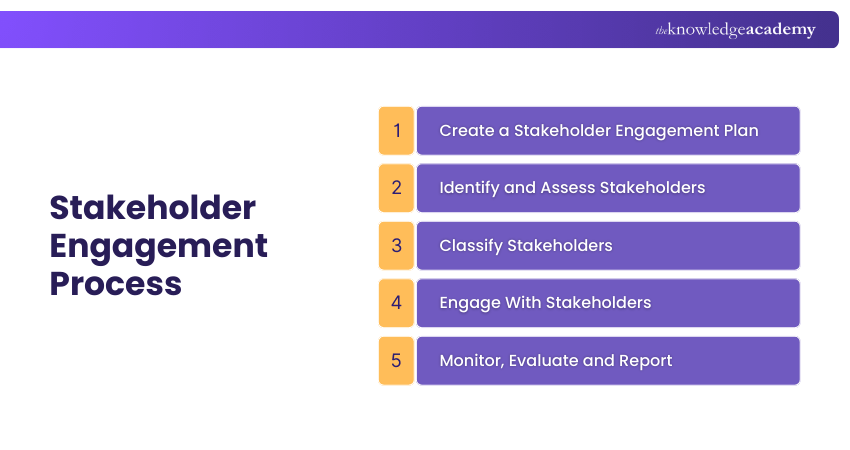
Stakeholder Engagement is not a one-time task; instead, it is a structured process. It helps organisations communicate clearly, manage expectations, and build strong relationships. A step-by-step approach ensures key stakeholders are not overlooked and keeps engagement focused and consistent.
Here are the steps that you can adapt for effective Stakeholder Engagement:
Step 1: Create a Stakeholder Engagement Plan
The first step is to develop a clear plan explaining how stakeholders will be managed throughout the project or business activity. This plan defines objectives, communication methods, frequency of interaction, roles, and responsibilities of the project team and key stakeholders.
It also sets expectations for how concerns and feedback will be handled. A well-prepared plan provides direction and ensures engagement is organised rather than reactive.
Step 2: Identify and Assess Stakeholders
This step focuses on stakeholder identification, stakeholder analysis, and mapping. Here, you will find out who your stakeholders are and understand them clearly. You have to list all the people and groups who may be affected by your project or who can influence its outcome.
Once you have your list, think about how much interest and influence each stakeholder has. You can group them based on their level of importance.
Step 3: Classify Stakeholders
After assessing your stakeholders, the next step is to group them into categories such as primary, secondary, and key stakeholders. Primary stakeholders are those directly affected by the project or business activity, such as employees or customers.
Secondary stakeholders are indirectly affected by your project, and they might be community groups or suppliers. Key stakeholders are individuals or groups with significant influence or decision-making power.
Step 4: Engage With Stakeholders
Stakeholder Engagement involves actively communicating and interacting with stakeholders through meetings, updates, consultations, or feedback sessions. The goal is to keep them informed, address concerns, and encourage collaboration.
Effective engagement requires transparency, active listening, and timely responses to issues. Regular communication also helps build trust and maintain strong working relationships throughout the project.
Step 5: Monitor, Evaluate and Report
Stakeholder Engagement needs to be checked regularly throughout the project. You have to keep track of how stakeholders are responding, review whether your communication is working, and make changes if needed. Sharing updates on progress and results helps build trust and accountability.
Continuous reviews also help you notice if new stakeholders become involved or if expectations change. By recording feedback and outcomes, you can improve your approach and manage stakeholders more effectively in future projects.
Unlock your organisation’s potential with our Statistical Process Control Training - Sign up now!
Mapping Your Stakeholders
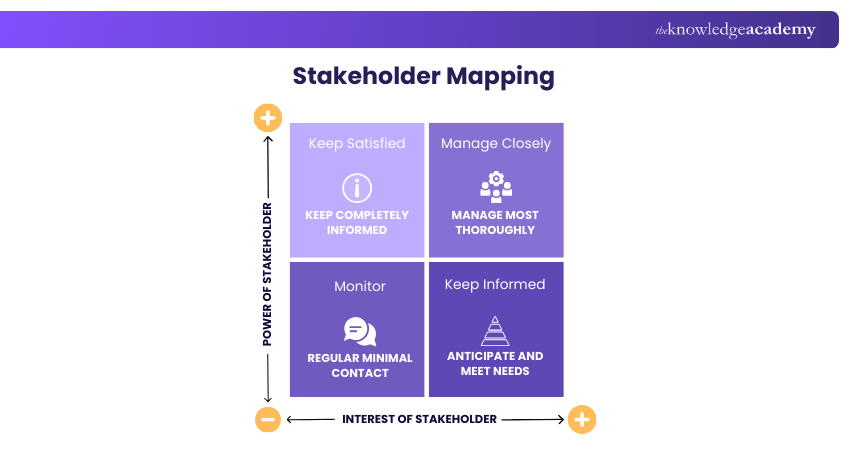
Stakeholder mapping is a simple way to understand how much interest and influence each stakeholder has in your project or business activity. It helps you decide how to communicate with different groups and how much attention each one needs. Let's check the different levels of stakeholder mapping:
1) Low Interest & Low Influence
These stakeholders have minimal interest in the project and limited ability to influence its outcome. They do not require frequent updates, but they should not be completely overlooked. Occasional communication and essential updates are usually sufficient to keep them informed without using excessive time or resources.
2) Low Interest & High Influence
These stakeholders may not show strong interest in daily activities, but they have significant power or authority. Because of their influence, it is important to keep them satisfied and well informed at key stages. Even if they are not closely involved, their decisions can greatly impact the project.
3) High Interest & Low Influence
These stakeholders are highly interested in the project but have limited decision-making authority. They should be kept informed regularly and given opportunities to provide feedback. Engaging them consistently helps build support, maintain motivation, and prevent frustration or dissatisfaction.
4) High Interest & High Influence
These are the most important categories of stakeholders. They are highly interested and have a strong influence on the project’s success. They require close engagement, regular communication, and active involvement in decision-making to ensure business alignment and smooth progress.
Map, improve, and transform business processes with our Business Process Mapping Training – Register today!
Stakeholder Engagement Examples
The examples of Stockholder Engagement are:
a) Urban Development Project: In a city redevelopment initiative, early engagement with residents, business owners, and local government helps ensure the project meets community needs, reducing opposition and facilitating smoother execution.
b) Product Launch: When the company is launching a new product, it might involve stakeholders such as customers, suppliers, and marketing teams early in the process to gather feedback and refine the product offering.
c) Non-profit Organisation: A non-profit might engage donors, volunteers, and beneficiaries to ensure its programmes align with community needs, thereby enhancing the impact of its initiatives.
Stakeholder Engagement vs Stakeholder Management
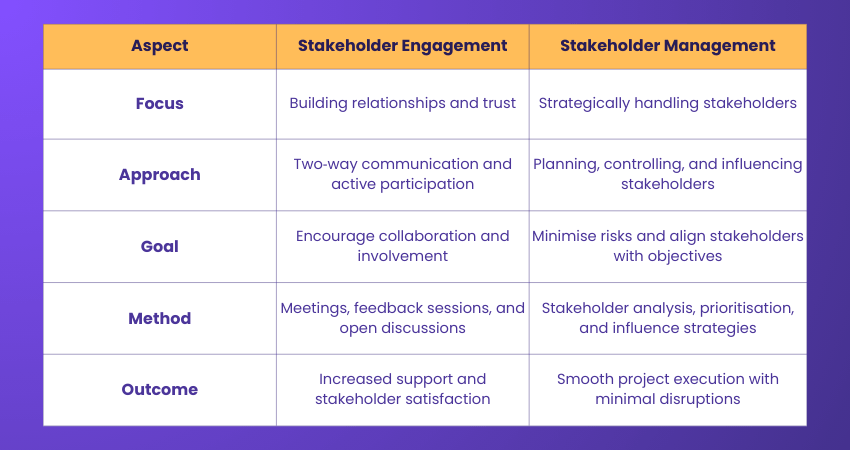
Although the terms are often used interchangeably, Stakeholder Engagement and Stakeholder Management are not exactly the same. Stakeholder Management focuses on identifying stakeholders, analysing their influence and interest, and creating a Stakeholder Engagement strategy to manage their expectations and impact on a project or organisation.
On the other hand, Stakeholder Engagement goes a step further. It emphasises building meaningful relationships with stakeholders through open communication, collaboration, and involvement. The table below offers a detailed differentiation between them:
Quick Tips for Engaging Stakeholders
Stakeholder Engagement is not a complicated process. Simple and consistent actions can help you build trust and maintain good relationships. Here are some easy tips you can follow:
1) Communicate Clearly and Regularly: Share updates in simple language and at regular intervals. This keeps everyone informed and reduces misunderstandings.
2) Listen to Their Feedback: Give stakeholders a chance to share their views and concerns. Listening carefully shows respect and helps build trust.
3) Understand What Matters to Them: Different stakeholders care about different things. Try to understand their needs so you can respond properly.
4) Be Honest and Open: Share both good news and challenges with your stakeholders. Being transparent helps create confidence and stronger relationships with them.
5) Be Flexible: Projects and stakeholder expectations can change, so adjust your communication and approach when needed.
Conclusion
Effective Stakeholder Engagement is vital for project success. By fostering open communication, building relationships, and involving stakeholders in decision-making, you can mitigate risks, build trust, and align expectations. A robust engagement strategy enhances project integrity, whether for small initiatives or large organisations, ensuring long-term success.
Step into the world of business insights and strategic decision-making with our Business Analyst Courses – Join now!
Frequently Asked Questions
What Tools are Used for Stakeholder Engagement?

Common Stakeholder Engagement tools include stakeholder mapping, stakeholder reporting, power-interest grids, communication plans, feedback forms, and collaboration platforms. These tools help gather stakeholder input and maintain a clear engagement throughout the project lifecycle.
What are the Considerations for Stakeholder Engagement?
Key considerations for effective Stakeholder Engagement include identifying the right stakeholders and understanding their concerns. It’s essential to foster open communication, involve them early, address issues promptly, build trust, remain adaptable, and maintain accountability throughout the project.
What are the Other Resources and Offers Provided by The Knowledge Academy?
The Knowledge Academy takes global learning to new heights, offering over 3,000+ online courses across 490+ locations in 190+ countries. This expansive reach ensures accessibility and convenience for learners worldwide.
Alongside our diverse Online Course Catalogue, encompassing 19 major categories, we go the extra mile by providing a plethora of free educational Online Resources like Blogs, eBooks, Interview Questions and Videos. Tailoring learning experiences further, professionals can unlock greater value through a wide range of special discounts, seasonal deals, and Exclusive Offers.
What is The Knowledge Pass, and How Does it Work?
The Knowledge Academy’s Knowledge Pass, a prepaid voucher, adds another layer of flexibility, allowing course bookings over a 12-month period. Join us on a journey where education knows no bounds.
What are the Related Courses and Blogs Provided by The Knowledge Academy?
The Knowledge Academy offers various Business Analyst Courses, including Creating Effective Stakeholder Engagement Training, Business Process Mapping Training and Business Analyst Fundamentals Training. These courses cater to different skill levels, providing comprehensive insights into Business Process.
Our Business Analysis Blogs cover a range of topics related to Stakeholder Engagement, offering valuable resources, best practices, and industry insights. Whether you are a beginner or looking to advance your Business Analysis skills, The Knowledge Academy's diverse courses and informative blogs have got you covered.

William Brown


Senior Business Analyst and Strategic Advisor
William Brown is a senior business analyst with over 15 years of experience driving process improvement and strategic transformation in complex business environments. He specialises in analysing operations, gathering requirements and delivering insights that support effective decision making. William’s practical approach helps bridge the gap between business goals and technical solutions.
View Detail
Upcoming Business Analysis Resources Batches & Dates
Date
 Creating Effective Stakeholder Engagement Training
Creating Effective Stakeholder Engagement Training
Fri 21st Aug 2026
Creating Effective Stakeholder Engagement Training
Fri 20th Nov 2026

 If you wish to make any changes to your course, please


