


 Top Rated Course


We may not have the course you’re looking for. If you enquire or give us a call on + 1-866 272 8822 and speak to our training experts, we may still be able to help with your training requirements.
Terraform vs Kubernetes: Key Differences
Lily Turner 26 March 2026Compare Terraform vs Kubernetes to learn how each tool supports Cloud Infrastructure and container orchestration, and where they best fit in DevOps workflows. They are highly integrated with the trends of AI and automation. Aids your business to take informed decisions for your infrastructure and Container Management needs.

Training Outcomes Within Your Budget!
We ensure quality, budget-alignment, and timely delivery by our expert instructors.
Table of Contents
When it comes to modern IT environments, tools that help manage servers and applications are more important than ever. Terraform and Kubernetes are two powerful tools used in modern DevOps, but they serve different roles. The debate between Terraform vs Kubernetes is more relevant than ever. These two powerful tools have redefined how organisations manage infrastructure and applications, but they serve distinct purposes.
Understanding the difference between them is a key to building efficient and scalable systems. With that, choosing the right tool can make a big difference in how smoothly your systems run and grow over time. Which tool will best support your journey to innovation? Let’s dive into the comparison.
Table of Contents
1) What is Terraform?
2) Pros and Cons of Terraform
3) What is Kubernetes?
4) Pros and Cons of Kubernetes
5) Terraform vs Kubernetes: Key differences
6) Challenges and Considerations: Terraform vs Kubernetes
7) Integrating Terraform and Kubernetes
8) Similarities Between Terraform and Kubernetes
9) Terraform vs Kubernetes: Which One to Choose?
10) What is Kubernetes Cloud Operator?
11) Conclusion
What is Terraform?
Terraform is an open-source Infrastructure as Code (IaC) tool developed by HashiCorp. It uses declarative configuration files called HashiCorp Configuration Language (HCL) to define and provision infrastructure resources across cloud providers and on-premises environments.
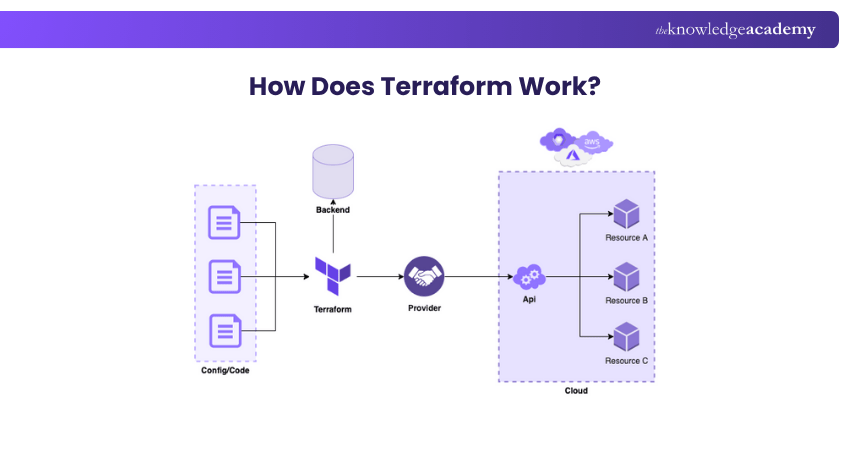
Terraform follows a "write once, run anywhere" approach, making creating, managing, and versioning your infrastructure easy. It works with many cloud providers like AWS, Azure, and Google Cloud, and helps ensure consistency across environments. This allows for version control, collaboration, and reproducibility.
Pros and Cons of Terraform
Terraform lets users define and manage infrastructure using a declarative programming language. With Terraform, teams can manage and update their computer systems like software. Here are some of the Pros and Cons of Terraform:
Pros of Terraform
1) Multi-cloud Support: Terraform works with many providers like Amazon Web Services (AWS), Azure, Google Cloud, and more, giving you flexibility.
2) Infrastructure as Code (IaC): You can write code to build and manage your cloud setup, making it easy to repeat and share.
3) Reusable Modules: You can create templates (modules) to reuse for different projects, saving time and ensuring consistency.
4) Automation Friendly: Terraform can automatically create, change, or delete resources without needing to click through dashboards.
Cons of Terraform
1) Steep Learning Curve: Can be challenging for beginners due to its powerful features, especially the syntax and planning stages.
2) Limited Built-in Workflow: Focuses on infrastructure, not on setting up or installing applications.
What is Kubernetes?
Kubernetes, an open-source container orchestration platform, is developed by Google. It helps you run and manage apps easily, especially when they are packaged in containers (like Docker). Instead of installing apps directly on one server, Kubernetes spreads them out across many computers and makes sure they keep running.
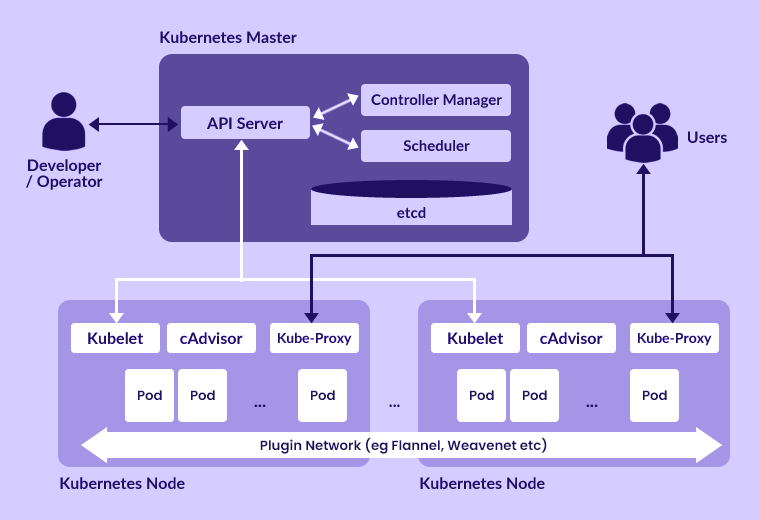
Kubernetes can start or stop applications automatically, restart them if they crash, and spread the workload evenly across multiple computers. It adjusts the number of app instances based on how much traffic you're getting, growing when demand is high, and shrinking when it is low. In simple terms, Kubernetes acts like a smart helper that keeps your apps running smoothly, even if something goes wrong or there is a sudden spike in users.
Pros and Cons of Kubernetes
So far, you would have explored what is Kubernetes and its role in automating the deployment, scaling, and management of containerised applications. Now, it is time for you to explore the pros and cons of it.
Pros of Kubernetes
1) Container Orchestration: Kubernetes manages the installation, scaling, and maintenance of packaged applications.
2) High Availability and Scalability: It efficiently distributes applications for high availability and scalability.
3) Ecosystem and Community: A large ecosystem and strong community support continuous improvement and growth.
4) Declarative Configuration: Kubernetes uses declarative configuration, simplifying management and maintenance of desired states.
Cons of Kubernetes
1) Complexity: Its complexity can be challenging for small projects or teams without container orchestration experience.
2) Resource Consumption: Kubernetes requires a lot of resources for optimal performance, which can be costly.
Terraform vs Kubernetes: Key Differences
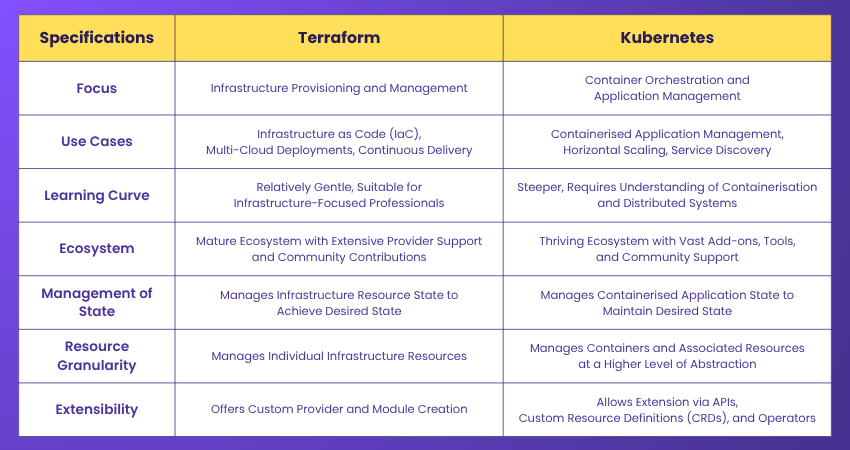
When it comes to comparing Terraform vs Kubernetes, it's essential to understand their primary focuses, features, and use cases. Let's delve deeper into the difference:
Infrastructure Provisioning
Terraform primarily focuses on infrastructure provisioning. It empowers you to define and manage various infrastructure resources, like Virtual Machines, networks, and storage. With its declarative configuration files, you can ensure consistent and unified interactions with multiple cloud providers and on-premises environments.
On the other hand, Kubernetes is capable of provisioning infrastructure resources using tools like Terraform. However, it mainly focuses on container orchestration and application management. Kubernetes excels at automating the deployment, management, and scaling of containerised applications across clusters of hosts.
Container Orchestration
When it comes to container orchestration, Kubernetes takes the spotlight. It offers robust features like automatic load balancing, horizontal scaling, and service discovery. With Kubernetes, you can effortlessly deploy and scale applications, ensuring efficient distribution of containers throughout the cluster.
Terraform doesn't specifically focus on container orchestration. It can still be used to provision the necessary infrastructure for running Kubernetes clusters or other container orchestration platforms. In this scenario, it handles the underlying infrastructure, while Kubernetes takes charge of container orchestration.
Expertise in automating workflows and Infrastructure Management with our Certified DevOps Professional (CDOP) Course - Join today!
Scalability and Flexibility
Both Terraform and Kubernetes provide scalability and flexibility but in different contexts. Terraform enables horizontal scalability by creating multiple instances of resources, like Virtual Machines or containers. It also allows you to scale your infrastructure horizontally, accommodating increased demand and traffic.
Kubernetes, on the other hand, enables horizontal scaling by increasing the number of container instances. With built-in mechanisms for horizontal scaling, Kubernetes ensures your applications can handle varying workloads while efficiently utilising resources within the cluster.
Learning Curve
Terraform has a relatively gentle learning curve, especially for individuals familiar with infrastructure concepts and declarative configurations. With the use of Terraform Modules, users can streamline their workflows and enhance the organisation of their infrastructure code. Its simple syntax and declarative approach make it accessible and easy to grasp, enabling users to get started quickly.
On the other hand, Kubernetes has a steeper learning curve because of its features and complex concepts such as pods, services, and deployments. Gaining proficiency in Kubernetes requires a deeper understanding of containerisation and distributed systems. However, Kubernetes offers unparalleled power and flexibility for managing containerised applications.
Ecosystem and Community Support
Terraform has a mature and extensive ecosystem with many providers, modules, and community contributions. It supports major cloud providers like AWS, Azure, Google Cloud, and various other infrastructure technologies. Its vast ecosystem and active community ensure that you can find resources, documentation, and community support whenever needed.
In the difference between Kubernetes and Terraform, Kubernetes, similarly, enjoys a thriving ecosystem and a large community of users and contributors. It receives extensive support from cloud providers, tooling vendors, and the open-source community. The ecosystem offers a rich set of add-ons, tools, and frameworks that enhance and extend the functionality of Kubernetes.
Explore effective designing with optimal solutions using AWS services by signing up for our AWS Certification Training today!
Management of State
Terraform manages the state of your infrastructure resources, keeping track of their current and desired states. This lets Terraform to determine what changes need to be applied to achieve the desired state. Its state file helps track and manage infrastructure changes over time.
On the other hand, Kubernetes focuses on managing the state of containerised applications. It ensures that the desired state of applications, as specified in the deployment manifests, is maintained across the cluster. Kubernetes continuously monitors the state of applications and makes adjustments to ensure they are running as intended.
Understand the basics of programming and how to solve problems creatively with our Programming Training – Join now!
Resource Granularity and Abstraction
Terraform operates at a higher level of resource granularity. It allows you to define and manage individual infrastructure resources, like Virtual Machines, networks, and storage. This level of control is useful when you need fine-grained management and customisation of infrastructure components.
In contrast, Kubernetes operates at a higher level of abstraction, focusing on managing containers and their associates. It removes low-level infrastructure details and provides a unified interface for managing applications. This level of abstraction simplifies deployment and management of applications, especially in complex, multi-container environments.
Extensibility and Customisation
Terraform provides a flexible and extensible framework to create custom providers and modules. This enables you to integrate with various Application Programming Interfaces (APIs),services, and technologies that might not have direct support. Its extensibility allows you to tailor it to your specific infrastructure requirements.
Kubernetes, being an open-source platform, also offers extensibility and customisation options. It provides a rich set of APIs, allowing you to extend and integrate additional functionality into Kubernetes. Custom Resource Definitions (CRDs) and operators enable you to create and manage custom resources and controllers, further enhancing the capabilities of Kubernetes.
Boost continuous integration, testing, and deployment strategies with our DevOps Engineering Foundation Course – Join soon!
Challenges and Considerations - Terraform vs Kubernetes
There are several challenges and considerations that come with employing Terraform or Kubernetes for your business. Here are some of their challenges and considerations:
1) Purpose
1) Challenge: Different layers as Terraform for infrastructure, Kubernetes for apps
2) Consideration: Use both together, each for its strength
2) State Management
1) Challenge: Terraform uses static state files; Kubernetes is dynamic
2) Consideration: Use remote state for Terraform and GitOps for Kubernetes
3) Resource Lifecycle
1) Challenge: Terraform expects full control; Kubernetes is dynamic
2) Consideration: Avoid managing Kubernetes resources with Terraform
4. Drift Handling
1) Challenge: Terraform detects but doesn’t fix drift; Kubernetes auto-reconciles
2) Consideration: Use both for their respective strengths
Integrating Terraform and Kubernetes
Here is a detailed explanation of how you can integrate Terraform and Kubernetes. Follow the steps below to put it into action.
1) Provision Infrastructure with Terraform
1) Use Terraform to create virtual machines or Kubernetes services (like EKS, GKE, or AKS)
2) Automates cloud resource setup (nodes, VPCs, IAM roles)
3) You will get a working Kubernetes cluster, ready for apps
2) Install Kubernetes Tools
1) Once cluster is created, configure access using command-line tool to talk to Kubernetes
2) Kubernetes config files (often generated by Terraform)
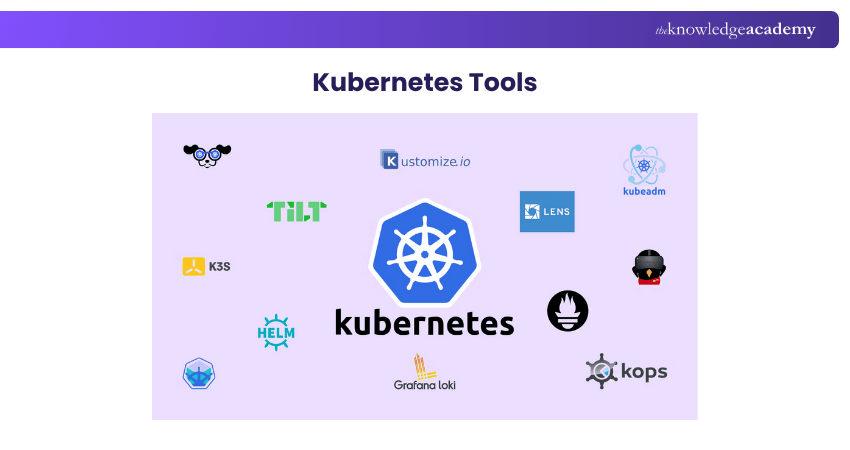
3) Use Kubernetes-native tools (Helm, Kustomize) for complex workloads
3) Deploy Apps to Kubernetes
1) Now that your cluster is ready, you can write Kubernetes manifests (YAML files)
2) Use Terraform to provision infrastructure
3) Deploy workloads using Continuous Integration and Delivery (CI/CD) pipelines
4) Use CI/CD Pipelines for Automation
1) Combine everything into one automated workflow
2) A CI/CD tool (like GitHub Actions, GitLab CI, or Jenkins) waits until the cluster is ready
3) Then applies Kubernetes manifests to deploy the application
5) Security Alignment
1) Terraform manages the cloud IAM
2) Kubernetes uses the RBAC and network policies
Define clear boundaries and use centralised secrets management like Vault, and AWSProtect applications and data from common security threats by signing up for our Security Engineering on AWS Training anytime!
Similarities Between Terraform and Kubernetes
Kubernetes and Terraform have unique features and capabilities. Here's a comparison of their similarities:
1) DevOps Tools: Both Kubernetes and Terraform are used by Site Reliability Engineers, DevOps, and Cloud Engineers.
2) Open Source & Cloud Agnostic: Both are open-source and have strong community support. They aim to be cloud, platform, and API agnostic, with integrations for common cloud providers.
3) Declarative Configuration: Both tools use declarative configurations to define setup. Though they use different languages, the approach is conceptually similar.
4) State Management: They both manage the state, applying logic to align the desired state in configuration files with the current running state.
5) Extensibility: Kubernetes and Terraform are highly extensible through external plugins, APIs, or custom resources.
6) Well-suited for Scale: Both are designed for large-scale environments and can support significant workloads.
7) CI/CD Compatibility: They offer automatable workflows and can be integrated into CI/CD pipelines to manage their lifecycle.
Terraform vs Kubernetes: Which One to Choose?
Terraform and Kubernetes are neither competitors nor rivals. They are complementary tools in a modern DevOps toolkit. Terraform shines at building infrastructure across any cloud, while Kubernetes excels at managing the applications that run on it.
The choice between Terraform and Kubernetes ultimately depends on your specific use case and requirements. Here are a few factors to consider:
1) Terraform is a better choice if you primarily need infrastructure provisioning and management.
2) If you are working with containerised applications and require advanced container orchestration features, Kubernetes is the way to go.
3) If you need both infrastructure provisioning and container orchestration, you can use Terraform to provision the underlying infrastructure and then deploy and manage Kubernetes clusters.
What is Kubernetes Cloud Operator?
Kubernetes Cloud Operators are specialised software extensions that automate the management of complex applications and services on Kubernetes, often in cloud environments. They extend Kubernetes' capabilities by encoding operational knowledge into custom controllers.
These operators simplify tasks such as provisioning, scaling, backups, and updates by integrating directly with cloud provider APIs. Instead of doing everything manually, you can let the operator handle tasks and services when something goes wrong.
Conclusion
Terraform vs Kubernetes are not competing tools, but more of complementary ones. Terraform excels at infrastructure provisioning. On the other hand, Kubernetes shines in container orchestration and effectively manages containerised applications. For modern DevOps workflows, using both together often delivers the most powerful and automated solution. By understanding their strengths, you can decide which tool is best suited for your needs.
Enhance your Machine Learning skills with our comprehensive Kubeflow Training – Register soon!
Frequently Asked Questions
How Many Pods can Kubernetes Handle?

Kubernetes can handle thousands of pods per cluster, depending on the cluster's size and configuration. The precise number depends on factors such as node capacity, network configuration, and resource limitations. However, it's commonly tested to manage up to 150,000 pods and 5,000 nodes in large-scale environments.
Is Terraform a Frontend or Backend?
Terraform is neither a frontend nor a backend; it's an Infrastructure-as-Code (IaC) tool. It uses configuration files to define and manage resources across cloud providers. Terraform can interact with backend systems like cloud APIs to store state, but its role is to automate infrastructure provisioning, not UI or backend development.
What are the Other Resources and Offers Provided by The Knowledge Academy?
The Knowledge Academy takes global learning to new heights, offering over 3,000+ online courses across 490+ locations in 190+ countries. This expansive reach ensures accessibility and convenience for learners worldwide.
Alongside our diverse Online Course Catalogue, encompassing 17 major categories, we go the extra mile by providing a plethora of free educational Online Resources like Blogs, eBooks, Interview Questions and Videos. Tailoring learning experiences further, professionals can unlock greater value through a wide range of special discounts, seasonal deals, and Exclusive Offers.
What is The Knowledge Pass, and How Does it Work?
The Knowledge Academy’s Knowledge Pass, a prepaid voucher, adds another layer of flexibility, allowing course bookings over a 12-month period. Join us on a journey where education knows no bounds.
What are the Related Courses and Blogs Provided by The Knowledge Academy?
The Knowledge Academy offers various DevOps Certification, including Certified DevOps Professional Course, DevOps Foundation Certification and DevOps Engineering Foundation Course. These courses cater to different skill levels, providing comprehensive insights into Kubernetes Tools.
Our Programming and DevOps Blogs cover a range of topics related to Terraform and Kubernetes, offering valuable resources, best practices, and industry insights. Whether you are a beginner or looking to advance your Pragramming and DevOps skills, The Knowledge Academy's diverse courses and informative blogs have you covered.

Lily Turner


Senior AI/ML Engineer and Data Science Author
Lily Turner is a data science professional with over 10 years of experience in artificial intelligence, machine learning, and big data analytics. Her work bridges academic research and industry innovation, with a focus on solving real-world problems using data-driven approaches. Lily’s content empowers aspiring data scientists to build practical, scalable models using the latest tools and techniques.
View Detail

 If you wish to make any changes to your course, please


