


 Top Rated Course

We may not have the course you’re looking for. If you enquire or give us a call on +852 2592 5349 and speak to our training experts, we may still be able to help with your training requirements.
What Is Dynamic Pricing? How It Works and Examples
James Smith 02 April 2026Dynamic pricing, also called surge or demand-based pricing, adjusts prices in real time based on demand, supply, competitor rates, and customer behaviour. It helps businesses maximise revenue while staying competitive. Using data and analytics, organisations can quickly adjust prices and respond to changing demand.

Training Outcomes Within Your Budget!
We ensure quality, budget-alignment, and timely delivery by our expert instructors.
Table of Contents
Have you ever noticed how the price of a flight, hotel room, or even a rideshare changes in a flash? That’s Dynamic Pricing at work! Think of it like a digital price tag that updates itself based on time, demand and competition. It’s not just a strategy; it’s a smart, ever-adapting system powering everything from Amazon deals to airline tickets.
In this blog, you'll learn What is Dynamic Pricing, how it works and why companies use it so frequently. So read on and gain a firm grasp on what it means for both businesses and customers in today’s fast-moving, tech-driven marketplace!
Table of Contents
1) What is Dynamic Pricing?
2) Why Is Dynamic Pricing Important?
3) How Dynamic Pricing Works?
4) Types of Dynamic Pricing
5) Examples of Dynamic Pricing
6) Pros and Cons of Dynamic Pricing
7) When to Use Dynamic Pricing?
8) How to Create a Dynamic Pricing Strategy?
9) Disadvantages of Dynamic Pricing
10) Conclusion
What is Dynamic Pricing?
Dynamic Pricing means changing the price of a product based on factors like market demand, season, supply, or competitor prices. Based on real-time data, prices can change quickly, sometimes every few minutes. Amazon is a well-known example of using algorithms to update prices based on shopper activity constantly.
This pricing method isn't just for online stores. Many industries, like airlines, hotels, ridesharing, and entertainment, now use it. For example, airlines change ticket prices based on travel dates and demand, while apps like Uber raise prices during busy times or in crowded areas.
Dynamic Pricing Methods
There are different ways companies can change prices using Dynamic Pricing. Here are a few simple examples:
a) Peak Dynamic Pricing: Prices go up during busy or high-demand seasons. For example, swimsuits may cost more in summer, and gifts might be priced higher around holidays.
b) Segmented Dynamic Pricing: Prices vary based on location. In areas where the cost of living is higher or people earn more, the same product's prices may be higher.
c) Inventory-driven Dynamic Pricing: Prices depend on stock levels. You may lower the price if you have too much of an item. You can increase the price if it’s popular and nearly sold out.

Why Is Dynamic Pricing Important?
Dynamic pricing plays a vital role in helping businesses stay flexible, competitive, and data-driven in today’s fast-changing market environment.
1) Responds to Market Changes Quickly: Dynamic pricing allows businesses to adjust prices in real time instead of relying on fixed pricing, helping them stay aligned with changing demand, competition, and inventory levels.
2) Improves Revenue and Profitability: Businesses can raise prices during high demand and reduce them during low demand, maximising sales opportunities while minimising losses and maintaining steady cash flow.
3) Enhances Competitiveness: By instantly reacting to competitor pricing, organisations can remain relevant in fast-moving markets and avoid losing customers due to outdated pricing strategies.
4) Supports Data-driven Decision-making: Using AI and machine learning, businesses can analyse large volumes of data to predict demand and set more accurate and effective pricing strategies.
5) Balances Supply and Demand: Dynamic pricing helps manage demand fluctuations, optimise inventory, and ensure efficient use of resources across different time periods and customer segments.
How Dynamic Pricing Works?
Dynamic Pricing continuously adjusts prices using real-time data, rules, and algorithms rather than fixed price lists. Businesses analyse market conditions and automatically update prices to match demand and maximise revenue through a clear, step-by-step process.
1) Data Collection
Systems collect live data such as customer demand, inventory levels, time, location, competitor prices, and customer behaviour.
2) Data Analysis
Algorithms analyse this data to identify patterns, demand spikes, price sensitivity, and market trends.
3) Price Calculation
Based on predefined rules or AI models, the system calculates the most suitable price to meet business goals like higher revenue, faster sales, or competitiveness.
4) Real-time Price Updates
Prices are updated instantly across platforms such as websites, apps, or booking systems without manual intervention.
5) Monitoring and Optimisation
Performance is continuously tracked, and pricing rules are refined to improve accuracy, fairness, and results over time.
Types of Dynamic Pricing
Types of Dynamic Pricing describe the different methods businesses use to adjust prices based on demand, competition, time, and customer behaviour. The key approaches are outlined below:
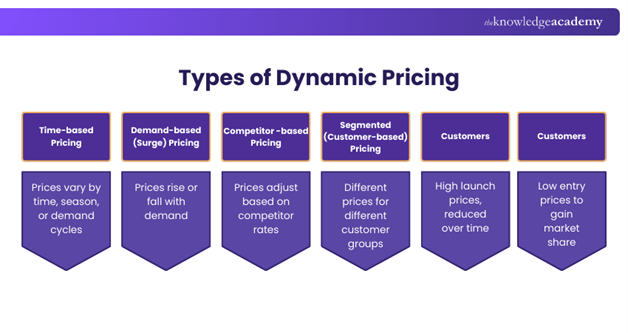
1) Time-based Pricing
Time-based pricing adjusts prices according to specific time periods such as peak hours, weekends, or seasonal demand. It is commonly used in hotels, airlines, and restaurants to maximise revenue during high-demand periods while encouraging purchases during off-peak times.
2) Demand-based (Surge) Pricing
Demand-based pricing increases prices when customer demand rises and lowers them when demand declines. This model helps businesses manage limited supply efficiently and maximise revenue during peak periods, as seen in ride-sharing services, event ticketing, and airline pricing.
3) Competitor-based Pricing
Competitor-based pricing involves adjusting prices in response to competitors’ pricing strategies. Businesses use real-time data and automated tools to monitor market rates, ensuring their prices remain competitive without constant manual intervention in fast-changing markets.
4) Segmented (Customer-based) Pricing
Segmented pricing offers different prices to different customer groups based on factors such as location, loyalty status, browsing behaviour, or purchasing history. This approach helps businesses personalise pricing, improve customer retention, and maximise revenue from varied customer segments.
5) Price Skimming
Price skimming sets a high initial rate for a new product or service and gradually reduces it over time. It targets early adopters willing to pay more before attracting price-sensitive customers as the product becomes more widely available and competition increases in the market.
6) Penetration Pricing
Penetration pricing introduces a product or service at a low initial price to quickly attract customers and gain market share. Once a strong customer base is established, prices are gradually increased. This strategy helps businesses grow volume, build loyalty, and compete effectively in new markets.
Learn how to identify actions for resolving vendor issues and disputes with our Vendor Management Training – Register today!
Examples of Dynamic Pricing
Let's explore some common examples of Dynamic Pricing to better understand the concept:
Hotels
a) Prices change based on the season, weekdays vs. weekends, or local events
b) The rates increase during holidays or special occasions due to higher demand
c) The prices are lowered in off-peak periods to attract more guests
d) It helps maximise room occupancy and revenue
Utility Providers
a) Electricity prices can differ depending on the time of day and demand
b) Higher rates are applied during peak hours (like evenings)
c) Lower rates are offered during off-peak times to encourage usage
d) It helps balance energy supply and reduce strain on the grid
Google Ads
a) Google Ads uses a bidding system to price ad placements
b) Cost Per Click (CPC) changes based on keyword demand and competition
c) The prices vary depending on the time of day or the popularity of keywords
d) It allows businesses to manage Budgets while competing for visibility
Pros and Cons of Dynamic Pricing
Dynamic Pricing adjusts prices in real time based on demand, competition, and customer behaviour. While it can boost revenue and efficiency, it must be managed carefully to maintain customer trust and brand value, as outlined below.
Pros of Dynamic Pricing
Here are the pros of Dynamic Pricing:
a) Increased Revenue and Profitability:
By raising prices during peak demand and optimising price points, businesses can maximise margins and drive measurable revenue growth, often leading to higher overall Sales performance.
b) Enhanced Competitiveness:
Real-time, data-driven pricing enables organisations to react quickly to competitor price changes, helping them stay relevant and competitive in fast-moving markets.
c) Improved Inventory Management:
Dynamic Pricing helps clear slow-moving stock through discounts while maximising returns on high-demand, limited-availability items.
d) Balanced Demand Management:
Adjusting prices based on availability helps control demand surges, particularly in industries like travel, hospitality, and Event Management.
Cons of Dynamic Pricing
Here are the cons of Dynamic Pricing:
a) Customer Backlash and Trust Issues:
Frequent or unclear price changes can feel unfair, leading customers to perceive pricing as manipulative or unethical.
b) Risk of Price Wars:
Automated competitor-based pricing may trigger aggressive price matching, reducing margins across the market.
c) Implementation Complexity and Cost:
Effective Dynamic Pricing requires advanced software, reliable data, and analytics expertise, which can increase operational costs.
d) Potential Brand Damage:
Without transparency and clear communication, constant price fluctuations can weaken brand loyalty and long-term customer relationships.
Secure a sustainable future for your business! Sign up for our Business Sustainability Course now!
When to Use Dynamic Pricing?
Dynamic pricing should be used in situations where flexibility, real-time data, and quick decision-making are essential to maximise business performance. Below are the key scenarios where it can be effectively applied:
1) Changing Market Conditions: Dynamic pricing is useful when market conditions change often and quick, data-driven decisions are needed. It helps businesses respond effectively when demand, supply, or customer behaviour is unpredictable.
2) Fluctuating Demand: Prices can be increased during high demand, such as peak seasons, and reduced when demand drops. This helps maximise revenue while maintaining steady customer flow.
3) Varying Stock Levels: When inventory is limited, prices can be raised to protect margins. When there is excess stock, prices can be lowered to boost sales and avoid overstock.
4) Competitive Markets: In markets where competitors frequently change prices, dynamic pricing helps businesses stay competitive and avoid relying on outdated pricing strategies.
5) Use of Real-time Data: With access to data and analytics tools, businesses can adjust prices quickly based on customer behaviour and market trends, improving decision-making.
6) Online and Service-based Industries: It works well in industries where prices need to change based on demand, availability, and customer activity, helping improve overall revenue.
How to Create a Dynamic Pricing Strategy?
Follow these steps to craft the ideal Dynamic Pricing strategy:

1) Set Clear Business Goals: First, decide what you want to achieve with Dynamic Pricing. This could be to increase sales, manage stock better, stay ahead of competitors, or make customers happier. Clear targets will help shape your strategy and track your progress.
2) Gather and Understand Data: Collect data that affects your Pricing, such as:
a) How customers behave and what they buy
b) What your competitors are charging
c) Your stock levels and supply chain status
d) Seasonal trends and changes in demand
e) Use tools to study this Data and spot useful trends for pricing decisions
3) Pick the Right Pricing Method: Choose a pricing model that suits your business and market. Some options include:
a) Time-based: Prices change depending on time or season
b) Demand-based: Prices go up or down based on current demand
c) Segmented: Prices differ by location or customer group
d) Competitor-based: Prices change based on what competitors charge
4) Set Rules and Automate: Create clear rules for when and how prices should change. Use software to update prices automatically. This keeps your prices accurate and saves time.
5) Track Results and Improve: Regularly check how your pricing strategy is performing. Look at things such as sales, profit, and customer feedback. Use what you learn to fine-tune your pricing and get better results over time.
Secure a sustainable future for your business! Sign up for our Business Sustainability Course now!
Disadvantages of Dynamic Pricing
Despite the proven benefits, the process of Dynamic Pricing is not without its drawbacks. Let's explore some of these disadvantages below:
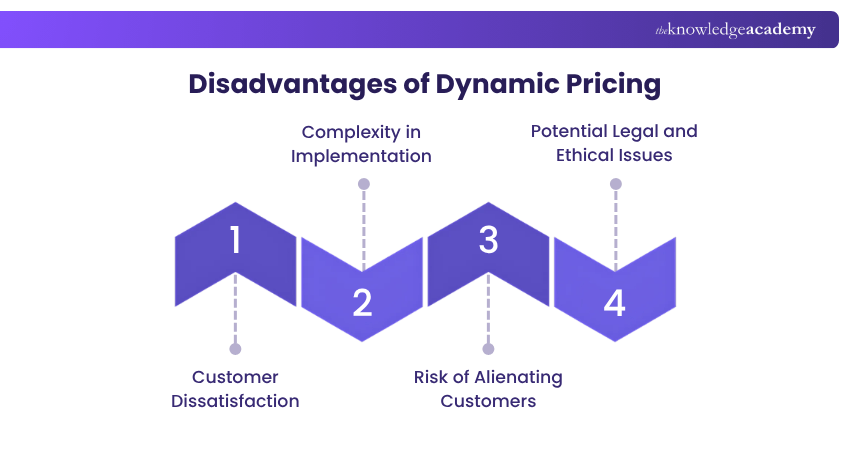
1) Customer Dissatisfaction
One of the significant risks of Dynamic Pricing is customer dissatisfaction. If customers notice that prices fluctuate frequently or feel they are being charged unfairly, it can lead to a loss of trust. This is particularly true if customers discover they paid more than others for the same Product or Service.
2) Complexity in Implementation
Implementing a Dynamic Pricing strategy can be challenging and requires sophisticated algorithms and technology. Businesses need to invest in the right tools and expertise to manage and analyse the vast amount of data required to make real-time pricing decisions.
3) Risk of Alienating Customers
Dynamic Pricing can alienate customers, especially if they perceive the pricing model as unfair or manipulative. This is particularly a concern for businesses that rely on customer loyalty and repeat business. Careful consideration must be given to how Pricing changes are communicated to customers.
4) Potential Legal and Ethical Issues
There are legal and ethical concerns with Dynamic Pricing, particularly around price discrimination. In some regions, charging different prices to different customers for the same product might lead to legal challenges. Businesses need to be aware of the legal issues of their pricing strategies.
Decode the numbers behind inventory for profitable precision! Sign up for our Inventory Accounting and Costing Course now!
Conclusion
Understanding What is Dynamic Pricing helps businesses unlock smarter, more flexible pricing decisions in competitive markets. By using real-time data and adaptive models, organisations can respond quickly to demand changes, optimise revenue, and create pricing strategies that balance profitability with long-term customer trust.
Develop essential communication, negotiation, and conflict resolution skills with our Management Courses – Join now!
Frequently Asked Questions
How can Businesses Avoid Customer Backlash From Dynamic Pricing?

To prevent customer backlash, companies should communicate their pricing change decisions effectively and provide proper rationales. They also have a chance to continue gaining customer loyalty through promotions or providing gifts to clients.
What Is an Example of Dynamic Pricing in B2B?
A common example of dynamic pricing in B2B is seen in manufacturing companies like General Electric (GE), which adjust prices for products such as jet engines based on demand, competition, and market conditions. For instance, prices may increase when demand is high and decrease during slow periods to stay competitive and maximise profits.
What are the Other Resources and Offers Provided by The Knowledge Academy?
The Knowledge Academy takes global learning to new heights, offering over 3,000+ online courses across 490+ locations in 190+ countries. This expansive reach ensures accessibility and convenience for learners worldwide.
Alongside our diverse Online Course Catalogue, encompassing 17 major categories, we go the extra mile by providing a plethora of free educational Online Resources like Blogs, eBooks, Interview Questions and Videos. Tailoring learning experiences further, professionals can unlock greater value through a wide range of special discounts, seasonal deals, and Exclusive Offers.
What is The Knowledge Pass, and How Does it Work?
The Knowledge Academy’s Knowledge Pass, a prepaid voucher, adds another layer of flexibility, allowing course bookings over a 12-month period. Join us on a journey where education knows no bounds.
What are the Related Courses and Blogs Provided by The Knowledge Academy?
The Knowledge Academy offers various Management Courses, including the Costing and Pricing Training, Team Development Training, and Economics for Managers Course. These courses cater to different skill levels, providing comprehensive insights into Settlement Agreements.
Our Business Skills Blogs cover a range of topics related to Dynamic Pricing, offering valuable resources, best practices, and industry insights. Whether you are a beginner or looking to advance your Pricing and finance knowledge, The Knowledge Academy's diverse courses and informative blogs have got you covered.

James Smith


Digital Marketing Manager and Trainer
James Smith is a digital marketing professional with over a decade of experience in SEO, content strategy, paid media and analytics. He has supported both SMEs and global brands in transforming their digital presence. James’s writing and training are rooted in results-driven tactics and the latest marketing trends.
View Detail
Upcoming Business Skills Resources Batches & Dates
Date
 Costing and Pricing Training
Costing and Pricing Training
Fri 17th Jul 2026
Costing and Pricing Training
Fri 20th Nov 2026

 If you wish to make any changes to your course, please


