


 Top Rated Course

We may not have the course you’re looking for. If you enquire or give us a call on +30 2111995372 and speak to our training experts, we may still be able to help with your training requirements.
Anger Management Tips Everyone Should Know
The Knowledge Academy 22 April 2026Anger Management focuses on recognising emotions, understanding triggers and responding thoughtfully rather than reacting impulsively in stressful situations. By recognising triggers, practising self-control and communicating clearly, anger can be managed in healthier ways. It reduces conflict and protects mental health with greater calm.

Training Outcomes Within Your Budget!
We ensure quality, budget-alignment, and timely delivery by our expert instructors.
Table of Contents
Anger can take over in seconds, affecting what you say, how you act, and the relationships you value most. From daily frustrations to deeper emotional triggers, unmanaged anger often causes more damage than the situation itself. However, anger can be controlled with the right awareness and Anger Management techniques.
In this blog, you will learn practical Anger Management tips that help you stay calm, communicate better, and respond thoughtfully in challenging situations. Let's begin to take control of your emotions!
Table of Contents
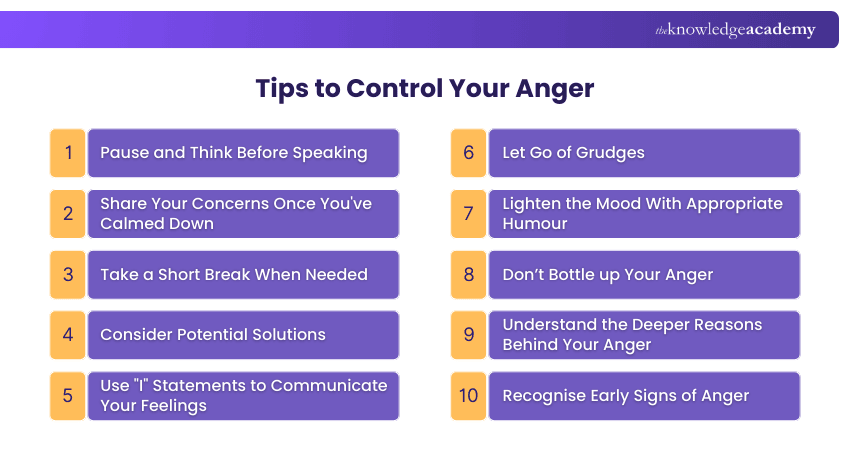
1) Tips to Control Your Anger
a) Pause and Think Before Speaking
b) Share Your Concerns Once You've Calmed Down
c) Take a Short Break When Needed
d) Consider Potential Solutions
e) Use "I" Statements to Communicate Your Feelings
f) Let Go of Grudges
g) Lighten the Mood With Appropriate Humour
h) Don’t Bottle up Your Anger
i) Understand the Deeper Reasons Behind Your Anger
j) Recognise Early Signs of Anger
2) Conclusion
Tips to Control Your Anger
Anger Management refers to the ability to recognise anger, understand its causes, and respond in a calm and controlled way rather than reacting emotionally or suddenly. It focuses on managing emotional responses, so anger does not harm relationships, decisions, or mental well-being.
By learning simple and practical techniques, it becomes easier to handle frustrating situations with clarity and balance. Let’s now explore some effective tips that can help you with Anger Management in everyday life:
1) Pause and Think Before Speaking
When anger appears, it often pushes us to react immediately. We may raise our voices, say hurtful words, or act without thinking. But pausing and thinking before speaking allows your mind to slow down and prevent words you may regret later.
To implement this:
1) Take three slow breaths before responding
2) Count silently from one to five
3) Ask yourself what outcome you want
4) Delay your response if emotions feel intense
5) Remind yourself that silence is sometimes safer than words
2) Share Your Concerns Once You've Calmed Down
Talking while angry usually makes situations worse because emotions are high and words can come out harshly. Once you calm down, you can explain your thoughts more clearly. It also increases the chance that the other person will listen rather than become defensive.
You can try to:
1) Step away until emotions settle
2) Choose a quiet and appropriate time to talk
3) Focus on the issue, not the person
4) Keep your tone calm and respectful
5) Be open to listening as well as speaking
3) Take a Short Break When Needed
If your emotions feel overwhelming, stepping away is often the best option. A short break helps your body and mind relax. You need to understand that taking a break does not mean ignoring the problem. It simply gives you time to cool down so you can return with a clearer mindset.
To do this, you can:
1) Walk away from the situation briefly
2) Go for a short walk or stretch
3) Sit quietly in another room for a few minutes
4) Avoid continuing the discussion immediately
5) Agree to return to the topic later
4) Consider Potential Solutions
Anger often focuses on what is wrong, and this increases frustration. Instead of staying stuck on the problem, think about what can help improve the situation. Ask yourself what can be done next. Focusing on solutions gives you a sense of control and helps you move forward.
To look at solutions, you may try to:
1) Ask yourself what can be changed
2) Break the issue into smaller steps
3) Focus on what is within your control
4) Look for compromise instead of blame
5) Write down possible solutions
5) Use "I" Statements to Communicate Your Feelings
How you speak and express yourself matters when emotions are involved. Using “I” statements as one of the Anger Management Strategies helps explain how you feel without blaming others. For example, saying “I feel upset when this happens” sounds calmer than “You always do this.”
To follow this, consider the tips below:
1) Focus on your feelings, not faults
2) Avoid blaming language
3) Be specific about the situation
4) Explain what you need or expect going forward
5) Keep your tone steady and calm
Discover proven strategies to handle pressure calmly with our Stress Management Course – Register today!
6) Let Go of Grudges
Holding onto anger from the past keeps emotional pain alive and can disturb your mental health. Letting go does not mean forgetting what happened or allowing it again. It means choosing peace instead of holding onto resentment, and it helps you feel lighter.
To choose peace with yourself, you may need to:
1) Accept that the past cannot be changed
2) Focus on peace rather than being right
3) Limit repeated negative thoughts
4) Practice forgiveness for your own well-being
5) Set healthy boundaries moving forward
7) Lighten the Mood With Appropriate Humour
Humour can help reduce tension when used carefully. A gentle joke or light comment can shift the mood and remind everyone that the situation does not have to become a fight. However, humour has to be respectful and used only when it feels appropriate.
For this, you can:
1) Use humour only when the moment feels right
2) Avoid sarcasm or mockery
3) Keep jokes light and kind
4) Try humour to connect, not dismiss
5) Stop immediately if humour upsets others
8) Don’t Bottle up Your Anger
Suppressing anger can lead to emotional buildup and stress. When emotions are pushed down, they often come out later in unhealthy ways. It is important to express anger safely. This is because expressing it in healthy ways prevents long-term emotional harm.
To avoid suppressing your anger, you might:
1) Talk to someone you trust
2) Write your thoughts in a journal
3) Release energy through exercise
4) Express feelings calmly and honestly
5) Avoid pretending everything is fine
9) Understand the Deeper Reasons Behind Your Anger
Anger often hides other emotions such as sadness, fear, or disappointment. Understanding what is really behind your anger, that is, its root cause, helps you respond better. Taking time to reflect on why you feel angry allows you to address the real issue.
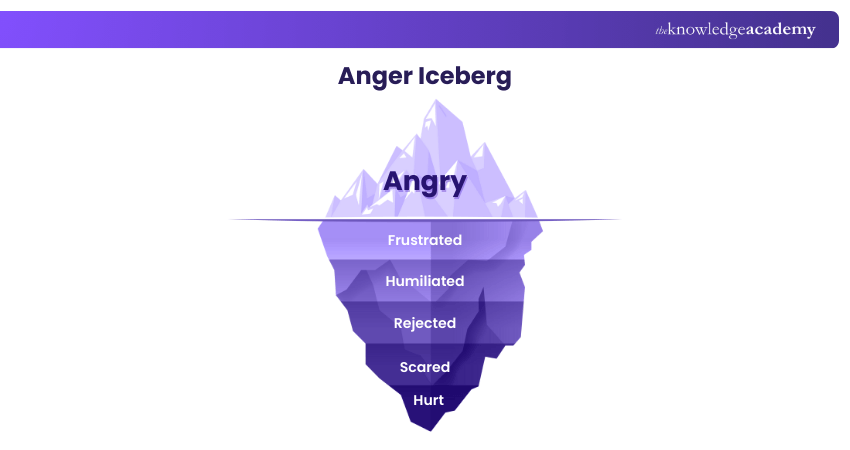
To understand it, you need to:
1) Ask yourself what truly upset you
2) Reflect on past experiences
3) Identify your unmet needs or boundaries
4) Notice emotional patterns
5) Practice self-awareness regularly
10) Recognise Early Signs of Anger
Anger usually gives warning signs before it fully appears. Noticing these early signals helps you act before anger changes into a bigger issue. Early awareness makes it easier to calm yourself and stay in control.
To find the early signs, you can:
1) Watch for physical tension
2) Notice changes in breathing
3) Pay attention to negative thoughts
4) Acknowledge irritation early
5) Act quickly using calming techniques
11) Identify What Triggers Your Anger
Some situations or behaviours may trigger anger easily. These triggers could include feeling rushed, criticised, ignored, or treated unfairly. By recognising them, you can think of ways to manage them. Keeping track of patterns helps you understand your emotional responses.
To put it in practice, you can follow the actions such as:
1) Observe patterns in angry moments
2) Keep a note of repeated triggers
3) Identify people or situations involved
4) Reflect on why certain things bother you
5) Plan responses in advance
Gain the skills to understand emotions and opinions with our Sentiment Analysis Training – Join now!
12) Practice Quick Calming Techniques
Simple calming techniques can help reduce anger quickly. Such techniques help your nervous system relax and bring your emotions back into balance. With regular practice, these techniques become easier to use and more effective over time.
Some of the quick calming techniques are:
1) Practice deep breathing
2) Relax your muscles slowly
3) Focus on the present surroundings
4) Use grounding techniques
5) Step away from stressful stimuli
13) Express Anger in Healthier Ways
Anger does not need to be aggressive to be expressed. There are various healthy ways to express anger in your daily life. It prevents you from causing harm to yourself and to others around you.
Let's check a few healthy ways of expressing your anger:
1) Speak assertively, not aggressively
2) Use mild physical activity to release tension
3) Try creative outlets like drawing or music
4) Write down angry thoughts safely
5) Choose a calm discussion over confrontation
14) Maintain Your Composure Through Self-care
Lack of sleep, stress, and poor habits can increase irritability. Taking care of your body helps control emotions. Regular self-care helps keep your emotions steady and makes it easier to handle everyday stress.
To follow proper self-care, you can:
1) Get enough sleep regularly
2) Eat balanced meals
3) Keep yourself active in some activities
4) Schedule time to relax
5) Reduce unnecessary stress
15) Reflect on Whether Your Anger is Constructive
Sometimes, a few angry points to real problems that need your attention. Reflecting on whether anger is helping or hurting you can be useful. If anger encourages positive change, it can be helpful. If it only causes stress, it may be time to let it go.
To self-reflect, here is what you can do:
1) Ask what anger is trying to tell you
2) Decide if action is needed
3) Separate emotion from reaction
4) Choose growth over conflict
5) Let go if anger serves no purpose
16) Prepare a Personal "Calm-down" Toolkit
A calm-down toolkit includes activities or tools that help you relax when emotions rise. It can be different for everyone, depending on what helps you feel calm and safe. Having these tools ready makes it easier to manage anger before it becomes overwhelming.
Here are the things that you can add to your toolkit:
1) List activities that calm you
2) Save calming music or quotes
3) Practice breathing exercises
4) Keep stress relief items nearby
5) Write and read some relaxing affirmations
Turn difficult interactions into productive outcomes with our Dealing with Difficult People Training – Sign up soon!
17) Open up and Discuss Your Feelings
Talking about anger helps release emotional tension. Sharing your feelings with someone you trust can bring clarity and relief. Even open conversations reduce loneliness and help you feel supported during challenging times.
To do this, you can follow the tips below:
1) Speak honestly with trusted people
2) Choose a safe and calm setting
3) Avoid blaming language
4) Listen as much as you talk
5) Seek professional help if needed
18) Concentrate on the Facts of the Situation
When you are angry, your mind may exaggerate or assume the worst of any situation. Focusing on the facts and what has actually happened helps reduce emotional thinking. Also, separating facts from assumptions allows you to think clearly and avoid unnecessary conflict.
To implement this, you might have to:
1) Avoid jumping to conclusions
2) Ask for clarification
3) Stay objective
4) Respond based on reality
5) Don’t overthink or assume anything
19) Shift Your Focus With a New Activity
Changing what you are doing can help break the anger cycle. A new activity shifts attention away from negative thoughts. It gives your mind a short break from the situation that causes frustration.
For this, you can:
1) Take a short walk
2) Do a household task
3) Listen to calming music
4) Engage in a hobby
5) Focus on something positive
Conclusion
Anger is not something to fear or ignore. It is a normal emotion that reflects how we feel and what we need. However, it needs to be managed and controlled with proper Anger Management practices. By practising awareness, communication, and calming habits, anger becomes easier to handle. These skills improve relationships, decision-making, and overall well-being.
Invest in yourself and gain practical tools for personal success with our Personal Development Courses – Begin your transformation now!
Frequently Asked Questions
What are the Four C's of Anger Management?

The four C’s of Anger Management are Control, Calm, Communicate, and Change. Control means noticing anger early. Calm involves using relaxation techniques. Communicating focuses on expressing feelings clearly. Change means learning from anger to improve future behaviour.
How Does the Brain Work When Angry?
When you are angry, the brain releases an emotional alarm and because of that, the amygdala activates. This triggers the fight-or-flight response, while the prefrontal cortex’s control weakens, reducing rational thinking and increasing impulsive reactions driven by heightened stress hormones.
What are the Other Resources and Offers Provided by The Knowledge Academy?
The Knowledge Academy takes global learning to new heights, offering over 3,000+ online courses across 490+ locations in 190+ countries. This expansive reach ensures accessibility and convenience for learners worldwide.
Alongside our diverse Online Course Catalogue, encompassing 17 major categories, we go the extra mile by providing a plethora of free educational Online Resources like Blogs, eBooks, Interview Questions and Videos. Tailoring learning experiences further, professionals can unlock greater value through a wide range of special discounts, seasonal deals, and Exclusive Offers.
What is The Knowledge Pass, and How Does it Work?
The Knowledge Academy’s Knowledge Pass, a prepaid voucher, adds another layer of flexibility, allowing course bookings over a 12-month period. Join us on a journey where education knows no bounds.
What are the Related Courses and Blogs Provided by The Knowledge Academy?
The Knowledge Academy offers various Personal Development Courses, including Anger Management Training, Stress Management Course and Dealing with Difficult People Training. These courses cater to different skill levels, providing comprehensive insights into the Types of Internal Conflict.
Our Business Skills Blogs cover a range of topics related to Anger Management, offering valuable resources, best practices, and industry insights. Whether you are a beginner or looking to advance your Anger Management skills, The Knowledge Academy's diverse courses and informative blogs have got you covered.

The Knowledge Academy


Global Training Provider
The Knowledge Academy is a world-leading provider of professional training courses, offering globally recognised qualifications across a wide range of subjects. With expert trainers, up-to-date course material, and flexible learning options, we aim to empower professionals and organisations to achieve their goals through continuous learning.

Upcoming Business Skills Resources Batches & Dates
Date
 Anger Management Training
Anger Management Training
Fri 3rd Jul 2026
Anger Management Training
Fri 25th Sep 2026

 If you wish to make any changes to your course, please


