


 Top Rated Course

We may not have the course you’re looking for. If you enquire or give us a call on +44 1344 203 999 and speak to our training experts, we may still be able to help with your training requirements.
Project Coordinator vs Project Manager: What's the Difference?
Scarlett Adams 22 December 2025Project Coordinator vs Project Manager explains how their roles differ in managing projects. Project Coordinators support project logistics, while Project Managers lead projects, make decisions, and ensure goals are met within scope, time, and budget. Together, they keep the project organised, focused, and moving forward.

Training Outcomes Within Your Budget!
We ensure quality, budget-alignment, and timely delivery by our expert instructors.
Table of Contents

Are you curious about who ensures a project stays on track and runs smoothly, Project Manager or Project Coordinator? Although their job titles are similar, their functions are very different. The Project Coordinator spends his or her time coordinating schedules, monitoring tasks, and keeping things in motion on a day-to-day basis.
The Project Manager oversees the whole project, making the important decisions, and keeping everything on schedule and within budget. When they work together, they create a strong team that drives results. In this blog, we’ll explore the key differences between Project Coordinator vs Project Manager and how each one contributes to a successful project.
Table of Contents
1) What is a Project Coordinator?
2) What is a Project Manager?
3) Project Manager vs Project Coordinator: Key Differences
4) How to Move from Project Coordinator to Project Manager?
5) Conclusion
What is a Project Coordinator?
A Project Coordinator supports the day-to-day activities of a project. They handle tasks like scheduling meetings, updating timelines, maintaining documentation, tracking progress, and communicating with team members. Their main role is to keep everything organised so that the project runs smoothly. They play a key part in ensuring tasks are completed on time and that everyone stays informed.
The major duties of Project Coordinator include:
a) Ordering materials, managing supplies, budgets, and financial records efficiently
b) Managing schedules, tracking tasks, and ensuring deadlines and meetings are met
c) Coordinating teams and departments, and maintaining clear communication
d) Training staff, assigning tasks, assisting HR, and documenting policies effectively
e) Managing paperwork, equipment, resources, and operations efficiently.

Skills of Project Coordinators
Project Coordinators need a mix of technical, organisational, and interpersonal skills. Here are some essential skills:

a) Time Management: Ability to plan, prioritise, and meet tight deadlines effectively.
b) Organisational Skills: Strong capability to keep schedules, resources, and documentation in order.
c) Communication Skills: Clearly and confidently share updates with team members and stakeholders.
d) Attention to Detail: Skilled at identifying small errors and ensuring accuracy in all project work.
e) Team Collaboration: Ability to work well with cross-functional teams and support project leaders.
f) Problem-solving: Quick thinking to address challenges and provide practical solutions.
g) Technical Proficiency: Comfortable using Project Management tools like Microsoft Excel and scheduling software.
h) Multitasking: Able to juggle multiple responsibilities and shift priorities with ease.
i) Adaptability: Remains calm, flexible, and focused in fast-paced project environments.
j) Project Understanding: Solid knowledge of project lifecycles, structures, and workflows.
What is a Project Manager?
A Project Manager is responsible for leading a project from start to finish. They create the plan, set goals, manage the team, allocate resources, track progress, and ensure the project is completed on time. They also handle risks, solve problems, and keep stakeholders informed. Their leadership ensures everything stays aligned and moves forward smoothly.

The major duties of a Project Manager include:
a) Planning ahead, setting clear goals, and managing multiple tasks efficiently
b) Leading the team confidently and keeping everyone motivated and focused
c) Communicating clearly with clients and ensuring all stakeholders stay informed
d) Managing budgets carefully and using resources wisely
e) Solving problems creatively and staying calm under pressure
Skills of Project Managers
Project Managers need a mix of planning, leadership, and problem-solving skills to guide projects successfully. Here are some key skills they should have:
a) Project Planning: Ability to set clear goals and create step-by-step plans.
b) Time Management: Skill in using time well and meeting deadlines.
c) Communication: Strong ability to share ideas clearly with teams and clients.
d) Problem-solving: Quick thinking to fix issues and find practical solutions.
e) Leadership: Confidence to lead teams, give direction, and keep people motivated.
f) Budget Management: Careful handling of costs and making smart financial choices.
g) Resource Management: Using time, people, and tools in the best way possible.
h) Organisational Skills: Keeping track of tasks, people, and project details.
i) Adaptability: Ready to handle changes and unexpected challenges.
j) Calm Decision-making: Staying calm under pressure and making good, fast decisions.
Learn risk management with our Program Management Professional (PgMP)® Certification – Join today!
Project Manager vs Project Coordinator: Key Differences
Here are the key differences between them:
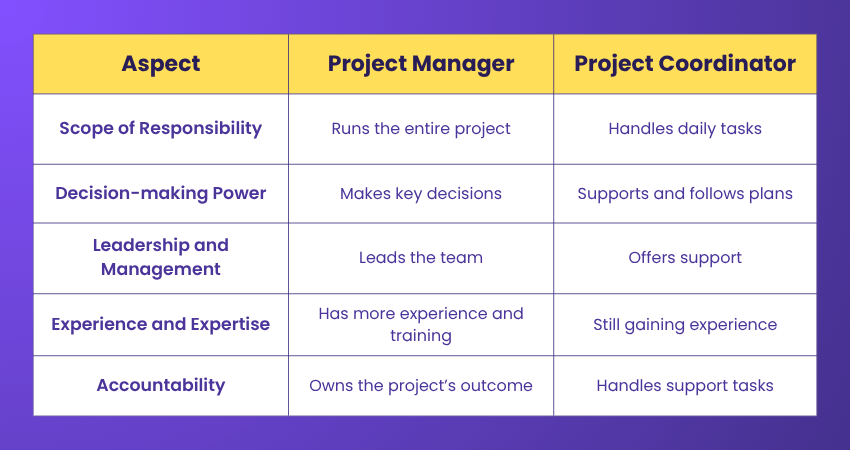
1) Project Manager vs Project Coordinator: Scope of Responsibility
The Project Manager oversees the project from start to finish. They define project goals, create plans to solve problems, and track progress at every stage.
On the other hand, the Project Coordinator handles the daily details, such as updating schedules, preparing reports, and keeping things running smoothly behind the scenes.
2) Project Manager vs Project Coordinator: Decision-making Power
Project Managers have the authority to make key decisions about budgets, deadlines, and project direction. They assess risks and choose the best path for the project.
In contrast, Project Coordinators follow those decisions and help put them into action. They usually do not have decision-making power.
3) Project Manager vs Project Coordinator: Leadership and Management
Project Managers lead the team, set expectations, and ensure everyone stays focused. They provide direction and motivation to keep the project on track.
Meanwhile, Project Coordinators support the process by keeping things organised and making sure everyone has what they need, but they do not directly manage or lead the team.
4) Project Manager vs Project Coordinator: Experience and Expertise Level
A Project Manager typically has more experience, deeper industry knowledge, and often holds certifications like PMP®.
On the other hand, a Project Coordinator usually holds an entry-level or early-career role. Their focus is on learning, gaining hands-on experience, and building Project Management skills over time.
5) Project Manager vs Project Coordinator: Accountability and Ownership
The Project Manager takes full responsibility for the project’s success or failure. They are accountable to clients, leadership, and senior management.
In contrast, the Project Coordinator is responsible for completing their assigned tasks and supporting the project, but the final ownership and accountability rest with the Project Manager.
Boost your exam confidence and knowledge with our PMP® Exam Prep Boot Camp - Join today!
How to Move from Project Coordinator to Project Manager?
The steps below highlight key actions you can take to successfully transition from Project Coordinator to Project Manager:

1) Improve Your Soft Skills
Develop strong communication, leadership, and time management skills. Start by speaking confidently in meetings, resolving small team issues, and staying organised. These abilities help you gain trust, show initiative, and prepare you for handling the larger responsibilities that come with a Project Manager role.
2) Request Additional Responsibilities
Talk to your manager about taking on more responsibility. Offer to lead smaller project phases, run team meetings, or manage timelines. These hands-on experiences help you prove your capability, show leadership potential, and build confidence as you move towards a Project Manager position.
3) Obtain Project Management Certifications
Pursue certifications like PMP® or PRINCE2® to strengthen your credibility. These qualifications show that you understand Project Management principles and tools, which increases your chances of moving into a Project Manager role and builds trust with hiring managers and employers.
4) Explore Internal Opportunities
Look for growth opportunities within your current company. Ask about training programmes, shadowing options, or mentorship opportunities. Express your interest in Project Management to your manager, who may support you in finding ways to grow into a new role within your existing team.
5) Apply for Jobs at Other Companies
If internal growth is limited, start applying for roles at other organisations. Look for entry-level Project Manager positions that align with your skills and experience. These roles give you the chance to take on leadership responsibilities and build the confidence needed to fully step into Project Management.
Conclusion
Project Coordinator vs Project Manager highlights two different but equally important roles in successful project delivery. Understanding their differences helps set clear expectations and provides a clear path for career growth. If you’re aiming to move from a Coordinator role to a Manager, focusing on skill development, gaining hands-on experience, and earning certifications can open new opportunities. With the right steps, transitioning into a leadership role becomes a realistic and achievable goal.
Master your Project Management skills with our PMP® Training – Join today!
Frequently Asked Questions
Is Project Coordinator a High Position?

A Project Coordinator is an entry-to mid-level role. It’s important for project support, but not a senior leadership position. However, it can be a strong stepping stone to more advanced roles like Project Manager.
Is a Project Coordinator the Same as a Project Manager?
No, a Project Coordinator is not the same as a Project Manager. A Project Coordinator supports daily tasks, while a Project Manager leads the whole project and makes key decisions.
What are the Other Resources and Offers Provided by The Knowledge Academy?
The Knowledge Academy takes global learning to new heights, offering over 3,000+ online courses across 490+ locations in 190+ countries. This expansive reach ensures accessibility and convenience for learners worldwide.
Alongside our diverse Online Course Catalogue, encompassing 19 major categories, we go the extra mile by providing a plethora of free educational Online Resources like Blogs, eBooks, Interview Questions and Videos. Tailoring learning experiences further, professionals can unlock greater value through a wide range of special discounts, seasonal deals, and Exclusive Offers.
What is The Knowledge Pass, and How Does it Work?
The Knowledge Academy’s Knowledge Pass, a prepaid voucher, adds another layer of flexibility, allowing course bookings over a 12-month period. Join us on a journey where education knows no bounds.
What are the Related Courses and Blogs Provided by The Knowledge Academy?
The Knowledge Academy offers various PMP® Training, including PMP® Certification, CAPM® Certification, and Program Management Professional (PgMP)® Certification. These courses cater to different skill levels, providing comprehensive insights into Workflow Management.
Our Project Management Blogs cover a range of topics related to Project Management, offering valuable resources, best practices, and industry insights. Whether you are a beginner or looking to advance your Project Management skills, The Knowledge Academy's diverse courses and informative blogs have got you covered.
Upcoming Project Management Resources Batches & Dates
Date
 PMP® Certification Training Course

 If you wish to make any changes to your course, please


