


 Top Rated Course

We may not have the course you’re looking for. If you enquire or give us a call on +44 1344 203 999 and speak to our training experts, we may still be able to help with your training requirements.
What Are Customer Touchpoints? A Complete Guide
The Knowledge Academy 18 April 2026Customer Touchpoints are interactions with a brand before, during, and after purchase across digital and physical channels, influencing experience and loyalty. Managing these touchpoints effectively helps organisations create positive experiences, build stronger relationships, and improve customer satisfaction.

Training Outcomes Within Your Budget!
We ensure quality, budget-alignment, and timely delivery by our expert instructors.
Table of Contents
Have you ever discovered a brand through a social media post, explored its website, read reviews, and made a purchase? Each of these moments is part of your interaction with the brand, and they are known as Customer Touchpoints. These interactions influence and shape how customers perceive a specific business.
It helps organisations identify every moment when customers interact with their brand. When touchpoints are designed thoughtfully across channels, such as websites or social media, businesses can build trust and strengthen long-term customer relationships. In this blog, you will learn about What are Customer Touchpoints, their importance, how they work, and more.
Table of Contents
1) What are Customer Touchpoints?
2) Importance of Customer Touchpoints
3) How Does a Customer Touchpoint Work?
4) Types of Customer Touchpoints
5) How to Identify a Customer Touchpoint?
6) How to Improve Customer Touchpoint?
7) Difference Between Customer Touchpoint and Customer Journey
8) Conclusion
What are Customer Touchpoints?
Customer Touchpoints refer to the interactions between a business and its customers through channels, such as websites, mobile apps, or social media advertisements. These moments represent how customers engage with a brand and shape their overall experience.
For example, clicking on a company advertisement or visiting a retail store to purchase a product are both Customer Touchpoints. Managing these interactions effectively helps businesses build stronger relationships and convert potential audiences into loyal customers.

Importance of Customer Touchpoints
Understanding the importance of Customer Touchpoints helps businesses improve how they interact with customers. By identifying and optimising these interactions, organisations can improve experiences and strengthen customer relationships. Let’s look at its importance below:
1) Increased Customer Retention: Positive Customer Touchpoints encourage customers to return and repeat purchases. Retaining existing customers is more cost-effective than acquiring new ones.
2) Brand Loyalty: Consistent positive interactions help build trust, encouraging customers to choose the brand repeatedly and recommend it to others.
3) Better Post-sales Support: Well-managed Customer Touchpoints help businesses handle enquiries quickly and resolve customer issues efficiently after a purchase.
How Does a Customer Touchpoint Work?
Customer Touchpoints work by taking several forms, such as advertisements, social media interactions, customer service calls, emails, or in-store experiences. Each touchpoint reshapes the customer's perception of the brand and influences their purchasing decisions. This asset makes it crucial for businesses to design effective strategies that effectively engage customers and enhance their experience.
To manage Customer Touchpoints effectively, companies must analyse each interaction for consistency and alignment with brand values. The process starts by gathering customer feedback, surveys, and analytics data to identify the clients’ pain points. The process ends with a coordinated approach to touchpoints that improves customer satisfaction, improves business and empowers positive word-of-mouth referrals.
Types of Customer Touchpoints
Customer touchpoints appear at different stages of the customer journey. These interactions are mapped on a customer journey map and are grouped into three main stages. Let’s look at them below:
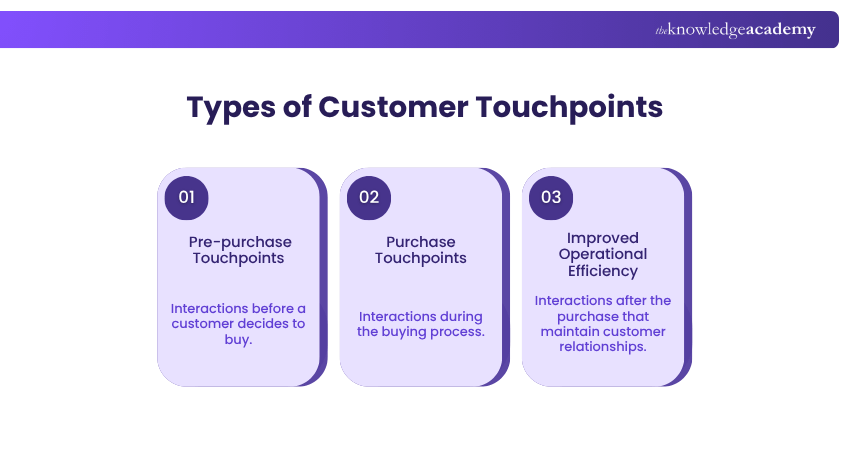
1) Pre-purchase Touchpoints
Pre-purchase touchpoints occur when potential customers discover and learn about a brand. These interactions help businesses create awareness and attract potential buyers. Some common Customer Touchpoints here include:
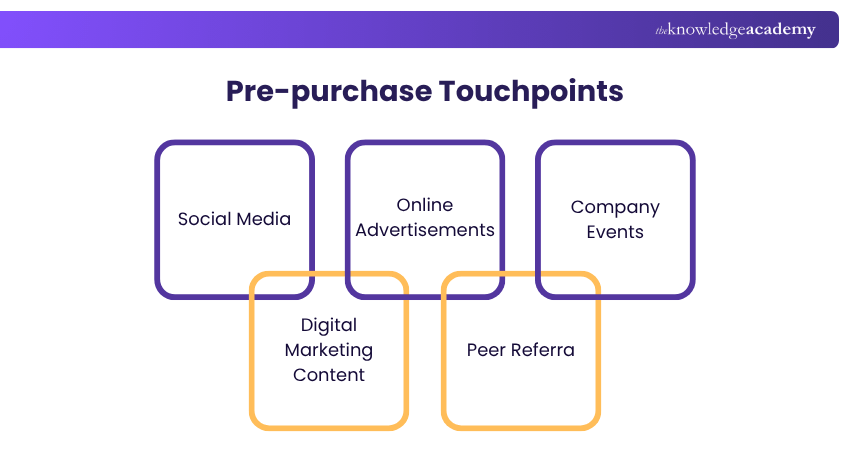
a) Social Media
Many customer journeys begin on social media platforms where users discover brands through posts, advertisements, or influencer content. Use engaging visuals, targeted messaging, and collaborations with influencers to capture attention and build trust.
b) Online Advertisements
Display ads on search engines or websites help businesses attract potential customers and direct them to their website or landing pages. Use customer insights and retargeting strategies to show relevant ads to people who have interacted with your brand.
c) Company Events
Webinars, conferences, or promotional events allow businesses to interact directly with potential customers and build brand awareness. Focus on audiences who have already shown interest in your products or services.
d) Digital Marketing Content
Content, such as blogs, videos, newsletters, infographics, and social posts, helps educate and engage potential customers. Maintain consistent and high-quality content that aligns with your brand style to improve recognition and trust.
e) Peer Referral
Recommendations from friends, family, or existing customers strongly influence purchasing decisions. Encourage referrals through loyalty or referral programmes that reward customers for recommending your brand.
Learn how to build strong, lasting connections that drive customer trust and business success with Building Business Relationships Training now!
2) Purchase Touchpoints
Purchase touchpoints occur when customers evaluate options and decide to buy a product or service. These interactions can directly influence the final buying decision. Some common Customer Touchpoints here include:
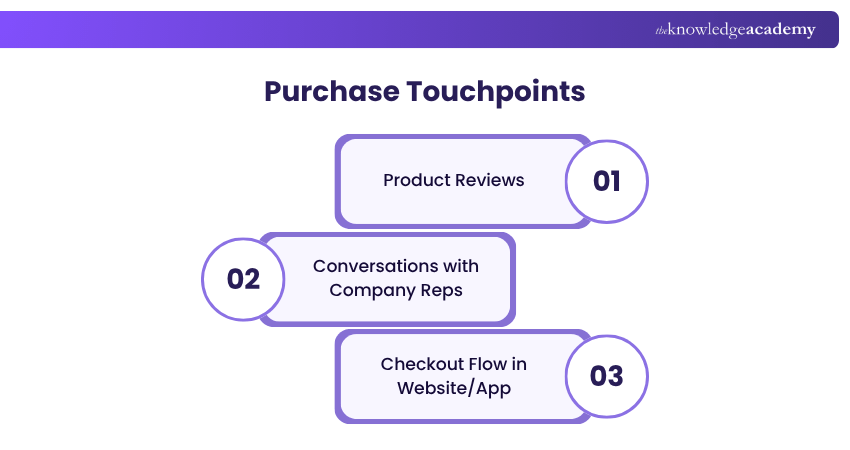
a) Product Reviews
Customers often check reviews from other buyers, influencers, or experts before making a purchase. Positive reviews increase confidence and help customers compare options.
b) Conversations with Company Reps
Customers may speak with sales or support teams to ask about product features, pricing, availability, or demonstrations. Train customer service teams in active listening, empathy, and product knowledge to improve the overall buying experience.
c) Checkout Flow in Website/App
The checkout stage is a crucial touchpoint that should be simple and convenient. Offer multiple payment options and minimise distractions on the checkout page to reduce cart abandonment.
3) Post-purchase Touchpoints
Post-purchase touchpoints focus on maintaining relationships with customers after they have completed a purchase. These interactions help improve customer satisfaction and encourage repeat business. Some common Customer Touchpoints here include:
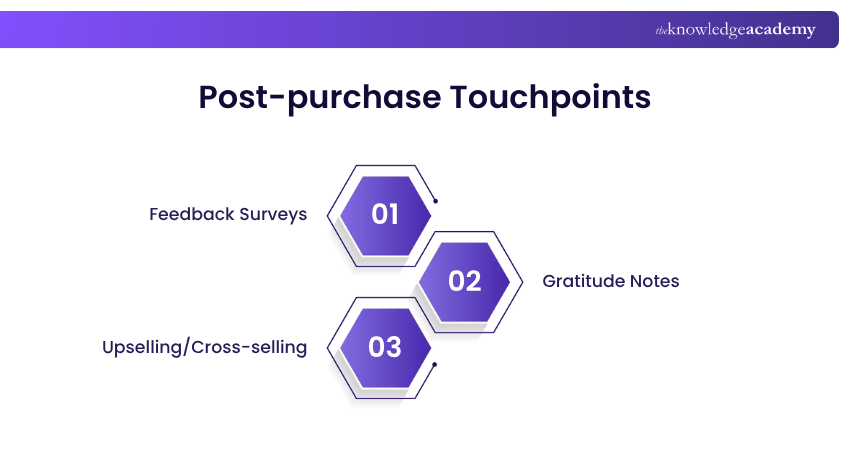
a) Feedback Surveys
Businesses collect feedback to understand customer experiences and identify areas for improvement. Analyse survey responses carefully and follow up with customers who report negative experiences.
b) Gratitude Notes
Gratitude messages help businesses show appreciation and build stronger relationships with customers. This leaves a positive impression and encourage customers to return in the future.
c) Upselling/Cross-selling
Recommending related products or services encourages customers to make additional purchases. Suggest products that complement the customer’s purchase to increase satisfaction and long-term value.
Improve communication and interpersonal skills to interact confidently in any professional setting with Social Skills Training today!
How to Identify a Customer Touchpoint?
Identifying customer touchpoints requires a structured approach that maps every interaction a customer has with a business during their journey. Let’s look at them below:
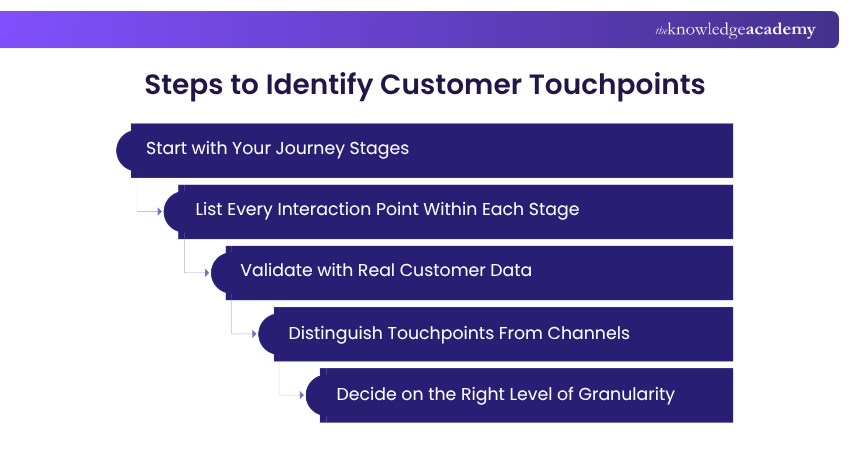
Step 1: Start with Your Journey Stages
Begin by defining the customer journey stages, such as pre-purchase, purchase, and post-purchase. These stages act as a framework that helps organise Customer Touchpoints and ensures interactions across the entire journey are considered.
Step 2: List Every Interaction Point Within Each Stage
For each stage, identify every point where customers interact with the business. This can include digital interactions like websites, emails, and social media, as well as physical interactions, such as retail stores or customer meetings.
Step 3: Validate with Real Customer Data
Once the touchpoints are listed, validate them using real customer data. Customer interviews, website analytics, support tickets, and session recordings can reveal how customers interact with the brand and where problems may occur.
Step 4: Distinguish Touchpoints From Channels
It is important to distinguish between channels and specific Customer Touchpoints. For example, a website is a channel, while the homepage or the checkout page are individual touchpoints.
Step 5: Decide on the Right Level of Granularity
The level of detail should depend on the purpose of the analysis. High-level touchpoints may be sufficient for strategic planning, while detailed touchpoints are more useful for improving specific services or digital experiences.
Transform your customer service approach for business impact- Join our Exceptional Customer Service Training today!
How to Improve Customer Touchpoint?
Improving Customer Touchpoints helps deliver a seamless and satisfying experience to their customers, enhancing loyalty and encouraging repeat business. Here are the ways to improve Customer Touchpoints:
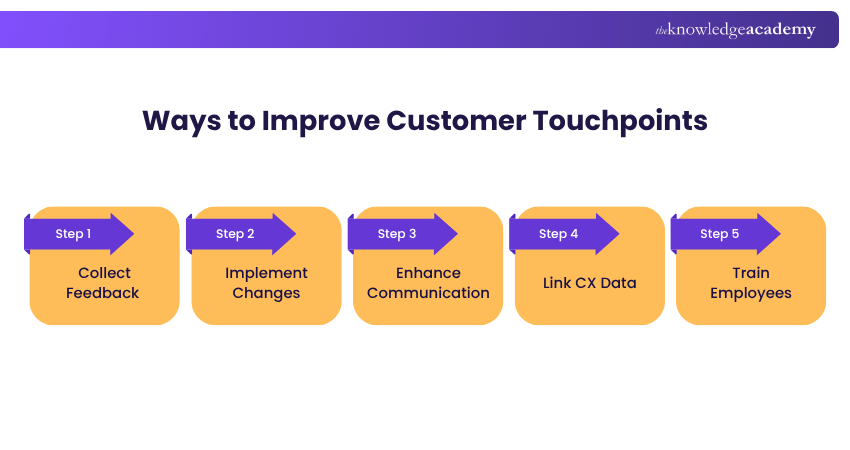
1) Collect Feedback
Gathering feedback from customers is important for understanding their experiences at various touchpoints. Use surveys, interviews, or social media polls to gain insights into what works well and requires improvement.
2) Implement Changes
Once feedback is collected, actionable steps need to be taken based on the insights received. Try to implement changes to enhance customer satisfaction and demonstrate your value in their opinions.
3) Enhance Communication
Improving communication across all touchpoints ensures that customers receive consistent and timely information. Clear and proactive communication helps in building trust and keeps customers engaged with your brand.
4) Link CX Data
Connecting customer experience (CX) data from various touchpoints allows a holistic view of customer interactions. By analysing this vast set of data, businesses can easily identify trends and areas for progress, further delivering more informed decision-making.
5) Train Employees
Investing in employee training is important for ensuring that they understand the importance of Customer Touchpoints. Well-trained staff can provide better service and deliver positive interactions that enhance the customer experience.
Transform your productivity with proven strategies with our Attention Management Training- register today!
Difference Between Customer Touchpoint and Customer Journey
Understanding the difference between a Customer Touchpoint and a Customer Journey helps businesses analyse how customers interact with a brand. Let’s look at the differences table below:
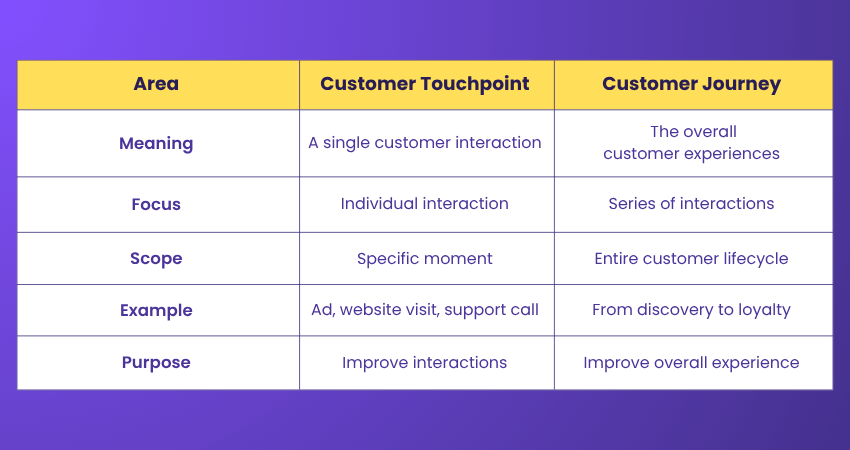
Customer Touchpoints refer to a single interaction between a customer and a brand, such as seeing an advertisement or speaking with customer support. Focusing only on individual touchpoints can sometimes create disconnected experiences if they are not aligned.
In contrast, the customer journey takes a broader view by connecting multiple touchpoints throughout the relationship with a brand. It helps businesses understand the full experience, including whether customers are satisfied, willing to return, and recommend the brand.
Conclusion
Understanding Customer Touchpoints helps businesses recognise how each interaction influences the overall customer experience. Managing these interactions effectively across the customer journey helps organisations create smoother customer experiences, strengthen relationships, and encourage long-term customer loyalty.
Strengthen your professional skills and unlock new opportunities with Personal Development Courses – Join now!
Frequently Asked Questions
How Many Touchpoints Do You Need to Convert a Customer?

The number of touchpoints needed to convert a customer varies, but studies suggest an average of 6 to 8 interactions. Each touchpoint builds awareness, trust, and engagement, moving potential customers from consideration to purchase. Ultimately, quality outweighs quantity.
What is an Omnichannel Customer Touchpoint Strategy?
An Omnichannel Customer Touchpoint Strategy connects digital and physical channels, such as social media, websites, and physical stores, to deliver a seamless customer experience. Integrating customer data allows customers to move between platforms without repeating information.
What are the Other Resources and Offers Provided by The Knowledge Academy?
The Knowledge Academy takes global learning to new heights, offering over 3,000+ online courses across 490+ locations in 190+ countries. This expansive reach ensures accessibility and convenience for learners worldwide.
Alongside our diverse Online Course Catalogue, encompassing 17 major categories, we go the extra mile by providing a plethora of free educational Online Resources like Blogs, eBooks, Interview Questions and Videos. Tailoring learning experiences further, professionals can unlock greater value through a wide range of special discounts, seasonal deals, and Exclusive Offers.
What is The Knowledge Pass, and How Does it Work?
The Knowledge Academy’s Knowledge Pass, a prepaid voucher, adds another layer of flexibility, allowing course bookings over a 12-month period. Join us on a journey where education knows no bounds.
What are the Related Courses and Blogs Provided by The Knowledge Academy?
The Knowledge Academy offers various Personal Development Courses, including Customer Experience Training, Attention Management Training, and Building Business Relationships Course. These courses cater to different skill levels, providing comprehensive insights into Customer Journey.
Our Business Skills Blogs cover a range of topics related to Customer Experience and Service professional development, offering valuable resources, best practices, and industry insights. Whether you are a beginner or looking to advance your Customer Service skills, The Knowledge Academy's diverse courses and informative blogs have got you covered.

The Knowledge Academy


Global Training Provider
The Knowledge Academy is a world-leading provider of professional training courses, offering globally recognised qualifications across a wide range of subjects. With expert trainers, up-to-date course material, and flexible learning options, we aim to empower professionals and organisations to achieve their goals through continuous learning.

Upcoming Business Skills Resources Batches & Dates
Date
 Customer Experience Training
Customer Experience Training
Fri 24th Jul 2026
Customer Experience Training
Fri 27th Nov 2026

 If you wish to make any changes to your course, please


