


 Top Rated Course

We may not have the course you’re looking for. If you enquire or give us a call on +08000201623 and speak to our training experts, we may still be able to help with your training requirements.
Defect Report in ISTQB - Explained
Richard Harris 26 May 2026Understanding Defect Reporting is essential for ensuring software quality and effective communication within testing teams across development environments. Curious to learn what is a Defect Report in ISTQB? Read this blog to learn the components, Defect Lifecycle, best practices and more about Defect Reporting.

Training Outcomes Within Your Budget!
We ensure quality, budget-alignment, and timely delivery by our expert instructors.
Table of Contents

The field of Software Testing plays a crucial role in ensuring the quality of software products. To effectively identify issues within software, the International Software Testing Qualifications Board (ISTQB) provides standardised guidelines and practices. One essential aspect of software testing practice is Defect Report in ISTQB, which involves documenting and communicating identified defects.
In this blog, you will learn how to become the various stages of a Defect Report in ISTQB as well as the defect life cycle. Continue reading to learn more!
Table of Contents
1) Defect Reporting in ISTQB
2) Components of a Defect Report
3) Defect Lifecycle and Workflow
4) Best Practices for Defect Reporting
5) Conclusion
Defect Reporting in ISTQB
Bugs in Software Testing play a crucial role in Defect Reporting within ISTQB, which is a systematic approach to identifying and documenting discrepancies or defects in software. Its primary goal is to facilitate clear communication and effective tracking of software defects throughout the testing process. By following ISTQB guidelines for Defect Reporting, testers can ensure that defects, including Bugs in Software Testing, are properly documented, prioritized, and resolved, ultimately enhancing software quality.

Components of a Defect Report
A Defect Report consists of several key components, each serving a specific purpose in accurately describing and reporting the identified defect. The structure of a Defect Report typically includes the following elements:
Defect Identification: Each Defect Report should have a unique identifier assigned to it. This identifier helps in tracking and referencing the defect throughout the testing and development lifecycle. Additionally, a meaningful title and appropriate categorisation of the defect are important for clear communication and effective prioritisation.
Detailed Description: A detailed and concise description of the defect is essential for developers to understand and reproduce the issue. It should provide a clear understanding of the problem and its impact on the software's functionality. Testers should strive to include relevant information, such as steps to reproduce the defect, making it easier for developers to pinpoint the issue.
Reproducibility and Environment: To ensure effective troubleshooting and resolution, it is vital to specify the reproducibility of the defect. Testers should indicate whether the issue occurs consistently or intermittently. Additionally, providing details about the software and hardware environment in which the defect was observed can help narrow down the root cause.
Actual and Expected Results: An accurate representation of the actual and expected behaviour is crucial in a Defect Report. Testers should describe the observed behaviour that deviates from what was expected, and clearly articulate the expected behaviour based on the software's specifications. Including relevant evidence, such as screenshots or log files, can further support the understanding of the defect.
ISTQB, the International Software Testing Qualifications Board, has a significant impact on Defect Reporting by providing standardised guidelines and practices that promote effective defect management. Here are some ways in which ISTQB influences Defect Reporting:
Common Terminology and Processes: ISTQB establishes a common terminology and set of processes for Defect Reporting. This ensures that testers and other stakeholders involved in software testing have a shared understanding of defect-related concepts and procedures.
Defect Reporting Guidelines: ISTQB provides guidelines and best practices for Defect Reporting. These guidelines outline the essential elements that should be included in a Defect Report, such as defect identification, detailed description, steps to reproduce, and attachments.
Defect classification and Prioritisation: ISTQB offers a standardised defect classification scheme, allowing testers to categorise defects based on their nature and impact. This classification helps in prioritising defects and determining the order in which they should be addressed.
Defect lifecycle Management: ISTQB defines a defect lifecycle, which encompasses various stages from defect identification to closure. This lifecycle provides a structured approach for managing defects throughout the testing process. It outlines the responsibilities of different stakeholders, such as testers, developers, and managers, at each stage of the defect resolution process.
Integration with Test Management Tools: ISTQB emphasises the integration of Defect Reporting with test management tools. Test management tools offer features specifically designed for defect tracking and reporting, allowing testers to efficiently manage and monitor the status of reported defects.
Acquire skills to perform Manual Testing following business objectives with the Manual Testing Training – Join today!
Defect lifecycle and workflow
The defect lifecycle encompasses several stages and throughout this lifecycle, effective tracking and monitoring of defects are necessary to ensure timely resolution and maintain a clear overview of the defect status. Collaboration between testers and developers is crucial, as they work together to address and resolve the reported defects.
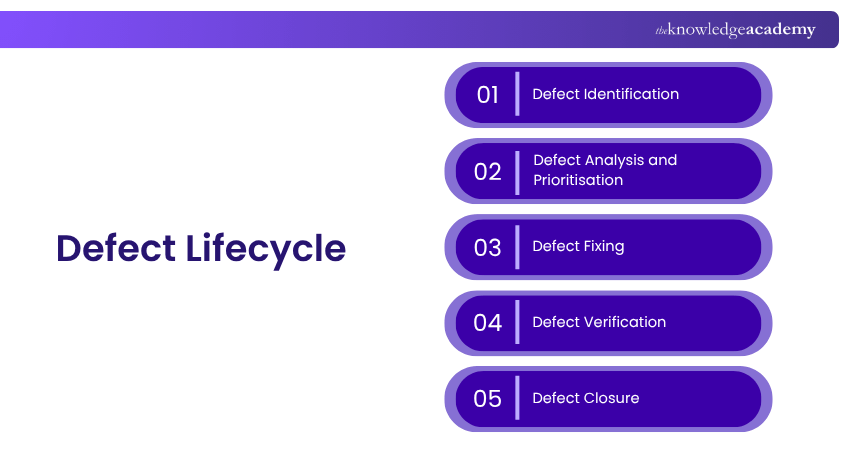
1) Defect identification: Testers identify and document defects during the testing process.
2) Defect analysis and prioritisation: Defects are analysed, categorised, and prioritised based on their impact and severity.
3) Defect fixing: Developers address the reported defects and provide fixes.
4) Defect verification: Testers retest the fixed defects to ensure successful resolution.
5) Defect closure: Defects that have been verified and confirmed as resolved are marked as closed.
Get certified in Software Testing with the ISTQB Software Testing Foundation Course Sign in today!
Best Practices for Defect Reporting
To optimise Defect Reporting in ISTQB, following best practices is highly recommended. For better insights and preparation, explore ISTQB Interview Questions. These practices include:
a) Clear and Concise Descriptions: Providing clear and concise descriptions helps developers understand the defect quickly and accurately. Including relevant details, such as error messages or log entries, can assist in the investigation and resolution process.
b) Accurate and Reproducible Steps: Documenting the steps to reproduce the defect in a precise and reproducible manner is vital. Testers should pay attention to the sequence of actions, input values, and any prerequisites required to recreate the issue.
c) Prioritisation and Categorisation: Assigning appropriate priorities and categories to defects ensures that high-impact and critical issues receive the necessary attention. Proper categorisation allows for efficient tracking and analysis of defects.
d) Including Relevant Attachments: Attachments such as screenshots, log files, or test data can provide additional context and assist in defect understanding and resolution. Testers should attach relevant artifacts that aid developers in reproducing and diagnosing the defect.
e) Communication and collaboration: Effective communication and collaboration between testers and developers play a vital role in defect resolution. Timely and accurate information exchange helps in understanding the defect's root cause and in working towards a resolution together.
Conclusion
Defect Reporting in ISTQB is a fundamental aspect of Software Testing that plays a crucial role in ensuring the overall quality of software products. By following these best practices, software teams can streamline their defect management processes and, as a result, deliver more reliable and high-quality software products. For those preparing for ISTQB exams or interviews, understanding the intricacies of defect reporting is essential, and you can find relevant ISTQB Interview Questions to help sharpen your knowledge.
Gain the deep knowledge of testing process with the ISTQB Advanced Level Test Manager Course Sign in now!
Frequently Asked Questions
What Tools are Used for Managing Defect Reports?

Common tools used for managing Defect Reports include Jira, Bugzilla, MantisBT, and Redmine. These tools help teams track, prioritise, assign, and resolve defects efficiently, while supporting collaboration, reporting, and integration with development workflows.
What is the Difference Between a Bug and a Defect?
A bug is an error in the code that causes the software to behave unexpectedly, while a defect is a deviation from the specified requirements identified during testing. Bugs usually originate during development, whereas defects highlight gaps between expected and actual outcomes.
What are the Other Resources and Offers Provided by The Knowledge Academy?
The Knowledge Academy takes global learning to new heights, offering over 3,000+ online courses across 490+ locations in 190+ countries. This expansive reach ensures accessibility and convenience for learners worldwide.
Alongside our diverse Online Course Catalogue, encompassing 17 major categories, we go the extra mile by providing a plethora of free educational Online Resources like Blogs, eBooks, Interview Questions and Videos. Tailoring learning experiences further, professionals can unlock greater value through a wide range of special discounts, seasonal deals, and Exclusive Offers.
What is The Knowledge Pass, and How Does it Work?
The Knowledge Academy’s Knowledge Pass, a prepaid voucher, adds another layer of flexibility, allowing course bookings over a 12-month period. Join us on a journey where education knows no bounds.
What are the Related Courses and Blogs Provided by The Knowledge Academy?
The Knowledge Academy offers various Software Testing Courses, including the ISTQB Software Testing Foundation Course, ISTQB Advanced Level Test Analyst Course and Certified Software Testing Professional (CSTP) Course. These courses cater to different skill levels, providing comprehensive insights into Why ISTQB Certification is Important.
Our Business Analysis Blogs cover a range of topics related to ISTQB, offering valuable resources, best practices, and industry insights. Whether you are a beginner or looking to advance your Software Testing skills, The Knowledge Academy's diverse courses and informative blogs have got you covered.

Richard Harris


Senior Full Stack Developer and Technology Educator
Richard Harris is a highly experienced full-stack developer with deep expertise in both frontend and backend technologies. Over his 12-year career, he has built scalable web applications for startups, enterprises and government organisations. Richard’s writing combines technical depth with clear explanations, ideal for developers looking to grow in modern frameworks and tools.

Upcoming Business Analysis Resources Batches & Dates
Date
 ISTQB Software Testing Foundation
ISTQB Software Testing Foundation
Mon 10th Aug 2026
ISTQB Software Testing Foundation
Mon 14th Dec 2026

 If you wish to make any changes to your course, please


