


 Top Rated Course

We may not have the course you’re looking for. If you enquire or give us a call on +33 805638382 and speak to our training experts, we may still be able to help with your training requirements.
What is SSCP: An Ultimate Guide for 2026
John Davies 14 July 2026Systems Security Certified Practitioner (SSCP) is a cybersecurity certification that validates practical security implementation skills within IT environments. It covers access controls, network security and incident response. Read this blog on SSCP to learn about the exam details, tips to prepare, related jobs, benefits of SSCP and more.

Training Outcomes Within Your Budget!
We ensure quality, budget-alignment, and timely delivery by our expert instructors.
Table of Contents
The Systems Security Certified Practitioner (SSCP) certification is something that you can consider as an Information Security Professional. This certification helps you validate your experience and knowledge in the technical aspects of cybersecurity systems.
According to a research report by Statista, in 2024, the global market of Security as a Service (SECaaS) was valued at £14–15 billion approximately. It is further estimated to grow up to £40 billion by the early 2030s. Want to learn What is SSCP? Read this blog to learn more about this certification and how it can help advance your career in IT Security.
Table of Contents
1) What is SSCP?
2) SSCP Exam Details
3) Tips to Prepare for the SSCP Exam
4) Is SSCP Certification Suitable for You?
5) SSCP-related Jobs
6) Benefits of Getting SSCP
7) Conclusion
What is SSCP?
The Systems Security Certified Practitioner (SSCP) certification is designed for cybersecurity professionals and is used to monitor information systems and respond to security events. Obtaining an SSCP certification can prove to your employers that you are capable enough of handling practical cybersecurity-related incidents efficiently. The International Information System Security Certification Consortium ISC2 offers the SSCP certification.
Earning an SSCP certification demonstrates your capability to monitor, manage, and implement IT infrastructure effectively. It helps you apply top security policies, practices, and procedures established by cybersecurity professionals at ISC2. Understanding SSCP vs CISSP can further guide you in choosing the right certification path for your career.

SSCP Exam Details
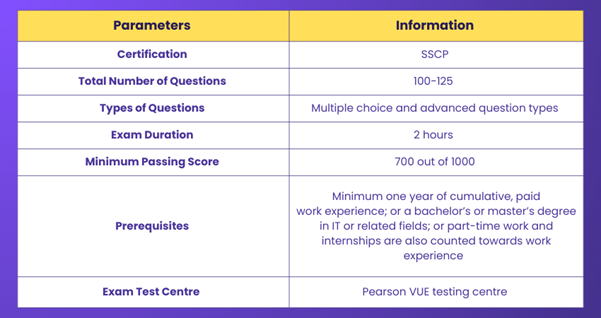
To obtain an SSCP certification and become a security professional, you must first clear the SSCP exam. Here is a list of a few crucial details listed in the below table.
Weights of SSCP Examination
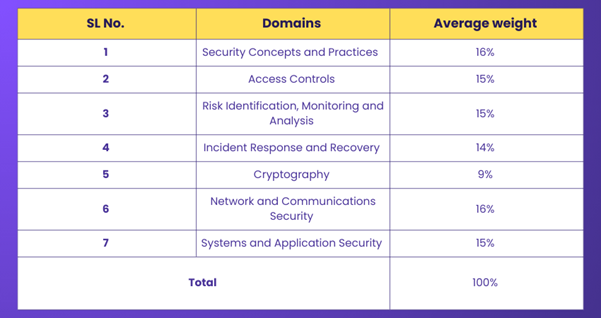
Use the following table to learn about the various SSCP exam domains with their weights to prepare and pass the exam.
SSCP Renewal Process
Let us understand how to earn Continuing Professional Education (CPEs) to maintain your SSCP certification here. The SSCP-certified members and Associates of ISC2 must earn a certain number of CPE credits to maintain the certification active. For a year, you need to score a minimum of 20 points and as a whole for three years, you need to maintain 60 CPEs. Also, you must pay an Annual Maintenance Fee (AMF) along with the minimum credits gathered to maintain good standing.
Certified members must meet CPE requirements no later than the certification expiry date (cycle end) within the three years of each certification cycle. Besides, for Associates of ISC2, the CPE activities must be completed within their yearly cycle.
You can earn these credits through various professional development activities related to cybersecurity. Attending various programmes, webinars, and security conferences is one of the most common ways to gain credits. You may also earn CPEs by completing courses, participating in workshops, writing security articles, teaching or mentoring others, and volunteering in security-related initiatives.
Furthermore, the SSCP-certified members will be re-certified to a new three-year certification cycle as their tenure of the three-year certification cycle is completed by meeting the payment requirements, and the minimum required CPE credit. The designation as an associate will be renewed yearly for one year if they can meet the required CPE credit score and pay the AMF amount.
Eligibility for the SSCP exam
The candidates should have at least one year of work experience in at least one of the seven SSCP CBK domains. Candidates with a degree in cybersecurity or any other related field (Bachelor's or Master's) will be given a one-year prerequisite pathway.
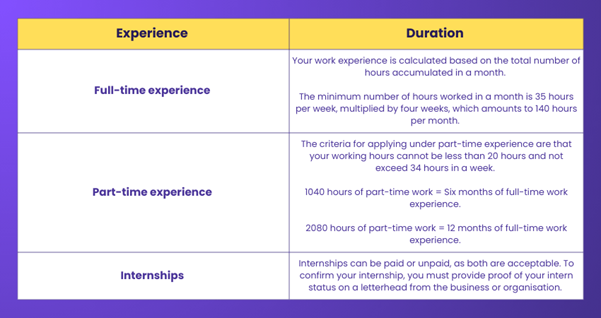
After passing the SSCP exam, a candidate who lacks the experience necessary to become an SSCP can instead become an Associate of ISC2. After that, the Associate of ISC2 will have two years to acquire the necessary one year of experience. Internships and part-time work can also be included in your experience.
The ISC2 also requires an approved cybersecurity degree to provide an SSCP certification.
1) The cybersecurity degree should be able to address the information,cyber, infrastructure and software security-related topics in its requirements.
Or
2) The degree can be one of the following preapproved programs:
a) Computer Engineering
b) Computer Science
c) Computer Systems Engineering
d) Information Technology (IT)
e) Management Information Systems (MIS)
Ensure to recheck or confirm the list of preapproved degree programs with (ISC)² as they might get periodically updated.
Further, let us understand how to calculate your work experience.
Are you interested in enhancing your skills in information security? Then, register with Systems Security Certified Practitioner (SSCP) training to upgrade your capabilities and build your career.
Tips to Prepare for the SSCP Exam
Your preparation for the SSCP exam might vary based on factors such as your knowledge, learning style, grasping power and subject-related experience. The following are some key points that may assist you in preparing for the exam.
Solving Practice Tests
Practice exams can play a significant role in having a self-perspective of your knowledge gained. It helps you understand what type of questions you will get and how to manage your time completing the questions within the time limit. You can try appearing in various mock tests and practice exams online. Also, you can find many books (For example, a practice questions book provided by ISC2 that may help you in your additional study.
Exam tips
Now, let us come back to understand the additional exam tips necessary to prepare for the exam.
a) Take enough time to get prepared for the exam confidently. Based on your current knowledge, the learning duration may vary by a few weeks or a few months.
b) Create flashcards to memorise acronyms and port numbers.
c) Read the exam questions clearly before your answer. You can spare a minute and a half for those questions you will respond to.
d) Mark those questions for review if you are unsure about an answer and need to put in more thought. You can use the "Flag for review" option to come back to them later.
e) Ensure to answer all the questions, as there is no negative marking for incorrect answers.
Is SSCP Certification Suitable for You?
SSCP is a highly sought-after certification by many IT professionals. It can certainly open doors to great opportunities and offer lucrative packages across various industries.
But ultimately, it depends on why you want this certification and your motivation to achieve your short-term or long-term career goals.
Before picking up any certification, ensure that the certificate you select matches your career goals and consists of market value/recognition.
SSCP-related Jobs
An SSCP certification is ideal for all professionals related to an organisation's security system. The individuals responsible for securing an organisation's critical assets must upgrade their technical skills and techniques to stay ahead of the competition. The SSCP certification-related jobs include:
a) Database Administrator
b) Network Analyst
c) Network Security Engineer
d) Security Analyst
e) Systems Administrator
f) Systems Engineer
g) Security Consultant
h) Security Specialist
I) Security Administrator
j) Systems Analyst
Benefits of Getting SSCP
Obtaining an SSCP certification can help you gain several potential benefits, which include:
a) Gaining new knowledge, skills, and techniques that are relevant to your information security job.
b) Proving your worth and capability to your employers.
c) Increased chances of promotions and salary hikes are often linked to specialised certifications. For example, Decoding SSCP Salary trends can highlight how such qualifications can significantly boost earning potential and career advancement opportunities.
d) Potential offers from multiple industries with a lucrative package.
e) Access to the cybersecurity community.
There are multiple other benefits to getting tagged as an SSCP-certified professional that can create possibilities for securing high-paying, in-demand cybersecurity positions. Obtaining an internationally recognised advanced security administration and operations certification such as the SSCP is a great strategy to develop your career and protect the vital assets of your organisation.
Also, a network of cybersecurity professionals is available to support you at any stage of your career to demonstrate your abilities, improve your career and earn support.
Ready to ace your exam? Check out the best study materials and practice questions for the SSCP Exam Questions today!
Conclusion
We hope you now understand What is SSCP, the importance of getting SSCP certified, the eligibility criteria, the pathway to earning the certification, and many other elements relevant to SSCP certification with this blog.
Are you interested in enhancing your knowledge or pursuing a career in information security? Register with SSCP Training today!
Frequently Asked Questions
Is SSCP Equivalent to Security+?

SSCP and CompTIA Security+ are similar but not equivalent. Security+ is an entry-level certification covering foundational cybersecurity concepts, while SSCP emphasises practical implementation and requires professional experience. SSCP is a higher-level credential, with hands-on operational security capabilities.
How Many Years of Experience are Required for SSCP?
To earn SSCP certification, professionals need at least one year of cumulative paid work experience in one or more SSCP security domains. A bachelor’s or master’s degree in IT or a related field may help meet eligibility requirements, and part-time roles or internships can also be counted toward the required experience.

John Davies


Cyber Security Governance & Assurance Specialist
John Davies is a cybersecurity expert specialising in governance, risk management, and compliance. With over 15 years in the field, he has led enterprise-wide security programmes across finance, healthcare and public sector organisations. His content provides practical guidance on building secure environments, managing risk and aligning with regulatory frameworks.


 If you wish to make any changes to your course, please


