


 Top Rated Course

We may not have the course you’re looking for. If you enquire or give us a call on 0800 446148 and speak to our training experts, we may still be able to help with your training requirements.
Transactional vs Transformational Leadership: Key Differences
Elizabeth Clark 12 March 2026Transactional vs Transformational Leadership: One focuses on supervision and rewards, the other on vision, innovation, and long-term growth. The first relies on structure, rules, and performance-based incentives. The second inspires change, motivates teams, and encourages creativity to drive lasting organisational success.

Training Outcomes Within Your Budget!
We ensure quality, budget-alignment, and timely delivery by our expert instructors.
Table of Contents
Leadership style shapes how teams communicate, perform, and respond to challenges. It affects motivation, accountability, and the overall work environment.
Understanding Transactional vs Transformational Leadership explains why some managers rely on structure while others encourage change and new ideas. In the following sections, we will look at how each approach works and when it is most effective.
Table of Contents
1) What is Transactional Leadership?
2) Characteristics of Transactional Leadership
3) What is Transformational Leadership?
4) Characteristics of Transformational Leadership
5) Difference Between Transactional and Transformational Leadership
6) When is Transformational Leadership More Effective?
7) Can a Leader Use Both Transactional and Transformational Leadership?
8) Conclusion
What is Transactional Leadership?
Transactional Leadership is a style that centres on the exchange of rewards and feedback between the leader and their followers. The leader establishes clear goals and expectations, offering feedback and incentives based on the followers’ performance. This approach maintains the status quo and avoids risks or changes. Transactional Leadership proves effective when tasks are simple, routine, and well-defined, and when followers are motivated by external rewards or consequences.
Additionally, Transactional Leadership can foster a stable and predictable work environment, which can be advantageous in industries, wherein consistency and adherence to established procedures are crucial. However, this style may limit creativity and innovation, as it discourages taking risks and exploring new approaches. For organisations aiming to drive change and adapt to dynamic environments, a more flexible and visionary leadership style might be necessary.

Characteristics of Transactional Leadership
Transactional leadership is built on structure, clear expectations, and measurable outcomes. It focuses on maintaining performance through defined systems of rewards and accountability.
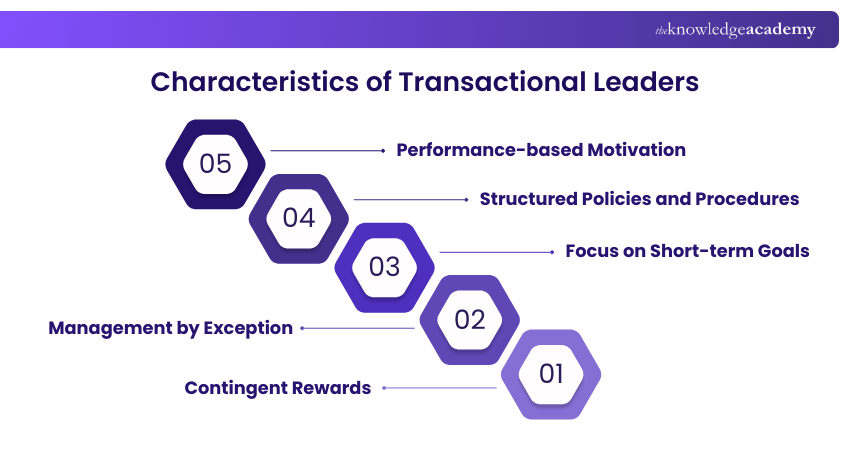
a) Contingent Rewards: Leaders set clear expectations and offer rewards like bonuses or recognition when those goals are met.
b) Management by Exception: Leaders monitor performance and step in with corrective actions when standards aren’t met.
c) Focus on Short-term Goals: Prioritises immediate results and efficiency over long-term innovation.
d) Structured Policies and Procedures: Emphasises clear rules, roles, and processes to maintain order and consistency.
e) Performance-based Motivation: Relies on rewards and sometimes penalties to motivate team members.
What is Transformational Leadership?
Transformational Leadership is characterised by four key components: Intellectual Stimulation, Individual Consideration, Inspirational Motivation, and Idealised Influence. These leaders encourage innovative thinking, provide mentorship, instil a shared vision, and act as role models. They focus on nurturing and positively motivating their workforce, fostering an autonomous environment that promotes creativity and empowers employees to make decisions.
This leadership style is particularly effective in organisations prioritising employee development over immediate production targets. It thrives in settings where products or services are novel, requiring open and innovative thinking to navigate new challenges and opportunities. Transformational Leadership Theory is especially impactful with younger team members, helping them integrate into the company culture and feel part of something unique.
Characteristics of Transformational Leadership
Transformational leadership centres on inspiring change and encouraging people to grow beyond routine performance. Leaders focus on vision, motivation, and personal development to create a positive and innovative work environment.
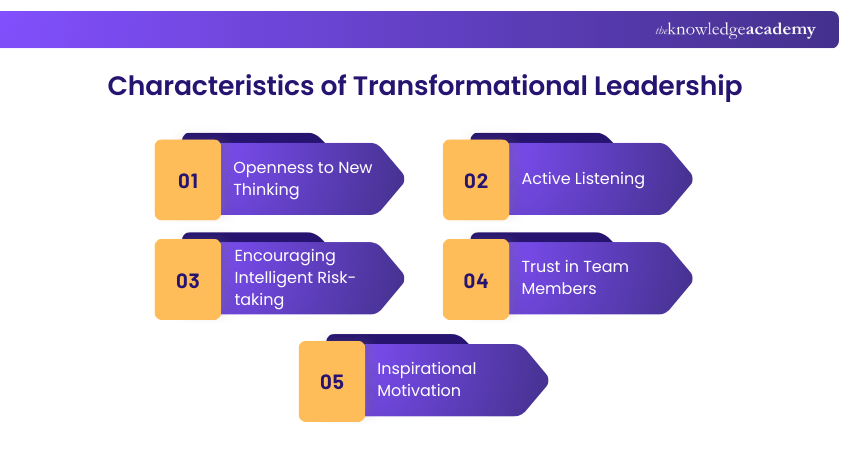
a) Openness to New Thinking: Leaders welcome fresh ideas and look for better ways of doing things, encouraging innovation across the team.
b) Active Listening: They listen without judgment and make employees feel valued and confident in sharing ideas.
c) Encouraging Intelligent Risk-taking: They support calculated risks when potential benefits outweigh the drawbacks.
d) Trust in Team Members: Employees are given autonomy and responsibility to contribute and make decisions.
e) Inspirational Motivation: Leaders communicate a clear vision and inspire people to work toward shared goals.
Drive change and inspire your team by investing in our Agile Leadership Training now!
Difference Between Transactional and Transformational Leadership
Now that we have defined each Transformational vs Transactional Leadership, let's study the difference between them. Here's an in-depth clarification of the difference between Transactional and Transformational Leadership patterns:
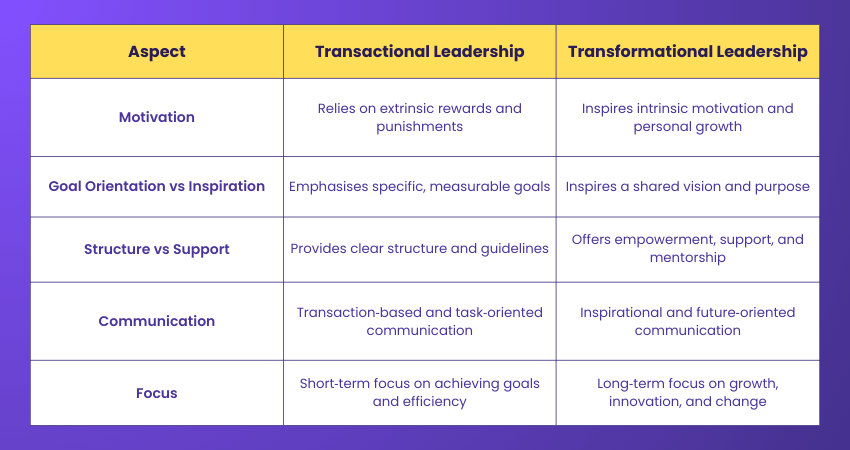
1) Motivation
Transactional leaders normally inspire their team members via a procedure of rewards and feedback. They establish clear expectations and performance metrics and praise folks that meet or exceed targets. Punishments or corrective movements are implemented to individuals who fail to meet expectancies. This transactional method hinges on extrinsic motivation.
Transformational leaders in general encourage their team members via intrinsic motivation. They encourage and engage their members by means of attractive to their better-order desires, along with individual development, self-realisation, and a sense of purpose. They build a supportive and empowering environment that encourages individuals to make satisfactory contributions.
2) Goal Orientation vs Inspiration
Transactional Leaders are highly goal-oriented. They set specific and measurable targets for their team members to achieve. These goals are often aligned with the organisation's objectives and may be tied to rewards or bonuses.
Transformational Leaders have a clear vision for the future and effectively communicate this vision to their followers. They inspire and energise their team by articulating a compelling vision which resonates with their values and aspirations.
3) Structure vs Support
Transactional Leaders offer a dependent work surroundings in which roles, duties, and expectations are described. They establish standard running methods and protocols, making sure that personnel adhere to established hints.
Transformational Leaders motivate their team members by delegating responsibilities, presenting autonomy, and growing opportunities for growth and development. They provide help, mentorship, and guidance to help people reach their full ability.
Discover the secrets to effective Leadership with our comprehensive Leadership Skills Training.
4) Communication
Communication in Transactional Leadership is primarily transaction-based. Leaders provide feedback, guidance, and instructions related to specific tasks or goals. They expect team members to follow instructions and meet performance targets.
Communication in Transformational Leadership is inspirational, motivational, and future-oriented. Leaders use storytelling, metaphorical language, and vivid imagery to effectively convey their vision and engage their followers emotionally.
5) Long-term Focus
Transactional Leadership tends to have a quick-time period awareness, emphasising instant effects and assembly goals. The primary objective is to make sure efficient operations and goal fulfillment within the short run.
Transformational Leadership emphasises long-term recognition on organisational growth and improvement. Such leaders concentrate on fostering innovation, promoting a studying lifestyle, and adapting to change. They encourage their team to assume past instant goals and strive for non-stop development.
When is Transformational Leadership More Effective?
Transformational leadership works best in fast-changing environments that require innovation, major organisational change, or crisis response. It improves performance by increasing engagement, creativity, and commitment to a shared vision, especially when teams need motivation or must adapt quickly.
Can a Leader Use Both Transactional and Transformational Leadership?
Leaders can, and often should, blend transactional and transformational leadership, as the two are not mutually exclusive. When combined, they create a balanced and more effective approach that supports both structure and long-term growth.
Conclusion
The decision in the Transactional vs Transformational Leadership is not which one is better than the other but rather what is the best time to apply each leadership style. Leaders are able to motivate performance and long-run growth by balancing structure and inspiration. Hopefully, this blog has also helped you to have a better understanding of applying these styles in your own leadership process.
Take your Leadership skills to the next level by signing up for our Leadership Training today!
Frequently Asked Questions
What Career Opportunities do Transactional and Transformational Leadership Skills Provide?

Transactional Leadership skills are well-suited for management roles and positions emphasising quality control and compliance. Conversely, Transformational Leadership skills open doors to executive positions, innovation and research roles, entrepreneurship, and human resources and organisational development careers.
How do Transactional and Transformational Leadership Skills Impact Career Progression and Professional Success?
Transactional Leadership skills propel career progression through their focus on efficiency, reliability, and financial accountability. On the other hand, Transformational Leadership skills drive professional success by fostering innovation, adaptability, and organisational growth.
What are the Other Resources and Offers Provided by The Knowledge Academy?
The Knowledge Academy takes global learning to new heights, offering over 3,000+ online courses across 490+ locations in 190+ countries. This expansive reach ensures accessibility and convenience for learners worldwide.
Alongside our diverse Online Course Catalogue, encompassing 17 major categories, we go the extra mile by providing a plethora of free educational Online Resources like Blogs, eBooks, Interview Questions and Videos. Tailoring learning experiences further, professionals can unlock greater value through a wide range of special discounts, seasonal deals, and Exclusive Offers.
What is The Knowledge Pass, and How Does it Work?
The Knowledge Academy’s Knowledge Pass, a prepaid voucher, adds another layer of flexibility, allowing course bookings over a 12-month period. Join us on a journey where education knows no bounds.
What are the Related Courses and Blogs Provided by The Knowledge Academy?
The Knowledge Academy offers various Leadership Courses, including the Leadership Skills Course, Agile Leadership Training, and High-performing Teams Training. These courses cater to different skill levels, providing comprehensive insights into Building an Effective Team.
Our Business Skills Blogs cover a range of topics related to Transactional and Transformational Leadership, offering valuable resources, best practices, and industry insights. Whether you are a beginner or looking to advance your Decision-making skills, The Knowledge Academy's diverse courses and informative blogs have got you covered.

Elizabeth Clark


Senior Leadership Trainer and Business Strategist
Elizabeth Clark is a senior trainer and strategist with a strong background in leadership, business management, and operational improvement. With more than 15 years of experience, she has worked with leaders across industries to enhance their influence, communication, and strategic planning skills. Her writing is known for being insightful and focused on real-world leadership challenges.
View Detail
Upcoming Business Skills Resources Batches & Dates
Date
 Successful People Management and Team Leadership
Successful People Management and Team Leadership
Fri 3rd Jul 2026
Successful People Management and Team Leadership
Fri 6th Nov 2026

 If you wish to make any changes to your course, please


